


The verdict
The Harbeth SHL5plus XD2 is a three-way standmount loudspeaker that scores 9.4/10 in our testing, pairing an exceptionally natural midrange with a more open, engaging treble and earning a Best of High End Award. It's built for listeners who value lifelike voices, convincing timbre and holographic imaging, not for those chasing the deepest bass without a subwoofer.
- Superb, lifelike midrange and vocals
- No matching stands from Harbeth
Some loudspeakers grab your attention almost immediately with an upfront presentation, prominent treble, or emphatic bass, but the very qualities that make them exciting at first can become fatiguing over longer listening sessions. Others reward a different approach, inviting you to sit down, put on a favourite recording, and allow the music to unfold without tiring your ears. Harbeth has spent much of its history building the latter. The Harbeth SHL5plus XD2 is the latest evolution of a standmount loudspeaker lineage that stretches back decades, reflecting the British manufacturer’s longstanding commitment to natural tonal balance, convincing timbre, and musical authenticity.
Yet this latest iteration also challenges a familiar perception of Harbeth loudspeakers: that they are refined, beautifully voiced, and perhaps a little too polite for listeners who want their music served with a generous helping of excitement.
Fair or not, Harbeth has acquired a reputation as a “pipe and slippers” loudspeaker brand. The expression suggests a comfortable, slightly old-fashioned sound intended for listeners who prefer an afternoon of gentle jazz to the visceral energy of rock, electronic music, or a full-blooded orchestral performance. There is some historical justification for the stereotype. Harbeth’s BBC heritage helped shape a design philosophy that prioritizes natural voices, convincing instrumental timbres, and long-term listening comfort over exaggerated treble, spectacular bass, or an artificially dramatic presentation. These remain important strengths, but they do not necessarily tell the whole story of what a modern Harbeth can deliver.
Spending time with the Harbeth SHL5plus XD2 convinced me that this familiar description no longer tells the whole story. These are not simply speakers for settling into a favourite armchair with a glass of whisky and a well-worn jazz record. They can be lively, dynamic, and remarkably engaging across a wide range of musical styles. The midrange remains exceptional, but the treble has an openness and presence that lend recordings a greater sense of air, clarity, and immediacy than I have traditionally associated with older Harbeth designs.
For this review, I compared the SHL5plus XD2 directly with Buchardt Audio’s E50, a less expensive standmount that takes a distinctly different approach to presenting music. At $7,400 Canadian per pair (from €6,499 in Europe), the Harbeth sits above the E50’s retail price of $6,500 Canadian (€4,100). The differences between the two became apparent as I moved between familiar recordings. The Buchardt demonstrated clear strengths in low-frequency extension and transient impact, but the Harbeth repeatedly drew me deeper into the performance through the natural presentation of voices, the convincing timbre of instruments, and an unusually realistic sense of space and ambience.
The SHL5plus XD2 is neither inexpensive nor particularly compact by standmount standards. It features a substantial three-way design that benefits from careful placement and thoughtful system matching. Get those elements right, however, and the rewards can be considerable, particularly for listeners who value natural tonal balance, convincing instrumental textures, and a deeply engaging musical presentation.
https://youtu.be/B6LUU8DCONY
About Harbeth
Harbeth was founded in 1977 by Dudley Harwood, formerly head of loudspeaker research at the BBC. That background is fundamental to understanding the company’s philosophy. BBC monitoring loudspeakers were developed primarily to reproduce human speech accurately and consistently, allowing broadcasters and engineers to judge recordings without the loudspeaker imposing an obvious sonic personality of its own.
The result was a design tradition that placed extraordinary importance on the midrange, where the character of voices, the body of acoustic instruments, and much of our perception of musical realism reside. Harbeth became particularly associated with this approach, developing loudspeakers that could communicate the subtleties of a singer’s phrasing or the woody resonance of an acoustic guitar without resorting to exaggerated detail.
Central to the company’s development has been its RADIAL cone technology, a long-running effort to optimize the material used in its midrange and bass/midrange drivers. Harbeth has continued refining that technology rather than abandoning its underlying principles in pursuit of fashionable sonic effects.
The Harbeth SHL5plus XD2 represents an important evolution of that philosophy. It retains the familiar proportions and fundamental character of the Super HL5plus, but introduces a new RADIAL4 cone material, revised driver tooling, and a redesigned crossover. The objective is not to reinvent Harbeth’s sound but to extend its capabilities, improving resolution, openness, and integration while preserving the natural presentation that made the brand famous.
Harbeth SHL5plus XD2: design, build & technology
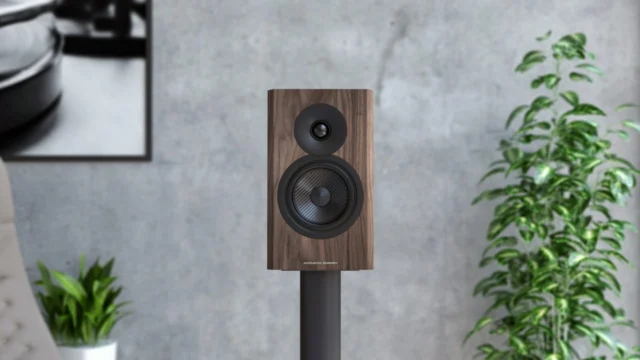
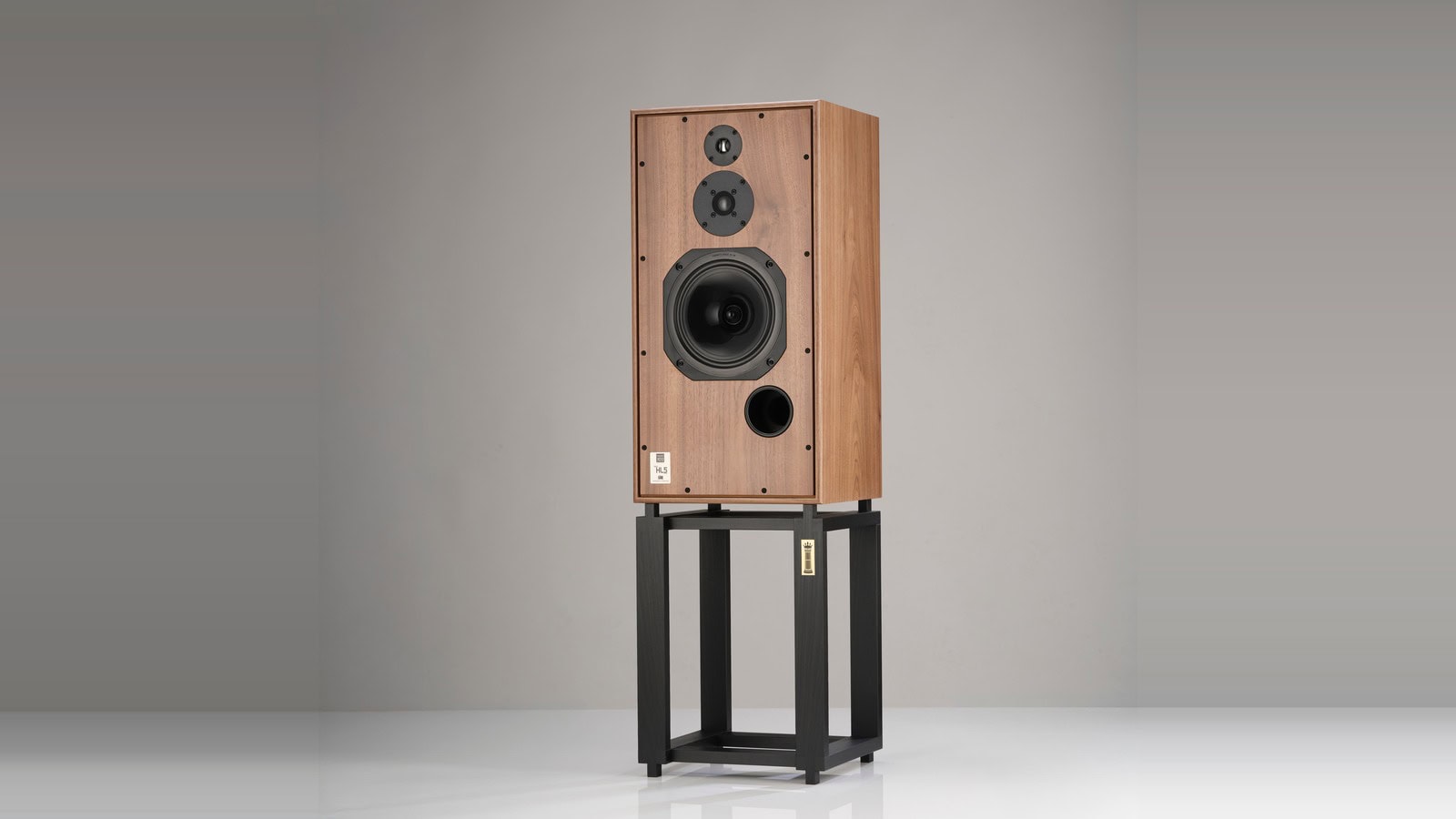
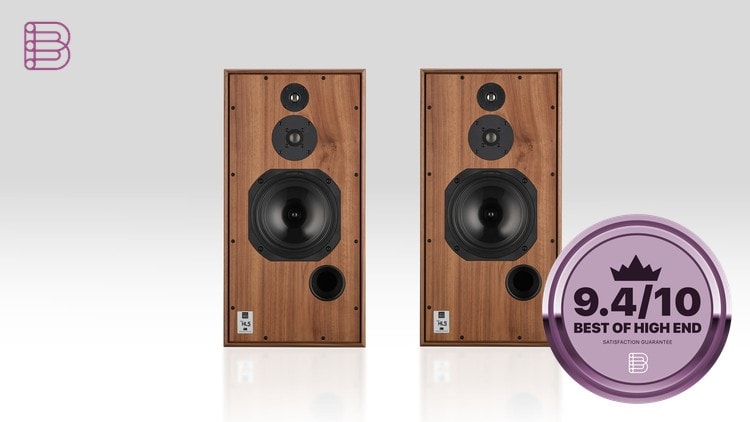
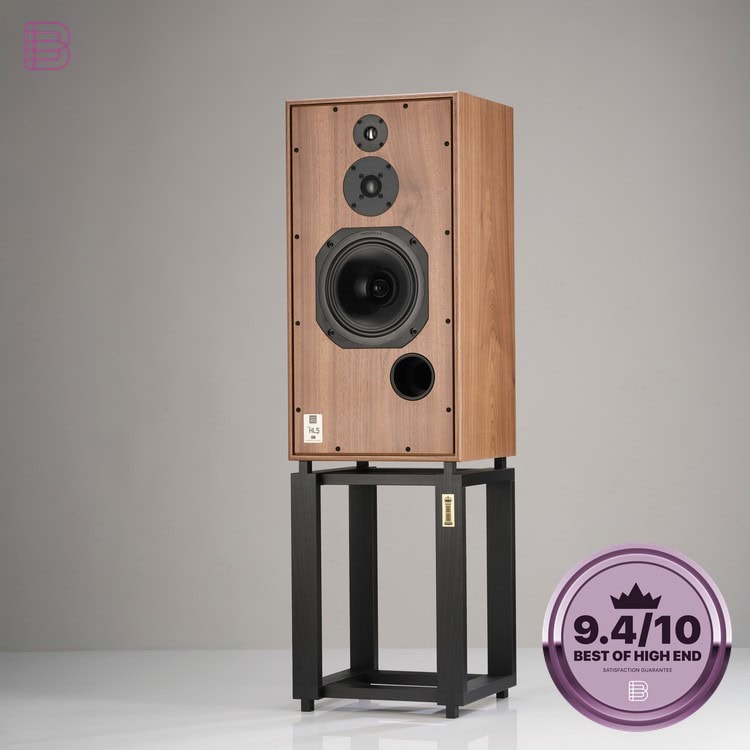
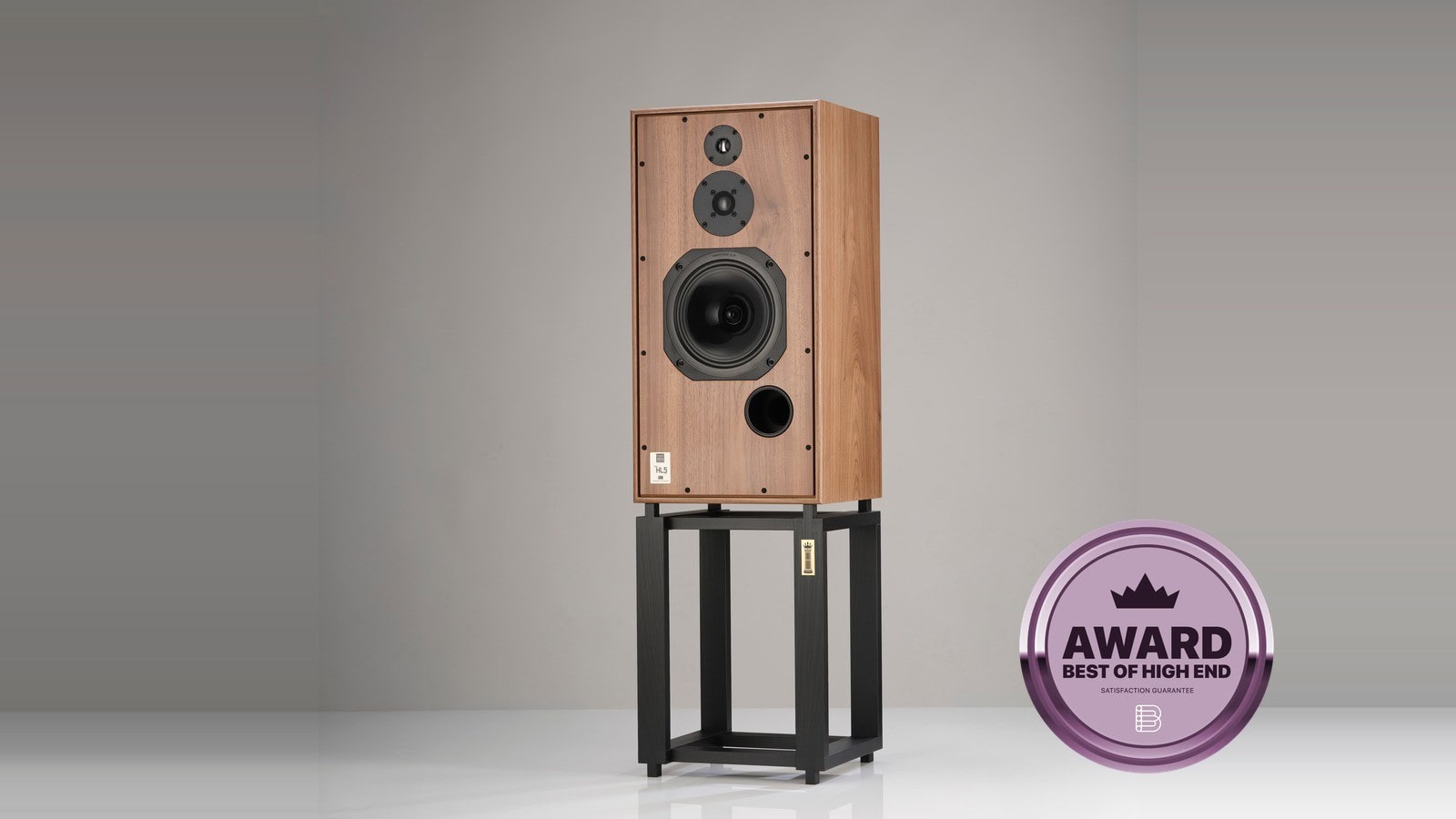
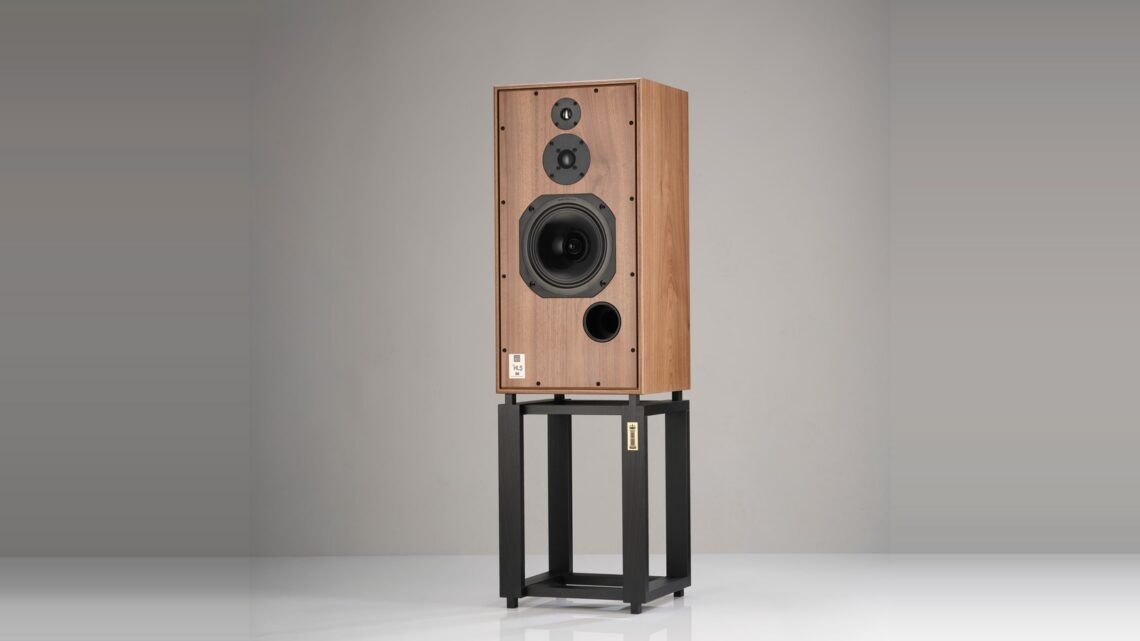
At first glance, the SHL5plus XD2 is unmistakably Harbeth. Its rectangular cabinet, traditional proportions, and handsome wood veneers may not appeal to those who favour more contemporary industrial design, but I find the understated aesthetic increasingly appealing. There is a purposeful simplicity to the proportions, while the choice of finishes gives the speakers a furniture-like quality. They have a distinct visual presence that draws the eye without relying on the kind of sculpted cabinets or dramatic styling favoured by some contemporary designs.
These are, however, very large standmount speakers. At approximately 635mm tall, 322mm wide, and 300mm deep, they occupy considerable space. Add suitable stands and allow some breathing room around the cabinets, and the SHL5plus XD2 makes its presence felt, both visually and physically. Anyone expecting a conventional bookshelf speaker should look elsewhere.
The cabinet is central to Harbeth’s design philosophy. Rather than pursuing the heaviest, most rigid enclosure possible, the company uses thin-walled construction intended to manage cabinet resonance in a controlled, musically sympathetic manner. The analogy often made is to a musical instrument: a violin or piano does not simply eliminate vibration, but uses carefully controlled resonance as part of its acoustic behaviour.
That philosophy also has implications for stand selection, which I will discuss shortly. For now, it is worth noting that the SHL5plus XD2 does not necessarily benefit from the most massive or rigid support available. As with many aspects of the Harbeth’s design, the key is finding the right balance rather than assuming that more is always better.
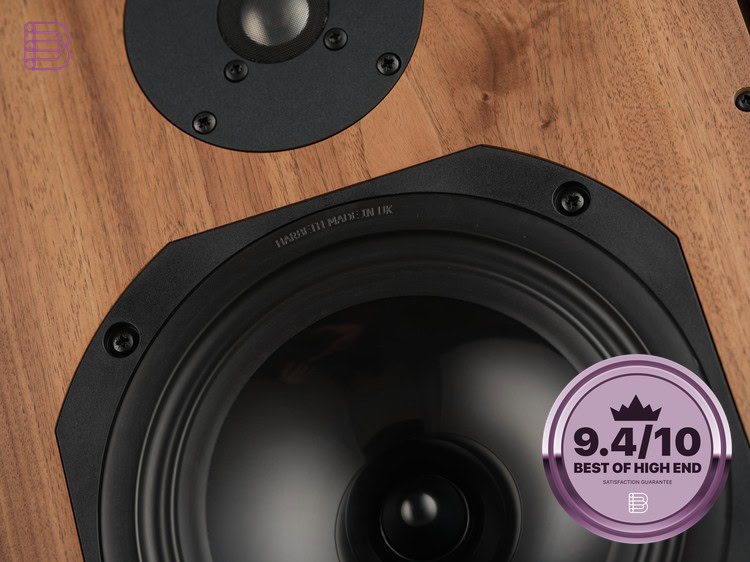
The most significant engineering changes are found in the drivers and crossover. Harbeth’s 200mm RADIAL4 mid/bass driver is joined by a 25mm ferrofluid-cooled tweeter and a 20mm dome supertweeter. The arrangement allows the dedicated high-frequency drivers to contribute to the speaker’s openness and extension while the large RADIAL4 unit handles the demanding transition between bass and midrange.
Harbeth’s development of RADIAL began with a UK government grant in 1995 to investigate better materials for loudspeaker cones. Unlike the vacuum-forming process common throughout the industry, Harbeth injection-moulds its cones from polymer granules. This approach offers greater freedom in material selection and makes it possible to optimize both the physical properties of the cone and its acoustic behaviour.
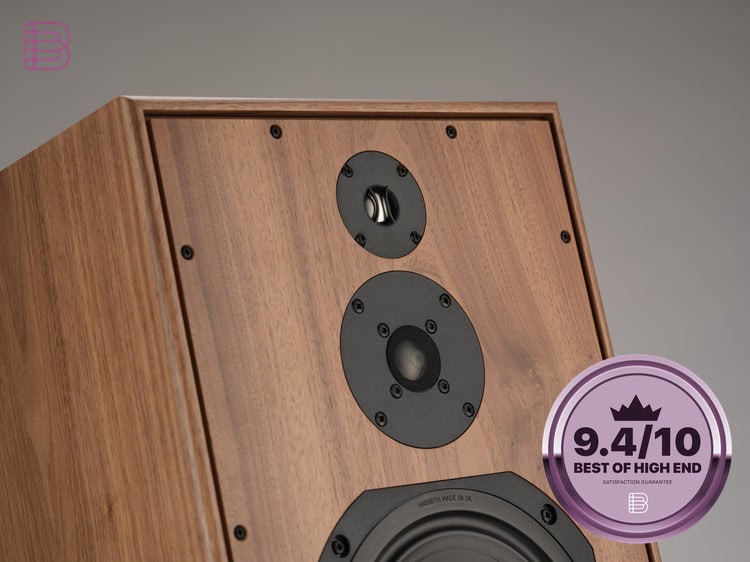
According to Alan Shaw, Head of Design, the company undertook a new global search for materials around the 30th anniversary of RADIAL. The resulting formulation is a completely new version of the material, accompanied by a new eight-inch injection-moulding tool costing approximately €35,000. The tooling also produces a slightly revised cone profile and mass distribution, particularly around the neck and voice-coil area.
These changes altered the acoustic behaviour of the driver sufficiently to justify redesigning the entire crossover. Shaw also emphasized that crossover performance cannot be understood simply by quoting electrical filter slopes: the final acoustic response depends on the natural behaviour of the drivers combined with the electrical network.
Harbeth has also upgraded its measurement facilities, including the use of Brüel & Kjær 4191 Grade 1 microphone capsules and a new quasi-anechoic room. Shaw says the microphones allowed Harbeth to distinguish more reliably between genuine loudspeaker behaviour and irregularities introduced by the measurement environment.
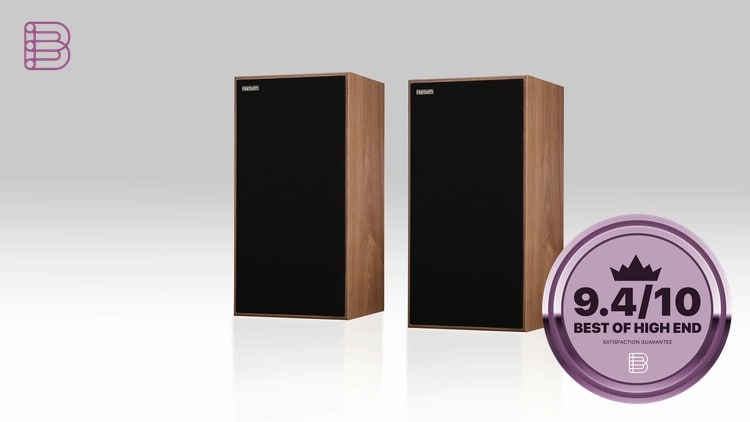
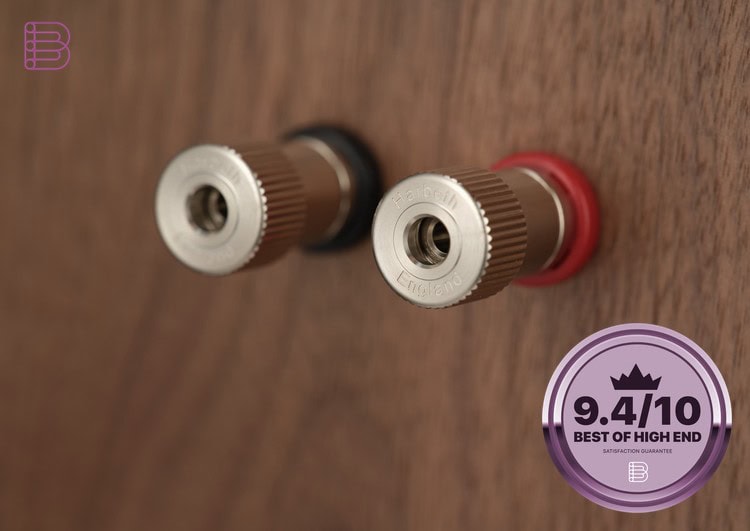
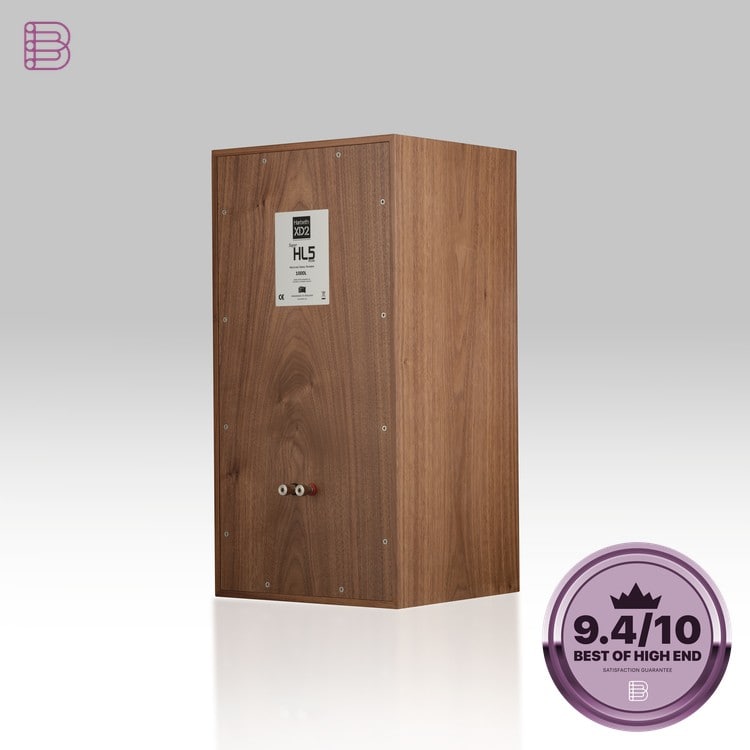
The cabinets remain essentially unchanged, while the XD2 receives new binding posts, revised grille cloth, and an updated badge. Importantly, the grille is part of the intended acoustic configuration, not merely a decorative accessory.
On paper, the specifications are straightforward rather than spectacular: a published frequency response of 40Hz–20kHz, ±3dB, with the grille fitted; nominal impedance of six ohms; and sensitivity of 86dB. Harbeth recommends amplification from 25 watts per channel, with power handling rated at 150 watts.
The figures tell only part of the story. The more interesting development is how the new driver material and crossover have helped Harbeth retain its celebrated midrange while giving the upper frequencies greater presence and definition.
Setup & system matching
The Harbeth SHL5plus XD2 rewards careful setup. Harbeth specifies that its overall response is optimized for use away from walls, so I would not automatically push these speakers into corners or tight against the rear wall. Experimentation with distance, toe-in, and listening position is essential, particularly because the XD2’s more open treble can change the perceived tonal balance substantially with placement.
The most important setup decision, however, concerns the stands.
Harbeth does not manufacture matching stands for the SHL5plus XD2, which is a notable omission given how much the support can influence their sound signature. The speaker’s thin-walled cabinet philosophy calls for an appropriately open-frame support rather than an excessively heavy, heavily damped platform. The aim is not to make the cabinet vibrate indiscriminately, but to avoid constraining its intended resonance behaviour.
For this review, I used the TonTräger Reference HL5 stands. Handmade in Germany from locally sourced hardwoods, these stands use traditional mortise-and-tenon joints and a lightweight frame developed specifically for Harbeth’s larger monitor. Their construction is elegant, and the speakers look entirely at home on them.
More importantly, I found the TonTrägers an excellent match. Bass became better defined, dynamics more convincing, and the overall presentation gained a greater sense of ease and coherence. The speakers sounded more alive, with improved separation between individual instruments and a stronger sense of musical flow.
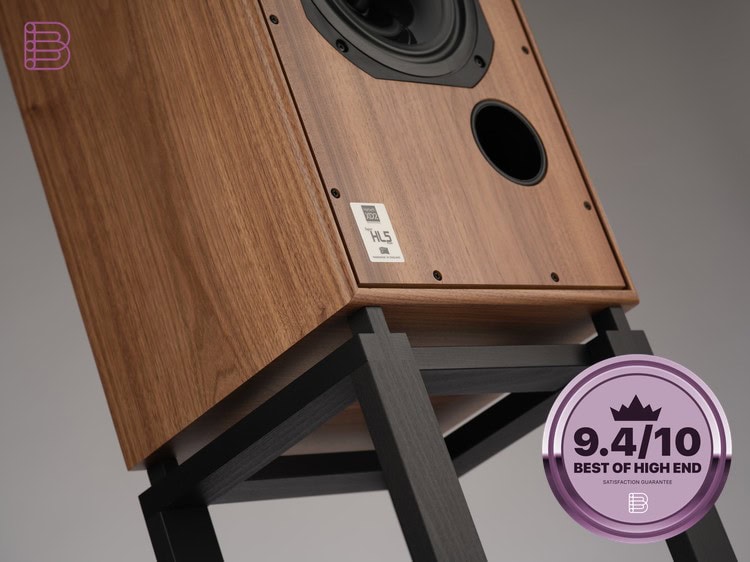
The drawback, however, is the price. The TonTräger Reference Stands retail for approximately $2,200 Canadian (€1,200) per pair, a considerable outlay for speaker stands, even when their craftsmanship and specialized design are taken into account.
A more affordable alternative is the Canadian-made Skylan SKY-4P18. Skylan has a strong following among Harbeth owners, and its stands offer a rigid yet relatively lightweight support for roughly half the price of the TonTräger Reference Stands. They are a great option for those who want to allocate more of their budget to their speakers and electronics.
Amplification also deserves attention. At 86dB sensitivity, the Harbeth is not exceptionally efficient, although its six-ohm impedance is described by the manufacturer as easy to drive. A quality amplifier with healthy current delivery and good dynamic headroom is highly recommended.
The XD2’s treble is more forward and revealing than some longtime Harbeth owners may expect. By no means did I find it bright, but pairing it with an already aggressive amplifier, a lively room, or strongly emphasized treble in recordings can push the balance in that direction. I would prioritize tonal compatibility and control over the assumption that a particular amplifier technology is mandatory. A good tube amplifier may provide a welcome sense of richness, but a capable solid-state design can work beautifully too, as was the case with my reference Atoll IN400 EVO integrated amplifier. It sits in the same family as the Atoll IN800 EVO.
For this review I listened with the grilles fitted, as Harbeth intends. Removing them or aiming the tweeters directly at the listening position can increase the perceived high-frequency energy.
Sound performance of the Harbeth SHL5plus XD2
The defining achievement of the Harbeth SHL5plus XD2 is its ability to combine an exceptionally natural midrange with a treble that is more open and engaging than the traditional Harbeth house sound would suggest.
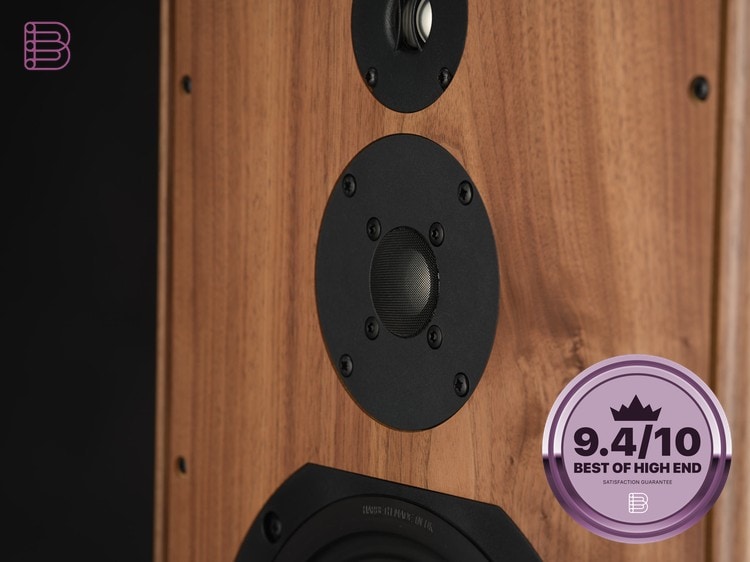
Voices have body, texture, and convincing physical presence. Instruments possess believable tonal colour rather than an artificially sharpened outline. At the same time, the XD2 does not hide detail behind a blanket of warmth. The leading edge of a piano note, the breath around a vocal, and the shimmer of percussion are presented with impressive clarity.
Compared with the Buchardt E50, the Harbeth consistently presented voices with greater immediacy and a more tangible presence. There was more air around singers, greater weight through the midrange, and a stronger impression that the performers occupied a physical acoustic space. The E50 could sound energetic and articulate, but the Harbeth consistently made me forget that I was listening to a pair of loudspeakers.
The revised crossover and its improved integration with the tweeter and supertweeter contribute to this greater sense of openness. Treble has sparkle and definition without ever becoming hard or aggressive. There is a more forward quality than some listeners may expect from a Harbeth speaker, and for me it is a definite advantage, as recordings had notable presence and immediacy rather than being softened into a uniformly comfortable presentation.
Bass performance has also improved significantly. The RADIAL4 driver provides convincing weight and articulation, and the speaker can communicate the shape of a bass line rather than simply adding warmth beneath the music. Nevertheless, the Harbeth cannot quite match the Buchardt E50’s low-frequency extension on recordings with deep, sustained electronic bass. The E50’s driver and passive-radiator arrangement give it a slight advantage when the music demands substantial output in the lowest octaves.
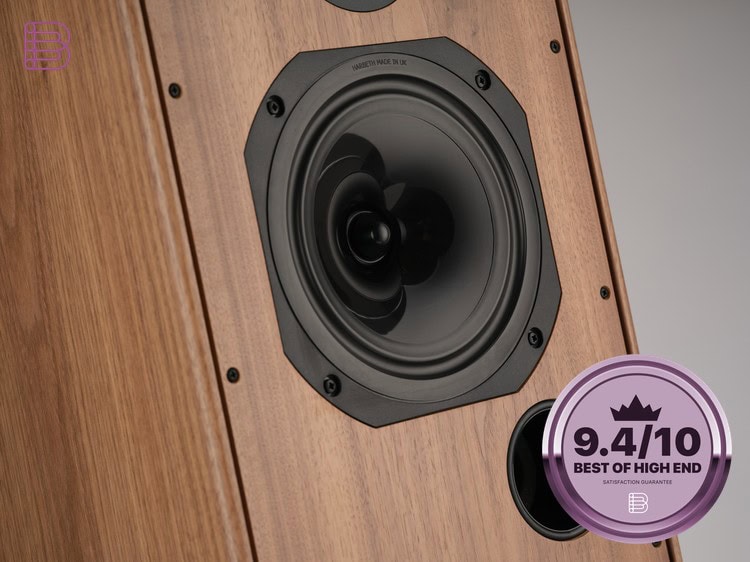
The SHL5plus XD2’s bass integrates naturally with the midrange, and its presentation of piano, double bass, and the lower-register harmonics of acoustic instruments is particularly convincing. There is ample weight and authority for most music, but listeners who want to explore the deepest bass, extending into the 30Hz region, would benefit from adding a quality subwoofer. Properly integrated, it would extend the Harbeth’s low-frequency reach without compromising the natural balance that makes it so appealing.
What was particularly impressive was the SHL5plus XD2’s dynamic performance. The new drivers can deliver lively attacks, credible changes in musical intensity, and a satisfying sense of scale. Its strongest quality is not the blunt physical impact of bass-heavy speakers, but the way it preserves instrumental character and musical continuity as a performance grows more complex.
Track-by-track listening
“Spanish Harlem” – Rebecca Pidgeon (On Qobuz)
Album: The Raven
I began with “Spanish Harlem” because few recordings expose a loudspeaker’s midrange performance as effectively. Rebecca Pidgeon’s voice is captured with exceptional intimacy, and the recording provides an excellent opportunity to assess vocal texture, sibilance, breath, and the acoustic space surrounding the performer.
The Harbeth immediately distinguished itself. Pidgeon’s voice sounded more open than it did through the Buchardt E50, with an additional layer of air around the vocal that made her presence feel remarkably tangible. I had the impression that she was standing in the room, rather than being reproduced by two loudspeakers. Both speakers handled the recording’s potentially troublesome sibilance well, but the Harbeth preserved the essence of the performance while adding a liveliness that made the recording feel more immediate.
There was greater weight to the instruments, and the piano possessed more convincing timbre. I could also locate the bass, piano, and violin more precisely within the acoustic. The Harbeth’s soundstage was both wider and noticeably deeper, with an almost holographic quality to the imaging.
The E50 remained enjoyable, but its presentation was comparatively less dimensional. The Harbeth’s more forward treble helped expose the recording’s fine detail without sacrificing its musicality. This is the kind of performance that explains why Harbeth has long been celebrated for vocal reproduction, and why the XD2’s additional openness is so significant.
“Company” – Patricia Barber (On Tidal)
Album: Modern Cool
“Company” shifts the emphasis toward integration between midrange, treble, and bass. Barber’s voice, the piano’s harmonic complexity, the double bass, and the percussion all demand attention, making this an excellent test of tonal balance and dynamic separation.
Here, the Harbeth again impressed with its vocal presentation. Barber’s voice emerged clearly from the mix, with greater prominence and naturalness than through the E50. On the Buchardt, I found her voice comparatively veiled, whereas the Harbeth allowed me to appreciate the texture and phrasing without having to concentrate so hard.
The E50 had two advantages: its bass extended lower, and the separation of instruments could be more striking during the track’s busier passages. When the saxophone solo arrived, the Buchardt delivered an infectious energy that made me want to get up and dance. It was a reminder that the E50 is a formidable competitor, particularly for listeners who value rhythmic excitement and low-frequency reach.
Yet the Harbeth maintained a more convincing balance between the voice and accompanying instruments. Piano notes had a more realistic tonal character, and the overall presentation felt more coherent. The E50 sometimes drew my attention toward the instrumental activity, while the Harbeth made Barber herself the centre of the performance.
This track also demonstrated why it is important to distinguish genuine resolution from treble emphasis. The Harbeth’s presentation is forward enough to bring vocal details into focus, but its greatest strength is the naturalness with which those details fit into the music.
“Bubbles” – Yosi Horikawa (On Qobuz)
Album: Vapor
If “Spanish Harlem” reveals the Harbeth’s greatest strength, “Bubbles” exposes one of its limitations. Horikawa’s extraordinary production places small percussive sounds around the stereo field, demanding precise imaging, excellent transient response, and convincing low-frequency reproduction.
This was the track on which I preferred the Buchardt E50. Its deeper bass extension gave the bubbles a more convincing physical presence, while the presentation was particularly effective at conveying their movement and individual character. The E50’s low-frequency capability was unmistakable, and I could hear why Buchardt’s driver and passive-radiator arrangement is so appealing for electronic and spatially complex recordings.
The Harbeth still delivered impressive imaging, and its presentation had considerable depth. However, the lowest-frequency information lacked the weight and physical realism the E50 could produce. For the first time during the comparison, I found myself wishing the Harbeth had a little more help from a dedicated subwoofer.
This is not a criticism of its midrange or treble, which remained highly accomplished. Rather, it illustrates the compromises inherent in a large standmount that prioritizes tonal refinement and natural integration over maximum bass extension.
For listeners who spend much of their time with electronic music, cinematic effects, or recordings built around deep synthesizer notes, the E50 has a clear advantage here. The Harbeth counters this with exceptional tonal realism.
“Why So Serious?” – Hans Zimmer (On Tidal)
Album: The Dark Knight soundtrack
Hans Zimmer’s “Why So Serious?” provides a more demanding examination of bass control and dynamic scale. The track’s slowly developing low-frequency sweep can reveal whether a loudspeaker maintains composure as the energy builds, or whether the bass becomes indistinct and overwhelms the rest of the recording.
The Buchardt again delivered more prominent bass, with greater extension into the lowest register. Its presentation conveyed the physical impact of the track more convincingly, and listeners who want to feel the full force of cinematic sound design will appreciate that ability.
The Harbeth, however, continued to excel through the midrange and upper frequencies. Textures were more convincing, and the tonal character of the higher-register material felt more natural. Rather than simply reproducing the scale of the effect, the SHL5plus XD2 revealed the changing character of the sound as it developed.
The distinction is important. The Buchardt creates a more forceful impression of the low-frequency event, while the Harbeth provides a more refined account of the information above it. Neither approach is inherently better, but they reveal different priorities.
I would not describe the Harbeth as dynamically timid. It can play with considerable authority, provided the amplifier has sufficient headroom. Its limitation is that it cannot reproduce the deepest bass notes with the same prominence as the E50.
“Private Investigations” – Dire Straits (On Tidal)
Album: Love Over Gold
I finished with “Private Investigations” because its changing dynamics, acoustic guitar, percussion, strings, and electric guitar offer a useful synthesis of everything the previous tracks revealed.
The Harbeth was the more convincing performer overall. Its piano reproduction was especially impressive, with more realistic timbre and tonal weight than the Buchardt. Knopfler’s voice also benefited from the Harbeth’s forward midrange. Through the E50, his vocal seemed set back in the mix, and I occasionally found myself leaning forward to hear it more clearly. With the SHL5plus XD2, that was unnecessary.
The Harbeth’s presentation allowed the quieter passages to retain their intimacy while the larger musical events opened up naturally. Instruments maintained their individual identities, and the soundstage expanded without losing coherence. The E50 remained capable of impressive dynamics and separation, but the Harbeth’s tonal realism made the performance more convincing as a whole.
This is where the SHL5plus XD2’s strengths become difficult to quantify through individual specifications. It is not simply a matter of more treble detail or a wider soundstage. Rather, voices and instruments have a sense of physical substance that makes the music easier to follow emotionally as well as analytically.
After five very different recordings, the pattern was clear. The E50 was slightly stronger on recordings featuring deep bass and particularly effective with electronic material, while the Harbeth was consistently more convincing with voices, piano, and the tonal character of acoustic instruments. For my listening preferences, those qualities clearly made the Harbeth SHL5plus XD2 the more satisfying all-rounder.
Soundstage and balance
The SHL5plus XD2 produces a soundstage that extends well beyond the physical boundaries of its cabinets. Width is impressive, but depth and the stability of instrumental placement are equally important. On well-recorded material, performers occupy distinct positions within a coherent acoustic space rather than appearing as isolated images between the speakers.
The TonTräger stands helped the system sound more composed, with improvements in bass definition, dynamics, and overall presentation. That experience reinforced the importance of treating the stand as part of the loudspeaker system rather than an afterthought.
Tonal balance is more open than Harbeth’s traditional reputation might suggest. The midrange remains the star, but the tweeter and supertweeter provide a sense of air and presence that gives recordings a more immediate character. Listeners accustomed to older, warmer Harbeth models should audition the XD2 before assuming it will deliver exactly the same presentation.
I would also resist judging the speaker solely on a short demonstration. The more revealing question is whether its balance remains believable across different recordings and whether the sound invites you to continue listening. For me, the answer was emphatically yes.
Like all speakers, the SHL5plus XD2 is not perfect. Bass-heavy music exposes its limitations against competitors with greater low-frequency extension, its size demands room to breathe, and its treble rewards careful system matching. But its ability to make instruments and vocals sound lifelike is exceptional.
Conclusion
The Harbeth SHL5plus XD2 is a compelling evolution of one of Britain’s most recognizable loudspeaker designs. It retains the midrange naturalness that made the brand famous, while its revised RADIAL4 driver and crossover bring greater openness, definition, and engagement to the presentation.
The old “pipe and slippers” stereotype no longer does this speaker justice. The SHL5plus XD2 is refined without being dull, detailed without being relentlessly analytical, and musical without sacrificing the ability to reveal what is happening in a recording.
For listeners who value natural voices, convincing timbre, holographic imaging, and a sound that can hold their attention for hours, the SHL5plus XD2 is an outstanding loudspeaker and one that demonstrates how a classic design can evolve without losing its soul.
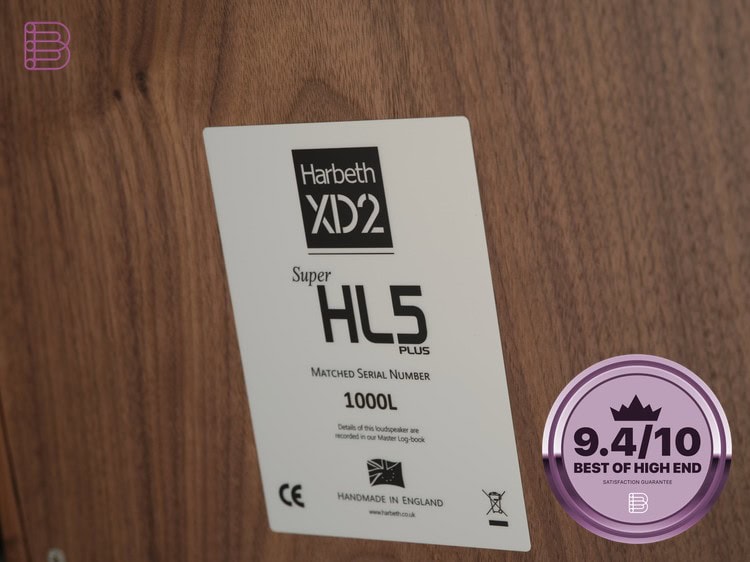
More information about the SHL5plus XD2 is available on the Harbeth website.
Tracklist
- Rebecca Pidgeon – “Spanish Harlem” – The Raven – Qobuz
- Patricia Barber – “Company” – Modern Cool – Tidal
- Yosi Horikawa – “Bubbles” – Vapor – Qobuz
- Hans Zimmer – “Why So Serious?” – The Dark Knight soundtrack – Tidal
- Dire Straits – “Private Investigations” – Love Over Gold – Tidal
Hardware checklist
- Harbeth SHL5plus XD2 loudspeakers
- Buchardt Audio E50 loudspeakers
- TonTräger Super HL5plus Reference stands
- Skylan SKY-4P18 stands
- Atoll IN400 EVO integrated amplifier
- PS Audio AirLens streamer
- PS Audio StellarGold DAC
- Torus Power RM 20 power isolation transformer
- Supra Sword Excalibur speaker cables
- Supra Lorad 2.5 Excalibur power cables
- Supra Sword-IXLR Rhodium Audio interconnects
- Prophecy CryoSilver Reference i2s cable
- Madera Works Stack Rack
- IsoAcoustics Gaia II Neo isolation feet
Harbeth SHL5plus XD2 technical specifications
- Type: three-way, reflex-loaded standmount loudspeaker
- Bass/midrange driver: 200mm Harbeth RADIAL4
- Tweeter: 25mm ferrofluid-cooled dome
- Super tweeter: 20mm dome
- Frequency response: 40Hz–20kHz, ±3dB, grille fitted
- Nominal impedance: 6 ohms
- Sensitivity: 86dB/2.83V/1m
- Recommended amplifier power: from 25W per channel
- Power handling: 150W
- Connectors: 4mm binding posts
- Dimensions (H × W × D): 635 × 322 × 300 mm
- Weight: 15.8 kg each, without packing
- Finishes: Black Ash, Cherry, Oak, Walnut and Rosewood, subject to availability
- Price: $7,400 Canadian per pair; in Europe €6,499 (black), €6,629 (walnut, cherry, oak) or €6,819 (rosewood) per pair
Frequently asked questions
What does the Harbeth SHL5plus XD2 cost?
The Harbeth SHL5plus XD2 costs from €6,499 per pair in Europe, depending on the finish: €6,499 in black, €6,629 in walnut, cherry or oak, and €6,819 in rosewood. In Canada it sells for $7,400 Canadian per pair. Suitable stands are not included: the TonTräger Reference stands used in this review add around €1,200 per pair, while the Skylan SKY-4P18 costs roughly half that.
How does the Harbeth SHL5plus XD2 compare to the Buchardt Audio E50?
The Buchardt E50 goes deeper in the bass and delivers more low-frequency impact, which suits electronic music and cinematic soundtracks. The Harbeth SHL5plus XD2 is more convincing with voices, piano and acoustic instruments, with a deeper, more holographic soundstage. For a broad musical diet, our reviewer found the Harbeth the more satisfying all-rounder.
Which amplifier suits the Harbeth SHL5plus XD2?
With 86dB sensitivity and a six-ohm impedance, the speaker needs an amplifier with healthy current delivery and good dynamic headroom; Harbeth recommends from 25 watts per channel. Tonal compatibility matters more than amplifier technology: avoid an already aggressive-sounding amplifier. A good tube amplifier can add richness, and a capable solid-state design such as the Atoll IN400 EVO works beautifully too.
What room and placement does the Harbeth SHL5plus XD2 need?
It is a large standmount of 635 mm tall, voiced for use away from walls. Avoid corners and positions tight against the rear wall, and experiment with distance, toe-in and listening position. Use an open-frame, relatively lightweight stand that does not constrain the thin-walled cabinet, and listen with the grilles fitted.
What is new in the Harbeth SHL5plus XD2?
The XD2 introduces the new RADIAL4 cone material for the 200mm bass/midrange driver, made with a new injection-moulding tool, together with a completely redesigned crossover. It also gets new binding posts, revised grille cloth and an updated badge, while the thin-walled cabinet remains essentially unchanged.
Harbeth SHL5plus XD2 loudspeakers
From 6.499 EUR per pairThe Harbeth SHL5plus XD2 is a three-way standmount loudspeaker that scores 9.4/10 in our testing, with an exceptionally natural midrange and a more open, engaging treble than the traditional Harbeth house sound. Best for listeners who value lifelike voices, convincing timbre and holographic imaging, provided they have the room, the right stands and, for the deepest bass, a subwoofer. The SHL5plus XD2 is a compelling evolution of one of Britain's most recognizable loudspeaker designs. It retains the midrange naturalness that made the brand famous, while the new RADIAL4 driver and a completely redesigned crossover bring greater openness, definition and engagement. The old "pipe and slippers" stereotype no longer does this speaker justice: it is refined without being dull, detailed without being relentlessly analytical, and musical without hiding what happens in a recording. In a direct comparison with the Buchardt Audio E50, the Harbeth was consistently more convincing with voices, piano and acoustic instruments, with a wider and deeper soundstage and a stronger sense that performers occupy a real acoustic space. The E50 goes deeper in the bass and suits electronic music and cinematic soundtracks better, and that is where the Harbeth shows its limits. The XD2 also asks for care: Harbeth offers no matching stands, an open-frame support such as the TonTräger Reference stands lifts its performance clearly, and the more forward treble rewards careful amplifier and room matching. Get those elements right, and the SHL5plus XD2 is an outstanding loudspeaker that can hold your attention for hours, and proof that a classic design can evolve without losing its soul.
Pros
- Superb, lifelike midrange and vocals
- Convincing instrumental timbre
- Excellent imaging and soundstage depth
- Improved bass articulation from RADIAL4
- Lively dynamic expression
- More open, engaging treble
- Beautiful, understated wood finishes
- Satisfying across many music genres
Cons
- No matching stands from Harbeth
- Large for a standmount, needs room
- Deepest bass extension is limited
- Treble needs careful system matching
The Harbeth SHL5plus XD2 is a three-way standmount loudspeaker that scores 9.4/10 in our testing, pairing an exceptionally natural midrange with a more open, engaging treble and earning a Best of High End Award. It's built for listeners who value lifelike voices, convincing timbre and holographic imaging, not for those chasing the deepest bass without a subwoofer.
What we loved
- +Superb, lifelike midrange and vocals
- +Convincing instrumental timbre
- +Excellent imaging and soundstage depth
- +Improved bass articulation from RADIAL4
- +Lively dynamic expression
- +More open, engaging treble
- +Beautiful, understated wood finishes
- +Satisfying across many music genres
Worth considering
- –No matching stands from Harbeth
- –Large for a standmount, needs room
- –Deepest bass extension is limited
- –Treble needs careful system matching
Compare more
Other loudspeakers we've tested
 8.8/10LoudspeakersBowers & Wilkins 707 S3 Prestige Edition reviewPerformance85Features90Build95Value90Beautiful, richer rosewood finishSlightly lighter, more open sound than the standard 707 S3Bass depth is still limited by the compact dimensionsRead the review
 9.3/10LoudspeakersPMC Prophecy 7 reviewPerformance94Features94Build95Value85Exceptionally neutral and transparent; true reference-grade…Bass performance is superbPricing positions it against other highly competitive…Read the review
 8.5/10LoudspeakersBang & Olufsen Beosound Premiere reviewPerformance83Features90Build100Value70Iconic designFabulous build qualityPrice tagRead the review