

The family listening room
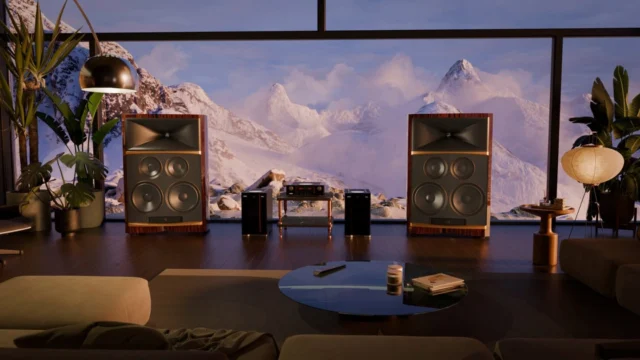
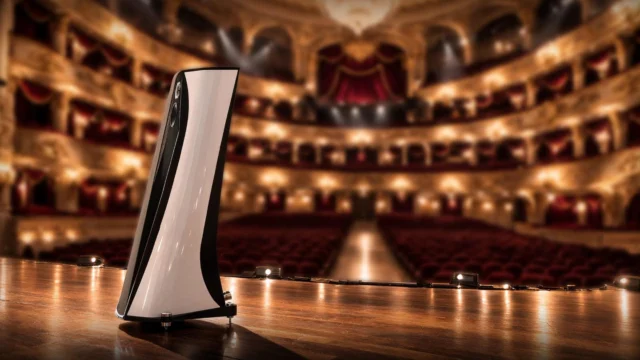
The room itself is a standard (maybe a little larger — about 50 m²) living room, where we spend time as a family — so it’s not a dedicated space. That might be better, but only a fraction of people really has this, and I like to experience things as they will most probably be used. On the other hand, it has really nice acoustic characteristics — partly just by chance, partly by using a good-looking and also nicely working wall behind the setup. The position of the speakers was tuned by ear and frequency measurements to work on the main listening spot.
Source & streaming


Amplification


Speakers

Analogue & disc


Cables
Mostly Nordost, mixed with boutique cabling from KrautWire and Voodoo Labs — everything placed on a DIY rack so I can easily switch cables and A/B components.


Accessories & isolation
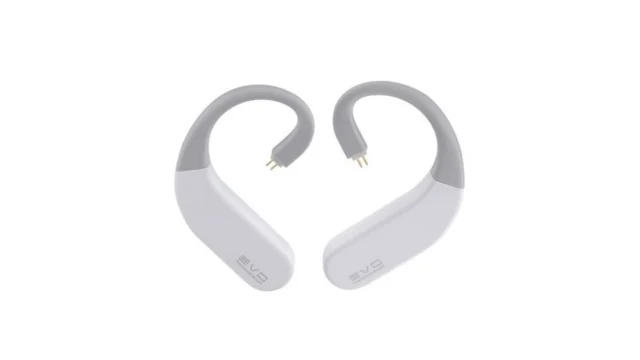
I live in a smaller city with not-so-great electricity and significant DC on my line, so I use filters wherever possible. All these small details — component feet and so on — were chosen by listening but also by measuring vibrations, so I only kept the ones that really do something.


Room treatment

What I’m chasing
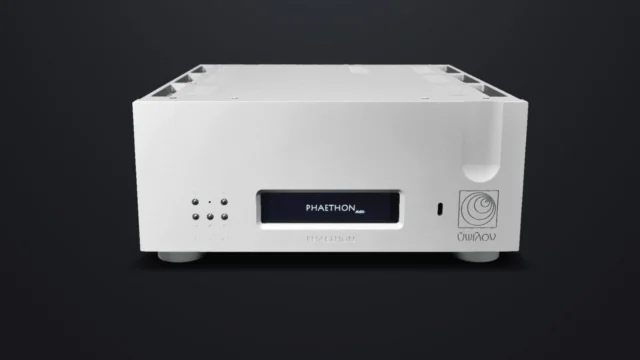
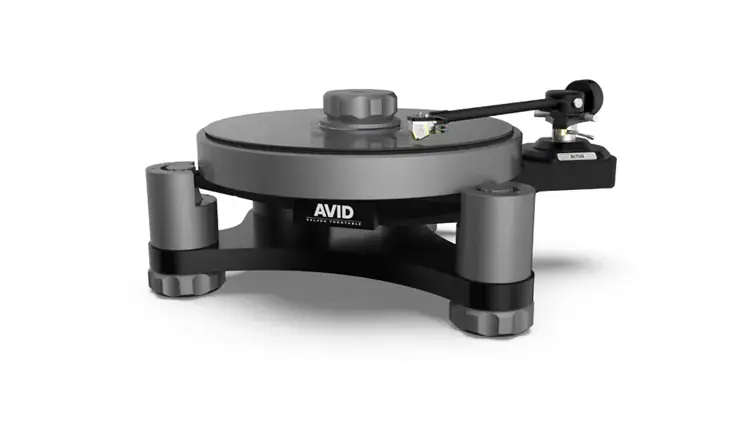
I chose Métronome for the rich, big and powerful sound with typical French love and warmth, the Norma amps as a totally neutral reference with almost no signature of its own, and the Blade One Meta simply because it’s a great combination of full-range output, lively dynamics, excellent imaging and “wife friendly” design. As I live in a smaller city with not-so-great electricity and significant DC on my line, I use filters wherever possible. All those small details — component feet and so on — were chosen by listening but also by measuring vibrations, so I only kept the ones that really do something. The analogue part of the chain was simply chosen by ear — I really like the Japanese way of dealing with analogue sound, that’s why I picked the Bordeaux. And AVID provides a compact form with great vibration attenuation, more than enough to let the warmth and fluidity shine. Part of the reasoning behind the system is also usability — I need to switch cables and components and be able to A/B a lot of things, so everything is placed on a DIY rack where I can easily reach it. I could live with a really top-end integrated amp, but for my job I simply find this configuration far more universal. Every few years I also change some equipment, so I don’t get stuck with one type of sound.

Room spider
0 = center (inner pole) · 5 = outer edge (outer pole) — applies to all four axes.
- Tonal character — 3.5. A combination of warmth from KEF and Métronome, and a very neutral Norma; not dry, but definitely on the neutral side.
- Dynamics — 4. Lively and robust sound.
- Imaging focus — 4. Could easily be 5 with digital room correction by Trinnov, but that overrides the system’s own character, which makes it unsuitable for reviewing.
- Attack — 3.5. More body, heartbeat and weight than tight speed.
Editor Daniel Březina

Daniel is an editor at Best of High End. His connection to high-end audio began almost as early as he can remember: his father has been a hi-fi reviewer since the early 1990s, so Daniel grew up surrounded by the hobby from around the age of five or six — and started reviewing professionally himself on 1 January 2008, at the age of 23.
He studied IT and mathematics at university, and worked in that field for about two years after graduating — a background that, among other things, led him to review printers early in his career. Alongside his work in audio, Daniel has a lifelong passion for photography; he still shoots with a vintage analogue Flexaret camera, though always purely as a hobby.
Over the years, Daniel has produced more than 7,200 articles, including 2,638 gear reviews to date — the majority covering loudspeakers and headphones, which together account for nearly 1,000 of his reviews and remain his primary area of expertise. He is also the founder of Hi-Fi Voice (hifi-voice.com), a Czech hi-fi website.