

The verdict
The IsoTek V5 Sigmas is a passive power conditioner that scores 9.2/10 in our testing, earning our Award for consistently cleaning up the noise floor and tightening bass without the dynamic compromises some active regenerators introduce. Best for buyers who want silent, cool-running conditioning for a reference system and can live without real-time power-quality monitoring.
- Completely silent, cool-running passive operation
- No display or real-time power-quality monitoring
The IsoTek V5 Sigmas power conditioner arrived in my system to test an idea I have grown increasingly convinced of over the years: that the performance of a high-end audio system is determined by far more than the individual components we choose. Speakers, amplifiers, DACs, and streamers understandably receive most of the attention, but every one of those components ultimately depends on something far less glamorous: the quality of the power feeding them.
This is also an area where audiophiles remain divided. Some believe that as long as a component receives stable AC power, additional conditioning provides little meaningful benefit. Others argue that modern homes have become increasingly hostile electrical environments, with computers, switching power supplies, LED lighting, refrigerators, HVAC systems, and countless other devices introducing noise and interference into the electrical network.
My own experience has shown me that power products can be among the most system-dependent upgrades available. In some systems the improvement can be subtle; in others, the difference can be immediately apparent. The quality of the incoming AC supply, the number of devices sharing the electrical network, and the amount of electrical noise generated elsewhere in the home can all influence the result.
One simple experiment I have performed over the years is listening at different times of the day. Late at night, when fewer appliances are operating and household electrical demand is generally lower, my system consistently sounds better. The background becomes quieter, low-level details are easier to hear, and music feels slightly more relaxed. This is not a scientific measurement, but it reinforces an important point: the electrical environment surrounding an audio system matters.
That made reviewing IsoTek’s V5 Sigmas Power Conditioner ($5,495 U.S., €4995) particularly interesting. Rather than comparing it with another passive conditioner, I evaluated it against my reference PS Audio PowerPlant 12 ($5,999 U.S), an active AC regenerator that takes a fundamentally different approach to improving power quality.
The question was straightforward: can a passive power conditioner compete with active AC regeneration while preserving the dynamics, transparency, and musicality required from a reference-level system? After extensive listening, the answer was more nuanced than simply choosing one product over the other.
Passive Conditioning vs. Active AC Regeneration
Both the IsoTek V5 Sigmas and PS Audio PowerPlant 12 improved the performance of my system compared with connecting directly to the wall. Both lowered the perceived noise floor and improved clarity, while providing the additional protection and distribution expected from a serious power product. But they achieve these results differently.
The PowerPlant 12 utilizes active AC regeneration. It analyzes incoming power and creates a new AC waveform designed to provide connected components with cleaner and more stable electricity. It also provides extensive real-time information through its display, including incoming and outgoing total harmonic distortion measurements.
The IsoTek V5 Sigmas takes a passive approach. Rather than rebuilding the AC waveform, it focuses on reducing common-mode and differential-mode mains noise while maintaining current delivery. In my system, the Sigmas had a slight advantage in one area that became increasingly apparent over longer listening sessions: it created a very quiet background while preserving the full dynamic energy of the music. Notably, it accomplished this while remaining completely silent and cool-running.
About IsoTek
IsoTek has established itself as one of the leading companies in high-performance power management. Unlike manufacturers that produce a broad range of audio products, IsoTek has focused specifically on improving the electrical foundation of audio and home cinema systems. The company’s philosophy is straightforward: high-resolution audio equipment requires high-quality power. IsoTek’s goal is not to impose a tonal character on a system.
IsoTek says its V5 Sigmas represents one of its most advanced passive power conditioning solutions and combines extensive filtering with a high-current architecture intended to reduce unwanted electrical contamination without compromising dynamics.

Design, Build & Technology
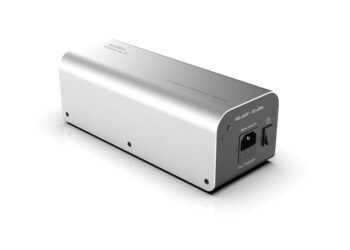
The IsoTek V5 Sigmas immediately conveys quality through its understated design. It does not rely on large displays, excessive controls, or unnecessary features to communicate its sophistication. Instead, it takes a minimalist approach.
The V5 Sigmas provides seven outlets divided into two categories: three high-current outlets designed for power amplifiers and other demanding components, and four medium-current outlets intended for source components such as DACs, streamers, and preamplifiers. This recognizes that different components place different demands on the electrical supply. Power amplifiers require the ability to access significant current instantly during demanding musical passages. Source components benefit greatly from minimizing electrical noise and maintaining a stable operating environment.
The challenge with any conditioner is finding the correct balance. Aggressive filtering can reduce noise, but if implemented poorly it can also restrict current delivery and make music sound compressed or restrained.
IsoTek incorporates technology intended to reduce both common-mode and differential-mode mains noise. Common-mode noise refers to interference appearing on both live and neutral conductors relative to ground, while differential-mode noise occurs between the live and neutral conductors themselves. Addressing both forms of contamination is important because electrical noise can enter a system through multiple pathways.
The Sigmas also includes IsoTek’s EVO3 Premier power cable, ensuring that the conditioner itself is fed by a cable designed to complement its performance. Build quality is excellent. The chassis feels substantial and appropriately engineered for a reference-level component, while its understated appearance allows it to integrate easily into a serious equipment rack.
One of the most impressive aspects of the V5 Sigmas, however, is something that cannot be seen. Silence. The Sigmas operates completely silently. There is no transformer hum, no fan noise, and no noticeable heat generation.
This is a significant difference from the PS Audio PowerPlant 12. The PowerPlant is an active device and consequently produces more heat. In my system, while the PowerPlant 12 operated quietly, it did produce a slight operational hum and ran warmer than the Sigmas. Its cooling fan rarely engaged, but when it did, it could be heard from several feet away. For most systems this will not be an issue. For a dedicated listening room where absolute silence is important, however, the Sigmas has the advantage.
Two Different Engineering Philosophies
The PowerPlant 12 takes incoming electricity and regenerates it. Rather than attempting to clean the existing AC waveform, it creates a new one. This provides a significant advantage in environments where incoming power is unstable or heavily contaminated. One of its strengths is its display and customization options. Audiophiles interested in understanding their electrical environment can see incoming power conditions and compare them with the regenerated output.
The IsoTek takes a simpler approach. Remove noise. Maintain current delivery. Stay out of the way. The Sigmas offers none of the monitoring capability of the PowerPlant 12. What it does provide is an entirely passive solution that remains silent and cool while allowing the connected components to perform without another active electronic device in the chain.
Neither approach is inherently superior. The better choice depends on the electrical environment, the system, and the listener’s priorities. In my system, I found I preferred the Sigmas’ slightly more natural and effortless presentation.
Setup and Initial Findings
For this review, the IsoTek V5 Sigmas was installed into my reference system and compared directly with the PS Audio PowerPlant 12.
I found the defining characteristic of the IsoTek V5 Sigmas is transparency. It does not make the system warmer, brighter, or more forward. Instead, it appears to remove a layer of electrical noise that can prevent the components already in place from reaching their full potential.
With the Sigmas installed, recordings appeared to have greater depth and dimensionality. Instruments occupied more clearly defined positions, and low-level information that was previously easier to overlook became more apparent. This is the type of improvement that can be difficult to appreciate during a brief demonstration but becomes obvious over extended listening. You do not necessarily hear a dramatically different system. Instead, you begin to notice that you are hearing deeper into familiar recordings.
I also found that bass performance also improved. The change was not an increase in bass quantity. Bass became more controlled, better textured, and more precise. Low frequencies started and stopped with greater accuracy, while complex bass passages became easier to follow.

Most importantly, the Sigmas maintained dynamics in all the tracks I played. A concern with passive power conditioners is that filtering can sometimes improve cleanliness at the expense of musical energy. If filtering is too aggressive, a system may sound cleaner but less alive.
Large-scale dynamic swings remained powerful. Percussion retained its impact. Crescendos maintained their sense of scale, while micro-dynamics became easier to appreciate. Compared directly with the PowerPlant 12, the differences were subtle but consistent. The PowerPlant 12 gave the impression of a highly controlled electrical foundation. The Sigmas felt more like it simply removed obstacles between the recording and the listener.
Track-by-Track Listening
Yosi Horikawa – “Bubbles” (Qobuz / TIDAL)
Yosi Horikawa’s “Bubbles” has become one of my preferred reference tracks for evaluating imaging, transient response, and system resolution. The recording consists of carefully positioned percussion elements moving throughout the soundstage. On a highly resolving system, these sounds should appear suspended in space rather than simply coming from the speakers.
With the IsoTek V5 Sigmas installed, the first thing I noticed was the increased sense of silence surrounding each individual sound. The track became more three-dimensional. Individual percussion elements were easier to locate, and their decay trails extended naturally into the room. The soundstage gained greater depth, with more clearly defined placement of individual elements. This is where the Sigmas’ reduction of electrical noise became most apparent. It was not creating new information. Instead, it was allowing existing information to become easier to hear.
Compared with the PS Audio PowerPlant 12, both products performed extremely well. The PowerPlant delivered excellent image stability and control, but the Sigmas created a slightly more relaxed and natural presentation.
Patricia Barber – “Company” (Qobuz / TIDAL)
Patricia Barber’s recordings are excellent references because they combine intimate performances with exceptional recording quality. “Company” is particularly revealing because it tests vocal realism, instrument texture, and the ability of a system to preserve low-level information.
The IsoTek V5 Sigmas immediately demonstrated its ability to improve refinement without making the presentation overly analytical. Barber’s voice gained additional texture and dimensionality. The subtle nuances in her phrasing became easier to appreciate, particularly the small changes in tone and breath that contribute to realism.
The piano benefited as well. Notes had a more convincing sense of decay, allowing the listener to hear not only the initial strike but also the resonance of the instrument as it interacted with the recording space. Bass performance was another highlight. I found it slightly tighter and more naturally textured. The double bass had greater articulation, allowing the listener to appreciate the instrument’s character rather than simply its weight.
Compared with the PowerPlant 12, the Sigmas produced a slightly more organic presentation. The PS Audio maintained superb control, but the IsoTek allowed the system to breathe.

Hans Zimmer – “Why So Serious?” (Qobuz / TIDAL)
A serious power conditioner (pun intended) must be able to handle demanding recordings, not just quiet acoustic performances. Hans Zimmer’s “Why So Serious?” is an excellent test because of its extreme low-frequency energy and gradual increase in intensity.
I found the opening low-frequency effects had greater definition and control. Bass was powerful but better organized, with less sense of excess energy. Instead of simply producing more impact, the system revealed more texture within the low frequencies.
As the track built in intensity, the system remained composed. This was perhaps the most impressive aspect of the Sigmas. It improved refinement while preserving power. There was no sense of compression. My Atoll IN400 EVO integrated amplifier remained free to respond naturally to the demands of the recording. The PowerPlant 12 provided the confidence of actively regenerated power, but the Sigmas offered an effortless quality that was especially noticeable during long listening sessions.
Rebecca Pidgeon – “Spanish Harlem” (The Raven, Qobuz / TIDAL)
Rebecca Pidgeon’s “Spanish Harlem” is one of the finest recordings for evaluating spatial realism and vocal reproduction. Unlike a demanding orchestral or electronic track, this recording reveals performance quality through subtle details: vocal texture, instrument placement, and the acoustic environment surrounding the musicians.
With the V5 Sigmas the recording space became easier to perceive. The room around Pidgeon’s voice expanded, and the boundaries between instruments became more clearly defined. Her vocal occupied a precise position in the centre of the soundstage, while the accompanying musicians remained naturally separated behind and around her. The guitar had greater body, subtle percussion details became easier to follow, and the decay of instruments extended more naturally into the room.
The PowerPlant offered superb stability and control. The Sigmas, however, provided a slightly more effortless and organic presentation.
Dire Straits – “Private Investigations” (Love Over Gold, Qobuz / TIDAL)
Dire Straits’ “Private Investigations” brings together many of the qualities that define a reference audio system: subtle acoustic passages, complex layering, dynamic contrasts, and carefully recorded instrumentation. The Sigmas handled every challenge exceptionally well.
The opening acoustic guitar passages benefited immediately from the quieter background. The space around each note was easier to appreciate, and the natural decay of the instrument created a stronger sense of realism. As additional instruments entered the mix, separation remained excellent. The piano occupied its own space. Percussion had greater definition. The electric guitar carried appropriate weight without overwhelming the rest of the arrangement. This track once again demonstrated the Sigmas’ ability to preserve dynamics.
Compared directly with the PS Audio PowerPlant 12, the difference again came down to presentation. The PowerPlant provided a highly controlled and polished foundation. The Sigmas provided a slightly more natural flow.
Tracklist
- Yosi Horikawa – “Bubbles” – Vapor – Qobuz / TIDAL
- Patricia Barber – “Company” – Modern Cool – Qobuz / TIDAL
- Hans Zimmer – “Why So Serious?” – The Dark Knight Soundtrack – Qobuz / TIDAL
- Rebecca Pidgeon – “Spanish Harlem” – The Raven – Qobuz / TIDAL
- Dire Straits – “Private Investigations” – Love Over Gold – Qobuz / TIDAL
The full system used to evaluate the IsoTek V5 Sigmas is listed below; readers can browse more accessory reviews on Best of High End for further reference points.
Hardware Checklist
- Atoll IN400 EVO integrated amplifier
- PS Audio AirLens streamer
- PS Audio StellarGold DAC
- Revival Audio Atalante 3 loudspeakers
- PS Audio PowerPlant 12
- IsoTek V5 Sigmas Power Conditioner
- IsoTek EVO3 Premier power cable
- Supra Sword Excalibur speaker cables
- Supra Lorad 2.5 Excalibur power cables
- Supra Sword-IXLR Rhodium Audio interconnects
- Prophecy CryoSilver Reference i2s cable
- Madera Works Stack Rack
- IsoAcoustics Gaia II Neo isolation feet

Technical Specifications
- Price: $5,495 U.S., €4995
- Number of Outlets: 7 (3 high-current + 4 medium-current)
- Outlet Types Available: UK, EU, US, AU & CH
- Mains Inlet: 16A IEC C20
- Mains Voltage: 100–240V / 50–60Hz
- Medium-Current Outlets (230V): 4 x 10A (2,300W total)
- Medium-Current Outlets (115V): 4 x 10A (1,150W total)
- High-Current Outlets (230V): 3 x 16A (3,680W total)
- High-Current Outlets (115V): 3 x 16A (1,840W total)
- System Link Outlets: 1
- RFI Reduction: 80dB
- Surge Protection: 121,500A instantaneous
- High-Current Circuit: Direct-Coupled (light version of V5 Titan)
- Source Circuit: Adaptive Gating
- Internal Wiring: Solid-core OCC copper, silver-plated, FEP/VDA dielectric
Check out the slightly different specifications for the US.
More information is available on the official IsoTek V5 Sigmas product page.
Frequently asked questions
How much does the IsoTek V5 Sigmas cost?
$5,495 U.S., €4,995.
Is the V5 Sigmas a passive or an active power conditioner?
Passive. Instead of regenerating the AC waveform like an active unit such as the PS Audio PowerPlant 12, it reduces common-mode and differential-mode mains noise while preserving current delivery.
How many outlets does it have?
Seven: three high-current outlets for power amplifiers and other demanding components, and four medium-current outlets for source components such as DACs and streamers.
Does the V5 Sigmas run silently?
Yes. Being fully passive, it operates with no transformer hum, no fan noise and virtually no heat generation.
Does it come with a power cable?
Yes, it ships with IsoTek’s EVO3 Premier power cable.
What noise reduction and surge protection does it offer?
It’s rated for 80dB of RFI reduction and 121,500A of instantaneous surge protection.
IsoTek V5 Sigmas Power Conditioner
$5,495 U.S., €4995The IsoTek V5 Sigmas reinforced something I have come to appreciate over the years: the quality of the power feeding a system can have a greater influence than we sometimes realize. The Sigmas does not impose a new character on the system or make an obvious change to its tonal balance. Instead, it seems to remove a layer of noise that can get in the way of what the components are already capable of delivering. The result is a system that sounds cleaner, more open, and ultimately more convincing. At $5,495 USD, the V5 Sigmas represents a significant investment, and I would strongly recommend auditioning it in your own system.

Pros
- Completely silent, cool-running passive operation
- Preserves dynamics while cleaning up the noise floor
- Tighter, better-textured bass and deeper imaging
- Sensible high-current/medium-current outlet split
- Bundled IsoTek EVO3 Premier power cable
- Substantial, well-engineered chassis
Cons
- No display or real-time power-quality monitoring
- No active AC regeneration for badly unstable mains
- Premium price for a passive conditioner


The IsoTek V5 Sigmas is a passive power conditioner that scores 9.2/10 in our testing, earning our Award for consistently cleaning up the noise floor and tightening bass without the dynamic compromises some active regenerators introduce. Best for buyers who want silent, cool-running conditioning for a reference system and can live without real-time power-quality monitoring.
What we loved
- +Completely silent, cool-running passive operation
- +Preserves dynamics while cleaning up the noise floor
- +Tighter, better-textured bass and deeper imaging
- +Sensible high-current/medium-current outlet split
- +Bundled IsoTek EVO3 Premier power cable
- +Substantial, well-engineered chassis
Worth considering
- –No display or real-time power-quality monitoring
- –No active AC regeneration for badly unstable mains
- –Premium price for a passive conditioner
Compare more
Other accessories we've tested
 8.8/10AccessoriesMadera Works Stack Rack reviewPerformance85Features90Build92Value95Handcrafted in Canada with excellent solid hardwood…Beautiful modular design allows shelves to be added…Currently ships only to customers in Canada and the United…Read the review
 9.0/10AccessoriesMiniTeddy SE Power Supply reviewPerformance92Features85Build90Value88Enhanced audio clarity and detailSuperior noise reductionOverall performance impact will vary depending on the…Read the review
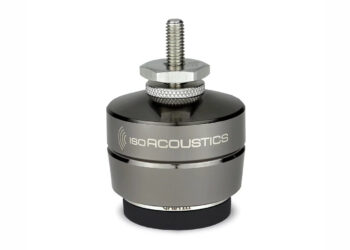 8.9/10AccessoriesIsoAcoustics GAIA III speaker isolators reviewPerformance90Features88Build90Value85Significantly reduces speaker vibrations and resonanceImproves sound clarity, better bass control, more focused…The overall impact on sound quality varies, depending on…Read the review