

The verdict
The PMC Prophecy 7 is a premium standmount loudspeaker that scores 9.3/10 in our testing — exceptionally neutral, transparent and reference-grade, with bass performance that outclasses most standmounts its size. Best for critical listeners who value accuracy over warmth and can live with a demanding, revealing character.
- Exceptionally neutral and transparent; true reference-grade presentation
- Pricing positions it against other highly competitive floorstanding and standmount speakers
This PMC Prophecy 7 review starts with a preference. Over the years, I’ve found myself increasingly drawn to standmount (bookshelf) speakers. Time and again, they’ve proven easier to position within a room and, more importantly, the best examples tend to “disappear” when the music starts in a way that that eludes many similarly priced floorstanding speakers.
There’s a fundamental reason for this. At any given price point, manufacturers face a trade-off: allocate resources toward a larger cabinet or toward higher-quality components. Floorstanding speakers also require more complex crossover designs to properly integrate multiple drivers, which further increases cost and engineering demands. Delivering on all fronts typically drives the price well beyond that of a comparable standmount design.
Standmount speakers, by virtue of their smaller size, allow brands to allocate more of the budget toward superior drivers, refined crossover components, and better cabinet bracing. The result is often greater midrange clarity, improved imaging, and a more cohesive presentation. Their smaller enclosures also minimize resonance and diffraction, contributing to that holographic soundstage many audiophiles crave. Floorstanders, meanwhile, typically win on scale, bass extension, and room-filling authority, but often at the expense of that last degree of finesse unless you spend significantly more.

Despite this, when I had the opportunity to review PMC’s newest Prophecy 7 three-way floorstanding speakers, I jumped at the chance. PMC has long been synonymous with precision, studio-grade sound, and their renowned Advanced Transmission Line technology. The question was simple: could an exceptionally slim floorstanding speaker like the Prophecy 7 truly deliver the imaging and coherence I’ve come to expect from the best standmount designs, while still offering the scale and authority of a full-range tower?
About PMC
PMC (Professional Monitor Company) was founded in the UK by engineers with deep roots in the BBC—an institution long revered for its pioneering contributions to loudspeaker design. From the beginning, PMC set out to create speakers defined by accuracy and transparency, tools professionals could trust for critical listening and mastering.

That commitment has made PMC a mainstay in many of the world’s most respected recording and mastering studios. Their monitors are relied upon by leading engineers and producers, and their reach extends into film, where PMC systems are trusted in the production and mastering of major Hollywood releases. This professional heritage is key to understanding the Prophecy 7: these are speakers designed not merely to impress, but to reveal the truth within a recording.
Design, Build & Technology
The new PMC Prophecy series comprises five models, each designed to address different requirements across stereo and home theatre applications. The lineup includes the compact Prophecy 1 standmount, the Prophecy 5 floorstander, the three-way Prophecy 7 reviewed here, the larger flagship Prophecy 9, and the matching Prophecy C centre channel for multichannel systems.
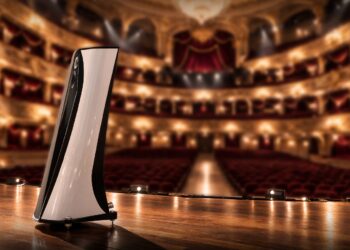
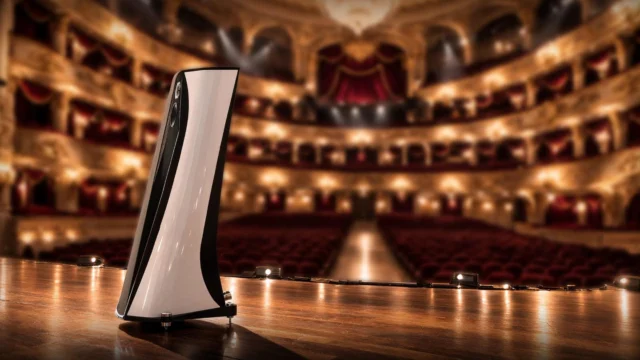
At first glance, the Prophecy 7 is striking in its restraint. Measuring just 165 mm wide, barely more than a CD case, along with a height of 965 mm, a depth of 310 mm, and a weight of 23.7 kg per speaker, it is an impressive engineering achievement that immediately sets it apart from the competition. For listeners unable to accommodate large, imposing floorstanders, the Prophecy 7 presents a compelling alternative: a speaker that occupies minimal visual and physical space while still promising full-range performance.

This is made possible in part by PMC’s Advanced Transmission Line (ATL) technology. Unlike traditional ported or sealed designs, ATL utilizes a long, carefully damped internal pathway that absorbs unwanted resonances while reinforcing low frequencies. The result is bass that extends deeper than expected from such a compact enclosure, with exceptional control and minimal distortion.
Another revamped piece of technology incorporated into the Prophecy series is the updated LaminarX, which plays a crucial role in extending the low frequencies further and cleaner into the listening area. By optimizing airflow, the LaminarX ensures that the bass remains tight, controlled, and undistorted.
The Prophecy 7 is a true three-way design, integrating dedicated drivers for bass, midrange, and treble. It utilizes advanced waveguide technology developed in-house by PMC Labs designed to complement their signature ATL bass-loading, providing a seamless transition between the midrange and tweeter drivers. The waveguide improves coherence, providing a more precise and accurate dispersion of high frequencies.

PMC has also refined the crossover and driver integration for this series, aiming to deliver seamless coherence across the frequency spectrum. Build quality as expected is exemplary, with a cabinet that feels inert and beautifully finished, yet understated enough to blend effortlessly into most living spaces.
Setup & System Matching
Despite being a floorstander, the Prophecy 7 proved refreshingly easy to position. Its slim profile and controlled bass output meant it integrated well into my listening room without the typical challenges associated with larger speakers. Unlike many floorstanders that can overwhelm my space, the Prophecy 7 remained remarkably composed and balanced across a wide range of music and at all listening levels.
For my review both the Prophecy 7 and my reference Revival Audio Atalante 3 standmount speakers were outfitted with IsoAcoustics Gaia II Neo isolation feet, which provided a clear sonic advantage over the stock feet, tightening bass response, improving focus, and enhancing overall clarity. The improvement was not subtle; low frequencies became more controlled and articulate, while imaging snapped into sharper focus, allowing instruments to occupy more clearly defined positions within the soundstage. The overall presentation gained a greater sense of precision and composure, particularly in more complex passages.

Beyond the sonic benefits, the IsoAcoustics feet also contributed to a more stable physical foundation, which is especially important for speakers with a narrow footprint. Slim floorstanders like the Prophecy 7 can be more susceptible to micro-movements or slight instability, particularly on certain flooring types. The Gaia II Neos not only improved isolation from room interactions but also adds a reassuring sense of solidity, helping the speaker remain firmly planted. For designs like the Prophecy 7, where the cabinet is exceptionally slender, this added stability is not just a convenience but directly enhances the speaker’s performance, making these isolation feet a highly recommended upgrade.
Amplification requirements are reasonable, but these speakers clearly benefit from high-quality upstream components. Feed them a clean signal, and they will reward you with remarkable transparency. I found Atoll’s exceptional IN400 EVO integrated amplifier an ideal match along with PS Audio’s AirLens streamer and StellarGold DAC.
Sound Performance
The defining characteristic of the Prophecy 7 is neutrality. These speakers aim to present music as it was recorded, no added warmth, no artificial emphasis, just pure, unvarnished sound.
What makes the Prophecy 7 particularly compelling is the balance it strikes. It delivers the detail and precision one expects from PMC and from their long history of producing world-class studio monitors, yet never sounds sterile or overly analytical. It pulls off an amazing balancing act: remaining highly resolving while still conveying the dynamics and emotional energy that, on the best recordings, can make you feel as though you’ve been transported into the recording studio itself.

Bass is one of the standout features. Thanks to the ATL design and LaminarX technology, it is both deep and incredibly controlled. Compared to my reference Revival Audio Atalante 3, the Prophecy 7 delivers bass that is more authoritative, faster, and more precise. While the Atalante 3 manages to reach nearly as deep, but it cannot match the PMC’s speed or articulation.
Midrange performance is clean and highly resolving, allowing vocals and instruments to emerge with lifelike clarity. Treble is smooth, refined, and notably well integrated. While the Atalante 3’s tweeter projects a more expansive sense of space, contributing to a larger perceived soundstage, it at times comes at the expense of overall tonal balance. The Prophecy 7 avoids this pitfall, maintaining a more cohesive and natural presentation across the frequency spectrum. I believe the Atalante 3’s slightly larger soundstage can be partially attributed to its cabinet proportions. At more than 12 cm taller than the Prophecy 7 on its matching stands, its tweeter sits closer to ear level in a seated position, giving it a small but notable advantage in perceived vocal scale.
Track-by-Track Listening
“Come Away with Me” – Norah Jones (On Qobuz)
On this intimate recording, the Atalante 3 still holds a slight edge in terms of sheer emotional presentation. Its wider soundstage and slightly warmer tonal balance give Norah Jones’ voice a more enveloping quality. However, the Prophecy 7 counters with superior precision. Each element is placed with pinpoint accuracy, and the neutrality ensures the recording is presented exactly as intended.
Listening more closely, the Prophecy 7 reveals micro-details in the recording that are less obvious on the Atalante 3. The subtle decay of piano notes lingers longer into the soundstage, and the texture of Jones’ voice, particularly the breathiness at the end of phrases, is rendered with remarkable clarity. The positioning of the double bass is especially impressive, sitting slightly behind and to the right with a clearly defined body and resonance.

Where the PMC really distinguishes itself is in its ability to maintain separation between the vocal and accompanying instruments without ever sounding analytical. The presentation is intimate, yet controlled. The Atalante 3, by contrast, blends these elements together in a way that can feel more expressive, but slightly less precise. This track ultimately highlights the fundamental difference in design philosophy between the two speakers: emotional expression versus precision.
It also underscores one of the Prophecy 7’s key strengths, instrument separation and timbral accuracy. Compared to the Atalante 3, the PMC presents each element with greater individuality and realism, allowing subtle tonal differences to emerge more clearly.
“Hotel California (Live)” – Eagles (On Qobuz)
Here, the Prophecy 7 showcases its dynamic capabilities. The opening guitars are crisp and well-defined, and as the track builds, the speaker maintains composure even at higher volumes. Instrument separation is excellent, with each guitar line clearly delineated. The Atalante 3 sounds slightly more blended by comparison.
As the crowd ambience fills the venue, the PMC speakers excel at recreating the scale of the live performance. You can clearly sense the size of the recording space, with applause extending far beyond the speaker boundaries. The Prophecy 7 projects a deep, layered soundstage, placing instruments and audience cues in a believable three-dimensional space.
The transient attack of the guitars is another standout quality. Each pluck and strum is delivered with speed and precision, giving the performance a sense of immediacy. When the percussion enters, the Prophecy 7 handles the dynamic swings effortlessly, never compressing or losing composure. Even during the track’s more complex passages, there is a sense of control that makes it easy to follow individual elements within the mix.
The Atalante 3 offers a slightly warmer and more forgiving take, but it could not quite match the PMC’s ability to resolve the intricacies of such a detailed live recording.
“Royals” – Lorde (On Tidal)
This track highlights bass performance. The Prophecy 7 delivers tight, punchy low frequencies that are both impactful and controlled. The rhythm is taut and engaging, with no hint of boominess. The Atalante 3 performs admirably, but lacks the same level of authority and speed.
What stands out immediately is how the Prophecy 7 handles the track’s minimalist production. The bass line is reproduced with exceptional grip, starting and stopping with precision that gives the song its signature rhythmic drive. There is a physicality to the bass that you feel as much as you hear, yet it never overwhelms the rest of the mix.

Lorde’s vocal sits front and center, completely unmasked by the low-end energy. The speaker’s neutrality ensures that her voice is presented without coloration, allowing the subtle layering of background vocals to come through clearly. The Prophecy 7 also excels at maintaining clarity in the midrange, even as the bass pulses beneath it.
Compared to the Atalante 3, the PMC feels more disciplined. The Atalante introduces a touch more warmth, which can make the track sound fuller, but slightly less controlled. The Prophecy 7, on the other hand, prioritizes precision, resulting in a cleaner and more articulate presentation.
“Time” – Pink Floyd (On Qobuz)
Complex arrangements are handled effortlessly. The Prophecy 7 excels at separating multiple layers of instrumentation, allowing the listener to follow each element without strain. The sense of scale is impressive, especially considering the speaker’s compact footprint.
The iconic opening clocks are rendered with startling realism, each chime occupying its own distinct space within the soundstage. As the track transitions into the main body, the layering of instruments becomes increasingly complex, yet the Prophecy 7 never loses its composure.
The bass line is tight and controlled, underpinning the track without becoming overbearing. Gilmour’s guitar cuts through the mix with clarity and presence, while the backing vocals are positioned with precision behind the lead. The speaker’s ability to maintain separation during the track’s crescendos is particularly impressive, ensuring that even the most densely layered moments remain intelligible.
The Atalante 3 presents this track with a slightly broader, more atmospheric feel, but the Prophecy 7 offers greater insight into the recording. It allows you to hear deeper into the mix, uncovering details that might otherwise go unnoticed.
“Clair de Lune” – Claude Debussy (On Tidal)
On this delicate piano piece, the Atalante 3 once again demonstrates its strength in creating a slightly wider, more open soundstage. The Prophecy 7, however, delivers greater accuracy in tonal reproduction, capturing the nuances of each keystroke with remarkable fidelity.
The PMC’s handling of dynamics is particularly noteworthy here. The softest passages are rendered with incredible subtlety, while the more forceful notes carry weight and authority without ever sounding harsh. The decay of each note is beautifully preserved, creating a sense of space and realism that draws the listener into the performance.
Piano reproduction, in particular, is exceptional on the Prophecy 7. Timbre is more convincing than on the Atalante 3, with a truer sense of the instrument’s harmonic structure and tonal weight. This is an area where the PMC clearly distinguishes itself.
Soundstage and Balance
One of the most surprising aspects of the Prophecy 7 is how well it performs at low listening levels. Even below 80 decibels, the speaker maintains its balance, detail, and dynamic integrity. Many floorstanding speakers lose their sense of energy and cohesion when played quietly, but the Prophecy 7 remains engaging and composed.
The understated design of the Prophecy 7 also cannot be overstated. These are speakers that blend into a room rather than dominate it. For those who value both performance and aesthetics, this is a significant advantage.
Despite their slim profile, they deliver a soundstage and dynamic range that rivals speakers far larger in size. In fact, if you were to close your eyes, you could easily believe you were listening to a speaker three times its physical size, an extraordinary engineering achievement given its compact footprint and room-friendly proportions.

At nearly three times the price of the Atalante 3 (USD $9,499 / CAD $11,499 per pair for the Prophecy 7), the PMC occupies a far more competitive segment of the market. Even so, the comparison is revealing.
While the Atalante 3 provides a larger soundstage, the Prophecy 7 surpasses it in several critical areas: instrument separation, detail retrieval, and timbral accuracy. The difference is especially evident with piano and bass instruments, where the PMC delivers a more lifelike and convincing presentation.
I found the Atalante 3’s treble to be more forward, which lends an immediate sense of detail, but occasionally at the cost of overall tonal balance. The Prophecy 7, by contrast, maintains a more even-handed and natural presentation across the frequency range.
Tracklist
- Norah Jones – “Come Away with Me” – Qobuz
- Eagles – “Hotel California (Live)” – Qobuz
- Lorde – “Royals” – Tidal
- Pink Floyd – “Time” – Qobuz
- Claude Debussy – “Clair de Lune” – Tidal
Hardware Checklist
- Atoll IN400 Evolution integrated amp
- Revival Audio Atalante 3 speakers
- PMC Prophecy 7 speakers
- PS Audio AirLens streamer
- PS Audio StellarGold DAC
- Supra Sword Excalibur speaker cables
- PS Audio PowerPlant 12
- IsoAcoustics GAIA II Neo isolation feet
- Prophecy CryoSilver Reference i2s cable
- Synergistic Foundation SX 12 power cable
- Synergistic Foundation SX 10 power cable
Technical Specifications
- Frequency Response:40Hz – 20kHz (-3dB)
- Sensitivity:88dB SPL 1W 1m
- Recommended Amp Power: 25 – 250W
- Effective ATL Length: 1.91m (6.3ft)
- Impedance: 6 Ohm
- Drive Units:
LF PMC 5”/125mm LTXL mineral cone with cast alloy chassis
MF PMC 2”/55mm soft dome precision midrange
HF PMC 1”/27mm soft dome - Crossover Frequency: 0.6kHz & 3.1kHz
- Input Connectors: One pair 4mm binding posts finished in satin nickel
- Dimensions:
H 965mm – 37.9” (+20mm spikes)
W 165mm – 6.5”
D 310mm – 12.3” (+ 23mm terminals and +10mm grille) - Weight:23.7kg (52 lbs)
This review is part of our Best Hi-Fi Loudspeakers 2026 buying guide, where we compare it against 11 other speakers.
Frequently asked questions
How much does the PMC Prophecy 7 cost?
7.995 EUR (9,499 USD) per pair, positioning it as a premium floorstander aimed at serious audiophiles.
How does it compare to the Revival Audio Atalante 3?
The Prophecy 7 wins on instrument separation, detail retrieval and timbral accuracy. The Atalante 3 counters with a wider soundstage and a warmer tonal balance.
What amplifier pairs well with it?
Power needs are moderate (25-250W recommended). In this review it was driven by the Atoll IN400 Evolution integrated amplifier with excellent results.
Is it a good fit for smaller rooms?
Yes. At just 165mm wide, its slim cabinet and Advanced Transmission Line design make it easy to place while still delivering full-range performance.
What is PMC’s Advanced Transmission Line (ATL) technology?
A long, internally damped pathway that absorbs unwanted resonance while reinforcing bass, giving deep, controlled low frequencies from a compact cabinet.
PMC Prophecy 7
7.995 EUR per pairWhile the Atalante 3 remains a tremendous speaker, particularly at its price, the Prophecy 7 operates at a higher level of refinement and accuracy, befitting its price class. That said, proper system matching remains important to allow the Prophecy 7 to reach its full potential. It is always advisable to audition speakers with electronics similar to your own, or ideally within your home environment, before making a final decision. The PMC Prophecy 7 speaker is a remarkable achievement. It challenges many of the traditional assumptions about floorstanding speakers by delivering the imaging, coherence, and ease of placement typically associated with standmount designs, while retaining the scale and authority of a full-range tower. Its slim form factor, advanced transmission line technology, and studio-grade tuning make it a compelling option for serious audiophiles. At $9,499 U.S. (Euro $7,995) per pair, it represents a significant investment, but one that is fully justified by its performance. What I found particularly striking is that, when you close your eyes, you would swear you are listening to a speaker three times its size. Yet its diminutive footprint allows it to integrate effortlessly into real-world living spaces where larger speakers simply are not practical. This combination of scale and practicality makes the Prophecy 7 something of an engineering marvel. While the Prophecy 7 proved itself superior to the Atalante 3 in my system, it also competes in a far more demanding price category. Even so, it stands out as one of the best floorstanding or standmount speakers I have auditioned under $10,000 U.S. For those seeking a speaker that combines precision, musicality, and real-world usability, the Prophecy 7 deserves a place at the very top of your audition list.

Pros
- Exceptionally neutral and transparent; true reference-grade presentation
- Bass performance is superb
- Bass performance is superb—deep extension with speed, control, and articulation
- Outstanding resolution and instrument separation with excellent tonal coherence
- Maintains composure, balance, and micro-detail at low listening levels
- Slim, room-friendly footprint with easy placement characteristics
- Advanced engineering, excellent build quality with understated, elegant design
Cons
- Pricing positions it against other highly competitive floorstanding and standmount speakers
- Prioritizes image precision over a larger soundstage compared to some competitors
- Highly revealing nature offers little forgiveness for poor recordings
- Tonal balance favors accuracy over warmth, which may not suit all preferences


The PMC Prophecy 7 is a premium standmount loudspeaker that scores 9.3/10 in our testing — exceptionally neutral, transparent and reference-grade, with bass performance that outclasses most standmounts its size. Best for critical listeners who value accuracy over warmth and can live with a demanding, revealing character.
What we loved
- +Exceptionally neutral and transparent; true reference-grade presentation
- +Bass performance is superb
- +Bass performance is superb—deep extension with speed, control, and articulation
- +Outstanding resolution and instrument separation with excellent tonal coherence
- +Maintains composure, balance, and micro-detail at low listening levels
- +Slim, room-friendly footprint with easy placement characteristics
- +Advanced engineering, excellent build quality with understated, elegant design
Worth considering
- –Pricing positions it against other highly competitive floorstanding and standmount speakers
- –Prioritizes image precision over a larger soundstage compared to some competitors
- –Highly revealing nature offers little forgiveness for poor recordings
- –Tonal balance favors accuracy over warmth, which may not suit all preferences
Compare more
Other loudspeakers we've tested
 8.8/10LoudspeakersBowers & Wilkins 707 S3 Prestige Edition reviewPerformance85Features90Build95Value90Beautiful, richer rosewood finishSlightly lighter, more open sound than the standard 707 S3Bass depth is still limited by the compact dimensionsRead the review
 8.5/10LoudspeakersBang & Olufsen Beosound Premiere reviewPerformance83Features90Build100Value70Iconic designFabulous build qualityPrice tagRead the review
 9.2/10LoudspeakersDynaudio Contour 20 Black Edition reviewPerformance92Features93Build92Value87Superb neutrality and transparencyExcellent spatial realism and stagingPremium priceRead the review