

The verdict
The Eversolo T10 is a digital transport that scores 9.3/10 in our testing — clean, confident performance at a price point that undercuts most rivals in this class. Best for listeners upgrading a DAC-only setup who want a dedicated, well-built transport without paying a premium for the privilege.
- fair price
Design and build
The Eversolo T10 is the brand’s newest digital transport, following the launch we covered back in July.
The Chinese brand Eversolo is one of the country’s audio dragons; since the little surprise that was the original DMP-A6, it has taken off in an incredible way and is churning out products at a pace that even manufacturers of seasonal goods such as A/V receivers or mainstream headphones cannot keep up with. Moreover, in the affordable realm of everyday hi-fi, it’s hard to ask for more than what their products already offer. Nevertheless, the company also caters to a slightly more premium segment; the Eversolo T10 streaming transport, for example, which follows on from the attractive T8 model, has great potential.

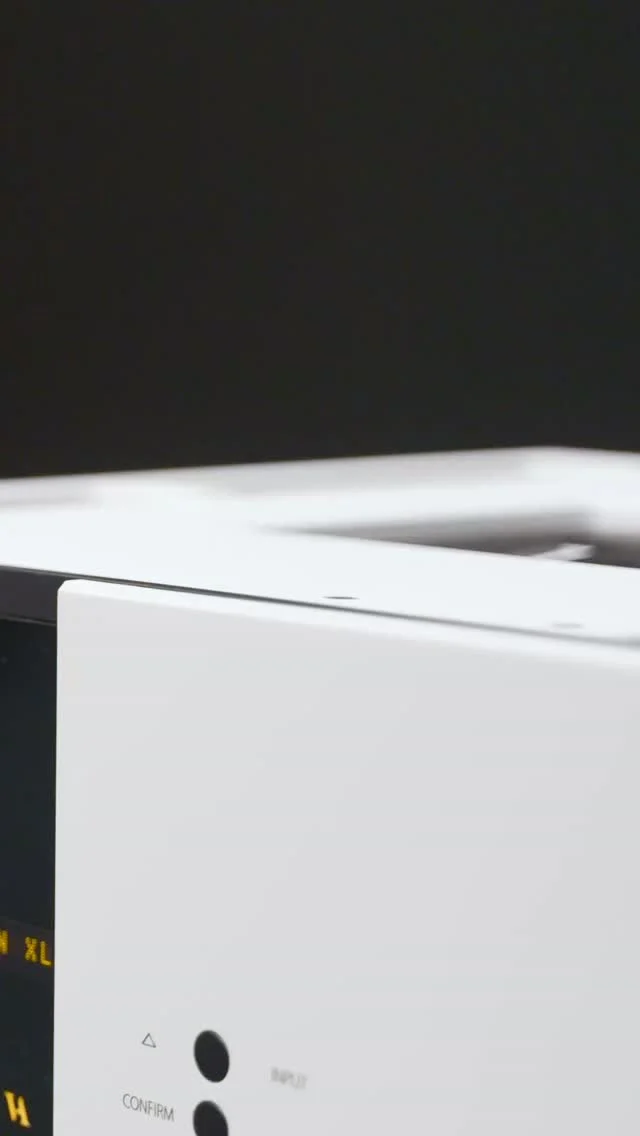
The Eversolo T10 essentially takes the concept of its smaller sibling and scales it up in every sense of the word. The streamer features a minimalist design with sharp lines. The front panel consists of a large glass panel with an equally massive display (shielded by an aluminium profile), which you can use for control but which can also display a wealth of information, from the album currently playing to simulated VU meters. Apart from the model designation, the only other feature visible here is the power button.
The top surface is plain, featuring only a milled-in logo; the sides are designed as cooling fins, maintaining the compactness of the overall structure, with dimensions matching those of the DAC-Z10.

The Eversolo T10’s rear panel is extremely well-organised, with all inputs arranged in a single row and clearly labelled. Starting from the left, there is a standard Ethernet socket (albeit at 2.5 G), two USB ports (which can accommodate data drives or even a CD drive for ripping discs), an SFP optical network interface and a dedicated isolated USB output; the next section features more conventional connectivity options – AES/EBU, optical, coaxial and HDMI I2S. Wi-Fi 6 is also available.
The Eversolo T10 also adds a 3.5 mm input and output trigger jack, two BNC interfaces for an external clock (50 ohms and 75 ohms, both supporting 10 and 25 MHz), and, of course, a mains socket with a rocker switch.
The interior is divided into three sections by thick partitions. Behind the socket is the main power filter block; at the front is a toroidal transformer and a large filter block packed with capacitors; and finally, there is a printed circuit board for signal processing.

Features, connectivity and software
You have 8 GB of fast DDR5 RAM and 64 GB of internal eMMC storage (though you can install up to two SSDs, each with a capacity of up to 8 TB), a powerful 64-bit ARM processor with eight cores, a temperature-compensated OCXO clock with a PLL circuit, and proper galvanic/electrical isolation on every conceivable input.

In addition to the tried-and-tested app, the software suite includes eight selectable operating modes for the IIS interface, the proprietary Evotune acoustic calibration feature, and, of course, the familiar range of virtually all streaming services available today (as well as the option to access local sources or build a library).

The Eversolo T10 is capable of handling 32-bit / 768 kHz resolution for PCM, as well as DSD512. Certified external apps include Spotify Connect, TIDAL Connect, JPLAY, Qobuz Connect, Roon and HQPlayer. Although the system is Android-based, it uses its own EOS audio signal processing system to preserve the original sampling rate, with the system itself not interfering with the transmission. It also features optional upsampling of up to 16 times the original rate.

It is worth mentioning Evotune Pro – a more advanced version of the company’s calibration tool. They recommend connecting a USB measurement microphone (the tried-and-tested UMIK from miniDSP is a good option); you have 40 bands, 20 preset PEQ profiles and a further 20 bands for room correction at your disposal. However, you can also import your own FIR filters, use a loudness profile or enable dynamic compression.

The Eversolo T10 system is also capable of adjusting the volume using EVC algorithms. This is a form of digital processing that takes place within the DSP core.
Setup and specifications
The Eversolo T10 is 36.5 cm wide, 31 cm deep and 8.8 cm high. However, the company does not specify its weight.

We had the transport connected to the Accuphase E-700 via the company’s D/A converter module (alongside the Fyne Audio F1-5 and SuperTrax instead of the Bluesound NODE (Gen 4)), but also in the main system, where it played through both I2S and coaxial connections to the Métronome DSC, the Norma Revo SC-2 LN and Norma PA 160 MR, with the sound coming through the KEF Blade One Meta. Mostly we used ZenSati Authentica, Nordost Valhalla 2, KrautWire SuperSymetric Gold and Voodoo Labs Dark Matter cabling.

Sound impressions
The bass on Zenón’s Displacement and Erasure (Golden City | 2024 | Miel Music | 0195269311605) was more relaxed than on the T8; calm yet precisely defined. The careful contouring and balanced, understated volume give the impression of superb and effortless clarity. It is a modern, impartial, natural sound. Not thrilling in an ultra-high-end sort of way, but disciplined and adding really nothing of its own to the output – on the contrary, the signal comes across as entirely non-technical, solid, yet not forced.
In fact, at first listen, the T10 seems less showy than the T8 – nothing is forced, it maintains a perfectly balanced and neutral character, playing more calmly and unobtrusively, but all the more maturely for it. The final shape of the sound is thus determined by the rest of the system, not the transport.
That the T10 belongs to a more mature class, however, is evident from the historic violin made by the Venetian master Francesco Gobetti in 1717, played by the American Tim Fain on Unraveling (2025 | recorded 2018 | Delos | DE 3611), where the instrument is given plenty of space, air around it and a wealth of nuances.
It is simply a full, smooth violin sound with a beautifully distinct texture, and it is here that you will appreciate the lack of colouration, the absence of technical intensity and something that is usually referred to as the ‘black background’. There is, in fact, a complete absence of that sense of noise lurking somewhere behind the musical layers, which you don’t usually even notice – until it disappears.
And the T10 simply doesn’t have it, so everything is crystal clear and lively. Thanks to the discipline already mentioned, the lead instrument has a three-dimensional presence, sounding very clear and natural in an open soundstage. The result is by no means shocking – everything is well-behaved, beautifully natural and calm.

The treble on Delphinium Blue (Cassandra Jenkins | My Light, My Destroyer | 2024 | Dead Oceans | DOC 346CD) did not draw any particular attention to itself. No emphasis, no bell-like quality, just a clean, neat sound that sounded ‘normal’ depending on the character of the D/A converter in question. Here, too, individual notes resolve easily thanks to a sense of high contrast and deeply recessed, virtually non-existent noise. Natural focus, a flat and ‘characterless’ frequency response curve that doesn’t alter the recording’s character – and the result is a sound full of lightness and detail that, for the reasonable price, you can’t help but be delighted by.
Although the track She from Harry Connick Jr.’s album of the same name (1994 | SONY | 074646437629) is no longer exactly new, its dynamics are exemplary. The percussion and bass, in particular, have a brilliant swing and punch. The Eversolo T10 renders the notes with superb clarity and precision, yet in such a way that even the attack of the drumstick on the snare drum doesn’t jar the ears.
The T8, by contrast, sounds more forward, whilst the T10 feels more natural, with greater composure and a certain inner reserve. The firmness, tension and speed are fearless, yet not forced forward by deliberate force; the delivery has that ‘confidently nonchalant’ style that you could easily spend hours listening to, and the level of vitality and energy is just right.
The well-known Kindertotenlieder (Julie Boulianne / Jean-François Rivest / Ensemble Orford | Mahler: Lieder | 2011 | ATMA | 00722056644228) sound superbly organised. There is nothing flashy about it; the sound is neat and transparent, with a sense of order prevailing, and you only realise just how good the T10’s resolution is when you notice how easily intelligible Julie Boulianne’s mezzo-soprano voice is. And this is without the performance sounding harsh or ‘monitor-like’. In terms of character, you really only perceive the D/A converter itself – and, by extension, the rest of the system; the T10 simply delivers a generous amount of information and a sense that everything is firmly and precisely in place.

The seamlessly organised musical texture in Antonio Vivaldi’s Juditha Triumphans, RV 644 (Lotte Bovi & l’Ore Blu | TRPTK nine-year anniversary sampler | 2023 | TRPTK) is built on the same foundation. The recording took place at the Oude Kerk in Rotterdam, and you can really hear the result – the subtle ambient sound doesn’t intrude, but rather enhances the atmosphere. However, the best testament to the T10’s qualities is that, even at the quietest levels, the stability and left-right balance of the soundstage do not break down; on the contrary, everything remains beautifully layered and completely clear, although it must be said that this is achieved in a completely unobtrusive manner.
However, you could also switch to something completely different and put on the old rock classic Wheel in the Sky (Journey | Infinity | recorded in 1978 | SONY | 828768589021). And it still works just as well – clear lines, precision, yet calm and free from any distracting sensations. You don’t get the feeling that it’s anything dramatic; you get music that plays smoothly, is maturely crafted and organised, with good energy, clarity and perspective. And a sonic signature provided by the downstream components, but not by the T10.
Frequently asked questions
How much does the Eversolo T10 cost?
The Eversolo T10 is priced at €2,190.
How does the T10 differ from the smaller Eversolo T8?
It scales up the T8’s concept into a larger chassis with a bigger display, but the sound is calmer and more mature rather than forward, leaving more of the final tonal character to the downstream system.
What resolutions and streaming services does it support?
It handles PCM up to 32-bit/768kHz and DSD512, with certified support for Spotify Connect, TIDAL Connect, Qobuz Connect, Roon, HQPlayer and JPLAY.
Can the internal storage be expanded?
Yes. Beyond the built-in 64GB eMMC storage, the T10 accepts up to two SSDs of up to 8TB each.
Does the Eversolo T10 include room correction?
Yes, via Evotune Pro: 40 EQ bands, 20 preset PEQ profiles and 20 further bands for room correction, using an external USB measurement microphone such as the miniDSP UMIK.
What outputs does the T10 offer?
AES/EBU, optical, coaxial and HDMI I2S outputs, an isolated USB output, an SFP optical network port and 2.5G Ethernet, plus BNC inputs for an external clock.
Eversolo T10 streaming transport
2.190 EURThe Eversolo T10 is a good, modern-generation transport with all the trimmings - thanks to its origin, it offers plenty of features at a great price (which is in line with current Chinese export policy). The large display is easy to use and a pleasure to look at; there are so many output sockets that they're bound to be sufficient for any situation; the software offers a wealth of options, although you'll probably never use most of them. But they're there, just in case. The T10 plays both local and online content with ease; it works quickly and effortlessly, whether via its own app, directly from music streaming services, or through add-ons such as Roon, more or less regardless of the source file's format or resolution. The T10 network transport is a superbly designed signal source that represents the very best in the reasonable hi-fi category, and if you don't want to venture into expensive high-end territory or beyond, it's a brilliant solution for absolutely balanced, detailed and clean reproduction of digital streams of all kinds. If you want to maximise the potential of what your DAC can process whilst keeping costs reasonable, the Eversolo T10 is a very interesting option.

Pros
- fair price
- stability and speed
- configuration possibilities
- lots of output options
- supports almost all resolutions and formats
- neutral and crystal clear sound
- you can really appreciate the 'black' background of the signal, and thus the high contrast and level of detail
- completely clean output with no "technical touch"
- a physical remote control, e.g. for adjusting the volume (if you happen to want to use it)
Cons
- in the context of the reasonable hi-fi class and its attractive price, absolutely nothing


The Eversolo T10 is a digital transport that scores 9.3/10 in our testing — clean, confident performance at a price point that undercuts most rivals in this class. Best for listeners upgrading a DAC-only setup who want a dedicated, well-built transport without paying a premium for the privilege.
What we loved
- +fair price
- +stability and speed
- +configuration possibilities
- +lots of output options
- +supports almost all resolutions and formats
- +neutral and crystal clear sound
- +you can really appreciate the 'black' background of the signal, and thus the high contrast and level of detail
- +completely clean output with no "technical touch"
- +a physical remote control, e.g. for adjusting the volume (if you happen to want to use it)
Compare more
Other digital sources we've tested
 8.6/10Digital sourcesSilent Angel Bremen SL1 Plus reviewPerformance85Features75Build100Value100Quality designHybrid versatile deviceOnly available in blackRead the review
 9.2/10Digital sourcesSilent Angel Bonn N8C reviewPerformance91Features90Build90Value100More easeImproved dynamicsForm factorRead the review
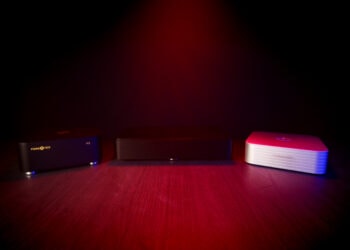 8.8/10Digital sourcesSilent Angel Rhein Z1 Plus, Forster F2 & Munich MU streaming set reviewPerformance87Features100Build80Value80Reference grade audio performanceSuper stable streaming setupSubstantial investmentRead the review