

Scan the spec sheet of almost any modern integrated amplifier or power amp and a single number keeps showing up in the marketing copy: amplifier damping factor, often quoted in the hundreds or, on some flagship designs, well above 1,000. The implication is always the same – a bigger number means tighter, more controlled bass. It is one of the most widely advertised specifications in high-end audio, and also one of the most misunderstood. Beyond a fairly modest threshold, extra amplifier damping factor stops making an audible difference, a fact manufacturers rarely mention next to their headline figures.
A Spec Left Over From the Tube Era
Amplifier damping factor became a meaningful selling point in the early days of solid-state audio, when engineers were still working to move past the relatively high output impedance of tube amplifiers. A tube amp with a modest damping factor let a loudspeaker’s own cone momentum and back-EMF ring on a little after a signal stopped, audibly softening bass transients. Solid-state designs, with their inherently lower output impedance, largely solved that problem, and amplifier damping factor became shorthand for “how solid-state, and therefore how well-controlled, is this amplifier’s bass.” Decades later, the number is still printed on spec sheets even though the engineering problem it was meant to solve has, for the most part, already been solved.
What Amplifier Damping Factor Actually Measures
Amplifier damping factor is a ratio: the nominal impedance of the connected loudspeaker divided by the amplifier’s output impedance at that frequency. An 8-ohm speaker driven by an amplifier with 0.01 ohms of output impedance yields a damping factor of 800. In theory, a higher number means the amplifier can more effectively “grip” the woofer and stop it from moving once the signal tells it to stop, by presenting a near-zero-resistance path for the back-EMF the driver generates as it moves. In practice, that theoretical grip is only ever part of the real-world electrical picture between amplifier and driver.
The reason is simple: amplifier output impedance is only one link in a chain that also includes the speaker cable’s own resistance and, more significantly, the loudspeaker’s internal crossover components and the driver’s own mechanical damping (its suspension, motor design and cabinet loading). Once amplifier damping factor climbs above roughly 20 to 50, the amplifier’s own contribution to total system damping becomes vanishingly small next to those other factors. Independent measurement work from Benchmark Media, along with similar analysis from KEF and PS Audio, has reached the same conclusion from different angles: a damping factor of 1,000 does not deliver meaningfully tighter bass than a damping factor of 100, because the loudspeaker and cable are already the dominant variables by that point.

Where the Numbers Stop Mattering: High-End Examples
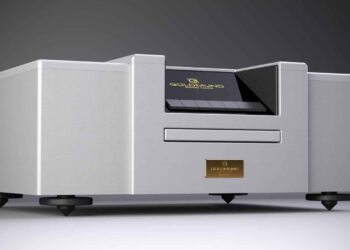
High-end amplifiers make the point well precisely because so many of them chase such extreme figures. The Goldmund Telos 9800 mono power amplifier is specified with a damping factor around 900 at 1kHz, the product of Goldmund’s dedicated power supply and gold-plated internal bus bars. The Hegel H200 integrated amplifier goes further still, with a claimed damping factor above 4,000 thanks to Hegel’s SoundEngine feedback topology. Both numbers look dramatically different on paper. In a real listening room, connected to a real loudspeaker through a few metres of real speaker cable, the practical difference between “very high” and “extremely high” amplifier damping factor all but disappears, because the loudspeaker itself has long since become the limiting factor.


Where Real Improvements Are Still Possible
None of this makes amplifier damping factor meaningless as a specification – a genuinely low number, well under 20, can still be audible, which is why some tube amplifiers retain a distinctive, looser bass character prized by their fans. But for the vast majority of solid-state amplifiers on the market today, chasing an ever-higher damping factor number delivers rapidly diminishing returns. The more productive places to look for tighter, better-controlled bass are elsewhere in the chain: thicker-gauge speaker cable to reduce its share of the total resistance, a loudspeaker with a well-engineered crossover and driver suspension, and solid mechanical and electrical construction inside the amplifier itself rather than a single number on the box. For enthusiasts comparing amplifiers on spec sheets alone, amplifier damping factor is worth a glance, but rarely worth losing sleep over once it clears that first, unglamorous threshold of about 20 to 50.
Key specifications
- Amplifier damping factor = loudspeaker nominal impedance ÷ amplifier output impedance
- Practical audibility threshold: roughly 20 to 50
- Above that threshold: speaker cable resistance and loudspeaker crossover/driver damping dominate
- Example: Goldmund Telos 9800, damping factor approx. 900 at 1kHz
- Example: Hegel H200, damping factor above 4,000 (Hegel SoundEngine technology)
- Where real gains still come from: cable gauge, loudspeaker crossover design, driver suspension, amplifier build quality