Advertisement
Best of High End Best of High End Best of High End
Choose
Buying guides
Best Hi-Fi AccessoriesBest Hi-Fi AmplifiersBest Hi-Fi LoudspeakersBest Streaming DACs
First looks
Reviews
Experience
Factory visits
Industry icons
Reports
Follow
News
Learn
Academy
Tech talk
Trust
Marco Lisi — Inside HQ
Daniel Březina — High-End, Lived-In
John Bugailiskis — Sound proof
Finn de Kroon — Kii room
Watch
Account
Inloggen
Contact
Populair
Menu
Choose
Buying guides
Best Hi-Fi AccessoriesBest Hi-Fi AmplifiersBest Hi-Fi LoudspeakersBest Streaming DACs
First looksReviews
Experience
Factory visitsIndustry iconsReports
Follow
News
Learn
AcademyTech talk
Trust
Marco Lisi — Inside HQDaniel Březina — High-End, Lived-InJohn Bugailiskis — Sound proofFinn de Kroon — Kii room
Watch
Best of High End
No Result
View All Result
  • Choose
    • Buying guides
      • Best Hi-Fi Accessories
      • Best Hi-Fi Amplifiers
      • Best Hi-Fi Loudspeakers
      • Best Streaming DACs
    • First looks
    • Reviews
  • Experience
    • Factory visits
    • Industry icons
    • Reports
  • Follow
    • News
  • Learn
    • Academy
    • Tech talk
  • Trust
    • Marco Lisi — Inside HQ
    • Daniel Březina — High-End, Lived-In
    • John Bugailiskis — Sound proof
    • Finn de Kroon — Kii room
  • Watch
Contact us
  • Choose
    • Buying guides
      • Best Hi-Fi Accessories
      • Best Hi-Fi Amplifiers
      • Best Hi-Fi Loudspeakers
      • Best Streaming DACs
    • First looks
    • Reviews
  • Experience
    • Factory visits
    • Industry icons
    • Reports
  • Follow
    • News
  • Learn
    • Academy
    • Tech talk
  • Trust
    • Marco Lisi — Inside HQ
    • Daniel Březina — High-End, Lived-In
    • John Bugailiskis — Sound proof
    • Finn de Kroon — Kii room
  • Watch
No Result
View All Result
Best of High End
No Result
View All Result
Home Academy

Why Do Audiophiles Still Trust Vacuum Tubes? The Physics Behind Tube Warmth

A century after the transistor took over consumer electronics, tube amplifiers still shape some of the best high-end systems - the physics of harmonic distortion and soft clipping explains why

Marco Lisi by Marco Lisi
September 2, 2026
in Academy
Reading Time: 4 mins read
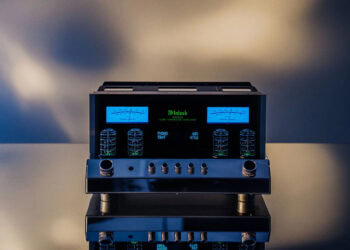
Glowing vacuum tubes and blue VU meters inside a McIntosh tube integrated amplifier

A vacuum tube integrated amplifier in operation

Transistor amplifiers have had the technical upper hand for more than half a century: lower distortion on paper, higher damping factor, far less heat, and a fraction of the cost per watt. Yet walk the aisles of any high-end audio show and vacuum tube amplifiers remain everywhere, often at prices that dwarf their solid-state rivals. Seasoned listeners with easy access to the newest transistor and Class D designs still choose, deliberately, to build systems around glass and glowing filaments. The reason is not nostalgia alone. Vacuum tube amplifier sound has a measurable, physical basis that explains why this century-old technology has never been pushed out of high-end audio.

  • A Technology Older Than the Transistor
  • The Physics Behind Vacuum Tube Amplifier Sound
  • Single-Ended, Push-Pull and Hybrid Designs
  • The McIntosh MA2375: A Modern Case Study
  • Is a Tube Amplifier Worth the Compromises?

A Technology Older Than the Transistor

Vacuum tubes predate the transistor by decades. The triode, invented by Lee de Forest in 1906, was the first practical device capable of amplifying an electrical signal, and it powered every radio, telephone repeater and early hi-fi amplifier until the transistor reached commercial maturity in the late 1950s and 1960s. Solid-state electronics then took over almost every field, from computing to consumer audio, for good reason: transistors are smaller, cheaper, cooler-running and, by most conventional measurements, more accurate. Vacuum tubes never disappeared from high-end audio, however. Instead they settled into a permanent niche among listeners and designers who prize a specific, consistent character over the lowest number on a distortion spec sheet.

The Physics Behind Vacuum Tube Amplifier Sound

The heart of the matter is what happens to a signal as a tube amplifies it. A triode or pentode stage does not amplify with mathematical purity; it introduces harmonic distortion, and critically, that distortion is dominated by even-order harmonics (the octave and its multiples), which the human ear perceives as musically consonant, even pleasant. Transistor circuits, by contrast, tend to generate more odd-order harmonics, which the ear reads as harsher and less related to the original note. This is the technical root of the famous vacuum tube amplifier sound: not an absence of distortion, but a specific, ear-friendly flavor of it.

The second factor is behavior at the limit. When a solid-state amplifier is driven past its power supply rails, it clips hard, chopping the waveform into a flat top that generates a harsh spray of high-order odd harmonics almost instantly. A tube amplifier, in contrast, saturates gradually. As the signal approaches the tube’s operating limits, distortion increases smoothly rather than suddenly, a behavior audio engineers call soft clipping. In practice this means a tube amplifier pushed close to its limits, briefly on a loud drum hit or orchestral swell, tends to compress and round off gracefully rather than crack. The output transformer found in nearly every tube power amplifier plays a supporting role here too, adding its own gentle high-frequency roll-off and interacting with the loudspeaker load in ways that further soften the top end compared with a direct-coupled transistor output stage.

Close-up of glowing vacuum tubes inside a McIntosh tube integrated amplifier chassis
The visible glow of a vacuum tube output stage in operation

Single-Ended, Push-Pull and Hybrid Designs

Not all tube amplifiers sound alike, and the topology matters as much as the tube type. Single-ended triode (SET) designs use one tube per channel with no negative feedback, typically producing only a handful of watts but an exceptionally direct, harmonically rich midrange prized by low-efficiency-speaker specialists. Push-pull designs use a pair of tubes working in opposite phase, which cancels much of the even-harmonic content that single-ended fans chase, but in exchange delivers far more power and lower output impedance, making push-pull the more common choice for full-range, full-volume listening. A growing third category, the hybrid amplifier, pairs a tube preamplifier or input stage with a solid-state output stage, aiming to capture some of the harmonic character of tubes while retaining transistor-level power, damping factor and reliability.
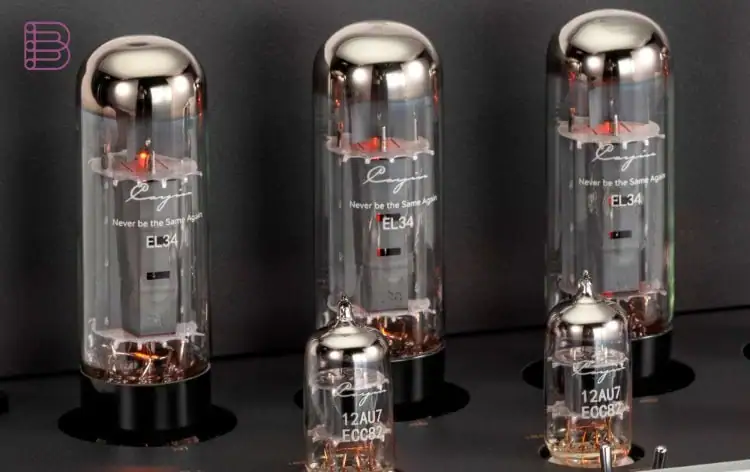
Close-up of labeled EL34 output tubes and 12AU7 preamp tubes in a push-pull tube amplifier
EL34 output tubes paired with 12AU7 preamp tubes in a Class AB1 push-pull circuit (Cayin JAZZ 70)

The McIntosh MA2375: A Modern Case Study

McIntosh’s MA2375 vacuum tube integrated amplifier is a useful, current example of why this technology persists at the top of the market. It is the brand’s first all-tube integrated in more than ten years, combining a tube preamplifier and tube power stage — two KT88 output tubes per channel, backed by 12AT7 and 12AX7A driver and preamp tubes — delivering 75 watts per channel into 4, 8 or 16 ohms in a single chassis. Like every McIntosh tube amplifier before it, the MA2375 relies on the company’s proprietary Unity Coupled Circuit output transformer design, first patented in the 1940s specifically to control distortion and extend bandwidth in a tube output stage, addressing one of the classic weaknesses of transformer-coupled amplification. That a company with full access to modern transistor and Class D technology continues to engineer and sell a flagship tube integrated says as much about sustained listener demand as it does about the technology itself.
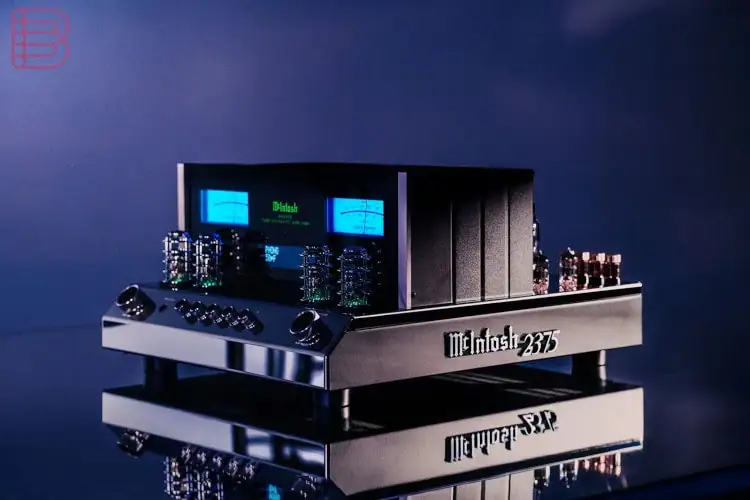
McIntosh MA2375 vacuum tube integrated amplifier, three-quarter view
The McIntosh MA2375, the brand’s first all-tube integrated amplifier in over a decade

Is a Tube Amplifier Worth the Compromises?

None of this makes tube amplification objectively superior. Tubes run hot, have a finite service life measured in thousands rather than tens of thousands of hours, generally deliver less power per dollar, and need occasional biasing or retubing that a transistor amplifier never asks for. Push-pull designs mitigate some of the power ceiling but rarely match a comparable solid-state amplifier’s raw control over a difficult speaker load. For listeners chasing maximum measured accuracy, headroom or bass control on demanding loudspeakers, a well-engineered transistor or Class D amplifier remains the more rational choice.

For listeners who have heard the difference and prefer it, though, the appeal is not a myth to be measured away. Vacuum tube amplifier sound rewards efficient, sympathetic loudspeakers, a midrange-focused listening priority, and a willingness to trade outright power and convenience for a specific harmonic signature that transistors, by design, do not produce. A century after the triode first amplified a signal, that trade-off still finds enough buyers to keep McIntosh and a long list of specialist tube manufacturers in business.

Tags: McIntoshVacuum Tube Amplifier
ShareTweet
Marco Lisi

Marco Lisi

Publisher

Marco Lisi is the publisher of Best of High End, part of AV Concepts BV. His path into audio started early: as a teenager he was drawn into the world of free radio, presenting shows and living immersed in music every day. In his early twenties he ran his own production studio for five years, creating jingles and commercials — hands-on training in sound design, pro-audio workflows, and critical listening through studio monitors that still shapes how he evaluates gear today. He also spent years DJing in clubs before moving into publishing, first at two earlier online magazines before founding Best of High End. His hi-fi and home cinema passion was inherited from his father, an inveterate system-swapper. Marco's first setup — a confirmation gift — paired AKAI separates with entry-level Bowers & Wilkins speakers, a brand he stayed loyal to for years as his system grew from stereo into full surround and home cinema. Like many enthusiasts, he went through an extended "audiophile" phase chasing the next upgrade, before settling into a more grounded view: gear as a means to enjoy music and film, not an end in itself. Years of critical listening have given him a well-trained ear — the ability to characterize a system or pinpoint a change in the chain quickly and accurately. Just as important, his teaching background (a Belgian "regent" degree in Dutch language) gives him the tools to translate those listening impressions into clear, readable writing.

Related Posts

McIntosh CS7500 streaming preamplifier with its signature green VU meters
News

McIntosh Brings Streaming and Preamplification Together in the CS7500

August 28, 2026
McIntosh MX124 A/V processor front panel
News

McIntosh introduces MX124 A/V processor

July 18, 2026
mcintosh-ma2375-vacuum-tube-integrated-amplifier
News

McIntosh MA2375 Vacuum Tube Integrated Amplifier

July 13, 2026
mcintosh-powers-kith-london
News

McIntosh powers Kith London

July 13, 2026
spotify-lossless-lands-on-mcintosh-ds200, msa5500-and-mx123
News

Spotify Lossless lands on McIntosh DS200, MSA5500 and MX123

July 13, 2026
McIntosh-x-Virgil-Abloh-Redefining-Sound-as-Culture
News

McIntosh x Virgil Abloh Redefining Sound as Culture

October 2, 2025
Next Post

Inside Samsung Connect Berlin: Micro RGB, Glare Free and the Quiet Return of the Living-Room Speaker

SIM2 UltraNero 4S DLP 4K HDR home cinema projector with visible light beam

SIM2 Expands the UltraNero Platform With Three New 4S Projectors

Tag Cloud

4K Audio-Technica AV processors Bang & Olufsen Bowers & Wilkins Cables CD player CES 2018 CES 2025 Dac DACs DALI Dan D'Agostino Estelon FiiO Focal Gold Note HDR Headphone amplifiers Headphones HIGH END Munich 2025 High End Vienna 2026 High End® Integrated amplifiers Klipsch loudspeaker Loudspeakers Lyngdorf Lyngdorf Audio McIntosh Panasonic Power amplifiers Preamplifiers Projectors Samsung Silent Angel Sonus Faber Sony Steinway Lyngdorf StormAudio Streaming audio Subwoofers Turntables Wireless speakers

Trending This Week

1 Eversolo T10 digital transport review 2 Atoll Electronique IN400 Evolution integrated amplifier review 3 Revival Audio Atalante 3 review 4 Eversolo Adds the AMP-F8 Power Amplifier to Its Hi-Fi Lineup 5 Dynaudio Evoke 20 review

Most Popular Posts

01 55.9K READS What’s the best position for the subwoofer? 02 15.5K READS Dynaudio Evoke 20 review 03 15.2K READS Focal Aria 948 review
Lyngdorf TDAI-1120 review 12.8K reads Is one subwoofer enough to excite the room? 11.7K reads Revival Audio Atalante 3 review 9.5K reads Rega RP-10 review 5.9K reads MSB Technology Select DAC for the best sound 5.4K reads Vitus Audio SIA-025 review 4.8K reads
Brand Partners

The brands we live with

Manufacturers and distributors who support independent high-end journalism. Their presence here never influences a score.

  • Alluxity
  • Atoll
  • DALI
  • Dan D’Agostino
  • Fresh ‘n Rebel
  • Kii Audio
  • Lyngdorf Audio
  • NAD
  • Oehlbach
  • Purifi
  • Purist Audio Design
  • R_volution
  • Samsung
  • Silent Angel
  • Steinway Lyngdorf
  • StormAudio
  • SVS
  • Vitus Audio
RGB Mini-LED, explained. Individually addressable RGB Mini-LED, explained. Individually addressable red, green and blue LEDs sit right inside the backlight, so color and brightness are created together instead of filtered afterwards. Hisense and TCL are already leading with it. Full breakdown, link in bio. #RGBMiniLED #MiniLED #TVtech #Hisense #TCL #HomeCinema #4KTV #HighEndAudio #DisplayTech #BlackFriday
Vlaggenschip in Tectonic-vormgeving: de Mark Levin Vlaggenschip in Tectonic-vormgeving: de Mark Levinson N°626 brengt dual-monaural precisie, een nieuwe DAC en een ingebouwde phono-trap samen in één voorversterker. Link in bio voor het volledige verhaal. #MarkLevinson #No626 #HighEndAudio #Preamplifier
Groot geluid, klein bureau: de Yamaha ATS-B200 pas Groot geluid, klein bureau: de Yamaha ATS-B200 past dubbele subwoofers en virtuele 3D-surround in één slanke bar. Link in bio voor het volledige verhaal. #Yamaha #ATSB200 #Soundbar #HomeCinema
Kleur met karakter: de Devialet Phantom Ultimate 9 Kleur met karakter: de Devialet Phantom Ultimate 98dB krijgt een gloednieuwe Pulse Blue-afwerking, ontwikkeld met F1-coureur Isack Hadjar. Link in bio voor het volledige verhaal. #Devialet #PhantomUltimate #PulseBlue #HighEndAudio
Buislamp-warmte, solid-state controle: de Riviera Buislamp-warmte, solid-state controle: de Riviera AFM100SE is een hybride Class A monoblock-versterker zonder tegenkoppeling, in Gold of Dark Titanium. Link in bio voor het volledige verhaal. #Riviera #AFM100SE #HighEndAudio #ClassA #MadeInItaly
Puur vermogen zonder compromissen: de Gryphon Apex Puur vermogen zonder compromissen: de Gryphon Apex levert tot 1.490 watt op 1 ohm, volledig in Class A en zonder globale tegenkoppeling. Link in bio voor het volledige verhaal. #Gryphon #Apex #HighEndAudio #ClassA #PowerAmplifier
Beeldhouwkunst die muziek maakt: de Estelon Forza Beeldhouwkunst die muziek maakt: de Estelon Forza Ultra brengt een nieuw vierweg-driversysteem en een marmercomposiet-kast samen in vier exclusieve afwerkingen. Link in bio voor het volledige verhaal. #Estelon #ForzaUltra #HighEndAudio #Loudspeakers
Bioscoopbeeld zonder losse speakers: de Epson Life Bioscoopbeeld zonder losse speakers: de Epson Lifestudio Flex Plus EF-72 brengt 4K PRO-UHD en Sound by Bose samen in één stijlvolle projector, vanaf €1.361,24. Link in bio voor het volledige verhaal. #Epson #Lifestudio #Projector #SoundByBose #GoogleTV
  • About us
  • Advertising
  • Contact
  • Terms and Conditions
  • Privacy Policy
  • Cookie Policy

© 2026 Best Of High End - by AV Concepts BV ·

Manage Consent
We use cookies to keep this site running, to measure how it is used, and to show videos from YouTube. Refusing costs you nothing: every article stays fully readable. Videos then show a short notice and load only when you click them.
Functional only Always active
The technical storage or access is strictly necessary for the legitimate purpose of enabling the use of a specific service explicitly requested by the subscriber or user, or for the sole purpose of carrying out the transmission of a communication over an electronic communications network.
Preferences
The technical storage or access is necessary for the legitimate purpose of storing preferences that are not requested by the subscriber or user.
Statistics
The technical storage or access that is used exclusively for statistical purposes. The technical storage or access that is used exclusively for anonymous statistical purposes. Without a subpoena, voluntary compliance on the part of your Internet Service Provider, or additional records from a third party, information stored or retrieved for this purpose alone cannot usually be used to identify you.
Marketing
The technical storage or access is required to create user profiles to send advertising, or to track the user on a website or across several websites for similar marketing purposes.
  • Manage options
  • Manage services
  • Manage {vendor_count} vendors
  • Read more about these purposes
View preferences
  • {title}
  • {title}
  • {title}
No Result
View All Result
  • Choose
    • Buying guides
      • Best Hi-Fi Accessories
      • Best Hi-Fi Amplifiers
      • Best Hi-Fi Loudspeakers
      • Best Streaming DACs
    • First looks
    • Reviews
  • Experience
    • Factory visits
    • Industry icons
    • Reports
  • Follow
    • News
  • Learn
    • Academy
    • Tech talk
  • Trust
    • Marco Lisi — Inside HQ
    • Daniel Březina — High-End, Lived-In
    • John Bugailiskis — Sound proof
    • Finn de Kroon — Kii room
  • Watch

© 2026 Best Of High End - by AV Concepts BV ·

Before you go — join the newsletter

Get the best in high-end audio, straight to your inbox. No spam, unsubscribe anytime.