

Ask three audiophiles what a network streaming transport is and there is a good chance you get three slightly different answers, because the term sits in a confusing spot between “streamer,” “DAC” and “network player.” The short version: a network streaming transport pulls digital audio off a network, a NAS or a streaming service and hands it, unconverted, to an external DAC. It never touches the analogue domain itself. That single restriction is also its entire selling point, and understanding why requires a quick look at where the idea came from.
From CD Transport to Network Transport
Long before streaming existed, high-end brands already split digital sources into two boxes: a CD transport that only spun the disc and read the data, and a separate DAC that converted that data into music. The logic was simple — isolate the noisy, mechanical, electrically busy part of a source from the sensitive conversion stage, and let each box do one job well. As physical media gave way to networked audio, that same logic carried over. A network streaming transport is the modern descendant of the CD transport: instead of a spinning disc, it reads files or streams from Qobuz, Tidal or a local NAS, and instead of a laser mechanism, its job is stable timing, clean power and a jitter-free digital handoff.
Why Keep the DAC Separate?
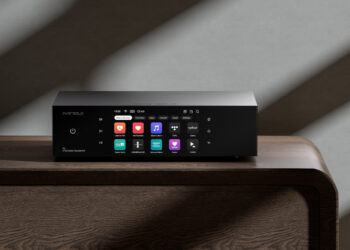
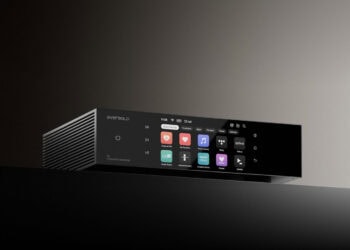
A network streaming transport deliberately leaves out the digital-to-analogue conversion stage, and that absence is the point. Every network transport still has to solve the same core problems: isolating a noisy Ethernet or Wi-Fi connection from the audio path, reclocking the incoming data against a stable, low-jitter clock, and delivering it over a clean digital output — commonly USB, I2S, AES/EBU or coaxial S/PDIF — without adding electrical noise from the network side of the device. Products built around this idea often use galvanic isolation between input and output stages and a dedicated, high-precision clock circuit rather than the clock built into a generic streaming chipset. The Ferrum BROEN, for instance, is built entirely around this philosophy: it houses a purpose-designed digital-to-digital converter module and ultra-low-jitter clocks, with no DAC stage at all, so it can be paired with whichever converter the listener already owns and trusts, such as Ferrum’s own WANDLA.
What Jitter Actually Does to the Signal
The word “jitter” gets thrown around loosely in high-end audio marketing, but the underlying problem is concrete: a digital audio stream doesn’t just carry sample values, it also carries timing information, and every sample needs to land at exactly the right moment for the DAC to reconstruct the original waveform accurately. Small, random variations in that timing — jitter — can smear transients and add a subtle, hard-to-place hardness or graininess to the sound, even though every bit of data technically arrived intact. A general-purpose network chipset, designed for file transfer rather than audio playback, typically isn’t optimised to minimise this kind of timing error. A purpose-built network streaming transport addresses it with a dedicated, high-stability clock (often a temperature-compensated or oven-controlled crystal oscillator, sometimes described as an OCXO), combined with buffering and reclocking circuitry that re-times the outgoing digital signal before it ever reaches the DAC. Independent reviewers who have measured this class of product, such as AudiophileStyle’s technical review of the Lumin U1, have documented measurable jitter reductions when a dedicated transport replaces a computer or a generic streaming box feeding the same DAC. Whether that reduction is audible depends heavily on the DAC’s own clock-rejection ability — some modern DAC chips are far less sensitive to incoming jitter than older designs — but the engineering intent behind a network streaming transport is unambiguous: remove timing uncertainty before it ever reaches the conversion stage.
Transport vs. All-in-One Streamer
Not every product marketed with “transport” or “streamer” in its name follows this pure, digital-only approach, and that’s where the terminology gets genuinely confusing. Some streaming transports, including recent designs from Eversolo, still carry an internal DAC and analogue output stage for convenience, blurring the line between a true digital-only transport and a full streaming DAC that simply emphasises its transport-grade clocking and isolation. At the other end of the spectrum sit fully integrated devices such as IDEON Audio’s Nous, which folds streaming, DAC conversion, clock management and a balanced preamplifier stage into one chassis rather than splitting them into separate boxes. Neither approach is objectively better: a dedicated transport rewards listeners who already have a DAC they love and want to feed it the cleanest possible signal, while an all-in-one design trades that flexibility for simplicity, fewer cables and one less power supply to manage.
Is a Separate Transport Right for You?
A network streaming transport makes the most sense once a system already has a DAC worth protecting — someone who has invested in a converter with a sound they like has more to gain from optimising the digital signal feeding it than from replacing the DAC itself. It also suits listeners who want to upgrade in stages: a transport can be swapped or improved later without disturbing the DAC, amplifier or speakers around it. For anyone starting from scratch, however, or who values a single box with one remote and one power cord, an all-in-one streamer with a built-in DAC remains the simpler, and often more cost-effective, route into networked high-end audio. Either way, the rise of the dedicated network streaming transport reflects something reassuring about the category: the same engineering discipline that once justified a separate CD transport is still being applied, just pointed at a network cable instead of a spinning disc.


Frequently asked questions
What is a network streaming transport, exactly?
A network streaming transport pulls digital audio off a network, a NAS, or a streaming service and hands it, unconverted, to an external DAC — it never touches the analogue domain itself. That single restriction is also its entire selling point: keeping digital-to-analogue conversion out of the box entirely, in the same spirit as the CD transports that high-end brands built decades before streaming existed.
Why keep the DAC separate instead of building it into the streamer?
A dedicated transport focuses entirely on delivering streaming data against a stable, low-jitter clock and a clean digital output — typically USB, I2S, AES/EBU or coaxial S/PDIF — without adding electrical noise from the network side of the device. Products like the Ferrum BROEN are built entirely around this philosophy, housing a purpose-designed digital-to-digital converter module and ultra-low-jitter clocks with no DAC stage at all, so the listener can pair it with whichever converter they already own and trust.
What does jitter actually do to a digital audio signal?
A digital audio stream doesn’t just carry sample values, it also carries timing information, and every sample needs to land at the right moment for accurate playback. Independent technical reviews, such as AudiophileStyle’s review of the Lumin U1, have documented measurable jitter reductions when a dedicated transport replaces a computer or generic streaming box feeding the same DAC — though how audible that reduction is depends heavily on the DAC’s own clock-rejection ability.
What is the difference between a true transport and an all-in-one streamer?
Not every product marketed with “transport” or “streamer” in its name follows the pure, digital-only approach — some streaming transports, including recent designs from Eversolo, still carry an internal DAC and analogue output stage for convenience, blurring the line between a true digital-only transport and a full streaming DAC. Neither approach is objectively better: a dedicated transport rewards listeners who already have a DAC they love, while an all-in-one design trades that flexibility for simplicity and fewer cables.
Is a separate network streaming transport, like the Ferrum BROEN, right for my system?
A separate transport makes the most sense once a system already has a DAC worth protecting — someone who has invested in a converter with a sound they like has more to gain from optimising the digital signal feeding it than from replacing the DAC itself. It also suits listeners who want to upgrade in stages, since a transport such as the Ferrum BROEN can be swapped or improved later without disturbing the DAC, amplifier or speakers around it; for anyone starting from scratch, an all-in-one streamer with a built-in DAC remains the simpler route in.