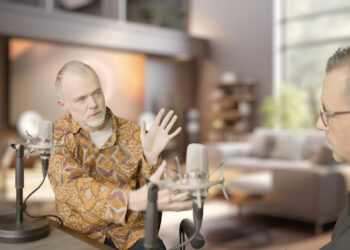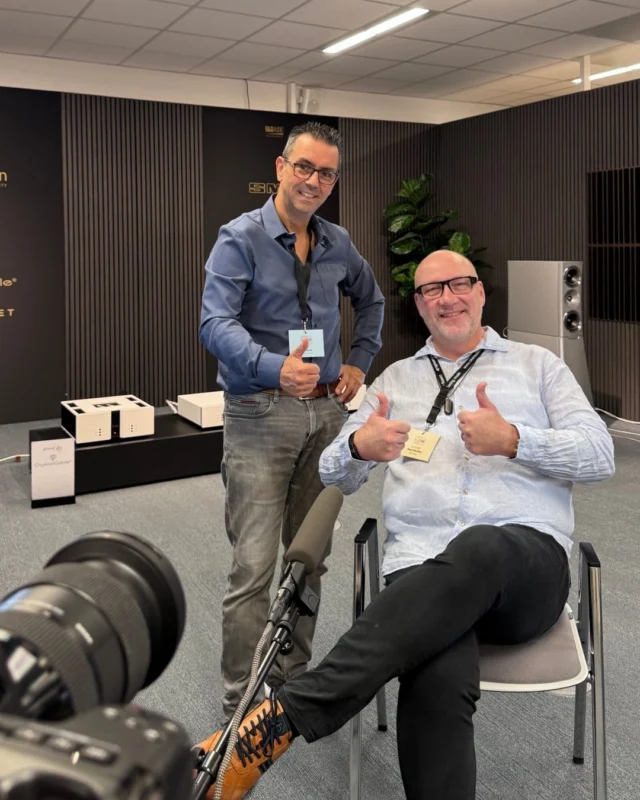


Every audio brand has an origin story, but few start quite as informally as this one: two amplifier engineers who kept bumping into each other at AES conventions, both convinced the other was worth working with, until one of them finally said enough talk. That conversation is how the Purifi Audio startup began, and in this Tech Talk, Bruno Putzeys — co-founder and CTO — walks through why he and Lars Risbo quit stable jobs to build it, what the company was actually meant to do, and how the plan changed within its first year.

How Lars Risbo and Bruno Putzeys began the Purifi Audio startup
Putzeys and Risbo had known each other for years, crossing paths at AES conventions and always falling into the same easy technical back-and-forth. In 2014, at the AES convention in New York, that turned into a decision: quit their respective jobs — Risbo at Texas Instruments, Putzeys at Hypex — and build something together. Risbo brought in his old friend Peter Lyngdorf, who helped found the company and bankroll its early years. Asked for a mission statement, Putzeys is characteristically blunt: there wasn’t one beyond finding a legitimate excuse for the two of them to work on something interesting together.
From a distortion-correction algorithm to building drivers and amplifiers
Both founders had built amplifiers before — Risbo is well known for the Millennium, the first fully digital amplifier, released in 1998 under TacT Audio and still influencing designs used today at Steinway Lyngdorf. But by 2014, both men had reached the same conclusion: amplifiers were no longer the weak link in a hi-fi system. Loudspeakers were. Purifi’s original plan was a DSP algorithm that could precompensate for distortion in loudspeaker drivers, built into a digitally controlled power amplifier. That idea is still alive somewhere in the background, but the sheer amount the pair had to learn about how drivers actually misbehave convinced them that the same knowledge could improve the drivers directly — for a fraction of the cost of getting a custom integrated circuit made. So Purifi pivoted to designing its own speaker drivers, and, somewhat later in the process, its own amplifier modules too.
Meet the Purifi Audio team
When Texas Instruments closed its Lyngby office shortly after Risbo’s departure, Purifi had a rare opportunity: an existing team of engineers who already knew each other’s work inside out. That team now runs much of the company day to day. Claus Neesgaard, formerly responsible for development, sales and marketing at TI, is CEO. Carsten Tinggaard — best known for heading manufacturing at the former Peerless driver plant in Denmark and for a raft of classic Peerless designs — is COO, having joined via the consultancy PointSource together with Morten Halvorsen, who now manages operations. Søren Poulsen, who worked on high-power amplifier ICs at TI, leads amplifier R&D and reliability testing, while Kim Madsen, a former TI applications engineer, covers applications for both the driver and amplifier businesses. Roles overlap by design: Putzeys describes the group as people who can productively argue about any part of the product line, not a rigid org chart.
Who buys Purifi Audio technology
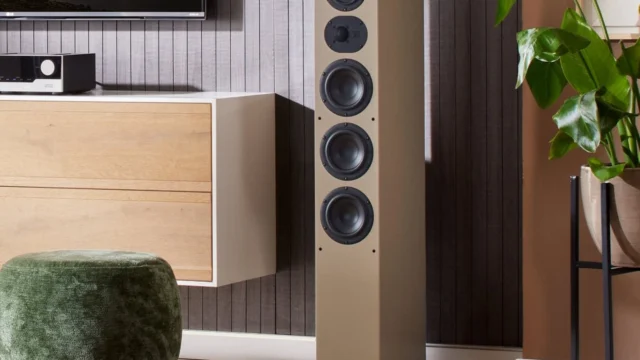
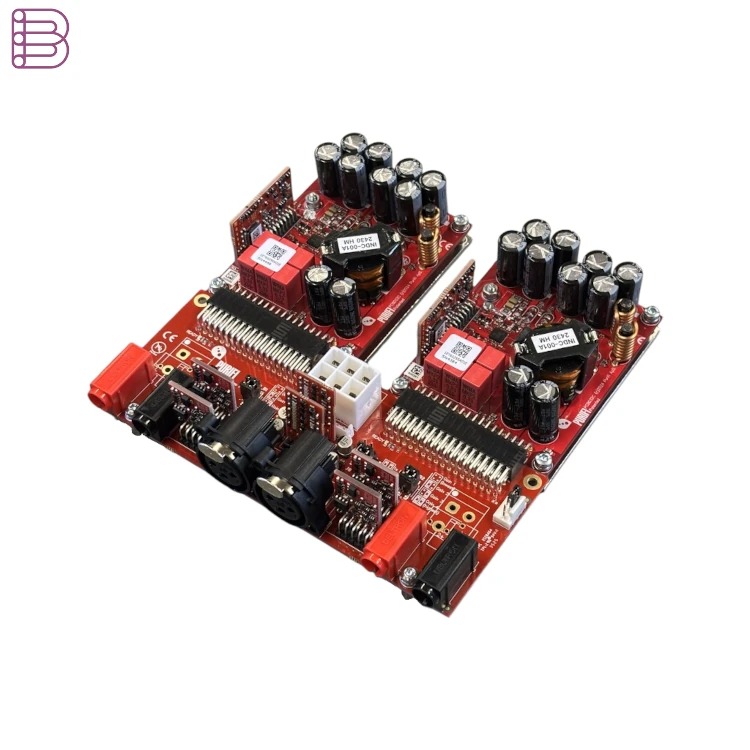
Purifi positions itself squarely at the performance end of the market — drivers and amplifier modules built in Denmark simply can’t be sold at rock-bottom prices, but Putzeys is confident they’re the best available by a clear margin. The company sells to OEMs building end-user products, with NAD as its best-known early amplifier adopter and Buchardt Audio — now an extraordinarily successful young speaker brand — among the early driver customers. Purifi also serves the DIY market directly, offering the same evaluation kits used by OEM engineers, which Putzeys singles out as an unexpectedly rewarding part of the business because of the direct, enthusiastic feedback from builders.
Frequently asked questions
Who founded Purifi Audio and when did the Purifi Audio startup begin?
Purifi was founded in 2014 by Bruno Putzeys and Lars Risbo, who decided at the AES convention in New York to leave their existing jobs and start a company together. Peter Lyngdorf joined as a co-founder and early investor, helping fund the company’s start.
What did Purifi originally set out to build?
The founders’ original idea was a DSP algorithm that could precompensate for distortion in loudspeaker drivers, integrated into a digitally controlled power amplifier. That work led them to study driver behaviour so closely that they decided to design their own drivers, and eventually their own amplifier modules as well.
Who is on the Purifi Audio leadership team?
Alongside co-founders Bruno Putzeys and Lars Risbo, Purifi is run by CEO Claus Neesgaard and COO Carsten Tinggaard, with Søren Poulsen leading amplifier R&D, Kim Madsen covering applications engineering, and Morten Halvorsen managing operations.
Does Purifi Audio sell to individual buyers or only manufacturers?
Both. Purifi’s main business is supplying OEM manufacturers such as NAD and Buchardt Audio, but it also sells the same evaluation kits directly to DIY speaker and amplifier builders.
What market does Purifi Audio target?
Purifi is positioned firmly at the performance end of the audio market. Its Danish-made drivers and amplifier modules are priced for manufacturers and enthusiasts who prioritise measured performance and sound quality over cost.