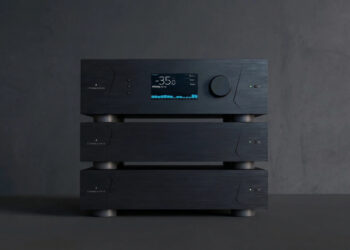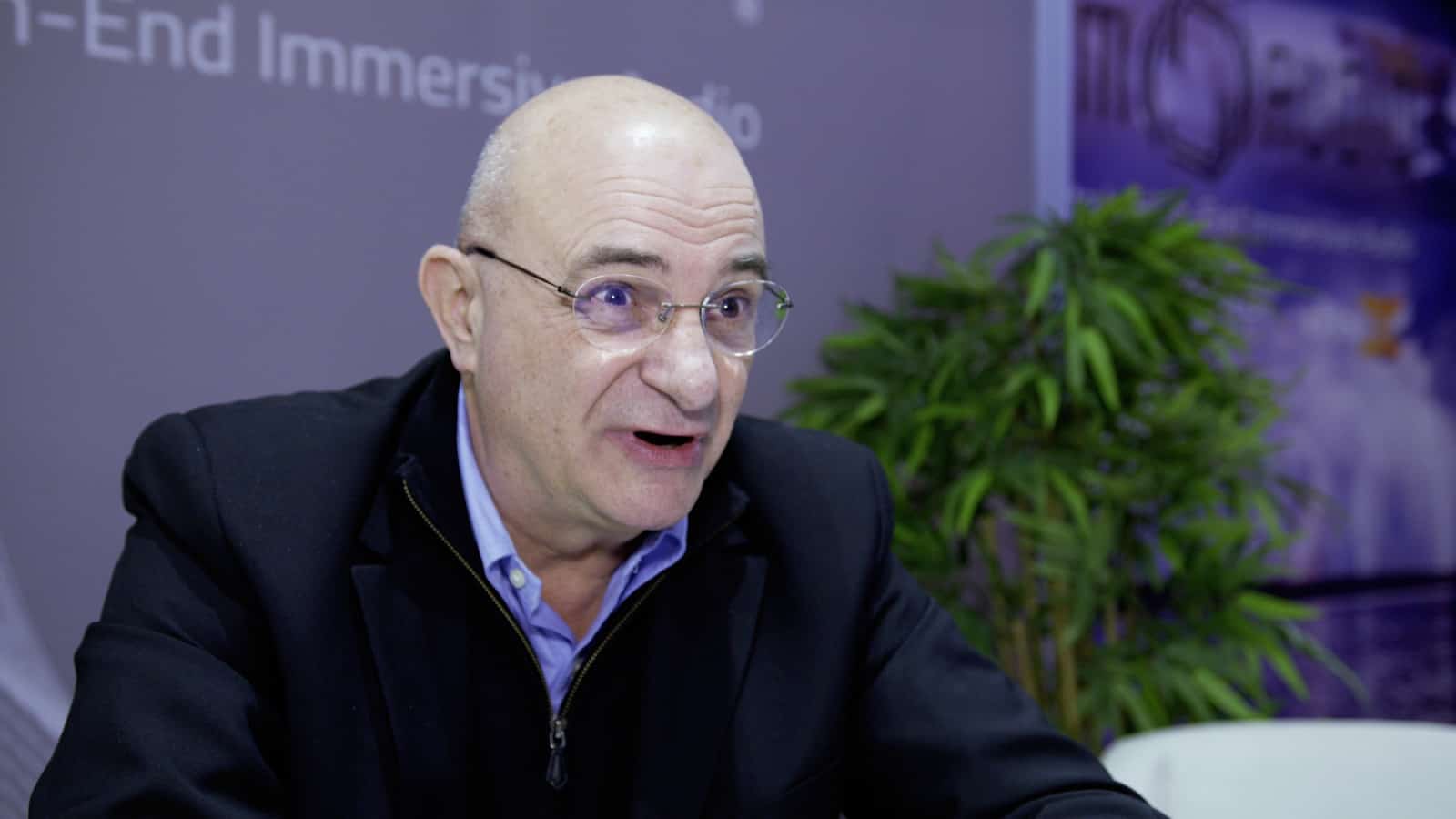


Comparing Auro-3D vs Dolby Atmos vs DTS:X, Yves Trélohan explains that StormAudio’s product line supports all three formats — a real challenge, since each one sets up speakers differently. It’s part of what makes StormAudio, the French manufacturer introduced here, such a complex engineering exercise.
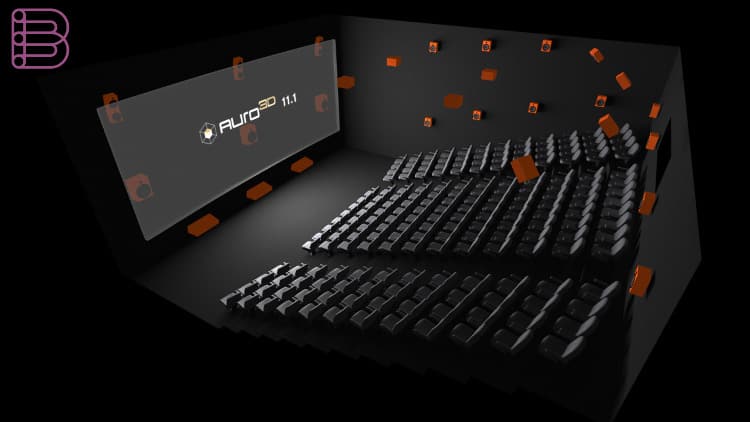
Three formats, three speaker layouts
Dolby Atmos builds on a traditional surround configuration of 5, 7 or 9 speakers, adding 2, 3 or 4 ceiling speakers on top. Most movies are mixed with this layout in mind.
Auro-3D takes a different approach. Because human hearing localizes sound more horizontally than vertically, Auro-3D uses only one speaker directly overhead, with a second layer of height speakers angled 20–30° above the base layer. According to Auro Technologies, that’s what makes the experience more immersive.
DTS:X arrived last and, in Trélohan’s words, was clever about it: it supports both configurations.
Why StormAudio doesn’t pick a favorite
So which format is best? It depends entirely on the content — most material is optimized for one particular format and speaker layout, and StormAudio never claims one format beats another. If content is natively mixed in Dolby Atmos, that’s the configuration to use, even if it could technically play through Auro-3D. The manufacturer’s real challenge is being flexible enough to support every format and speaker configuration intelligently, so any format can run through a chosen layout — “very complex,” as Trélohan puts it. It’s the same philosophy behind what Trélohan considers high-end immersive audio more broadly.
Visit the StormAudio | Auro-3D | Dolby Atmos | DTS:X website.
Frequently asked questions
What’s the difference between Auro-3D, Dolby Atmos and DTS:X in speaker layout?
Dolby Atmos uses a traditional 5/7/9 speaker base with 2 to 4 ceiling speakers added on top. Auro-3D uses only one speaker directly overhead, with a second layer of height speakers angled 20–30°. DTS:X supports both layouts.
Which 3D audio format is best?
None, according to Trélohan — it depends on how the content was mixed. Material natively mixed in Dolby Atmos sounds best through a Dolby Atmos layout, even though Auro-3D could technically play it.
Why does StormAudio support all three formats?
Because the real challenge for a manufacturer is being flexible and intelligent enough to support every format and speaker configuration — complex, but necessary to stay compatible with any content.