


The verdict
The StormAudio Core 16+ delivers reference-level, holographic sound with seamless Dirac ART calibration, earning a 9.5/10 and a Best of High End Award. It's built for installers and enthusiasts who want total calibration control, not for anyone looking for a plug-and-play solution.
- Reference sound performance
- Only available in black
Do the French take pride in their language and culture? Yes they do. They even invented their own word for it: chauvinism. We mainly know France for a mix of culinary excellence, culture, romance, and a certain way of life. French cuisine is UNESCO World Heritage. Think fresh baguettes, croissants, cheese (hundreds of varieties!), escargots (snails), frogs’ legs (though they eat them less than people think), and of course wine from regions like Bordeaux and Champagne. Paris is the fashion capital of the world, with haute couture, brands like Chanel, Dior, and Louis Vuitton, and Paris Fashion Week. The Eiffel Tower, the Louvre (with the Mona Lisa), Versailles, Notre-Dame, and the romantic atmosphere of Paris as the “City of Light / Love. The French are known as romantic, with cheek kisses as greetings, long lunches, and a focus on “joie de vivre.” Stereotypes like berets, striped shirts, and onion sellers (from the past) are part of it too. In short, France evokes images of elegance, delicious food, beautiful art, and a passionate way of life — things that make the country such a popular vacation destination! But wait, not a word about hi-fi or high-end?

France has a strong reputation in the high-end hi-fi (high-fidelity audio) world, with brands known for innovative design, precision engineering, and a signature “French sound” that’s often described as refined, detailed, and musical. Arguably the most famous French hi-fi brand worldwide is Focal, specializing in speakers and headphones with in-house driver technology like beryllium tweeters (Utopia series). Devialet, known for futuristic, high-tech wireless speakers with massive power in compact forms. The Phantom series: egg-shaped wireless speakers delivering incredible volume and bass without distortion. Triangle is known as a long-standing speaker manufacturer focused on dynamic, engaging sound at various price points. Iconic product: The Borea series remain popular for their clarity, balance, and value in entry-to-mid hi-fi setups. Cabasse are pioneers in coaxial driver technology and spherical speakers for omnidirectional sound. Their most iconic product is La Sphère, an ultra-high-end, four-way coaxial sphere speaker system that’s a statement piece in luxury audiophile setups. Last but not least there’s Atoll. The brand that specializes in clean, neutral amplifiers and integrated systems, all made in France. Models like the IN series integrated amplifiers are praised for their dual-mono design and musical performance. Other notable mentions include Micromega (compact amps like the MyAmp), Elipson (historic spherical designs), Jadis (luxury tube amps), and Advance Paris (stylish amps with VU meters). Wait, no mention of StormAudio?
StormAudio, a storm in a teacup?
The StormAudio brand was initially launched by the Belgian company Auro Technologies (known for the Auro-3D format). In 2015, Auro created a division for home entertainment and luxury audio, and introduced the StormAudio line: high-end processors and amplifiers compatible with immersive formats. From the start, StormAudio collaborated closely with Auro Technologies to reproduce the cinematic immersive audio experience at home. In December 2017, Yves Trélohan (then Senior VP at Auro) organized a management buyout, backed by investor Saffelberg Investments. He acquired the StormAudio division (including the brand, intellectual property, and infrastructure) from Auro Technologies. As a result, StormAudio was placed under a new, independent French company: Immersive Audio Technologies (headquartered in Saint-Herblain near Nantes). Yves Trélohan became managing director, and later Olivier Thumerel joined as CEO. Since then, StormAudio has been fully French, with production in France.
The French brand quickly became known for supporting all major immersive formats, including Dolby Atmos, DTS:X Pro, Auro-3D, IMAX Enhanced, MPEG-H, and more. Their products emphasize advanced features like Dirac Live room correction (including Room Correction, Bass Control and now Dirac Active Room Treatment, which they pioneered in full integration), multi-channel processing (up to 32 channels), Audio over IP (AoIP), and exclusive tools like Storm XT for ambiance expansion.

Iconic products include the Elite MK3, their flagship processor with up to 32 channels. The Core 16+ represents the more compact yet high-performance option for up to 18 channels. Finally there’s the Evo processor, a versatile, future-proof fully digital model. Their product line-up extends with paired power amps like the PA 16 MK3 or PA 8 Ultra and Fusion 20, an immersive AV integrated amp processor that seamlessly incorporates 16 channels of Edge amplification technology developed by Danish-based ICE Power.
StormAudio has won multiple CEDIA, CES and press demo and technology awards. The brand is sold through exclusive dealers worldwide, powering some of the most elaborate custom home cinemas. It’s aimed at serious enthusiasts and professional installers who want reference-level, theater-like immersion at home.
Introduction to the StormAudio Core 16+
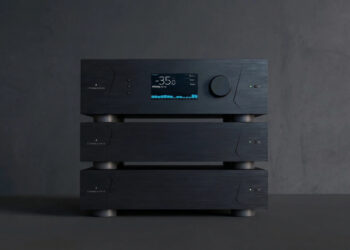
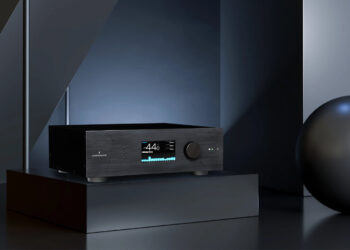
The StormAudio Core 16+ is a premium French-designed and manufactured immersive audio preamp/processor, positioned as a more compact and accessible alternative to the flagship Elite MK3 series while retaining much of its reference-level performance. Housed in a sleek 3U rack-mountable chassis with a refined minimalist design, including a full-color 5-inch front display for real-time monitoring, it serves as the central brain of high-end home cinema systems. The StormAudio Core 16+ decodes and processes all major immersive audio formats, delivering cinematic soundtracks and music with exceptional clarity, dynamics, and precision. Building on the original Core 16, the “+” variant introduces two more channels expanding the support to 18 fully processed channels, with the inclusion of the Storm XT channel expander, making it ideal for advanced setups like 9.4.6 Dolby Atmos configurations without compromising on StormAudio’s signature neutral and detailed sound reproduction. Furthermore, there’s acces to Expert Bass management with flexible routing and multiple bass zones and the HDMI dual zones Matrix. This allows you to send independent video signals to the 2 HDMI outputs. In the original StormAudio Core 16 these outputs typically operates as mirrored outpus (same source on both). An optional license package (1.000 EUR) unlocks these extra features and upgrades a regular StormAudio ISP 16 to a 16+.

Key features of the StormAudio Core 16+
The Core 16+ stands out with a rich set of advanced tools tailored for custom installers and audiophiles:
- Immersive Format Support: Full decoding for Dolby Atmos, DTS:X Pro, Auro-3D, IMAX Enhanced, and legacy formats.
- Channel Flexibility: Up to 18 channels of processing, with 20 parametric EQs per channel, multi-way active crossovers (up to four-way), unlimited subwoofer support, and sophisticated bass management.
- Room Correction: Industry-leading integration of Dirac Live, including Bass Control and Active Room Treatment (ART) for optimized multi-subwoofer performance and reduced room modes.
- Audio Performance: Identical high-quality DAC section as the Elite series, combined with a proprietary hybrid analog/digital volume control for superior dynamic range and low noise.
- Connectivity and Control: HDMI 2.1 with 8K support, balanced XLR outputs, intuitive web-based UI, StormEasy setup wizard, iOS/Android app, IR remote, and integration with home automation systems.
- License package: Expert Bass Management, StormXT channel expander, and multi-zone HDMI matrixing.
- Hyperstream IV ESS Sabre DAC upgrade: From media 2025 the Analog Devices DAC board can be upgraded for a lower noise floor, better linearity, higher dynamic range and consistent high-end performance (950 EUR)

The ADEC upgrade
ADEC (AdvancedDECoder) This next-generation hardware decoder section was announced in early 2025. This modular upgrade significantly enhances the decoding and processing capabilities of their immersive audio processors, emphasizing StormAudio’s focus on future-proof, upgradeable designs.
- Announcement and rollout: StormAudio unveiled ADEC in January 2025 as part of broader hardware and software advancements. New units shipping from France (e.g., Evo, Elite MK3, Fusion) began including it immediately. The upgrade became available as an optional retrofit for existing owners by the end of Q1 2025, with integration into the Core 16 scheduled for the second half of 2025.
- Compatibility: It’s fully backward-compatible with all existing StormAudio models (Elite, Core, Evo, Fusion, Master) and even extends to Focal Astral 16 and Bryston SP4 processors running StormAudio’s optional firmware upgrade.
- Technical improvement:
- In-house redesigned decoder card with dual-core DSP and ARM architecture, delivering up to 10x more processing power and 2.5x faster codec switching (reducing audio dropouts during format changes).
- Support for up to 35 discrete channels (with up to 32 active on current units), ultra-low latency, and perfect channel synchronization—ideal for complex home cinema setups.
- Full certification for the latest immersive formats: Dolby Atmos (including 1.8),DTS:X Pro, Auro-3D, MPEG-H, Sony 360 Reality Audio, and IMAX Enhanced.Expanded configuration flexibility (e.g., thousands of possible speaker layouts) and optimized AV sync.
- User Impact: Owners can upgrade without replacing the entire unit (typically via a dealer-installed card), extending the life and performance of their systems. First reviews and demos highlight noticeable gains in speed, immersion, and reliability.

Setting up the StormAudio Core 16+
Setting up and controlling the unit can be done several ways: via web browser, app, remote and using the buttons on the unit. I decided to go with my Macbook Pro to have the best overview during the whole process. You can access the web browser interface by entering ‘stormaudio.local’ in the URL bar or the local IP address, retrievable from the network information of the StormAudio Core 16+. The ‘Home page’ offers the choice to opt for the StormEasy setup procedure, the Expert setup or use the Remote Control page.

The Remote Control page provides all the functions of the physical remote , but in a handy global overview.

Let me take you through the Expert setup as this gives you a clear picture of everything this immersive sound processor has to offer. Caution! Get ready to take a leap into the deep, because the possibilities for tweaking seem endless. If you’re not an expert of installer, StormAudio has you covered. Besides a comprehensive and clear manual, you’ll find a large support database on the brand’s website. They’re also available to assist you in person if needed. For example, I had an online meeting with Thibaud Phelipot (Head of Technical Support) where he helped me with a specific inquiry about subwoofer groups.

The first page where you end up after starting the ‘Expert setup’is the ‘System’ page. It shows quite a few settings: main controls, processor status, licences, system back & restore, password mangement and network settings. Check out the menu: system, inputs, main speakers, settings, presets, monitoring and remote control.

On the ‘Input’ page you can activate and set up inputs according to your needs.

The ‘Settings‘ page allows to dive into an extra layer of more detailed settings regarding HDMI, IR remote control, system setup, front panel, triggers and zone settings. You can access those individual settings by just scrolling further down or using the menu in the upper left corner.

Next in the menu is the ‘Presets‘ page. Here you can create and delete presets. Presets are defined by the chosen theater, the Dirac profile, the Dirac curve (which you can name), audio zone, triggers and prefered upmix.

To improve the durability of the product, StormAudio introduced the ‘Monitoring’ page. Here you can check the internal temperature of the processor and the fan speed. There’s the option to turn on VU meters of the input, outputs, aux inputs and the HDMI / Downmix. More details can be rolled out the signal info, video info, power supply status and an event log.

Now the real journey begins … Let’s set up a theater with our specific speaker configuration on the ‘Main speakers‘ page. Let start with how the end result will look like.

Please check the hardware list of this review or the ‘reference system’ link on our website for more details on the different speakers in our system. For didactic reasons I’ve created a new ‘Review layout’ to guide you through the speaker setup.

We add a theater via the large plus sign and end up in the speaker configurator. First up is the base layer: 7 speakers in a standard configuration together with 5 sub(woofer)s.

In the next screen we assign our four height speakers to the height layer.

All our 16 speakers have been assigned, so we have no speakers to add to the top layer. Top layer speakers are often associated with Auro-3D setups. Recap. With the StormAudio Core 16+ you have 18 channels at your disposal. In the ‘Settings’ page you can activate that option. The 2 extra channels are routed through a digital output and have full processing capabilities.

The summary offers a final check of the speaker configuration, both in 2D and 3D.


Let’s press save to store our configuration. A very handy function is the ‘Output mapping’, accessible from the ‘Main speakers’ page. Pressing the button in the upper right corner opens up a popup allowing you to match the right outputs with the right speakers without changing any cable connections on the back of the processor. Kinda neat, right?

Now things get really interesting. After saving the speaker setup in a theater, you end up on the overview page of the saved setup.
Here you can fully control:
- Channel routing
- Channel status
- Activating EQ
- Channel naming
- Corresponding signal
- Size and filtering setting
- Filter frequency
- Filter slope
- LFE setting

These are some powerful tools to finetune your specific setup! But there’s more. In this screen you can also set the volume reference, verify your speaker setup with the generator using pink noise, sine, pink 400Hz-4kHz or an external signal. Saving, deleting, viewing theater setups, arranging the signal routing or create a child theater is also possible in this screen. Within a theater setup you can create different profiles: you can create new ones, delete, duplicate, rename and save them. Dirac can also be started from here. We’ll cover this in a separate section. Let’s take a closer look at the EQ section, a vey powerful tool again. The EQ section is set before any Dirac room calibration, with 20 available EQ cells per channel! Create EQ’s while choosing filter type, setting the frequency, gain and Q-factor. Copying saved EQ profiles to other channels is child’s play. It’s even possible to load saved EQ profiles (cross-processor) using the REW import button. Switch the graph on or off as you see fit. The accumulated EQ graph offers a visual reproduction of the created EQ’s.

The ‘Main speakers’ page opens up in the ‘Standard Bass management’. Since the StormAudio Core 16+ has the optional license pack on board, there’s the ‘Expert Bass management‘, opening extended features as sub grouping, sub routing, setting subsonic filters and bass delay.

Beside the bass management section, there’s another section which offers full control over delay / distance, level gain, enabling and setting limiters, utilising TiltEQ and the posibility to invert the polarity. When you’re not a fan of room calibration software, this immersive sound processor offers a ton of settings and features to tweak the sound what we call ‘manually’. If choosing this way will offers the same end result remains the question. But the option is available with maximum support from the processor.

Mastering room acoustics with Dirac ART
When you buy a StormAudio Core 16+, full access to the following Dirac products is included: Room Correction, Bass Control and ART (Active Room Treatment). The arrival of Dirac ART was long anticipated. StormAudio pioneered the integration of this softtware with availability in all their products since 2023. In comparison it took until Q4 of 2025 until the software was released for selected AV receivers from Denon and Marantz. Dirac ART builds on the Room Correction and Bass Management and uses several speakers together as a collaborative system to proactively supress room resonances instead of correcting them afterwards.
The entire Dirac process consists of 7 phases:
- Device selection
- Recording device selection
- Level measurement
- Sweet spot selection
- Actual measurements (you need minimum 9 to be able to use Dirac ART)
- Filter design
- Filter export
Here we go! In the ‘Main speakers’ page we press the Setup button in the right upper corner to access the Dirac Live group setup to gain insight in how Dirac places speakers into groups.

Pushing the Dirac button opens the ‘Dirac Live Calibration‘ popup screen. Push the ‘Start new calibration‘ button.

Now we need to start the Dirac Live software on our MacBook Pro to make connection with the StormAudio Core 16+.

Once connected we need to choose our recording device. At the time of the measurements we used a miniDSP UMIK-1 USB acoustical measurement microphone with associated calibration file to get accurate results. I find it particular that StormAudio doesn’t include a calibration kit, when most other brands do. They do offer solutions but it will cost extra. Now that the microphone is connected we adjust the Mic gain and Master volume and correct the channel volume using the corresponding slider for each channel with the test noise so that the meter reaches the middle area.


Next step: sweet spot selection. Do we want a tightly focussed sweet spot (single chair at listening position), focussed imaging (middle seat on a sofa) or wide sweet spot (complete sofa)? I chose the middle seat on the sofa. Ready to start measuring. We need at least 9 measurements to use Dirac ART. First measurement is at the sweet spot, the other ones in the area around the sofa. After each individual measurement you choose the next position, replace the microphone and confirm. The complete cycle takes about 30-45 minutes. Moving on to filter design the software first starts preprocessing. Interesting to see which speakers Dirac Art puts into groups and which target curves it sets. There’s a lot to learn from the measurement results. Per group Dirac Arts shows the spread, target curve, filters (102 of 108 used), curtains, spectrum, correction curve and group colors. On the left bottom it shows which speaker groups Dirac Art chose to support each other. Of course these setting are completely adjustable. For now, we follow what Dirac did / suggests. It’s also possible to switch from the set target to the impulse response from each group (top right corner). In Group 1 Dirac combines the left and right (CUE-100) speakers.


Group 2 only consits of 1 speaker: the center channel (CUE-100).


Dirac ART puts the surround left and right (FR-1) speakers in group 3.


No surprise that the 2 back surround speakers (FR-1) are in group 4.


Surprisingly Dirac Art puts all 4 height speakers into group 5.


Final group 6 is the collection of all sub(woofer)s (SB-17 + BW-20).


To complete the Dirac calibration the calculated filters can be exported to a profile. Consulting the delay, level, limiter and polarity section on the ‘Main speaker’ page shows how Dirac measures the distance of the speakers from the sweet spot and to which level each individual speaker has been set.

I ended up creating 3 different profiles: Dirac, Dirac HT and Dirac pers. The Dirac HT profile differs in target curves from the Dirac profile. I downloaded the target curves from the StormAudio website for the main, surrounds and subwoofers. They share a slightly higher and rounder curve in the bass. The rest of the frequency curve isn’t as flat as those from Dirac but slopes slightly downwards from a higher starting position. Let’s call Dirac pers a personal experiment. I rearranged the groups as follows: left + left BW-20 woofer (group 1), center + center BW-20 woofer (group 2), right + right BW-20 woofer (group 3), surrounds (group 4), back surrounds (group 5), height speakers (group 6), SB-17 subwoofers (group 7). Target curves stayed the same (from StormAudio). In general I would describe the Dirac profile as neutral. Dirac HT builds up a little more pressure in the bass, the soundstage (3D sound bubble) feels a little more extended. Dirac Pers expands the bubble even more and puts the front stage a little more backwards. Bass performance is somewhere in between the Dirac and Dirac HT profile. How interesting and engaging is it to create profiles with dedicated target curves and adjustments to satisfy that audiophile hunger!

Immersive format experiences
Music (stereo -> Dolby Atmos upmix)
- The double bass and Nenad seem to be physically present while performing Christos Anesti. Speed, attack and depth are incredible. You can actually feel the instrument, it’s resonating into the room with powerful bass notes that at all time stay perfectly in check. No hanging bass, but the full spectrum restrained and confined. Even all the little nuances add to the overall enjoyment: think of the plucking of snares, the transients of fingers gliding over metal, the sound and color of the instrument itself. Although this track is just 1 double bass playing, you instantaneously are drawn into the interpretation of the musician. Wow, what a warm-up!
- A guitar and double bass play the leading role in the second track Berimbass of Renaud Garcia-Fons, Kiko Ruiz and Transante. The instruments sound so rich and natural. What strikes me about this track is the musicality, the rhythm and the musicians’ enthusiasm. You immediately start tapping your feet to the beat. It’s so easy to follow the melody as a result of the brilliant presentation. Once again I feel like I’m in the middle of the live performance. The quality of the representation contributes to being able to follow the musical structure well: think tempo changes, dynamic contrasts. Sound is very open, layered, accurate, dynamic and punchy.

Let’s go full poppy with our third track: Till the morning from HAEVEN with Lily Meola. The song is completely pulled apart and presented in various layers. I’d venture to describe it as watching music. So much is happening in front of me, beside me, behind me and above me. It’s not just sound coming from speakers, but a coherent musical whole that immerses you in a cosy atmosphere where a good glass of wine and a piece of cheese wouldn’t be out of place. The voices sound bitter sweet, tasteful with extreme texture. Double singing voices move like a wave over and beside you, embracing you with their warmth. I get a first hint of how well this immersive sound processor and Dirac are bringing out the best in oneself. Together they form a harmonious marriage.
Son Lux doesn’t shy away from challenging the bass performance of your system. Plans we make really fires up the bass section of our system. A lot of energy fills the room. It’s hard to describe this phenomenon. There’s power, punch and dynamics. The bass is so dialed in that you actually feel it coming over you and passing through the sofa. Dirac Art manages to distribute that energy evenly throughout the space. Not a single room rattle. No peeps or creeks. Just plain bass power hitting you in the face. The slam doesn’t come from a lightweight, rather from a heavyweight champ. It doesn’t seem easy to me to get five subs to perform as one, especially considering the different profiles of the SVS SB-17’s and the Lyngdorf BW-20’s. Dirac Art does a fantastic job!

Let’s revisit a classic track: Billie Eilish with When the party’s over. What immediately stands out is how open and nearby her voice sounds. She’s singing to me personally. Her voice carries so much detail that I’m surprised how much they’ve put into the recording. I’ve heard this track on a lot of systems, but here voice always sounded smaller, distant and flatter. The dynamic contrasts are rendered so well that you can perceive her playing with the power of her voice. Again, all the voice effects are spread into the room in a way that they support the main voice while you can also enjoy them separately. Her brother (the producer) looks like an artist filling his canvas with colorful strokes of paint.
To sum things up … listening to music took place on a whole new level. Acoustics no longer stand in the way of a complete immersive experience. It’s music first! The musical performance of the StormAudio Core 16+ along with Dirac is simply fantastic. Voices sound larger than live, open, and engaging without losing a single detail. Instruments just stand in the room. The sheer power in terms of dynamics is unbelievable. Never before could I generate so much bass power in our listening room. Don’t be fooled! Bass is short, deep, fast with punch and sheer impact … never bloated. All speakers seem to be in perfect harmony with each other playing with sound spheres that most of the time you think you are watching the music.
Movies (native codecs)
- Watching the opening scene of Star Trek – Into Darkness immediately set the tone. The sheer drama when Spock was sent down to the volcano to save the people of the planet was overwhelming: erupting lava, gas explosions, a failing shuttle engine and the timed explosive device. It all felt so real like I was right in the middle of it. While captain Kirk and doctor Bones were running towards the cliff, Kirk stunned their ride so they had to make a run for it escaping the local population. That ride was a large beast. When it fell down, I jumped up on the sofa. They dive of the cliff to reach the Enterprise which is parked on the bottom of the ocean. I love the scene where they fire up the engines of the Enterprise to leave the water and make their escape. The roar of the engines together with the sound effects build up so well until the moment they go to warp and leave for space. At some point I thought the roof was opening for the Enterprise to escape. I felt as if I was sitting in the command chair.
- Dino time! Jurassic Park — Fallen Kingdom is a true classic. My personal highlight of the movie starts when the girl is trying to stay ahead of a dino, ending up laying in bed in her room. But the dino’s are so smarty. The beast finds its way into her room, even opening the window with the handle. What comes next is pure cinema: both in picture and sound. The animal moves closer to the girl while hanging over her bed. At some point it makes a growling sound. The rendering is so realistic that you spontaneously look around. Its head hangs just beside you as it blows its foul breath into your ear. Realistically horrible. A big shout-out to the sound designers of this movie. All those clever sounds and a great musical scores add an extra dimension to the experience.

John Williams wrote the music of a lot of blockbuster movies. No surprise he wrote the score for Jurassic Park. He conducted a mix of his best work with one of the world’s best orchestras. He was well in his eighties in 2020 when they recorded this concert: Live in Vienna. The Dolby True HD version puts you right in the best seat of the house. I noticed while watching a lot of concerts that you sometimes see musicians performing but don’t hear them. Try mixing and mastering a full-blown classical orchestra. No sinecure. Again, all the instruments sound so natural, rich and full. Those musical nuances are so romantic and lovely. Anne-Sofie Mutter plays her violin inspiringly. Her virtuosity is reinforced by an abundance of details. Every flourish of her bow sounds just a little bit different, making her performance both unique and world-class. From the finest piccolo sound to the rumble of the bass drum, the passion and drive of the orchestra oozes from it.
Gladiator II comes nowhere near the original Gladiator. They should have just left it. Sometimes the people get what the people want. We can feast on the numerous fight scenes. At one point, a rhinoceros roars into the arena looking for blood. The thumbs feel like small earthquakes. All sense of reality is lost when they flood the arena and ships suddenly appear. But hey, anything for fun and spectacle, right? Arrows fly around, sharks swimming around looking for limbs. It’s all very entertaining and amusing. The StormAudio’s performance gives this film an extra dimension. It’s more than just experiencing the action; you’re part of it. That’s a whole different ballgame.

Save the best for last? Absolutely. Let’s end on a high note. Fast forward to the epic final battle scene of Star Wars IX — The rise of Skywalker. Two different scenes alternate: the Jedi trying to take out as much destroyer canons as possible and Rey and Kylo Ren take on the Sith. X-fighters and TIE fighters swarm off the screen into our listening room. Duck! Shooting up those destroyer canons, obliterating them all together creates such low frequency energy that I’m wobbling in my seat. When a destroyer drills itself into the ground you feel the low frequency waves affecting you. I can no longer speak about a soundstage, better would be a 3D sound bubble. And it virtually extends far beyond the room size. Since we are in the galaxy, the sound information is just overwhelming. The voice of the Sith makes you shudder. Its dark and macabre tone exudes evil. The counterbalance comes from Rey and Ren and a pair of light sabres. Boy, when they ignite those you get a kick in the butt from the subs. When they use Jedi power and move Sith soldiers with hand / arm movements the sound producers put in a lot of low frequency effects. The power, punch and weight of these effects is mindblowing. Every guest who watched the Sith throwing some kind of lightning out of his hands flew off the sofa. I’m all the Sith he said. And I am all the Jedi she said. Lightning versus dual light sabres. What an epic scene in all areas. I’m not watching the scene, but am part of it. I’m standing between Rey and the Sith. Thankfully, good prevails.
Listening to music was already happening at a new level. The movie experience builds solidly on this. The processor and Dirac make all the speakers work together in an unprecedented way. We move forward from a soundstage to a genuine 3D sound bubble. Sounds are no longer coming out of the speaker. Collaborating speakers create sound areas that immerse you in an atmosphere of coherence, extra data and lifelike sound. The combo is capable of uncovering so much additional information that you have to listen and watch everything again.
Upgraded DAC section
StormAudio recently converted from the Analog Devices ADAU1966 DAC board to the Hyperstream IV ESS SABRE DAC board with the ES9039PRO DACs. While the Analog Devices was a solid dac solution, the Hyperstream IV ESS SABRE DAC board offers a major upgrade in terms of specs. Key highlights include:
- Extended dynamic range (120dB vs 118dB)
- Extended support for high-resolution formats (32-bit/768kHz vs 24-bit/192kHz)
- Lower total harmonic distortion (THD+N)
- Customizable digital filters
- Hardware control modes
The Analog Devices DAC board is generally praised as warm and organic. On the other hand, the ESS SABRE DACs are often subjectively described as detailed, transparant and resolving. Some prefer them for their neutral or even analytical sound. In the real world, the result depends on the implementation of the DAC board, not so on the absolute specs. We expected the engineers of StormAudio to have a lot of experience in finding the right implementation for their immersive processors. The proof is in eating the pudding as they say. High-end sound experiences are often very personal, subjective and depend on the listeners perception. With the original DAC board voices sounded very pleasant, music and movie scenes fluent and organic. The upgrade presented a more neutral and resolving sound without becoming analytical. If you ask me, that’s the right way to go with an immersive surround proessor. The more revealing the general sound becomes, the more you get drawn into the music and movies. The overall sound presentation became more clearer, like an image that becomes sharper. Certain tracks or scenes revealed new information that just wasn’t there before. Hail to StormAudio’s pursuit to offer their clients the best possible technology and sound.
Front panel
- Down button (4)
- Home / Access (3)
- Up button (2)
- Display (5)
- Volume know (6)
- IR receiver (7)
- Power button (1)

Back panel
- Power socket (8)
- Power switch (8)
- LAN ethernet port (9)
- 2 x USB ports for USB microphone RTA function or for service 5V/500mA max (10)
- IR in + out (11)
- 4 x Trigger out (12)
- Zone 2 digital toslink output (16)
- 3 x Digital toslink inputs (13)
- 3 x Digital coaxial inputs (13)
- 4 x Analog RCA inputs (14)
- 16 x Analog XLR output (15)
- 7 x HDMI 2.1 inputs (17)
- 2 x HDMI output 17)

Technical specifications
- Auro-3D, Dolby Atmos, DTS/X Pro, IMAX Enhanced decoding
- StormXTR channel expander
- All grades of Dirac Live licence
- Up to 9 Dirac Live Active Room Treatment supporting speakers
- StormMonitoring remote monitoring
- 18 Output channels
- 18 Decoding / upmixing channels
- Up to 192kHz supported sample rate
- 48kHz post processing sampling rate
- Dirac Live runtime with high resolution mixed-phase filter
- Standard & Expert Bass Management
- Flexible bass routing up to 6 zones
- Unlimited multi-subwoofer channels
- Up to 4 multi-way crossover (6 to 48dB / oct, Linkwitz-Riley, Butterworth) per channel
- Up to 20 parametric EQ filters per channel (REW plugin)
- 100 Mbps ethernet
- 118dB dynamic range with Analog Devices DAC board
- HDMI 2.1a standard
- HDCP 2.3 standard
- 4K UHD, rec BT709 and rec BT2020
- HDR10 / HDR10+ / HLG / Dolby Vision
- RGB, YcbCr, 4:4:4, 4:2:2, 4:2:0 color space and subsampling
- Deep color 12 bpc
- 8K / 4K 120fps maximum resolution support (18 Gbps)
- 3D / OSD
- ARC / eARC
- Streaming Roon ready end point
- Audio zone configuration
- Individual theater and zone source selection (Main & Zone 2)
- Unlimited Theater and zone listening presets
- 10 Dirac Live presets per Theater / Zone
- Backup and restore of set-up
- Firmware update via USB / network
- Advanced control via front panel
- Web-based product configurator
- TCP / IP API based control
- StormRemote control application (iOS / Android)
- Crestron, Control4, RTI, ELAN home automation drivers
- Logitech Harmony IR database integration
- IR remote control handset
- Rack integratable with removable ears
- 8.3 Kg net weight
- 3RU size
- Dimensions of 44,2 (L) x 13,27 (H) x 40,22 (D) without ears / feet (Ears +4cm, Feet +2cm)
- 200 Watt maximum power consumption

StormAudio Core 16 pricing
StormAudio Core 16: 10.950 EUR
Optional license package: 1.000 EUR
Hyperstream IV ESS Sabre DAC upgrade: 950 EUR
Calibration kit with case ¹: 1.190 EUR
Microphone mini-kit ²: 290 EUR
Calibration service or Pro Remote Assisted Calibration ³: 990 EUR
¹ Includes flightcase + calibrated microphne + microphone stand with boom + USB cables + USB / CAT 5 cable & extender
² includes calibrated microphone + pod + USB / CAT 5 cable & extender
³ includes StormAudio Designed service with microphone survey — 4 hours maximum
Software list
Music
- Christos Anesti — Nemad Vasillic — Bass Boom
- Berimbass — Renaud Garcia-Fons, Kiko Ruiz, Negrito Trasante — Arcoluz
- Till the morning — Haevn, Meola — Till the morning
- Plans we make — Son Lux, Kadja Bonet — Tomorrows III
- When the party’s over — Billie Eilish — When we all fall asleep, where do we go?
Movies
- Star Trek — Into Darkness
- Jurassic Park — Fallen Kingdom
- John Williams — Live in Vienna
- Gladiator II
- Star Wars IX — The rise of Skywalker

Hardware list
- Lyngdorf Audio MP-60 AV Processor Stormaudio Core 16+
- Purifi Audio EVAL5 mono 1ET9040BA Deluxe amplifiers (L, C, R)
- Lyngdorf Audio MXA-8400 8-channel power amplifier (woofer L, woofer C, woofer R, L surround, R surround, L back surround, R back surround)
- Lyngdorf Audio SDA-2400 2-channel power amplifier (L front height channel, L back height channel)
- Lyngdorf Audio SDA-2400 2-channel power amplifier (R front height channel, R back height channel)
- R_volution PlayerPro 8K Signature Edition
- Silent Angel Bremen SL1 Plus music player
- VitOs app for streaming music (mainly Tidal and Qobuz)
- Roon Server for bitperfect Tidal streaming
- Lyngdorf Audio Cue-100 speakers (L, C, R)
- Lyngdorf Audio BW-20 passive boundary woofers (L, C, R position)
- Lyngdorf Audio FR-1 speakers (L surround, R surround, L back surround, R back surround)
- Lyngdorf Audio MH-2 speakers (L front height channel, R front height channel, L back height channel, R back height channel)
- Oehlbach Powerstation 909 multiple socket strip (2 pcs)
- Oehlbach High End Power Cable 4m (2 pcs to feed 2 Powerstation 909)
- Oehlbach High End 8K — Ultra High-Speed HDMI Cable (2 pcs)
- Formovie Theater Premium Ultra Short Throw 4K Triple Color Laser TV
- Vovox Excelsus XLR cables
- Vovox Sonorus XLR cables
- Vovox Excelsus speaker cables 5 (L, C, R, woofer L, woofer C, woofer R)
- Devine Neutrik SpeakON 2 x 2.5mm speaker cables
- Vovox Excelsus power cables
- Standard network switch
Check out our Reference system for more details.
StormAudio Core 16+
€11.950 (optioneel: licentiepakket €1.000 · Hyperstream IV ESS Sabre DAC-upgrade €950 · ADEC-upgrade €950)This is not a toy for the faint of heart. Setting up the unit, performing the Dirac room calibration and fine-tuning the sound completely to your own taste is no easy task. Expert level or installer status is mandatory. Don't let that scare you off though. After the steep learning curve, an incredible cinema experience awaits. A nearby dedicated dealer or installer will probably be happy to help you on your way. Worst case, less experienced enthusiasts can rely on StormAudio's own remote installation / calibration. Use the device itself, remote, app or browser to operate the unit. The sublime integration with Dirac Art offers infinite set-up / room calibration fine-tuning options. Too bad a calibration kit is not included. Bad news if you don't like black. That's the only color the device is available in. As an "analog" conceived processor, this unit offers more than adequate connectivity options. An analog XLR and digital AES-EBU input would have completed the package. I'm head over heels in love with the reference sound of this AV processor. The low frequency energy that it can distribute is not of this world. It makes you shake on the sofa while the room doesn't make any rattling noise at all. Its holographic sound reproduction places you at the heart of the movie or concert. The finest details can be perceived simultaneously with huge bass bursts, resulting in extreme dynamic contrasts. Thanks to the processor's power to separate everything, you can perfectly follow the film score, dialogue and powerful effects. The StormAudio Core 16+ costs a penny, but you get what you pay for and then some. It introduced me to a new reference level. No more watching movies or listening to concerts. Now you're right in the middle of it all. That's a truly next-level immersive experience. Period. In my opinion, the StormAudio brand and the ISP Core 16+ should be part of France's national heritage and should be mentioned alongside other leading French brands. Looking for the ultimate cinema sound? Look no further. Definitely put this processor on your top 3 shortlist. Bestofhighend award!

Pros
- Reference sound performance
- Seamless Dirac integration
- Infinite set-up/room calibration fine-tuning
- Leading low frequency energy distribution
- Holographic resolution and layering
- Extreme dynamic contrasts
- Web based, app, unit and remote controllable
- Fantastic support (online/in real life)
Cons
- Only available in black
- No calibration kit included
- Expert knowledge required
- No analog XLR/digital AES-EBU input


The StormAudio Core 16+ delivers reference-level, holographic sound with seamless Dirac ART calibration, earning a 9.5/10 and a Best of High End Award. It's built for installers and enthusiasts who want total calibration control, not for anyone looking for a plug-and-play solution.
What we loved
- +Reference sound performance
- +Seamless Dirac integration
- +Infinite set-up/room calibration fine-tuning
- +Leading low frequency energy distribution
- +Holographic resolution and layering
- +Extreme dynamic contrasts
- +Web based, app, unit and remote controllable
- +Fantastic support (online/in real life)
Worth considering
- –Only available in black
- –No calibration kit included
- –Expert knowledge required
- –No analog XLR/digital AES-EBU input
Compare more
Other amplifiers we've tested
 9.3/10AmplifiersAtoll Electronique IN400 Evolution integrated amplifier reviewPerformance95Features90Build92Value92Effortless macro-dynamicsSuperb dynamic nuanceNo purpose-built remoteRead the review
 9.0/10AmplifiersGold Note HP-10 Deluxe headphone amplifier reviewPerformance90Features100Build80Value80Immersive sound experienceCustom adjustable sound profilesDistinct difference between analog, Bluetooth and USB-CRead the review
 9.7/10AmplifiersLyngdorf MXA-8400 8-channel Power Amplifier reviewPerformance97Features95Build100Value100PowerhouseFantastic controlOnly XLR (analog) inputsRead the review