

Almost every amplifier, DAC and CD player arrives with a spec sheet that lists a distortion figure, often with an impressive number of zeros behind the decimal point. Total harmonic distortion, or THD, is one of the oldest and most quoted measurements in audio, yet it is also one of the most misunderstood. A figure such as 0.002% looks like a clear verdict on quality. In reality it describes one narrow aspect of a component’s behaviour, measured under conditions that the spec sheet rarely spells out.
This explainer looks at what total harmonic distortion actually measures, why the character of the distortion matters as much as its amount, and why a lower number does not automatically mean better sound.
A measurement with a long history
The idea behind THD is simple. Feed a component a pure sine wave, a single frequency, and look at what comes out. A perfect device would return exactly the same tone, only louder. Every real circuit adds a little extra: tones at whole-number multiples of the original frequency, called harmonics. Measuring those harmonics was one of the first practical ways to put a number on how faithfully an amplifier behaves.
The figure gained formal weight in the 1970s, when the American Federal Trade Commission required amplifier makers to state their rated power together with the distortion at which it was measured. From then on, power and THD travelled together on spec sheets. The same decade also produced the first serious debate about whether a single distortion number tells the whole story, as engineers began to study transient and intermodulation effects that a steady test tone does not reveal.
Total harmonic distortion: what the number measures
Total harmonic distortion expresses the combined level of all those added harmonics as a percentage of the original signal. If a 1 kHz test tone produces small extra components at 2 kHz, 3 kHz, 4 kHz and so on, THD adds them together and compares the total to the 1 kHz fundamental. Many manufacturers quote THD+N instead, which also includes the noise floor of the device.
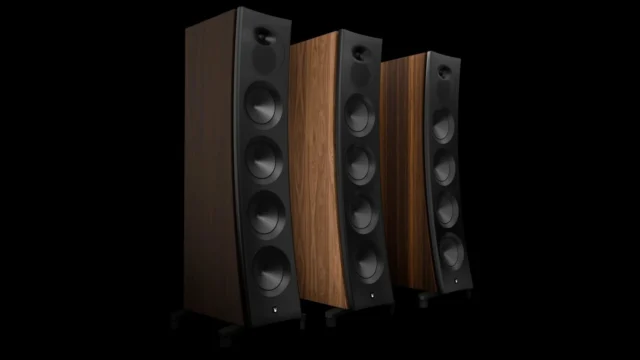
The number only means something together with its conditions. Distortion changes with output level, frequency and load. An amplifier may show a vanishingly low figure at 1 W into 8 ohms at 1 kHz, and a very different one near full power, at 20 kHz or into a difficult 4-ohm loudspeaker. When a spec sheet gives a single THD value without saying how it was measured, it is hard to compare it with anything. A good example of the opposite approach is the Norwegian Sigberg Audio Saranna active loudspeaker, whose specification states less than 1% THD at 96 dB and 1 metre above 100 Hz: level, distance and frequency range all included.
Even and odd harmonics do not sound the same
Two components can share the same total harmonic distortion figure and still sound different, because the percentage says nothing about which harmonics make up the total. Even-order harmonics, the second and fourth, are related to the original tone by octaves. At low levels they tend to blend in and can add a sense of fullness or warmth. Odd-order harmonics, the third, fifth and seventh, form less consonant intervals with the fundamental. Higher-order odd harmonics in particular are easily heard as hardness or edge, even at levels that look small on paper.
This is a large part of why many listeners still value valve designs, a subject we explored in Why Do Audiophiles Still Trust Vacuum Tubes?. A single-ended triode can measure several percent of THD, mostly second harmonic, and still be described as natural and engaging. A transistor amplifier with a fraction of that distortion, but spread over higher odd orders, can sound less relaxed. The total is the same kind of number in both cases; the spectrum behind it is not.
How total harmonic distortion shows up in today’s high-end designs
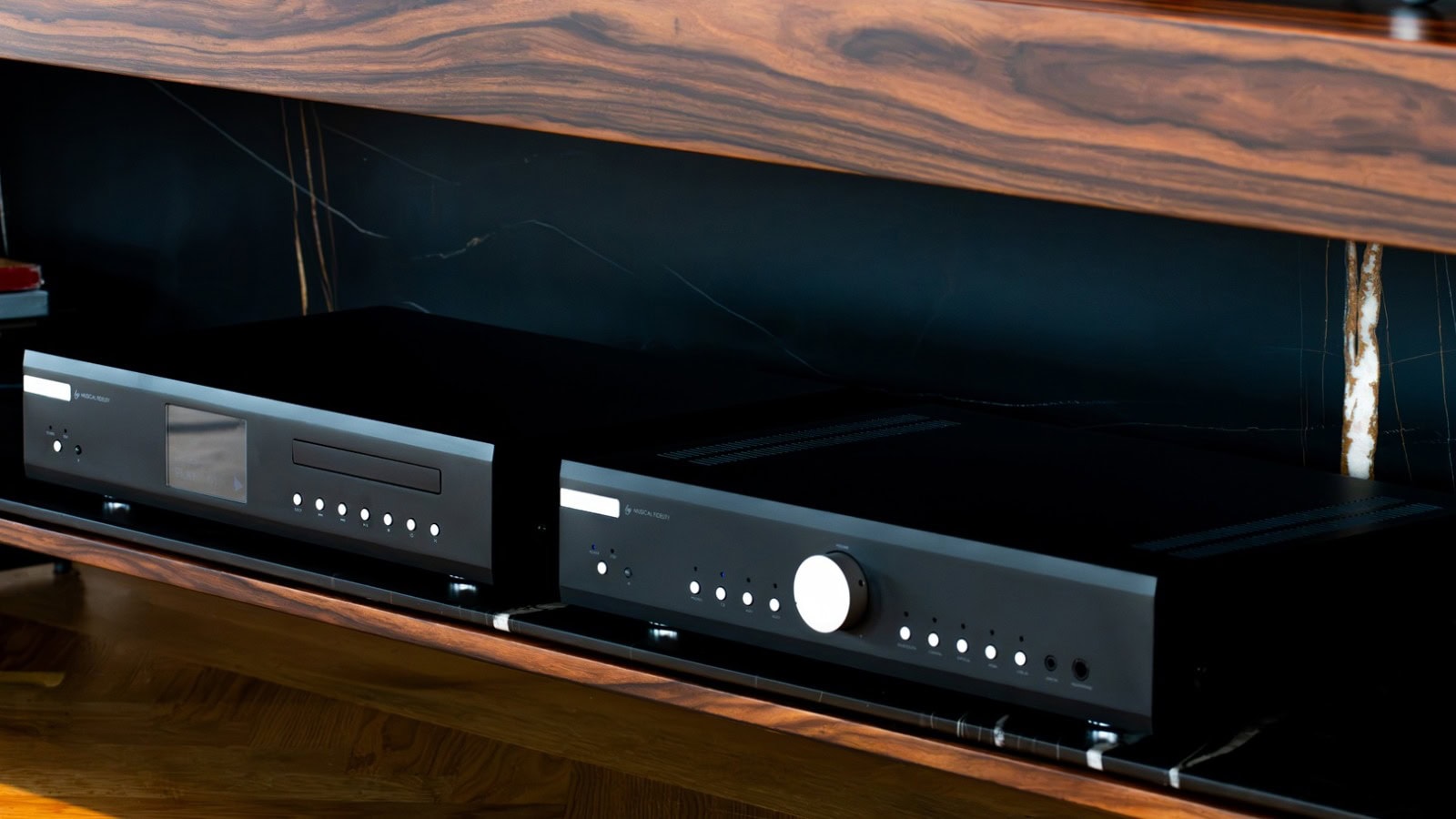
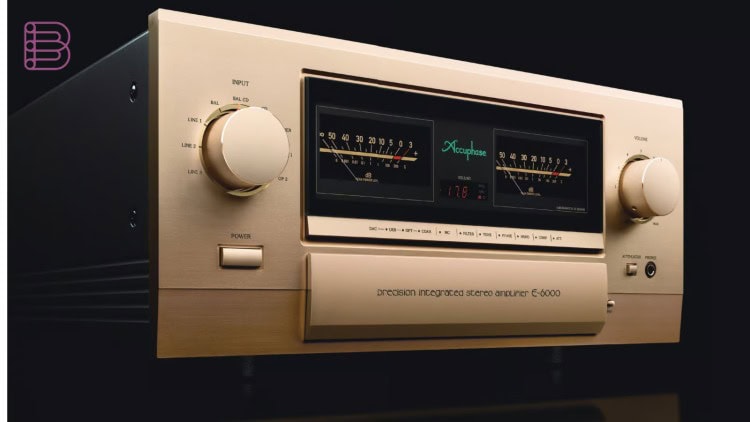
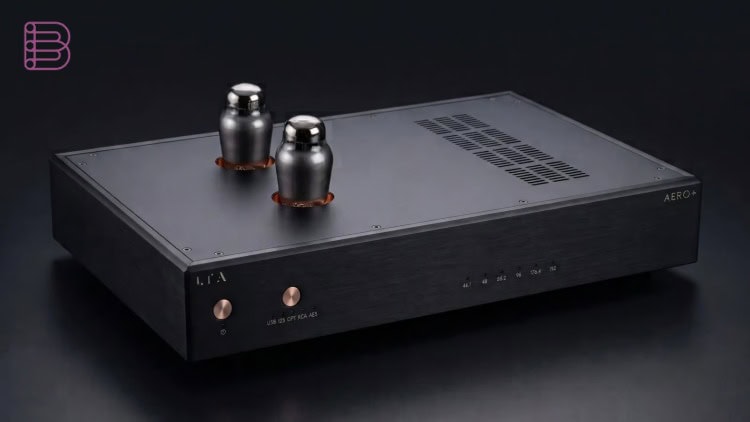
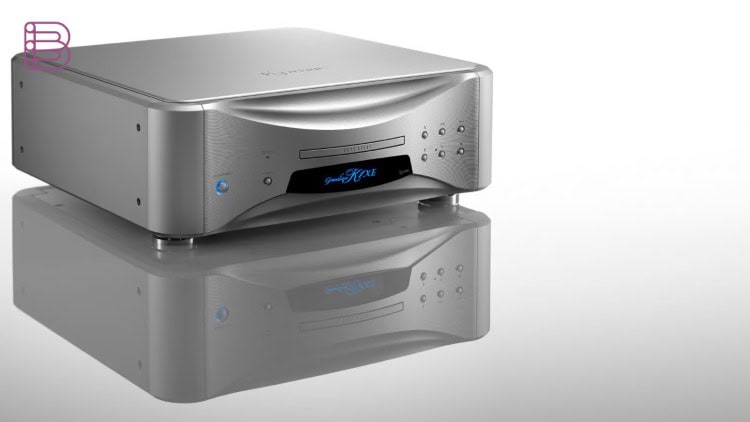
Current products show how differently manufacturers deal with distortion. Some aim for the lowest possible figures through feedback and careful circuit design, as in solid-state flagships such as the Accuphase E-6000. Others deliberately keep a valve in the signal path. The Linear Tube Audio Aero+ uses tubes in a DAC, and the Advance Paris NOVA range combines tube and transistor stages in its integrated amplifiers. Digital sources such as the Esoteric Grandioso K1XE and the Musical Fidelity B1xcd face the same question at the conversion and output stage, while phono stages such as the Audiolab PPA7 and wireless devices like the iFi UP Travel Max have their own distortion challenges, from very low signal levels to compact battery power.
None of these approaches is right or wrong by definition. They reflect different priorities: measured transparency on one side, a chosen distortion character on the other.
Why lower THD is not automatically better
Below a certain level, differences in total harmonic distortion are very hard to hear. Moving from 0.01% to 0.001% is a tenfold improvement on paper, but both figures are far below what most listeners can detect in a normal room, where the loudspeakers themselves usually distort far more than the electronics. At that point other factors weigh more heavily: how a component behaves near its limits, how it handles a real loudspeaker load, its noise floor, and how it deals with complex music rather than a single tone.
THD also says little about intermodulation distortion, where two or more tones interact and create frequencies that are not harmonically related to the music. Those products are often more audible than plain harmonic distortion, and they are not captured by a standard THD figure.
What to look for instead
For the high-end enthusiast, total harmonic distortion is best treated as a starting point rather than a verdict. Look for the conditions behind the figure: output level, frequency range and load. Where a manufacturer publishes a harmonic spectrum or THD-versus-power curve, it tells far more than one number. Check whether the figure is THD or THD+N. And above all, remember that a component with a slightly higher THD can sound more natural than one with a record-breaking figure, depending on which harmonics it produces. The spec sheet can narrow down the choice; the final judgement belongs to careful listening in your own system.