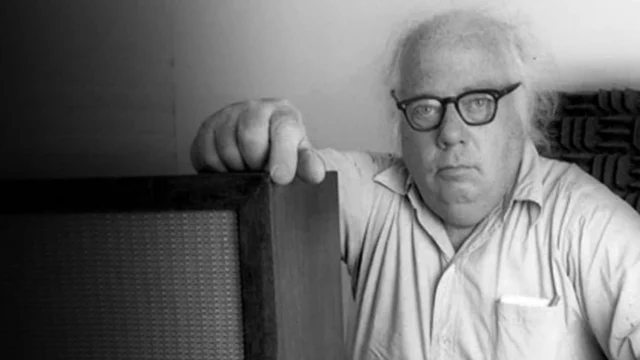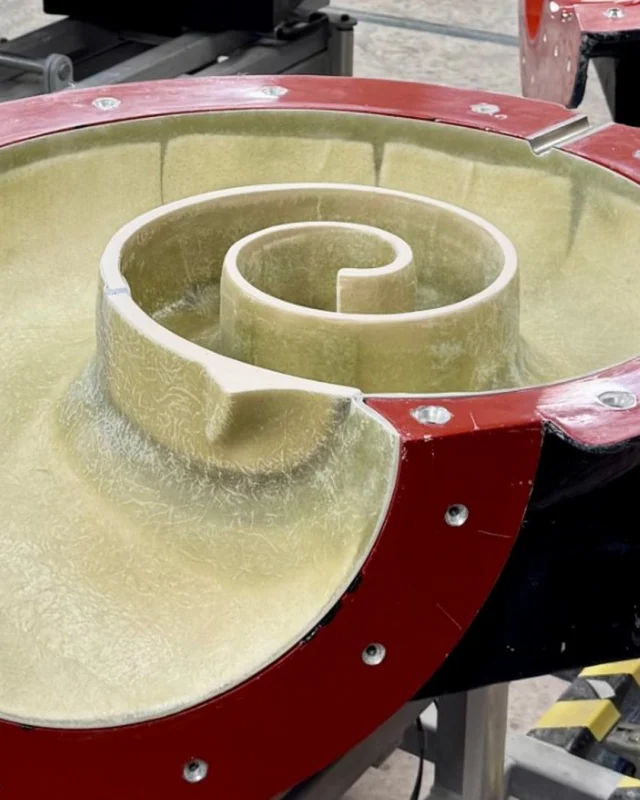


Do we really know how real acoustic instruments sound, and is that sound the reference we should be chasing when we set up a system? In this Tech Talk, Roland Hoffmann of Steinway Lyngdorf takes a deep dive into what actually happens between an instrument, a recording, and its reproduction on a hi-fi system — and why the fine, easily-masked details are where the real fascination of high-end audio lives.

Why real acoustic instruments are harder to reproduce than they seem
A drum is a drum, a guitar is a guitar — except it isn’t quite that simple, as Hoffmann points out. Norah Jones doesn’t sound like Billie Eilish, and neither sounds like Diana Krall, even singing the same note. The difference comes down to overtones: the sound character that sits on top of the main frequency, lower in volume, easily masked, and unique to every voice, every piano, every instrument. A Steinway doesn’t sound like a Yamaha even playing the identical key, and that character — rich, subtle, and fragile — is exactly what cheaper speakers, cheaper amplifiers and noisy rooms tend to mask first, long before anyone notices the main tune has changed.
Small details, big consequences
These overtones aren’t decoration; they’re information. The reverb of the room a recording was made in, the character of a specific studio, jazz club or concert hall, the exact way a singer shaped a word — all of it is small, low-level detail that a good recording captures whether or not the engineer set out to capture it deliberately. On a small portable speaker, you’ll still recognise the song and the singer, but none of that magic survives. On a genuinely good system, in a room that isn’t fighting you, something else happens: details that were always on the recording, but previously inaudible, suddenly reveal themselves — and once you’ve heard them, there’s no going back to a lesser system without noticing what’s missing.

Why piano and violin are the classic “difficult” test instruments
Audiophiles have long reached for piano and violin recordings to evaluate speakers, and Hoffmann confirms there’s real substance behind the tradition. These instruments are exceptionally rich in overtones, shaped by centuries of mechanical refinement — open a piano and every one of its hundreds of parts contributes something to its specific sound character, which is why one Steinway doesn’t sound like another piano brand even playing identical notes. The second reason is more biological: human hearing is unusually good in the frequency range occupied by the male and female voice, and by extension, instruments that share that range, which is precisely where more detail becomes audible and where system shortcomings become most apparent.
The Steinway Lyngdorf origin story
This isn’t an abstract question for Lyngdorf. Steinway Lyngdorf exists because a loudspeaker had to convince Steinway & Sons’ management in New York that an audio system could genuinely reproduce the sound of a real piano — and, by extension, any instrument, voice or orchestra. The team’s confidence rested on keeping the signal in the digital domain to minimise coloration, an open-dipole loudspeaker design purpose-built to avoid adding character of its own, and RoomPerfect to remove room acoustic problems from the demonstration itself. What convinced Steinway wasn’t a licensing pitch or a technical specification sheet — it was simply whether what they heard sounded like a real piano, played next to the actual instrument, closely enough that the difference became genuinely hard to identify.
What sound engineers do — and don’t — know they’ve captured
Hoffmann’s view is that sound engineers sometimes capture detail they weren’t specifically listening for: the acoustic signature of a recorded room, a microphone catching a singer’s head move away as they turn toward their instrument. It’s on the recording either way, intentionally or not, and the better the reproduction system, the more of it surfaces. That’s part of why some albums — a valve-microphone recording that captures the intimate sound of a singer opening their mouth, for instance — reveal dramatically more detail than a different session using a different setup, even from the same artist.

Frequently asked questions
Why is it so difficult to reproduce real acoustic instruments accurately on a hi-fi system?
Because the character that makes an instrument recognisable — its overtones — sits at a lower volume than the main tone and is easily masked by cheaper components, distortion, or a noisy room, even though the main melody still comes through clearly.
Why are piano and violin recordings often used to test loudspeakers?
Both instruments are extremely rich in overtones due to their mechanical complexity, and both sit largely within the frequency range where human hearing is most sensitive — the same range occupied by the human voice — making system shortcomings especially audible.
How did Steinway & Sons get convinced that a loudspeaker could reproduce a real piano?
Not through specifications or a licensing pitch, but through a direct listening demonstration where a loudspeaker system, kept in the digital domain and calibrated with RoomPerfect, was compared against a real Steinway piano until the difference became genuinely difficult to identify.
Do sound engineers always know what detail they’ve captured in a recording?
Not always. Hoffmann notes that some fine detail — like the acoustic signature of a room, or a singer’s microphone technique — ends up on a recording whether or not the engineer specifically focused on capturing it.
Why does upgrading a system sometimes reveal details in music you thought you knew well?
Because that detail was always present in the recording but masked by distortion, noise, or a lesser system. A better amplifier, speaker, or room doesn’t add information — it simply stops hiding what was already there.