

Few engineers have left as clear a signature on high-end audio as Peter Walker. Quad’s founder spent nearly half a century pursuing a single idea: that domestic hi-fi should get out of the way of the music. From a wartime public-address workshop in London to the electrostatic loudspeaker that still carries his DNA today, the story of Peter Walker Quad is really the story of British hi-fi engineering finding its own voice.
Peter Walker Quad: From S.P. Fidelity to the Closest Approach to the Original Sound
Peter James Walker founded his company in London in 1936, first as S.P. Fidelity Sound Systems and, later that same year, as The Acoustical Manufacturing Co. Ltd. The earliest products were amplifiers and public-address equipment rather than hi-fi as we know it. After the London premises were destroyed by wartime bombing, Walker relocated the business to Huntingdon, Cambridgeshire, in 1941, a base the company still occupies today.
Only after the war did Walker turn his attention to domestic sound reproduction. His first true hi-fi product was the QA12/Pre amplifier of 1949, and it was around this time that he coined the acronym “QUAD” — Quality Unit Amplifier Domestic — to describe the growing range. The phrase that would define the company for decades, “The Closest Approach to the Original Sound”, became both a slogan and a design brief.
The Quad II and an Engineering Philosophy
By 1953, the 15-watt Quad II power amplifier and its companion QCII control unit had set a new benchmark for low-distortion domestic amplification, eventually selling around 90,000 units over 17 years. Walker’s approach was consistently pragmatic: low distortion, restrained industrial design, and a refusal to chase fashion. That same engineering discipline shaped the corner-loaded ribbon loudspeaker of the late 1940s, a less-remembered product but one that hinted at the loudspeaker breakthrough still to come.

Walker’s Wonder: The Electrostatic Loudspeaker
In 1957, Walker introduced the product that would define his legacy above all others: the Quad Electrostatic Loudspeaker, universally nicknamed “Walker’s Wonder”. Using a virtually mass-less plastic-film diaphragm driven between perforated stators, it was the world’s first full-range electrostatic loudspeaker put into production, prized for its transparency and vanishingly low distortion. The BBC adopted it for monitoring broadcast quality, and the design remained in production for 25 years before being replaced by the ESL-63. Decades later, the same electrostatic principle still underpins Quad’s current ESL-X range, and its influence can even be traced in more conventional modern Quad designs such as the Elegan standmount and floorstanding speakers.

Current Dumping and the Queen’s Award
Walker’s next major contribution came in 1975, when he presented a paper on “current dumping” to the Audio Engineering Society. Writing in Wireless World that December, he laid out the underlying logic: take a portion of the amplifier’s output, compare it with the input to derive an error signal, then amplify and add that error signal back in the correct amplitude and phase to cancel out distortion. The resulting Quad 405 combined a low-power, high-quality error amplifier with a high-power output stage, achieving very low distortion even at high output levels. It proved a major commercial success, and in 1978 the achievement earned Quad the Queen’s Award for Technological Achievement — to this day the only such award ever given to a hi-fi manufacturer.

The Final Electrostatic and a Lasting Legacy
The transistor era also brought the 1967 Quad 33 preamplifier and 303 power amplifier, a minimalist pairing so influential it was later exhibited at New York’s Museum of Modern Art. Walker’s last great electrostatic statement arrived in 1981 with the ESL-63, affectionately known as “FRED” (Full Range Electrostatic Doublet), which used concentric annular electrodes fed through delay lines to behave like a near-ideal point source. The first year’s production sold out within two months.


Walker retired from day-to-day involvement in the late 1980s, handing management to his son Ross. He died on 10 December 2003, aged 87, survived by his daughter Victoria and son Ross. Writing in Stereophile shortly afterwards, editor John Atkinson — who had known Walker personally — recalled how “rhetorical questions played a major role in Peter’s conversational style”, and how Walker liked to reduce any audio engineering problem to “an equal mix of Ohm’s Law and common sense, hmmm?” Walker is also widely credited with one of hi-fi’s most quoted lines: that the perfect amplifier should be “a straight wire with gain”.
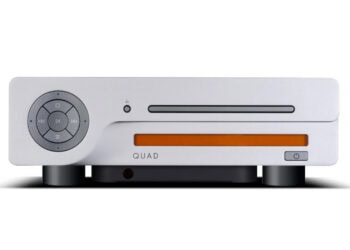
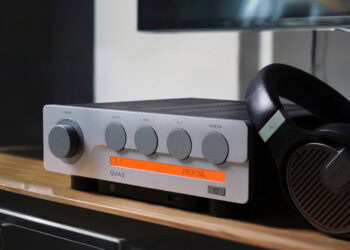
Today, as part of the IAG Group, Quad continues to build electrostatic and conventional loudspeakers and electronics in Huntingdon and beyond, from the modern ESL-X series to the Platina electronics range and the Elegan loudspeaker line — all still measured, whether the engineers realise it or not, against the standard Peter Walker set: the closest approach to the original sound.