

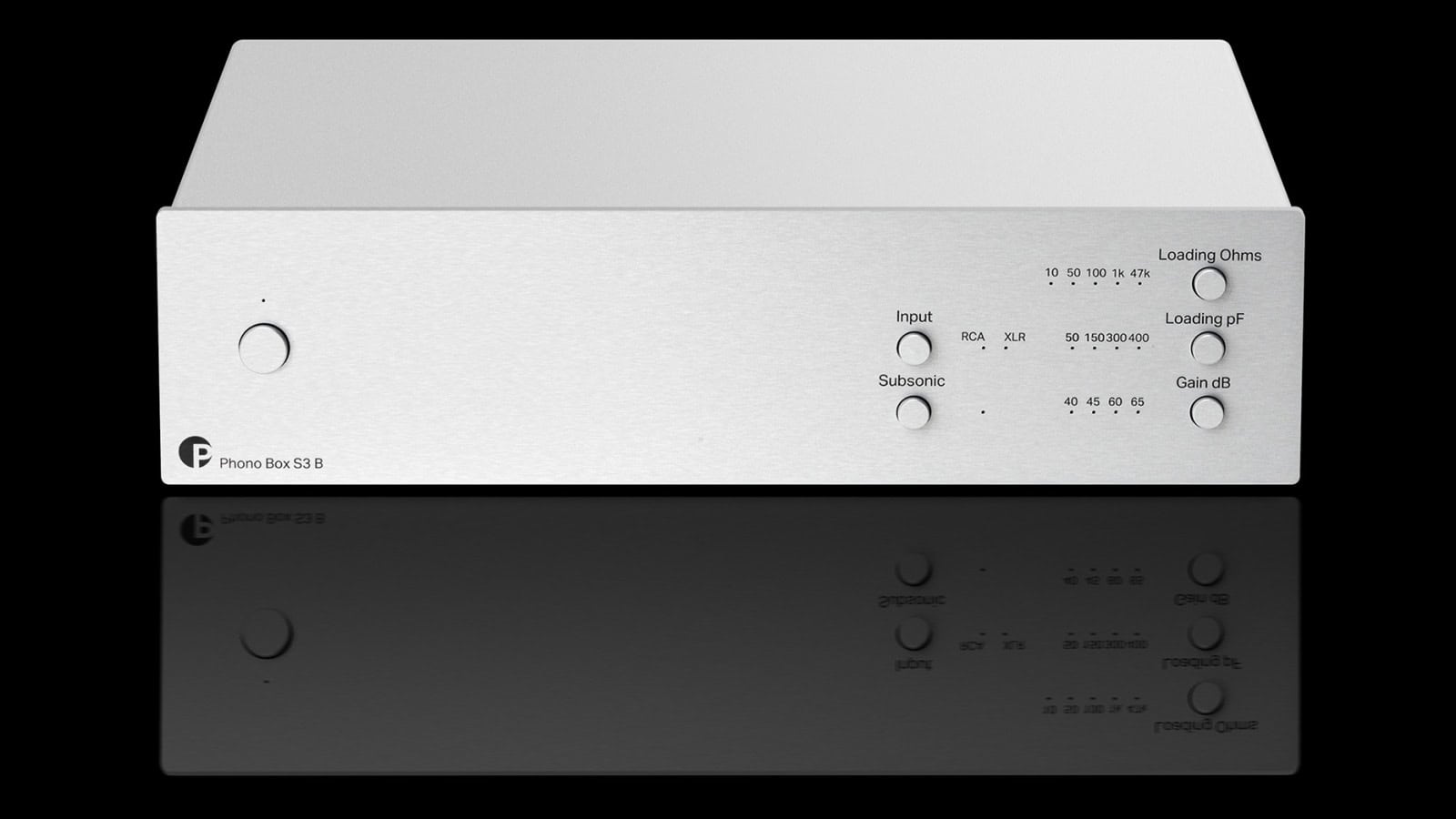
A phono preamplifier looks like the simplest box in a high-end system: one input, one output, a bit of gain and the RIAA curve undone. In practice, the single spec that makes or breaks a phono stage with a given cartridge is rarely mentioned on the box at all. It is the combination of gain and loading, and nowhere does it matter more than in the MM vs MC phono preamp decision every analogue listener eventually has to make.
The basic electrical principles behind both cartridge types are well documented (see this general background on phono preamplification for the underlying RIAA theory), but the practical consequences for gain and loading are what actually decide how a system sounds. Moving Magnet (MM) and Moving Coil (MC) cartridges generate their signal in fundamentally different ways, and that difference cascades directly into what the phono stage behind them needs to do. Treat the MM vs MC phono preamp question as a simple “which input do I plug into” choice, and a very expensive cartridge can end up sounding thin, bright or simply wrong – not because the cartridge is flawed, but because the gain or the loading never matched it.
MM vs MC Phono Preamp Basics: A Short History of Two Cartridge Families
Moving Magnet cartridges attach a tiny magnet to the cantilever, which moves inside fixed coils to generate voltage. The design is simple, rugged, relatively high in output (typically 3-6 mV) and easy to manufacture with replaceable styli, which is why MM dominated mainstream turntables for decades. Moving Coil cartridges invert the principle: the coils themselves move inside a fixed magnetic field. That construction allows a far lighter moving mass, which is the main reason MC cartridges are prized for their resolution and tracking ability, but it comes at a steep cost in output voltage, often 0.2-0.6 mV, ten to twenty times lower than MM.
That output gap is the entire reason a serious phono preamplifier cannot simply have “one setting.” A gain stage tuned for MM will leave an MC cartridge buried in noise; a gain stage tuned for MC will clip instantly on an MM input. Every capable MM vs MC phono preamp design therefore has to solve gain and loading as two separate engineering problems, not one.
Gain: Why MC Needs So Much More Than MM
Gain is simply how much the preamplifier amplifies the tiny cartridge signal before it reaches the rest of the system. An MM cartridge outputting a few millivolts needs roughly 40-45 dB of gain to reach line level. An MC cartridge outputting a fraction of a millivolt needs 60-70 dB or more – a ten- to thirtyfold increase in amplification on top of what MM already requires. Supply too little gain and the music sounds flat and recessed, with low-level detail disappearing into the noise floor. Supply too much, or apply MC-level gain to an MM cartridge, and the preamp clips on loud passages, adding a harsh, strained character that is easy to mistake for a bad recording or a worn stylus.
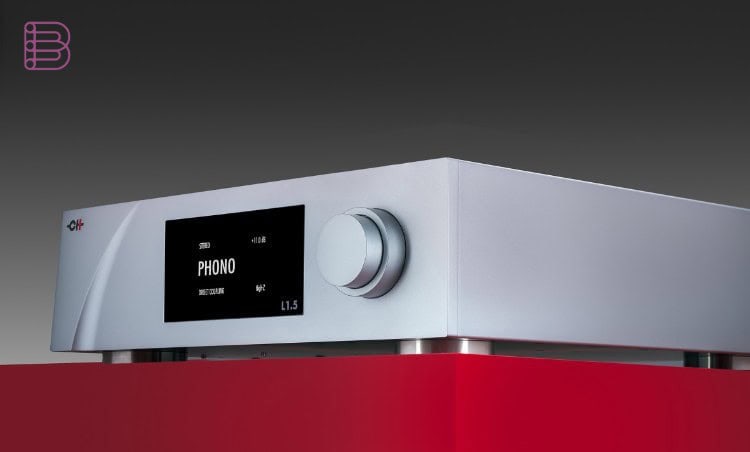
This is precisely why the current wave of high-end phono preamplifiers spends so much engineering effort on gain architecture rather than treating it as an afterthought. CH Precision’s recently announced P1.5 phono and line preamplifier pairing, for example, builds its entire input section around separate current-sensing inputs for low-impedance MC cartridges and a dedicated voltage-sensing MM/MC input, with gain adjustable in fine steps rather than a handful of fixed positions. The point is not luxury for its own sake: a cartridge’s true output varies within a single product line, and even a few dB of mismatched gain is audible as compressed dynamics or added noise.
Loading: The Spec Sheet Rarely Explains
Gain gets the attention; loading is where most systems quietly go wrong. Loading describes the electrical resistance (for MC, usually 10-500 ohms) or capacitance (for MM, usually 100-200 pF) that the phono stage presents to the cartridge. Every cartridge is designed to work into a specific loading window, and that window interacts directly with the frequency response of the coils and the cable connecting them.
Load an MC cartridge too high in resistance and the top end can ring or sound etched; load it too low and the sound turns dull and congested, with transients smeared. Load an MM cartridge with the wrong capacitance and the result is the classic “too bright” or “too dark” phono complaint that owners often blame on the cartridge, the cables, or even the turntable, when the real culprit is a loading mismatch of a few hundred picofarads. Because MM and MC cartridges respond to loading in opposite units and opposite ways, a phono preamplifier cannot use one loading scheme for both – it needs genuinely separate paths, correctly matched to each cartridge type, not a single compromise setting labelled “universal.”
Adjustable vs. Fixed Gain in Practice
Any serious MM vs MC phono preamp comparison has to look past the input labels on the back panel. At the entry level, many phono preamplifiers fix gain and loading at one or two switch-selectable positions – adequate for a handful of popular cartridges, but a guess for anything unusual. Move up the price ladder and adjustability becomes the differentiator: continuously variable gain, multiple selectable loading values, and increasingly, built-in tools that remove the guesswork entirely. CH Precision’s menu-driven “Gain Wizard,” inherited from the flagship P10 and carried into the new P1.5, lets the owner measure or enter the cartridge’s actual output and have the preamplifier calculate and apply the optimal gain and loading automatically, rather than relying on a chart and a screwdriver. It is a useful illustration of where the MM vs MC phono preamp conversation has moved: from “does it have an MC input” to “how precisely can it be matched to this exact cartridge.”

Matching Gain and Loading to Your Own Cartridge
Getting the MM vs MC phono preamp match right, in practice, does not require expensive test equipment. Start with the cartridge manufacturer’s own specification sheet, which lists recommended loading (and sometimes a loading range) and typical output voltage. Compare that against the phono preamplifier’s gain and loading options before assuming “MC input” is enough information on its own – a preamp with a single fixed 100-ohm MC loading will suit some cartridges and quietly sabotage others. If the preamplifier offers adjustable loading, start at the cartridge manufacturer’s recommended value and make small adjustments by ear, listening specifically to cymbals and vocal sibilance for signs of excess brightness (loading too high) or dullness (loading too low). Gain is easier to judge: if the volume control needs to sit unusually high in the range to reach a normal listening level, or if quiet passages sound noisy, the gain is very likely mismatched to the cartridge.
The lesson that a growing number of high-end phono stages are built around is simple: the question is never just “MM or MC,” but which gain and which loading, matched to one specific cartridge. Specification sheets will keep listing “MC input: yes” as if that settles the matter. It rarely does.