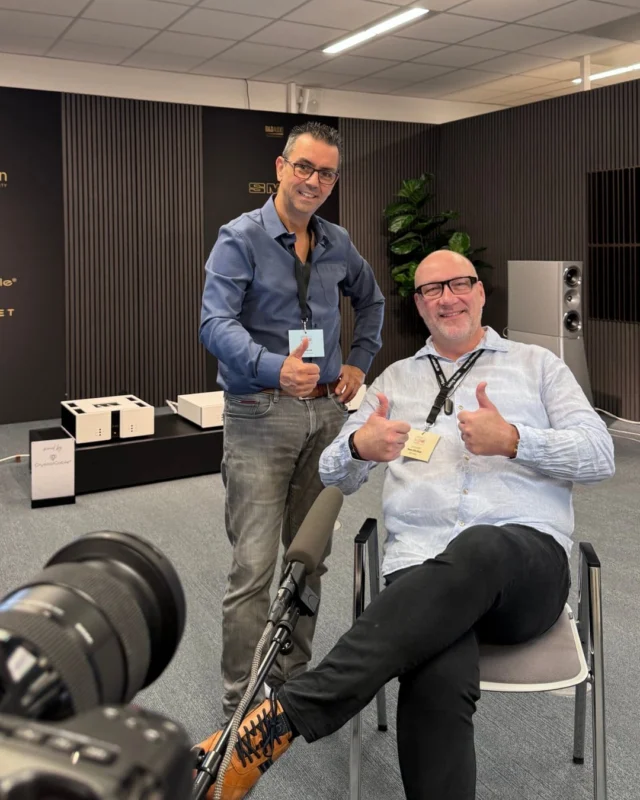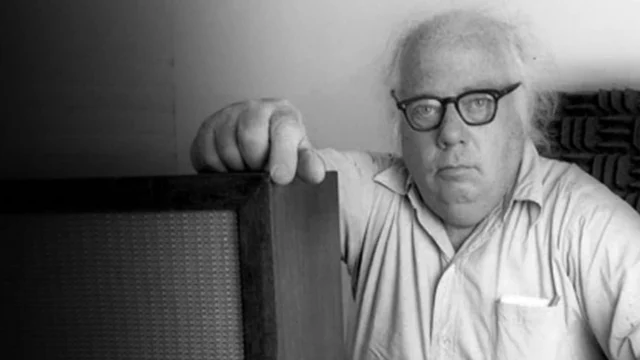


No measurement can replace what your own ears tell you the moment a speaker moves an inch closer or further away. In this Tech Talk, Roland Hoffmann, Director of Product Marketing at Steinway Lyngdorf, shares his practical rules for speaker placement — starting with the simplest one: trust your ears over any rule of thumb, including his own.

Speaker placement rule one: trust your ears, then follow the stereo triangle
Hoffmann’s starting advice is deliberately unscientific: you can measure a room backwards and forwards, but the fastest way to good speaker placement is to just listen and ask whether a change sounds better or not. His second rule is more structural — recreate the stereo triangle as closely as your room allows, because that’s the geometry almost every recording was mixed in. The closer your listening position mirrors the mixing engineer’s original setup, distance and all, the closer your home system gets to reproducing what that engineer actually heard — a goal that also depends on getting a system’s harmonic frequencies right in the first place.
The “yes or no” method and why tape on the floor matters
To find good speaker placement in practice, Hoffmann recommends a simple trial-and-error routine: nudge the speakers slightly, listen again to the same track, and ask a plain yes-or-no question — is that better? Keep moving in whichever direction keeps producing “yes,” on both the distance from the listener and the gap between the two speakers, until the answer turns to “no.” He recommends picking a song with a clear, repeating bass melody rather than an isolated bass drum or dance beat, since a melodic bassline makes it far easier to hear improvements across a range of frequencies rather than at just one. Marking the starting position with tape on the floor makes the process practical, so you can track exactly how far you’ve moved each speaker on both sides — just remember to peel it up again before guests arrive.
Toe-in and tweeter height: let your ears set the angle
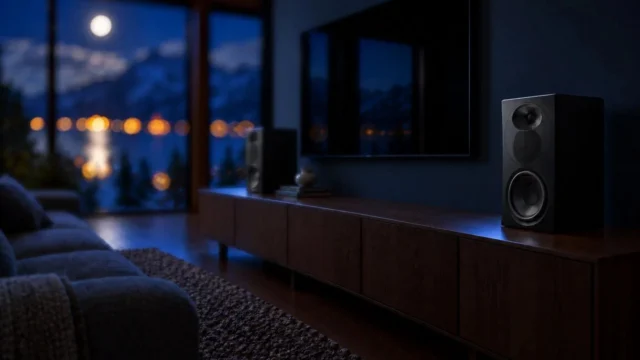
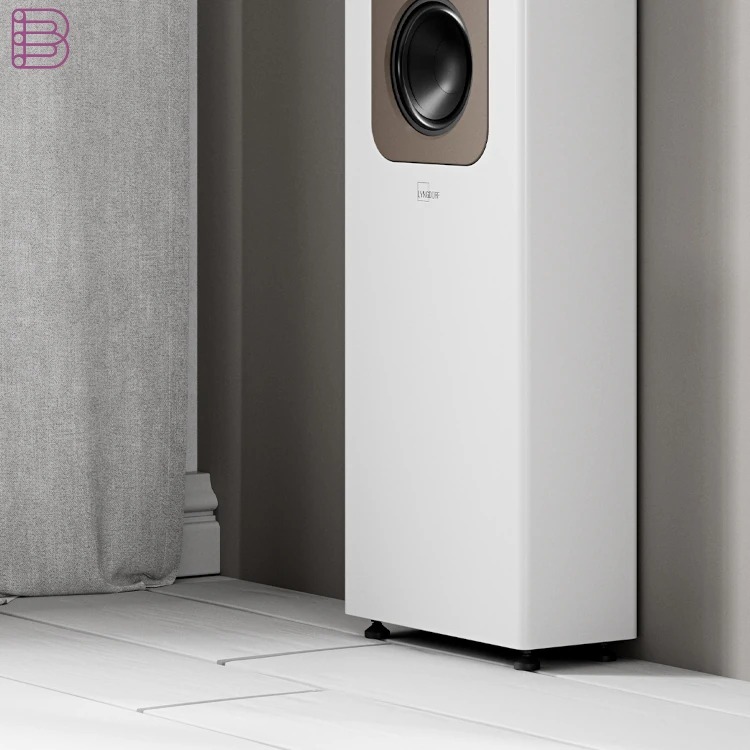
Whether a speaker should face straight ahead or angle slightly inward depends on how its designer engineered its radiation pattern, but most speakers sound best with a bit of toe-in — somewhere between facing the room directly and aiming straight at the listener. Hoffmann deliberately avoids specifying degrees: too little toe-in and the upper frequencies sound too prominent, too much and they sound muted, and the difference is audible regardless of whether the actual angle is three degrees or ten. Tweeter height relative to your ears matters too, but most speakers are designed and tuned at a specific height already, whether floorstanding or on a stand, so there’s rarely a need to adjust it beyond how the manufacturer intended the speaker to be used.
Why subwoofer placement breaks the normal rules
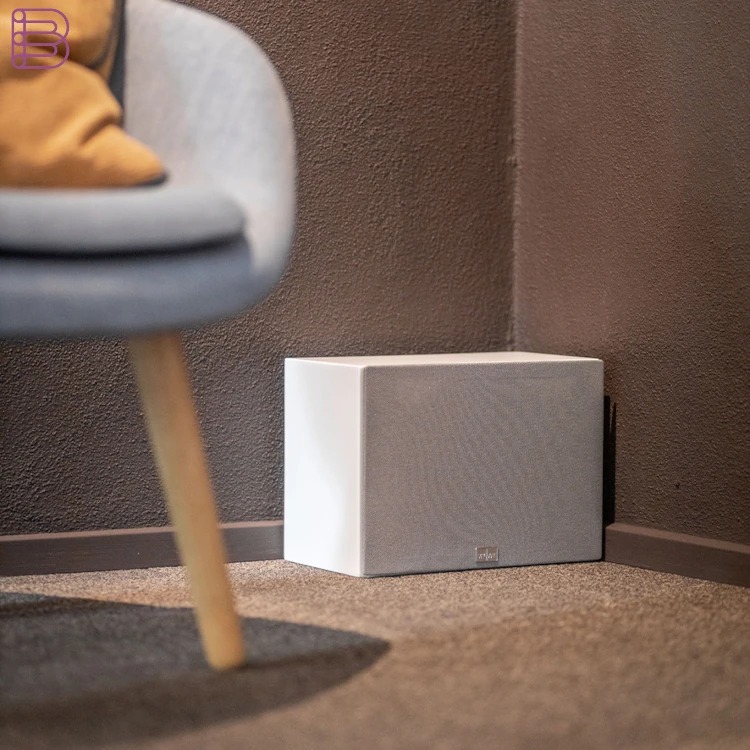
Bass wavelengths are large enough to behave almost like visible water waves, which is part of why bass is fundamental to a system’s sense of space and exactly why subwoofer placement causes so much trouble: the wave doesn’t just travel to the listener, it also reaches the back wall and side walls, reflects, and returns delayed — producing phase cancellation that exaggerates some bass notes and nearly cancels others. The common instinct is to move the subwoofer further from the wall to escape that problem, but Hoffmann calls this backwards: moving away only delays the reflected wave further and introduces new timing problems. Counterintuitively, a corner is often one of the best-sounding subwoofer positions, because the direct and reflected waves arrive almost simultaneously there, giving tighter, better-timed bass — the resulting extra loudness from room gain can simply be corrected afterward with DSP.
Why studios use on-wall and in-wall speakers
The same wave-reflection logic explains why recording studios often mount monitor speakers flush with or inside the wall: it isn’t primarily an aesthetic choice, it’s about controlling the same reflected, delayed waves that complicate subwoofer placement, which also affects the low-mid and upper-bass range for any speaker with real cabinet depth. A speaker placed flat against or inside a wall has a better time-domain response — meaning a more even frequency response overall, even if certain frequencies end up louder and need correcting with EQ. Moving a speaker away from the wall or corner costs amplifier headroom, since more of the amplifier’s output has to compensate for those cancellation effects instead of contributing directly to level.
Frequently asked questions
What is the single best speaker placement rule to follow?
Trust your own ears. Roland Hoffmann recommends listening critically to whether small changes in speaker position sound better or worse rather than relying purely on measurements or fixed rules, using a repeating, melodic bass track to make differences easier to hear.
What is the stereo triangle and why does it matter for speaker placement?
The stereo triangle is the equal-distance, equal-angle listening geometry used when most music is mixed in the studio. Recreating it as closely as possible at home moves your listening position closer to what the mixing engineer actually heard.
Should speakers be toed in or facing straight ahead?
Most speakers sound best with some toe-in, but the ideal angle depends on the speaker’s design and is best judged by ear — too little makes the treble sound overly prominent, too much makes it sound muted.
Where is the best place to put a subwoofer?
Counterintuitively, a room corner is often one of the best subwoofer positions for timing and bass punch, because the direct and wall-reflected waves arrive almost together. Moving a subwoofer away from the wall usually makes reflection timing problems worse, not better.
Why do recording studios use on-wall or in-wall speakers?
Because mounting a speaker flush with or inside a wall reduces the delayed, reflected waves that complicate the time-domain response, giving a more even frequency response overall — the same underlying principle that makes a subwoofer corner placement favourable.