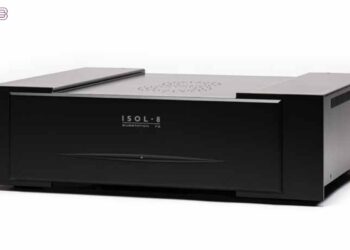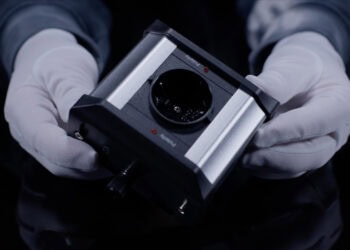


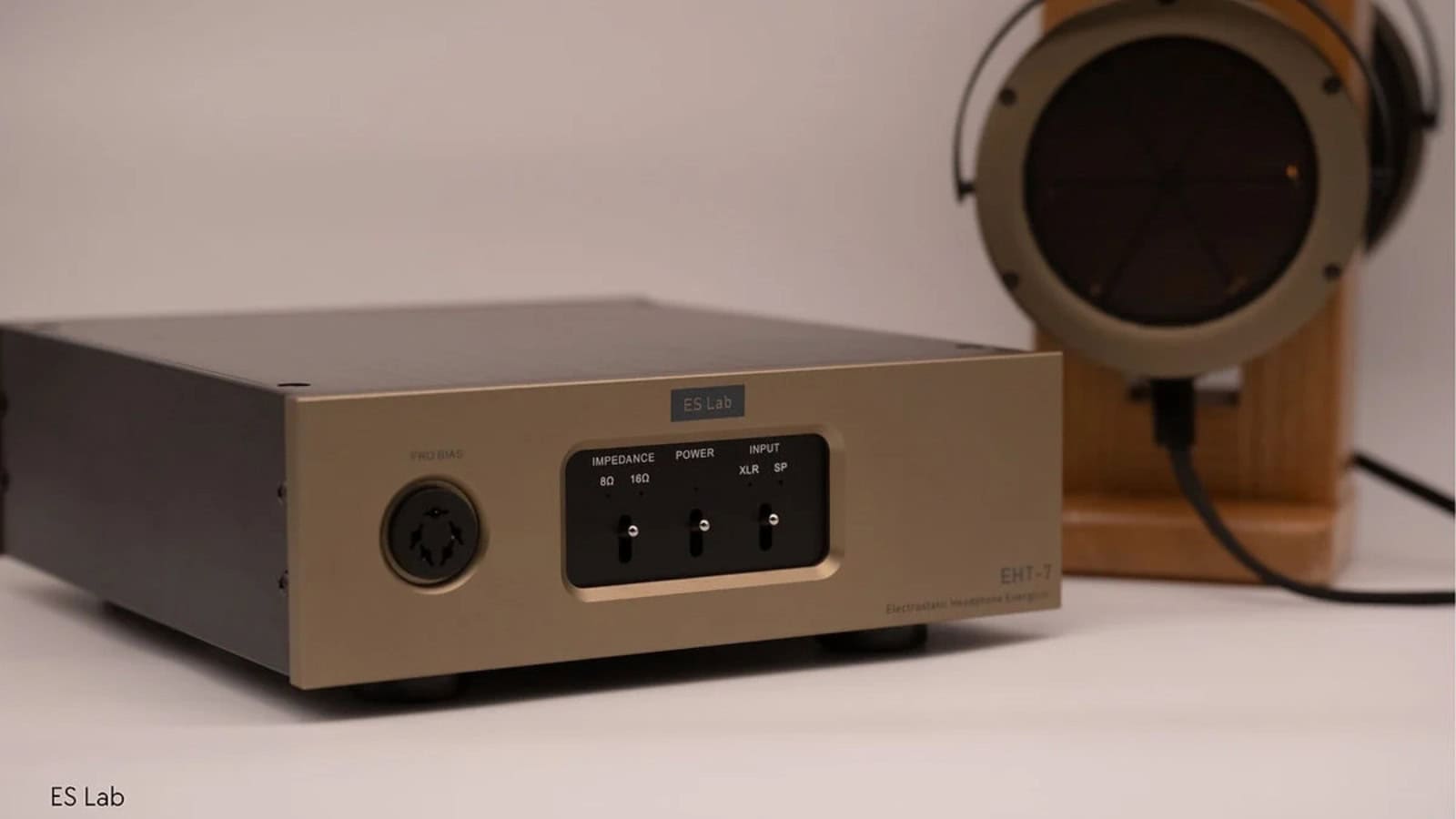
ESLAB has added the EHT-7 to its electrostatic lineup, a universal energizer designed to drive electrostatic headphones through an existing speaker or headphone amplifier rather than through a dedicated, proprietary amp. For listeners who already own a serious amplifier but want to step into electrostatic sound, the ESLAB EHT-7 positions itself as the missing link, and it has already picked up a Recommended Buy Award 2026 from Headfonia.
ESLAB EHT-7: a transformer-based approach, rethought
Where many conventional energizers still rely on an older voltage-multiplier design, ESLAB took a different route with the EHT-7. The unit uses a multi-stage, clean-bias power architecture: an external switching supply feeds an ultra-low-noise LT3045 regulator, which in turn drives a low-ripple, high-voltage DC-DC converter module that produces the 580V bias needed for Pro Bias electrostatic headphones. ESLAB says the goal was to escape the noise penalty of the multiplier topology while keeping the bias supply stable under real musical signals.
The step-up transformers themselves come in two flavors. The standard configuration uses Japanese-crafted, audio-grade transformers with cores from Nippon Steel Corporation’s grain-oriented silicon-iron, tuned for strong high-frequency extension. Buyers chasing the last word in resolution can instead specify the Swedish-made Lundahl LL1630, a highly sectioned C-core transformer wound with a low-capacitance technique that further extends bandwidth.
Built to interface with what you already own
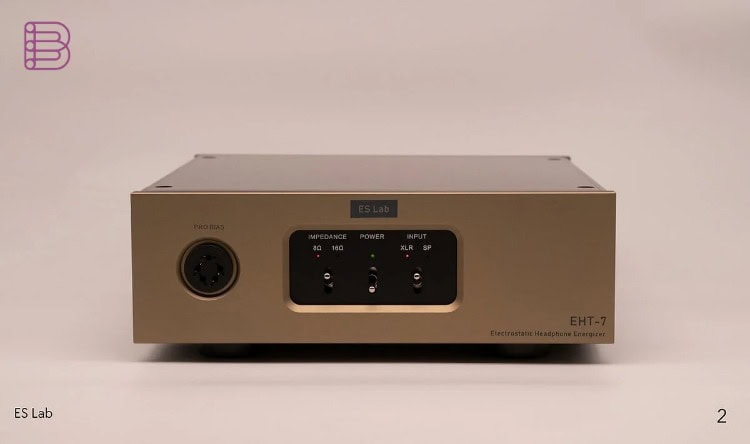
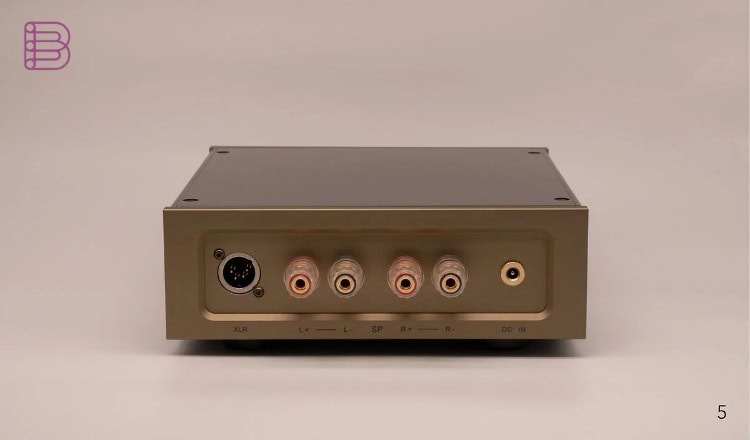
Rather than forcing a new signal chain, the EHT-7 is designed to slot into an existing system. It offers two inputs — speaker-level termination for connection to a speaker amplifier, and an XLR balanced input for a headphone amplifier — switched through five sealed silver-alloy contact relays chosen for longevity and current handling. A front-panel switch also lets owners select 8Ω or 16Ω primary impedance, so the EHT-7 can be matched properly to whatever amplifier is driving it.
Safety gets equal billing with sound quality. A zener-diode clipping network keeps output below 1150V peak stator-to-stator, matched Jantzen Audio load resistors guard the transformers against DC faults or impedance swings, a Vishay 4.7MΩ ballast resistor limits current before it reaches the headphone, and the input circuitry disables automatically whenever the unit is powered down.
Pricing and availability
The ESLAB EHT-7 is available now at $850 with the standard Japanese transformer, with the Lundahl LL1630 upgrade offered as a configurable option at checkout through authorized retailers such as Apos Audio. An optional EHT-LPS linear power supply is sold separately for owners who want to move beyond the stock switching supply. The unit ships with a 2-year warranty.
Key specifications
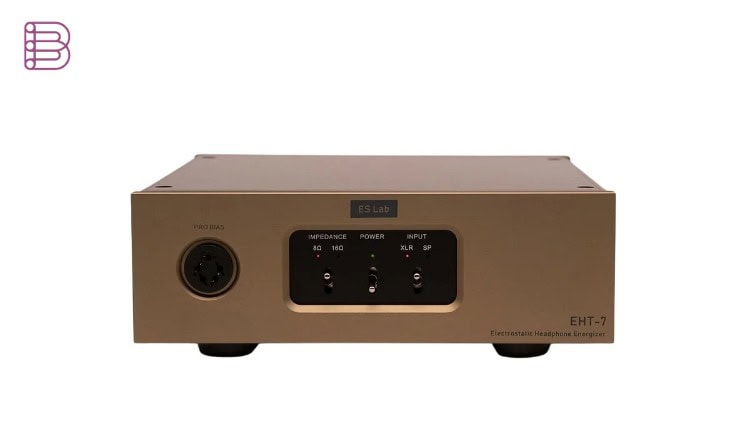
- Output connection: Stax 5-pin Pro Bias
- Bias voltage: 580V (clean multi-stage architecture)
- Output voltage protection: 1150V peak, stator-to-stator
- Inputs: XLR balanced / speaker-level termination
- Primary impedance: switchable 8Ω or 16Ω
- Gain (Japanese transformer): 31.1 dB (8Ω) / 27.8 dB (16Ω); frequency response 10Hz–55kHz
- Gain (Lundahl LL1630): 23.0 dB; frequency response 10Hz–65kHz
- Power input: 15VDC / 0.2A
- Dimensions: 215 x 235 x 80mm; weight 3.1kg
- Warranty: 2 years
ESLAB’s approach with the EHT-7 echoes the thinking behind its earlier ES Lab Hydra amplifier paired with SJY Argos electrostatic headphones, continuing the Hong Kong brand’s focus on giving electrostatic designs a cleaner, more universal power path. Full specifications and ordering details are available on the official ESLAB EHT-7 product page.