Advertisement
Best of High End Best of High End Best of High End
Choose
Buying guides
Best Hi-Fi AccessoriesBest Hi-Fi AmplifiersBest Hi-Fi LoudspeakersBest Streaming DACs
First looks
Reviews
Experience
Factory visits
Industry icons
Reports
Follow
News
Learn
Academy
Tech talk
Trust
Marco Lisi — Inside HQ
Daniel Březina — High-End, Lived-In
John Bugailiskis — Sound proof
Finn de Kroon — Kii room
Watch
Account
Inloggen
Contact
Populair
Menu
Choose
Buying guides
Best Hi-Fi AccessoriesBest Hi-Fi AmplifiersBest Hi-Fi LoudspeakersBest Streaming DACs
First looksReviews
Experience
Factory visitsIndustry iconsReports
Follow
News
Learn
AcademyTech talk
Trust
Marco Lisi — Inside HQDaniel Březina — High-End, Lived-InJohn Bugailiskis — Sound proofFinn de Kroon — Kii room
Watch
Best of High End
No Result
View All Result
  • Choose
    • Buying guides
      • Best Hi-Fi Accessories
      • Best Hi-Fi Amplifiers
      • Best Hi-Fi Loudspeakers
      • Best Streaming DACs
    • First looks
    • Reviews
  • Experience
    • Factory visits
    • Industry icons
    • Reports
  • Follow
    • News
  • Learn
    • Academy
    • Tech talk
  • Trust
    • Marco Lisi — Inside HQ
    • Daniel Březina — High-End, Lived-In
    • John Bugailiskis — Sound proof
    • Finn de Kroon — Kii room
  • Watch
Contact us
  • Choose
    • Buying guides
      • Best Hi-Fi Accessories
      • Best Hi-Fi Amplifiers
      • Best Hi-Fi Loudspeakers
      • Best Streaming DACs
    • First looks
    • Reviews
  • Experience
    • Factory visits
    • Industry icons
    • Reports
  • Follow
    • News
  • Learn
    • Academy
    • Tech talk
  • Trust
    • Marco Lisi — Inside HQ
    • Daniel Březina — High-End, Lived-In
    • John Bugailiskis — Sound proof
    • Finn de Kroon — Kii room
  • Watch
No Result
View All Result
Best of High End
No Result
View All Result
Home Academy

Total Harmonic Distortion: What the THD Spec Doesn’t Tell You

Why a tiny distortion percentage says less about sound than its place on a spec sheet suggests, and what to look for instead

Marco Lisi by Marco Lisi
November 11, 2026
in Academy
Reading Time: 4 mins read
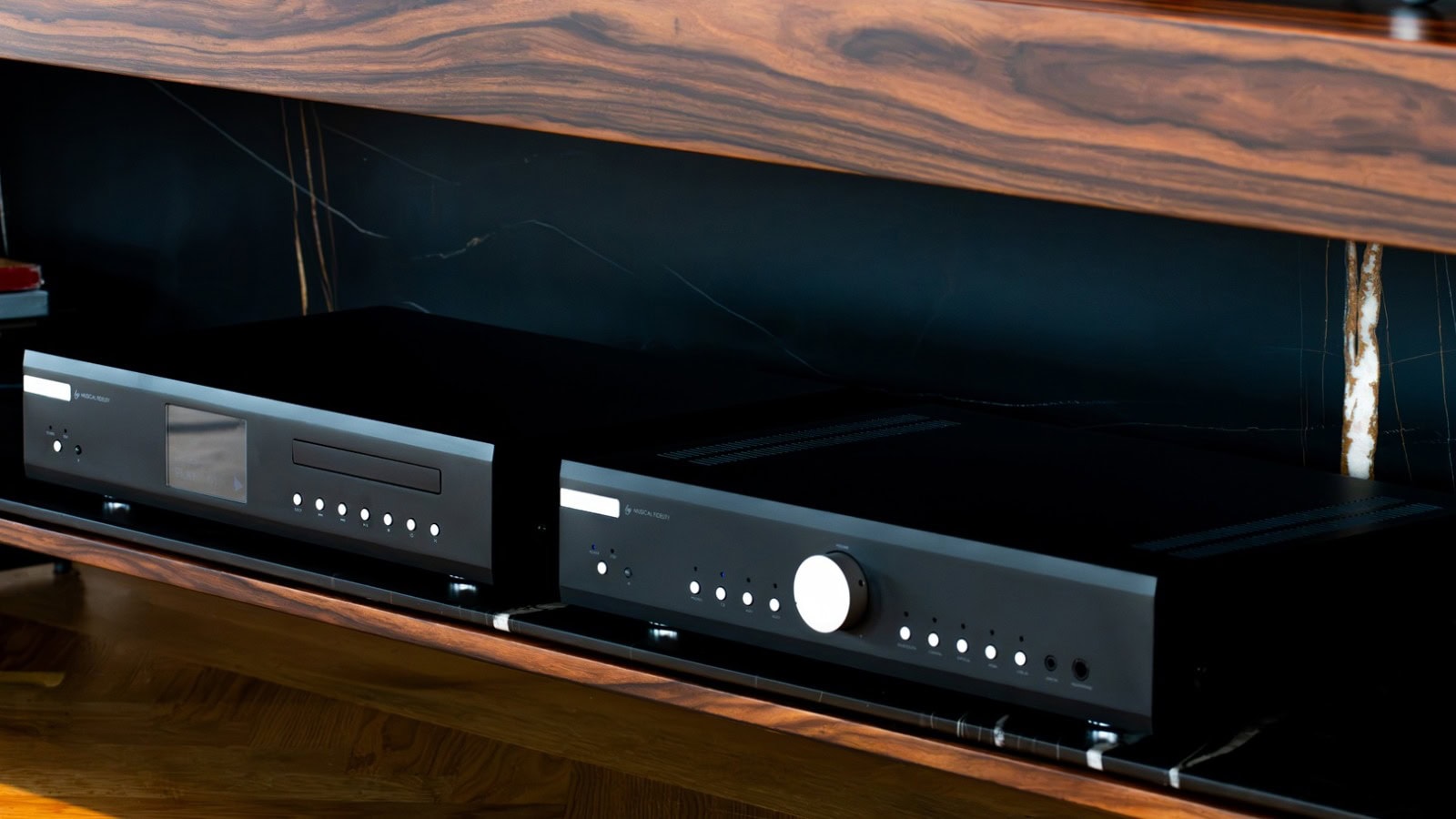
Total harmonic distortion explained: Musical Fidelity B1 components in a listening room

Musical Fidelity B1-series components

Almost every amplifier, DAC and CD player arrives with a spec sheet that lists a distortion figure, often with an impressive number of zeros behind the decimal point. Total harmonic distortion, or THD, is one of the oldest and most quoted measurements in audio, yet it is also one of the most misunderstood. A figure such as 0.002% looks like a clear verdict on quality. In reality it describes one narrow aspect of a component’s behaviour, measured under conditions that the spec sheet rarely spells out.

This explainer looks at what total harmonic distortion actually measures, why the character of the distortion matters as much as its amount, and why a lower number does not automatically mean better sound.

  • A measurement with a long history
  • Total harmonic distortion: what the number measures
  • Even and odd harmonics do not sound the same
  • How total harmonic distortion shows up in today’s high-end designs
  • Why lower THD is not automatically better
  • What to look for instead

A measurement with a long history

The idea behind THD is simple. Feed a component a pure sine wave, a single frequency, and look at what comes out. A perfect device would return exactly the same tone, only louder. Every real circuit adds a little extra: tones at whole-number multiples of the original frequency, called harmonics. Measuring those harmonics was one of the first practical ways to put a number on how faithfully an amplifier behaves.

The figure gained formal weight in the 1970s, when the American Federal Trade Commission required amplifier makers to state their rated power together with the distortion at which it was measured. From then on, power and THD travelled together on spec sheets. The same decade also produced the first serious debate about whether a single distortion number tells the whole story, as engineers began to study transient and intermodulation effects that a steady test tone does not reveal.
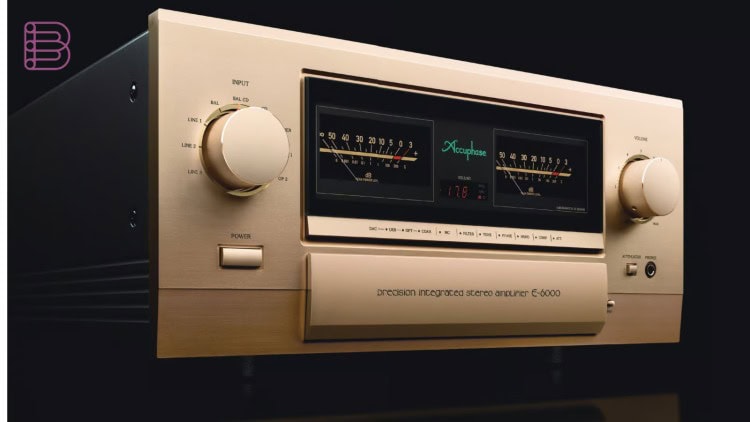
Total harmonic distortion in practice: the Accuphase E-6000 integrated amplifier
Accuphase E-6000 integrated amplifier

Total harmonic distortion: what the number measures

Total harmonic distortion expresses the combined level of all those added harmonics as a percentage of the original signal. If a 1 kHz test tone produces small extra components at 2 kHz, 3 kHz, 4 kHz and so on, THD adds them together and compares the total to the 1 kHz fundamental. Many manufacturers quote THD+N instead, which also includes the noise floor of the device.

The number only means something together with its conditions. Distortion changes with output level, frequency and load. An amplifier may show a vanishingly low figure at 1 W into 8 ohms at 1 kHz, and a very different one near full power, at 20 kHz or into a difficult 4-ohm loudspeaker. When a spec sheet gives a single THD value without saying how it was measured, it is hard to compare it with anything. A good example of the opposite approach is the Norwegian Sigberg Audio Saranna active loudspeaker, whose specification states less than 1% THD at 96 dB and 1 metre above 100 Hz: level, distance and frequency range all included.

Even and odd harmonics do not sound the same

Two components can share the same total harmonic distortion figure and still sound different, because the percentage says nothing about which harmonics make up the total. Even-order harmonics, the second and fourth, are related to the original tone by octaves. At low levels they tend to blend in and can add a sense of fullness or warmth. Odd-order harmonics, the third, fifth and seventh, form less consonant intervals with the fundamental. Higher-order odd harmonics in particular are easily heard as hardness or edge, even at levels that look small on paper.

This is a large part of why many listeners still value valve designs, a subject we explored in Why Do Audiophiles Still Trust Vacuum Tubes?. A single-ended triode can measure several percent of THD, mostly second harmonic, and still be described as natural and engaging. A transistor amplifier with a fraction of that distortion, but spread over higher odd orders, can sound less relaxed. The total is the same kind of number in both cases; the spectrum behind it is not.
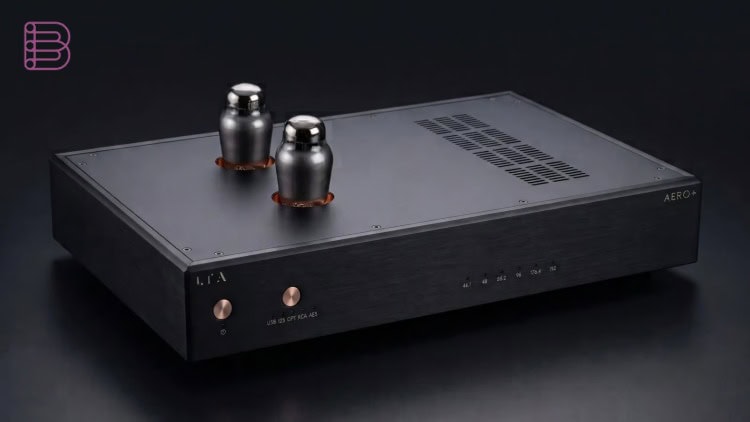
Linear Tube Audio Aero+ tube DAC, an example of even-order harmonic distortion
Linear Tube Audio Aero+ tube DAC

How total harmonic distortion shows up in today’s high-end designs

Current products show how differently manufacturers deal with distortion. Some aim for the lowest possible figures through feedback and careful circuit design, as in solid-state flagships such as the Accuphase E-6000. Others deliberately keep a valve in the signal path. The Linear Tube Audio Aero+ uses tubes in a DAC, and the Advance Paris NOVA range combines tube and transistor stages in its integrated amplifiers. Digital sources such as the Esoteric Grandioso K1XE and the Musical Fidelity B1xcd face the same question at the conversion and output stage, while phono stages such as the Audiolab PPA7 and wireless devices like the iFi UP Travel Max have their own distortion challenges, from very low signal levels to compact battery power.

None of these approaches is right or wrong by definition. They reflect different priorities: measured transparency on one side, a chosen distortion character on the other.
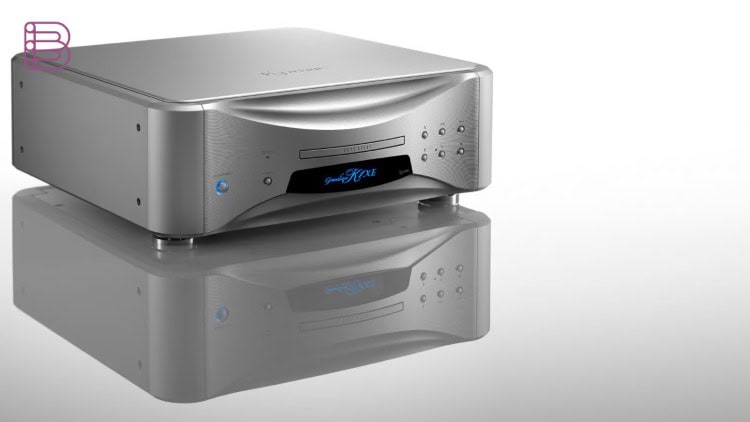
Esoteric Grandioso K1XE SACD player with discrete DAC
Esoteric Grandioso K1XE SACD player

Why lower THD is not automatically better

Below a certain level, differences in total harmonic distortion are very hard to hear. Moving from 0.01% to 0.001% is a tenfold improvement on paper, but both figures are far below what most listeners can detect in a normal room, where the loudspeakers themselves usually distort far more than the electronics. At that point other factors weigh more heavily: how a component behaves near its limits, how it handles a real loudspeaker load, its noise floor, and how it deals with complex music rather than a single tone.

THD also says little about intermodulation distortion, where two or more tones interact and create frequencies that are not harmonically related to the music. Those products are often more audible than plain harmonic distortion, and they are not captured by a standard THD figure.

What to look for instead

For the high-end enthusiast, total harmonic distortion is best treated as a starting point rather than a verdict. Look for the conditions behind the figure: output level, frequency range and load. Where a manufacturer publishes a harmonic spectrum or THD-versus-power curve, it tells far more than one number. Check whether the figure is THD or THD+N. And above all, remember that a component with a slightly higher THD can sound more natural than one with a record-breaking figure, depending on which harmonics it produces. The spec sheet can narrow down the choice; the final judgement belongs to careful listening in your own system.

Tags: THD
ShareTweet
Marco Lisi

Marco Lisi

Publisher

Marco Lisi is the publisher of Best of High End, part of AV Concepts BV. His path into audio started early: as a teenager he was drawn into the world of free radio, presenting shows and living immersed in music every day. In his early twenties he ran his own production studio for five years, creating jingles and commercials — hands-on training in sound design, pro-audio workflows, and critical listening through studio monitors that still shapes how he evaluates gear today. He also spent years DJing in clubs before moving into publishing, first at two earlier online magazines before founding Best of High End. His hi-fi and home cinema passion was inherited from his father, an inveterate system-swapper. Marco's first setup — a confirmation gift — paired AKAI separates with entry-level Bowers & Wilkins speakers, a brand he stayed loyal to for years as his system grew from stereo into full surround and home cinema. Like many enthusiasts, he went through an extended "audiophile" phase chasing the next upgrade, before settling into a more grounded view: gear as a means to enjoy music and film, not an end in itself. Years of critical listening have given him a well-trained ear — the ability to characterize a system or pinpoint a change in the chain quickly and accurately. Just as important, his teaching background (a Belgian "regent" degree in Dutch language) gives him the tools to translate those listening impressions into clear, readable writing.

Related Posts

No Content Available
Next Post
Panasonic projector fitted with the ET-C1U090 ultra-short-throw L-shaped lens

Panasonic Bends the Throw With the ET-C1U090 Ultra-Short-Throw Lens

Erzetich Pan closed-back headphones

Erzetich Pan is the brand's first fully closed-back headphone

Trending This Week

1 Accuphase Tops Its Integrated Lineup With the E-6000 2 Eversolo T10 digital transport review 3 DALI VEGA review 4 Philips Keeps You Connected During Power Cuts With the TAR3500 Emergency Radio 5 Atoll Consolidates Its Flagship Duo Into the IN800 EVO

Most Popular 12 Months

1 Atoll Electronique IN400 Evolution integrated amplifier review 5.5K reads 2 Dynaudio Evoke 20 review 5.1K reads 3 MSB Technology Select DAC for the best sound 4.7K reads
4 Revival Audio Atalante 3 review 3.7K reads 5 Dynaudio Contour 20 Black Edition review 2.9K reads 6 Onkyo unveils PR-RZ91 AV Receiver 2.7K reads 7 Eversolo T10 digital transport review 2.1K reads 8 PMC Prophecy 7 review 2.1K reads 9 Lyngdorf TDAI-1120 review 2.0K reads 10 DALI SONIK 7 Floorstanding Loudspeaker 1.6K reads

Tag Cloud

4K amplifiers Audio-Technica AV processors Bang & Olufsen Bowers & Wilkins Cables CD player CES 2018 Dac DACs DALI Dan D'Agostino FiiO Focal Gold Note Headphone amplifiers Headphones HIGH END Munich 2025 High End Vienna 2026 High End® Integrated amplifiers JBL Klipsch loudspeaker Loudspeakers Lyngdorf Lyngdorf Audio McIntosh Panasonic Power amplifiers Preamplifiers Projectors Samsung Silent Angel Sony Steinway Lyngdorf StormAudio Streaming audio Subwoofers SVS Turntables Vitus Audio Wireless speakers
Brand Partners

The brands we live with

Manufacturers and distributors who support independent high-end journalism. Their presence here never influences a score.

  • Alluxity
  • Atoll
  • DALI
  • Dan D’Agostino
  • Dynaudio
  • Fresh ‘n Rebel
  • IsoTek
  • Kii Audio
  • Lyngdorf Audio
  • McIntosh
  • NAD
  • Oehlbach
  • PMC
  • Purifi
  • Purist Audio Design
  • R_volution
  • Revival Audio
  • Samsung
  • Silent Angel
  • Steinway Lyngdorf
  • StormAudio
  • SVS
  • TCL
  • Vitus Audio
DALI VEGA review: 8.8/10 🔊 One box, ten drivers, DALI VEGA review: 8.8/10 🔊
One box, ten drivers, 400 watts and a soundstage that stays stable across roughly 160 degrees. Plug and play hi-fi in real wood, aluminium and fabric.
One beautiful box or a full hi-fi system: which would you choose? 👇
Full review via the link in bio 🔗
#DALI #DALIVEGA #BluOS #WirelessSpeaker #HiFi #Audiophile #HomeAudio #bestofhighend
Delayed ⏳ Sony found a production issue and pushed Delayed ⏳ Sony found a production issue and pushed back the PlayStation Pulse Elevate speakers. No new date yet. Will you wait for them? 👇
#PlayStation #PulseElevate #PS5 #GamingSpeakers #Sony #GamingSetup #bestofhighend
Four towers, down to 24 Hz 🔊 The Genesis TianDi de Four towers, down to 24 Hz 🔊 The Genesis TianDi debuts at Capital Audiofest this weekend. Would you give your room to four towers? 👇
#Genesis #TianDi #Loudspeakers #CapitalAudiofest #HighEndAudio #Audiophile #bestofhighend
$4,999 for a portable player 🤯 The Shanling M10 pa $4,999 for a portable player 🤯 The Shanling M10 packs 8 AKM chips and up to 2,300 mW in a copper alloy body. Worth it, or desktop money? 👇
#Shanling #ShanlingM10 #DAP #PortableAudio #AKM #Audiophile #bestofhighend
You've seen his name before almost every film you' You've seen his name before almost every film you've ever watched 🎬
Ray Dolby started out as a teenager in the Ampex labs, earned a PhD at Cambridge and founded Dolby Laboratories in London in 1965 with one obsession: removing tape hiss without removing the music. From Dolby A and B to Atmos and Vision, that obsession still shapes how the world hears cinema.
Which Dolby moment changed your listening the most: the cassette deck, the cinema or Atmos at home? 👇
Read his full story via the link in bio 🔗
#RayDolby #Dolby #DolbyAtmos #IndustryIcons #AudioHistory #HomeCinema #Cinema #HiFi #Audiophile #bestofhighend
Dynamic + planar + balanced armature 🎧 The Noble A Dynamic + planar + balanced armature 🎧 The Noble Audio Astrid brings three drivers, LDAC and sound tuned to your own ears. €579.
Would you take the hearing test? 👇
Full story via link in bio 🔗
#NobleAudio #Astrid #TrueWireless #Earbuds #Audiophile #LDAC #HiFi #PersonalSound
Meet Norse 3 🔌 Nordost's new Heimdall 3, Frey 3 an Meet Norse 3 🔌 Nordost's new Heimdall 3, Frey 3 and Tyr 3 cables debut at Capital Audiofest this week.
Heimdall, Frey or Tyr: which would you pick? 👇
Full story via link in bio 🔗
#Nordost #Norse3 #HiFiCables #Audiophile #HighEndAudio #CapitalAudiofest #HiFi #AudioCables
Norwegian forests, meet Norwegian speakers 🌲 The A Norwegian forests, meet Norwegian speakers 🌲 The Arendal Sound 1528 Tower 8 and Bookshelf 8 now come in Walnut, Dark Walnut and Smoked Eucalyptus. Same award-winning sound, limited numbers only.
Which finish is your favourite? Tell us below 👇
Full story via link in bio 🔗
#ArendalSound #1528 #HiFi #Loudspeakers #Walnut #ScandinavianDesign #HighEndAudio #AudioPhile #HomeAudio
  • About us
  • Advertising
  • Contact
  • Terms and Conditions
  • Privacy Policy
  • Cookie Policy

© 2026 Best Of High End - by AV Concepts BV ·

Manage Consent
We use cookies to keep this site running, to measure how it is used, and to show videos from YouTube. Refusing costs you nothing: every article stays fully readable. Videos then show a short notice and load only when you click them.
Functional only Always active
The technical storage or access is strictly necessary for the legitimate purpose of enabling the use of a specific service explicitly requested by the subscriber or user, or for the sole purpose of carrying out the transmission of a communication over an electronic communications network.
Preferences
The technical storage or access is necessary for the legitimate purpose of storing preferences that are not requested by the subscriber or user.
Statistics
The technical storage or access that is used exclusively for statistical purposes. The technical storage or access that is used exclusively for anonymous statistical purposes. Without a subpoena, voluntary compliance on the part of your Internet Service Provider, or additional records from a third party, information stored or retrieved for this purpose alone cannot usually be used to identify you.
Marketing
The technical storage or access is required to create user profiles to send advertising, or to track the user on a website or across several websites for similar marketing purposes.
  • Manage options
  • Manage services
  • Manage {vendor_count} vendors
  • Read more about these purposes
View preferences
  • {title}
  • {title}
  • {title}
No Result
View All Result
  • Choose
    • Buying guides
      • Best Hi-Fi Accessories
      • Best Hi-Fi Amplifiers
      • Best Hi-Fi Loudspeakers
      • Best Streaming DACs
    • First looks
    • Reviews
  • Experience
    • Factory visits
    • Industry icons
    • Reports
  • Follow
    • News
  • Learn
    • Academy
    • Tech talk
  • Trust
    • Marco Lisi — Inside HQ
    • Daniel Březina — High-End, Lived-In
    • John Bugailiskis — Sound proof
    • Finn de Kroon — Kii room
  • Watch

© 2026 Best Of High End - by AV Concepts BV ·

Before you go — join the newsletter

Get the best in high-end audio, straight to your inbox. No spam, unsubscribe anytime.