

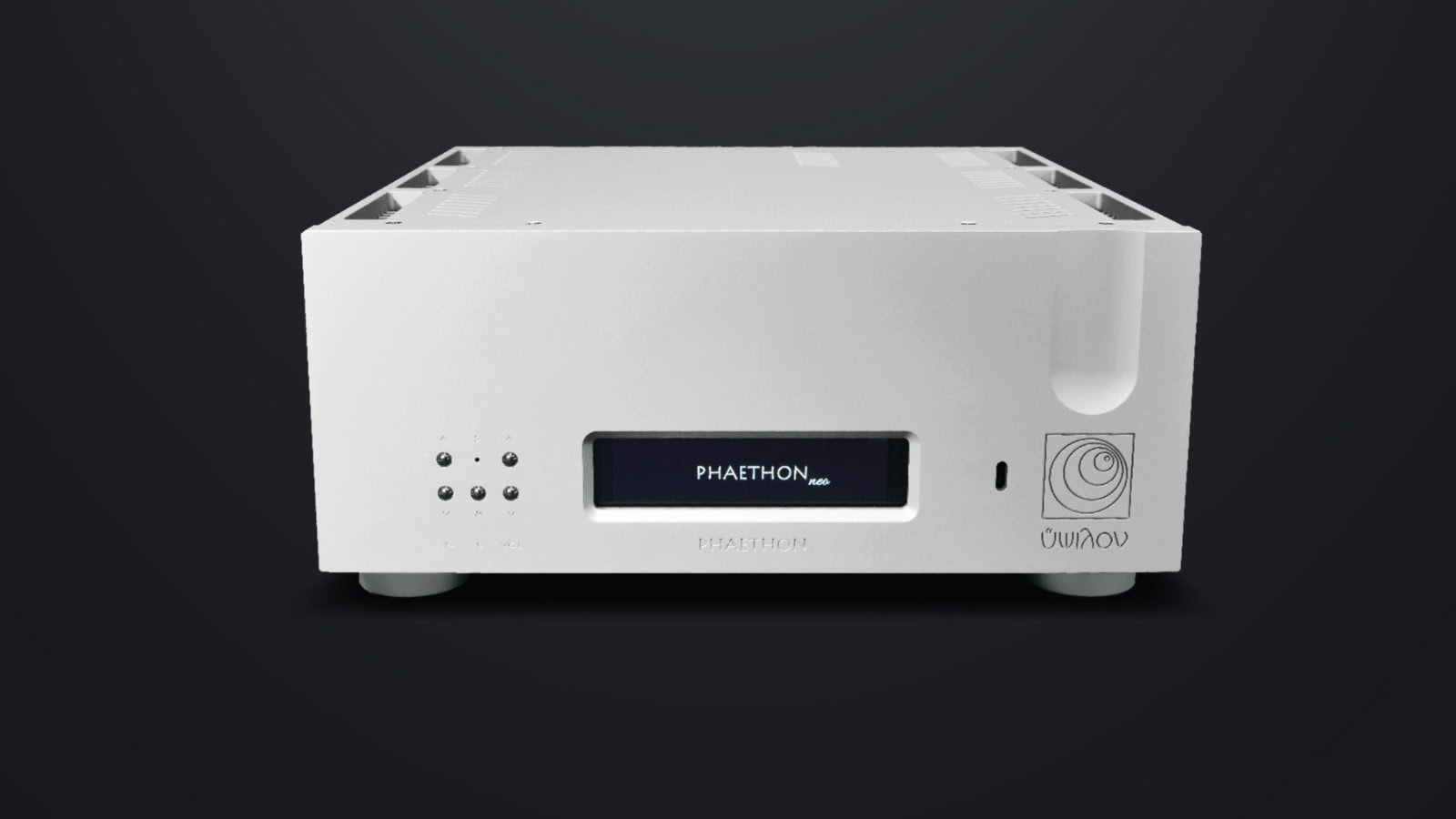
Ypsilon Phaethon neo refines the Greek manufacturer’s existing Phaethon integrated amplifier rather than replacing it outright, carrying over the platform’s unusual hybrid topology while tightening the circuit details around it. Like Ypsilon’s PST-100 Mk2 preamplifier, Ypsilon Phaethon neo leans on transformers rather than feedback and semiconductors wherever Ypsilon can manage it, in pursuit of what the brand calls a transparent, uncoloured sound.
Ypsilon Phaethon Neo Uses Just Three Gain Stages
At the input, Ypsilon Phaethon neo uses a low-noise double triode, with the entire signal path built from only three gain stages in total — one of them the active tube preamp stage itself. The power amplifier section couples the driver and output stages through a specially designed interstage transformer rather than direct or capacitive coupling, a technique Ypsilon has carried across much of its amplifier range to keep the signal path short and the sound, in the brand’s words, free of semiconductor-induced grain.
A Bridged Single-Ended Output Stage, Biased in Class A
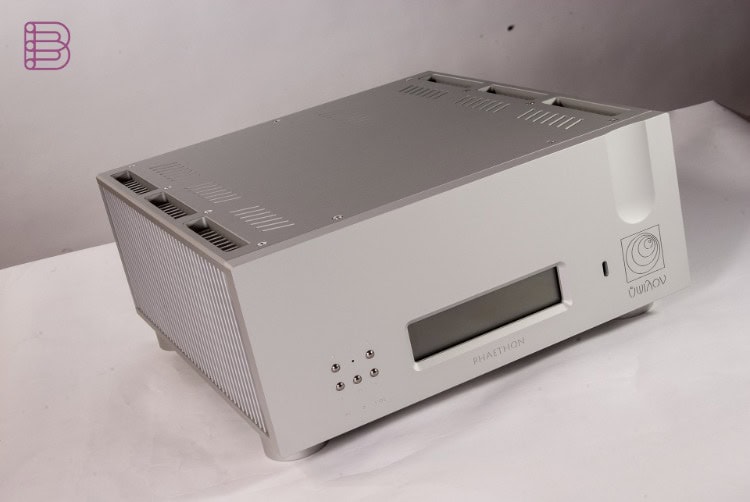
The output stage is where Ypsilon Phaethon neo’s design gets more unconventional: same-polarity semiconductors handle both phases in what Ypsilon describes as a “bridged single-ended” arrangement, biased in class A for what the brand calls the “first most important watts” of output. Separate power supplies feed the tube and output stages independently, built around five power supply inductors for low-noise filtering, two power supply transformers and four signal transformers — all tuned together as one platform rather than as isolated sections bolted onto a shared rail.
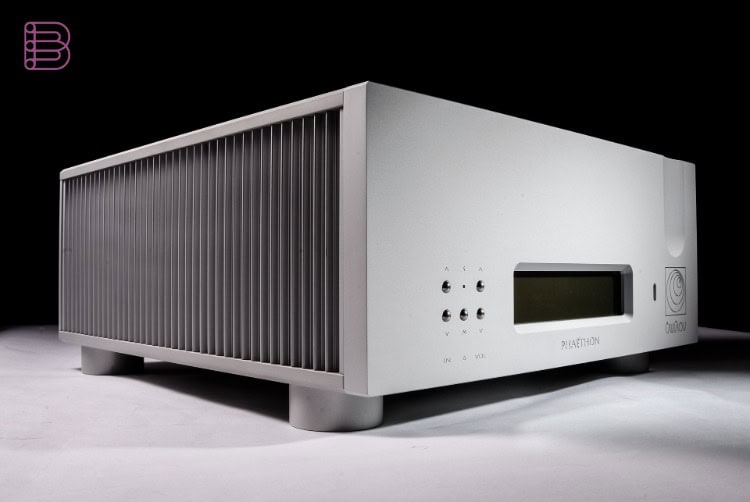
Output is rated at 110Wrms into 8 ohms and 180Wrms into 4 ohms before clipping, with a gain of x60 and an output impedance of just 0.5 ohms, figures that point at a design able to control a wide range of loudspeaker loads despite its tube input stage. Every function is remote-controlled, with status shown on a high-resolution TFT display with large characters legible from across the room — a practical nod the brand says matters as much in daily use as the circuit topology underneath it.
Ypsilon has also published a short video walkthrough of the Phaethon neo, covering its construction and the thinking behind its transformer-based signal path — a useful watch for anyone weighing it against more conventional solid-state integrateds at the same power level.
Pricing and availability
Ypsilon Electronics has not published a retail price for the Phaethon neo; as with the rest of the range, pricing and ordering run through the brand’s authorized dealer network.
Key specifications
- Output power before clipping: 110Wrms @ 8 ohm, 180Wrms @ 4 ohm
- Bandwidth: 11Hz – 75kHz (-3dB)
- Output impedance: 0.5 ohm; input impedance: 47kΩ
- Gain: x60
- Inputs: 3 RCA + 1 XLR, unbalanced
- Power consumption: 125W at idle
- Dimensions: 400 x 185 x 425mm (W x H x D); weight: 35kg
- Topology: double-triode input, interstage-transformer-coupled driver/output stages, bridged single-ended class-A output stage
- Full-function remote control with high-resolution TFT display