

Room treatment and room calibration often get treated as competing solutions — pick one or the other. According to Roland Hoffmann, Director Product Marketing at Steinway Lyngdorf, that framing misses the point: the two address different parts of the problem, and the part calibration handles is precisely the part that’s hardest to notice on your own.
Why absorption is the easy half of the problem
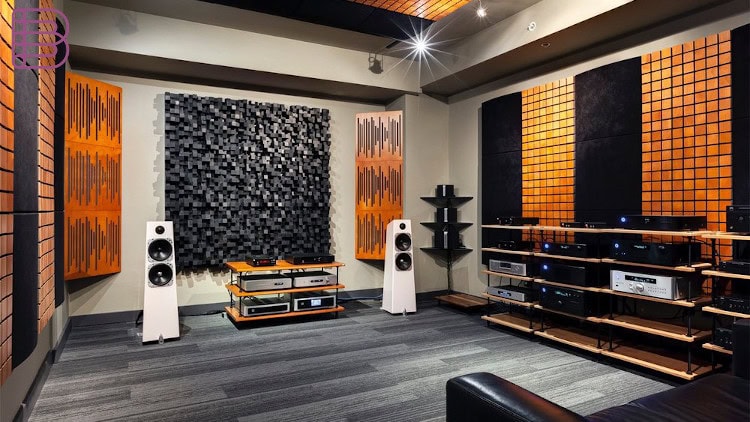
At mid and high frequencies, room treatment is intuitive. Add absorption to a wall or ceiling, and the effect is immediate and audible: less slap-back, less harshness, a more controlled sound. It’s easy to hear what’s wrong and easy to hear the fix working, which is exactly why room treatment tends to dominate the conversation — it gives fast, satisfying feedback. As covered in our Tech Talk on whether absorbers can solve bass problems, that same intuitive relationship breaks down once the frequency drops into bass territory.
Why low frequencies are the invisible half
Low frequencies don’t behave the same way, and they don’t announce themselves the same way either. Room modes, first and second-order reflections, and standing waves shape the bass response throughout a room, but none of that is something a listener can point to and hear directly the way they can hear a harsh high-frequency reflection. The wavelengths involved are simply too large relative to typical room treatment to fix with absorption alone, and the problem itself is largely invisible — you feel an uneven, boomy-in-one-seat, thin-in-another bass response without necessarily being able to trace it back to a specific cause the way you could with a mid-range echo.
That invisibility is exactly why this part of the problem tends to get overlooked. It’s not that low-frequency room behavior matters less than what room treatment addresses — it’s that it’s much harder to diagnose by ear, and much harder to fix with the same tools.
Why calibration is what handles the invisible part
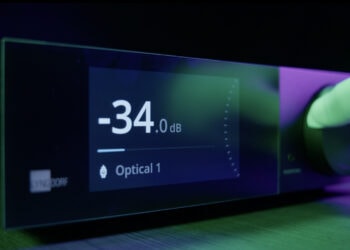
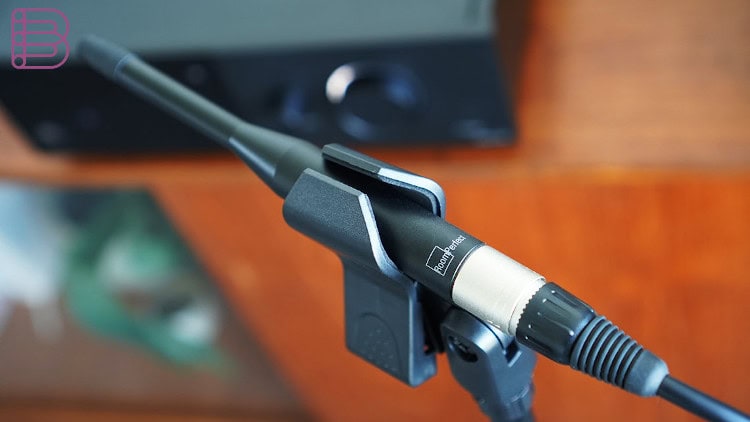
This is where room calibration earns its place alongside treatment rather than in competition with it. A system like RoomPerfect measures how the room actually behaves at low frequencies and corrects for it with DSP, addressing exactly the modes, reflections and resonances that are too diffuse and too large-wavelength for absorption to reach. For more on how that room-wide measurement and correction actually works, see our Tech Talk on what actually separates RoomPerfect from ordinary speaker calibration. Treatment and calibration end up complementary rather than redundant: treatment handles what’s audible and intuitive at mid and high frequencies, calibration handles what’s largely invisible at low frequencies — together covering the full range in a way neither fully does alone.
Frequently asked questions
Should I choose between room treatment and room calibration?
No — according to Hoffmann, they’re complementary, not competing. Treatment is the more effective tool at mid and high frequencies; calibration is what addresses low-frequency room behavior that treatment alone struggles to reach.
Why is room treatment easier to evaluate than room calibration?
Because its effects at mid and high frequencies are immediate and audible — you can hear the improvement directly. Low-frequency room problems are largely invisible by comparison, making them much harder to diagnose by ear alone.
Why can’t absorption panels fix bass problems the way they fix high-frequency issues?
Low frequencies involve wavelengths that are too large relative to typical room treatment, and the underlying causes — room modes, standing waves, reflections — behave differently than the reflections absorption is designed to catch.
What does room calibration actually correct at low frequencies?
It measures how the room itself behaves — its modes, reflections and resonances — and corrects for them with DSP, addressing the low-frequency problems that room treatment alone doesn’t intuitively cover.