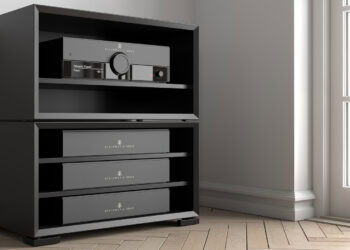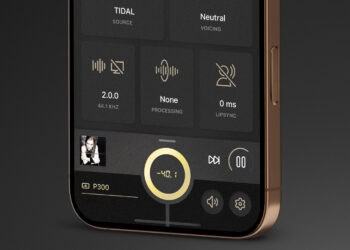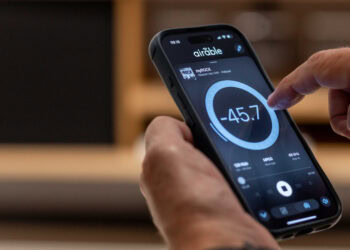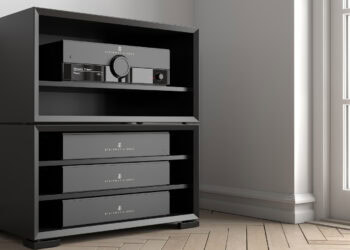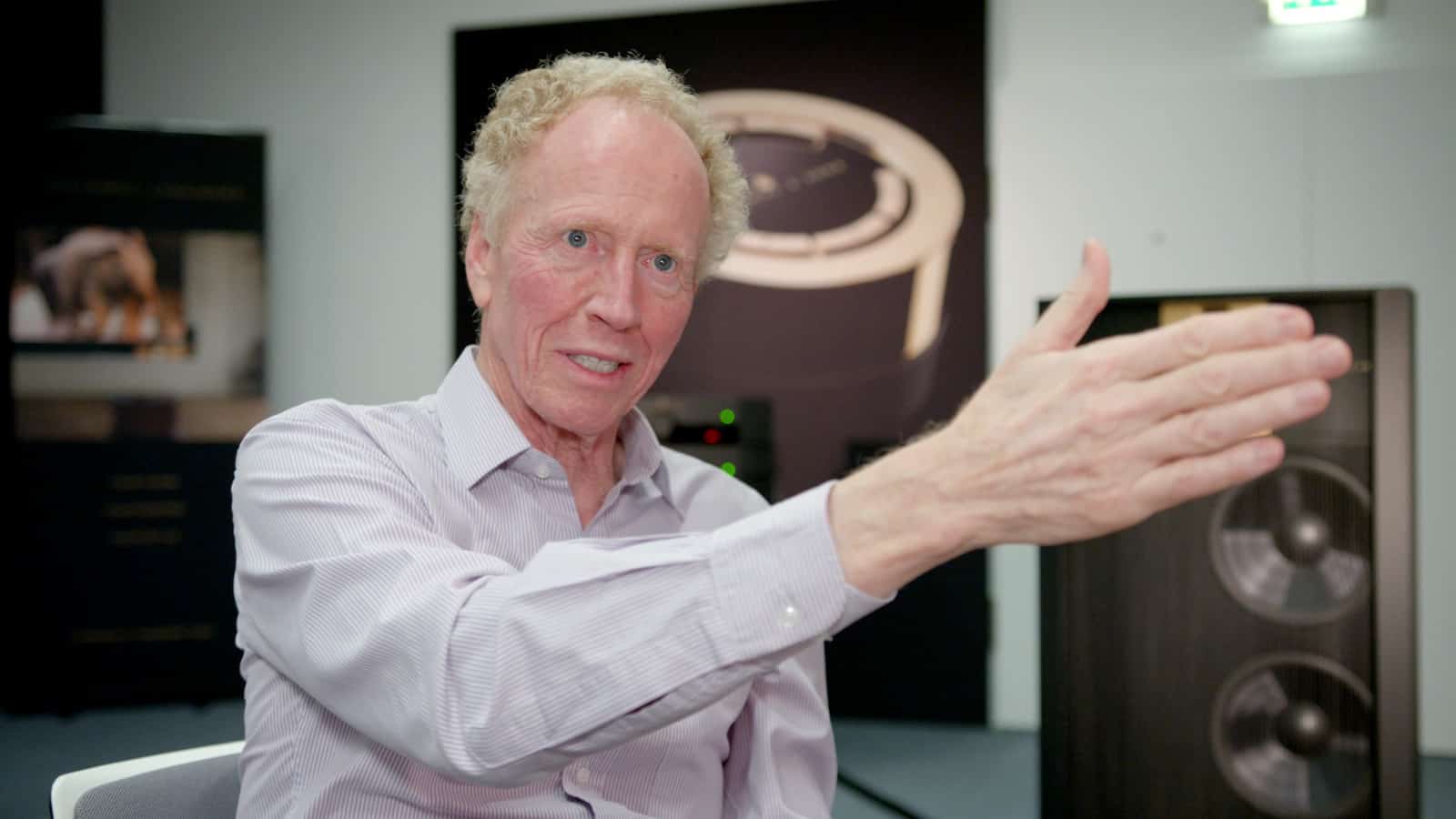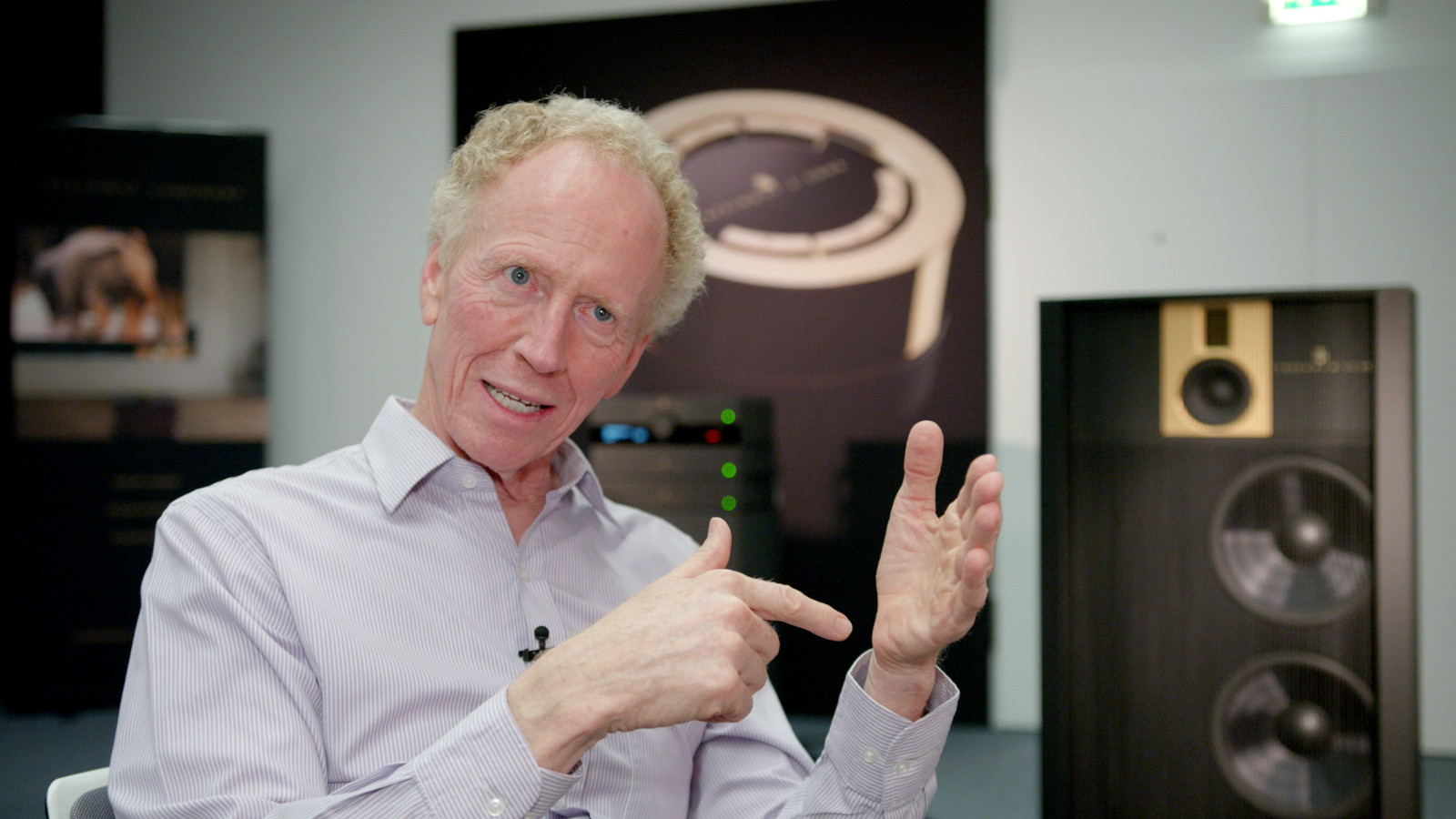


Steinway Lyngdorf’s P300 is the latest generation of the brand’s multichannel processor — a product Peter Lyngdorf half-jokingly calls out of his own technical league, given just how complex a modern processor has become.
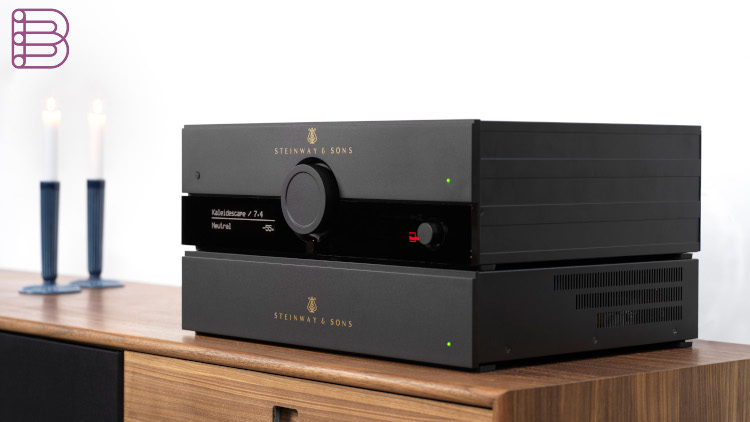
16-channel processing, fully updated
At its core, the P300 carries every current sound and video format alongside 16 individual channels, capable of controlling up to 256 individual speakers across Steinway Lyngdorf’s multichannel systems — the same ceiling as earlier processors. What’s new is simply an update across the board: current video and audio format support, and RoomPerfect built in as standard, as it is on every Steinway Lyngdorf processor.
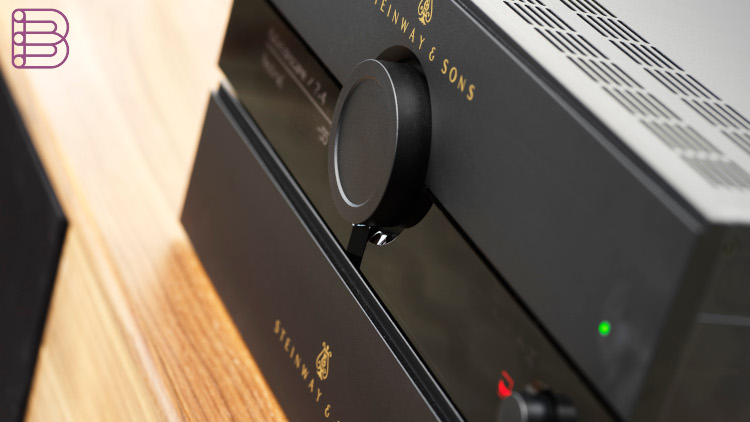
Psycho-acoustic bass steering explained
Beyond format support, the P300 carries a more specialised piece of engineering Lyngdorf calls psycho-acoustic bass steering. In a large, full home theatre setup, the left and right channels typically pair a dedicated woofer with a mid-high speaker to form a full-range system — but the centre channel is deliberately kept from reproducing anything below 200 Hz. Placing a full-range speaker where the centre channel usually sits, often behind the screen, means its impulse response won’t match the left and right channels even if the frequency response can be corrected. So the low end that’s missing from the centre channel is instead produced by the time-aligned, RoomPerfect-corrected left and right speakers — and the same approach applies to the surround channels. In an 11.2 system, several layers of low-frequency information end up routed through the left and right speakers that would normally have come from elsewhere. It’s a genuinely complex setup, but the result, Lyngdorf says, is that even small speakers positioned as centre, surround or ceiling channels sound like full-range speakers — more uniform overall than actually using full-range speakers in every position.
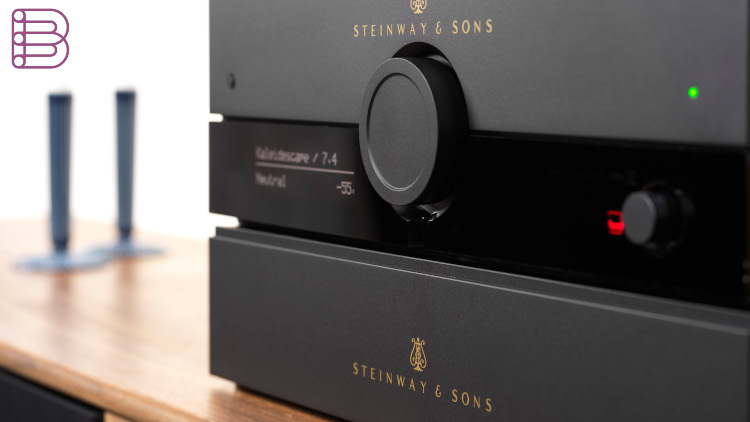
Fully digital is the way to go
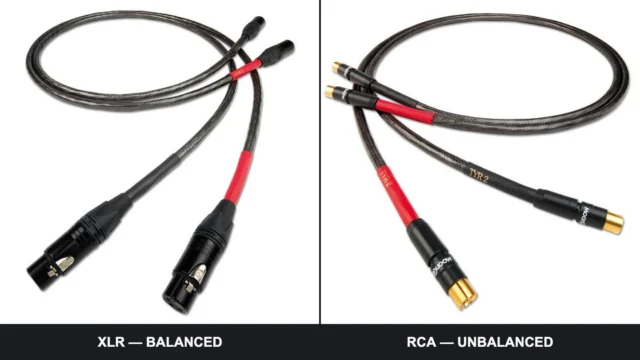
A multichannel system has to juggle level adjustment, room correction, tuning and surround-level controls all at once — and doing all of that risks running out of headroom, ending up with less digital resolution than intended once attenuation is applied. Steinway Lyngdorf avoids that by distributing sound digitally over its own CAT5 cabling to the individual power amplifiers, so volume is ultimately adjusted at the power supply of each amplifier’s digital-to-analogue converter, not in a shared pre-amplifier stage. The result, Lyngdorf says, is systems free of noise, buzz and hum — backed by a guarantee that any customer hearing audible hum anywhere in an installed system doesn’t have to pay for it, regardless of cable runs. He describes demoing this by playing as loud as anyone can tolerate, adding another 20 dB of gain, and asking whether anyone can hear any hum or noise from the woofers: there is none, even with a stethoscope on the cabinet. Most other multichannel systems carry at least a trace of hum — enough, in Lyngdorf’s view, to audibly change how something as sensitive as a piano recording actually sounds. It’s part of why he’s comfortable using a full multichannel system as a standard preamplifier for the Model B without any compromise to Steinway Lyngdorf’s best stereo performance. For a more affordable alternative built on the same RoomPerfect foundation, see the Steinway Lyngdorf P100.
Find out more about the Steinway Lyngdorf P300.
Find Steinway Lyngdorf shops in the Benelux.
Find Steinway Lyngdorf dealers worldwide.
Frequently asked questions
How many channels can the Steinway Lyngdorf P300 control?
16 individual channels, capable of controlling up to 256 individual speakers across a Steinway Lyngdorf multichannel system.
What is psycho-acoustic bass steering?
A technique that keeps the centre and surround channels from reproducing bass below 200 Hz, instead routing that low-frequency information through the time-aligned left and right speakers for more consistent sound.
Why does Steinway Lyngdorf distribute sound digitally over CAT5 cable?
It lets volume be adjusted at each amplifier’s own power supply rather than in a shared pre-amplifier stage, which is what keeps the system free of noise, buzz and hum.
Does Steinway Lyngdorf guarantee a noise-free installation?
Yes — if any audible hum is present anywhere in an installed system, the customer does not need to pay for it.