


What turns a technically good speaker or pair of headphones into one that simply feels right? In a new article on the HARMAN newsroom, Sharon Peng, Senior Vice President of Global Engineering for Lifestyle Consumer Audio at HARMAN, explains how the company approaches great sound. Her answer starts with the listener, not with the technology. “Technology is very important, but technology is the means, not the destination,” she says.
Great sound needs measurements and listening
According to Peng, great sound rests on two pillars. Measurements describe frequency response, distortion, dynamics and spatial performance, but on their own they cannot tell whether sound feels natural or engaging. That is why HARMAN combines objective data with critical listening. “Measurements tell us what the product is doing; listening tells us what the listener is experiencing,” Peng explains.
Perception, she adds, happens largely in the brain. Context, expectations and earlier experiences all shape what we hear. That is also why HARMAN does not chase one single “perfect” sound. Instead, it aims for a shared foundation of clarity, balance, natural timbre and comfortable listening, and then adds room for personal preference.

The room is part of the system
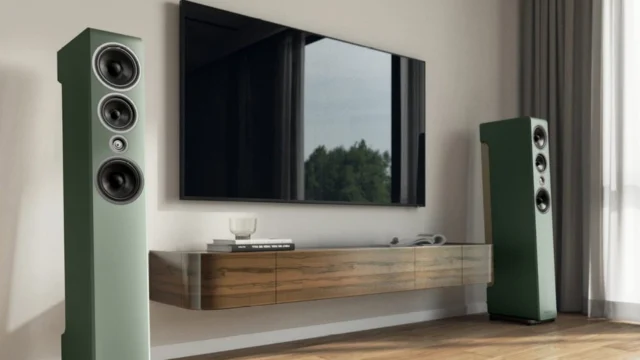
One of the strongest points in the article is about the listening environment. At home, in the car and on the go, listeners face different background noise, different acoustics and different product placements. HARMAN takes those conditions into account from the very first design stage. “The environment is part of the audio system, whether we like it or not,” says Peng.
For hi-fi enthusiasts, that idea is familiar. A loudspeaker never sounds the same in two rooms, and placement, furnishing and reflections often make a bigger difference than a component upgrade. If you want to know more, read our guide to understanding room acoustics.
AI as a tool, the listener as the reference
Peng also explains how HARMAN uses artificial intelligence. AI helps products adapt to background noise, listening level and personal preferences, and it helps engineers analyse large datasets that link measurements to perception. She mentions technologies such as JBL Spatial 360 sound in the JBL Tour Pro 3 and JBL QuantumEngine in JBL’s gaming headphones, as well as products such as the Harman Kardon Luna 2 and the JBL PartyBox range.
Still, she is clear about where the final judgement lies: “The human listener is still the final reference.” Many of the most important engineering choices, she adds, are details that listeners never consciously notice, but that make listening more comfortable for longer.


Why this matters for great sound at home
The article is aimed at HARMAN’s lifestyle products rather than its high-end brands, but the message applies across the board. Specifications are a starting point, not a conclusion. That is also why every review on Best of High End combines technical information with weeks of listening in a real room. As Peng puts it: “Great sound is engineered with precision, but judged by feeling.”
HARMAN, a wholly owned subsidiary of Samsung, owns brands such as JBL, Harman Kardon, Mark Levinson, Revel and AKG. The full interview can be read on the HARMAN newsroom.
Key points
- Great sound combines objective measurements with critical listening
- Perception happens largely in the brain, shaped by context and expectations
- HARMAN aims for clarity, balance, natural timbre and comfortable listening, plus personalisation
- The listening environment is treated as part of the audio system from the first design stage
- AI helps adapt sound to noise, level and preference, and links measurements to perception
- The human listener remains the final reference