

Read enough spec sheets and press releases and one phrase keeps coming back: fully discrete. Amplifier makers print it on brochures, DAC builders put it in headlines, and headphone amplifiers are sold on it alone. In discrete circuit design audio engineers build a circuit from individual transistors, resistors and capacitors rather than relying on a ready-made integrated circuit such as an operational amplifier or a DAC chip. But what does that actually change, and does discrete automatically mean better sound?
From discrete to integrated, and back again
The operational amplifier, or op-amp, is the basic gain block of analogue electronics. It started life as a discrete circuit: by 1961, solid-state op-amps built from individual transistors were already in production. Two years later Fairchild introduced the μA702, the first monolithic op-amp on a single chip, followed by the μA709 in 1965 and the internally compensated μA741 in 1968. Integration made op-amps small, cheap and consistent, and they quickly displaced most discrete designs.
Audio followed. When Signetics introduced the NE5532 in 1979, its low noise and very low distortion made it the industry standard for professional audio. Circuit designer Douglas Self has written that there is probably no music on the planet that has not passed through a hundred or more 5532s. Mixing desks, studio converters and a large share of consumer hi-fi still rely on op-amps.
High-end brands, however, kept returning to discrete circuitry. For a manufacturer building a small number of expensive components, the cost advantage of a chip matters less than the freedom to design every stage in-house, and fully discrete became a way of signalling exactly that. Today, discrete circuit design audio brands range from boutique headphone amplifier makers to Japanese flagship manufacturers.
What a discrete circuit does differently
An integrated op-amp is a complete, sealed design. The chip maker has chosen the topology, the transistors, the bias currents and the compensation, and the audio designer works around those choices. A discrete circuit lets the designer make every one of them, and that freedom is the core promise of discrete circuit design audio products:
- Supply voltage: an op-amp’s output can never exceed the supply it runs on. A discrete stage can be designed for higher rails, and therefore more headroom.
- Bias and operating class: the output stages inside common op-amps run in class B or AB. Nelson Pass notes that chips are therefore not as linear as might be achieved with class A operation, while a discrete builder can bias every stage in class A. Sparkos Labs, for instance, runs its discrete op-amp stages at around 14 mA, against roughly 5 mA in a typical IC.
- Parts selection: each transistor, resistor and capacitor can be chosen and matched individually. Burson, which sells discrete op-amp modules, uses hand-matched transistor pairs and 0.1% resistors.
- Thermal behaviour: on a chip, all transistors share one piece of silicon. In a discrete layout they can be physically separated, which Burson argues eliminates thermal crosstalk.
The other side of the coin
Discrete design is not a free lunch. More parts mean more cost, more board space and more assembly time, and every stage has to be matched and tuned. Nelson Pass, who built his reputation on simple discrete amplifiers, warns DIY builders that home-made op-amps are typically not as good as chips at power supply rejection, and that there will be times when the circuits oscillate. PURIFI is even more sober in a 2025 technical note: in its view, going discrete only makes sense if you want something the chip makers are not offering.
Modern op-amps are also remarkably capable, and a well-implemented chip can outperform a poorly executed discrete stage. The word on the spec sheet says nothing about the quality of the implementation, and that is the main caveat of discrete circuit design audio marketing.
Discrete circuit design audio in practice: three examples
How brands apply the idea varies widely, and the details matter more than the label.
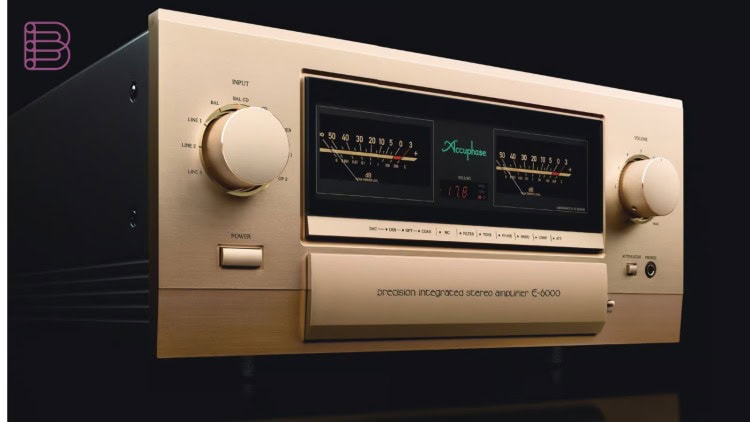
Accuphase E-6000. Accuphase’s flagship integrated amplifier, which we covered when it topped the brand’s integrated line-up, uses an instrumentation amplifier architecture in its power stage and a six-fold parallel push-pull output stage of bipolar transistors, rated at 260 watts into 8 ohms. Volume is handled by Accuphase’s AAVA system, which removes variable resistors from the signal path altogether. Interestingly, the only place the official feature list explicitly mentions discrete circuitry is the dedicated headphone amplifier.
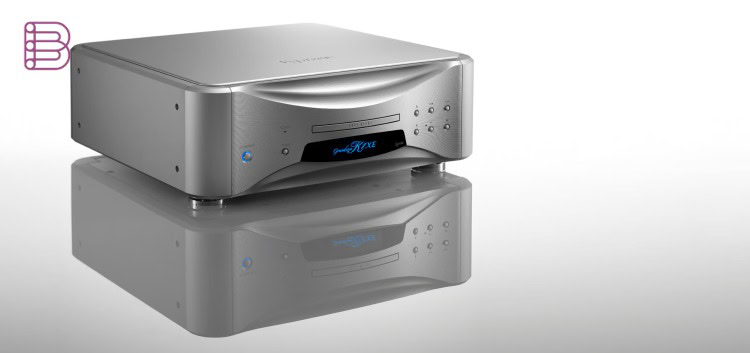
Esoteric Grandioso K1XE. Esoteric takes the idea into the digital domain. Instead of a DAC chip, the Grandioso K1XE uses the second-generation Master Sound Discrete DAC, built from separate components. On its discrete DAC technology page, Esoteric explains that it wondered whether it was possible to use higher-grade parts than integrated chips, and that this idea led to the discrete DAC. The design arranges 32 circuit elements in two circles, each with its own resistors, logic ICs and independent power supply. Because component tolerances are directly linked to arithmetic precision in a discrete DAC, according to Esoteric, it uses resistors of measuring-instrument grade.
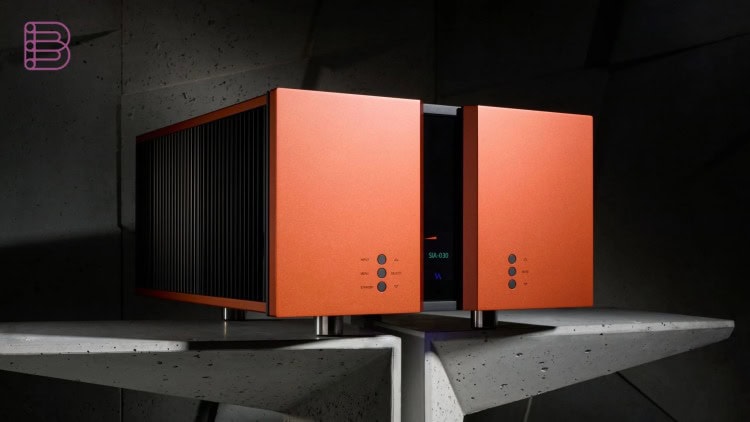
Vitus Audio. The Danish manufacturer describes its amplifiers as discrete designs and lets owners of the SIA-030 integrated amplifier switch between class A and class AB operation. Founder Hans-Ole Vitus discussed those operating modes, and why he questions some of the accepted rules of amplifier design, in our Tech Talk series.
What to look for as a buyer
Fully discrete tells you how a circuit is built, not how it sounds. A discrete design gives an engineer more freedom, but freedom can be used well or badly. When a brand promotes its discrete circuit design audio credentials, it is worth asking which stages are actually discrete, whether that is the gain stages, the output stage, the volume control or the DAC, and what the designer gained from it: higher supply rails, class A bias, tighter parts matching or simply a different topology.
Measured performance, build quality, how a component matches the rest of the system and, above all, listening remain better guides than a single word on a spec sheet. Discrete circuit design audio components can be superb, but so can a carefully implemented op-amp design. The label is an invitation to look closer, not a verdict.