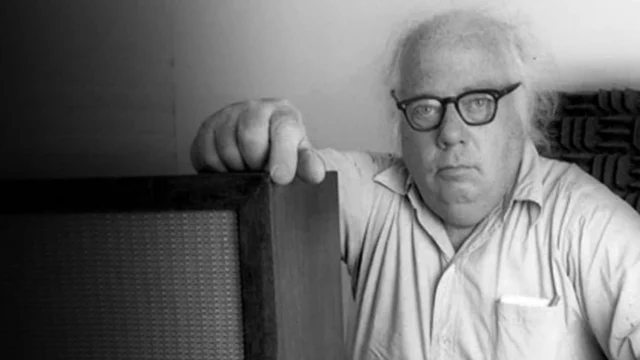


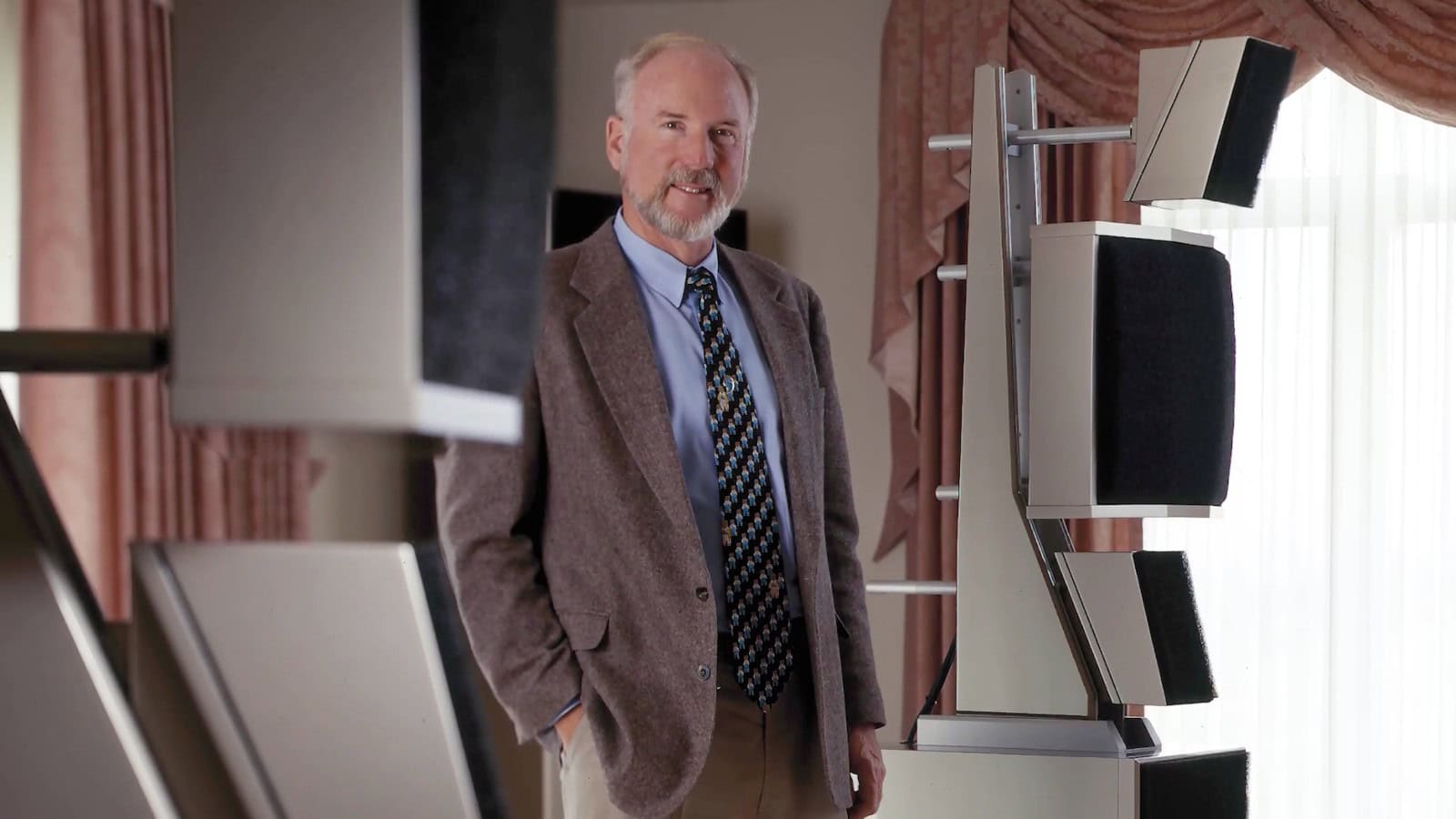
Few names carry as much weight in loudspeaker design as Dave Wilson. As the founder of Wilson Audio Specialties, he built a company — and an entire design philosophy — around one uncompromising question: does the sound reaching the listener’s ears preserve the true timing of the original musical event? That obsession with the time domain, first explored in a garage in Novato, California, in the 1970s, would go on to define some of the most celebrated loudspeakers in high-end audio history, and it earned Dave Wilson (1944–2018) a permanent place among the pioneers who shaped the industry.
From Recording Engineer to Loudspeaker Pioneer
Born on September 8, 1944, Wilson traced his fascination with sound back to childhood, when a neighbor’s Klipschorn speaker blasting Christmas carols kept him awake on Christmas Eve. That early curiosity turned into a lifelong pursuit once he met his future wife and business partner, Sheryl Lee, in college in Utah. While working as a designer of medical equipment at Cutter Laboratories, Wilson’s audio hobby kept growing: he began producing his own recordings in the late 1970s and joined the reviewing staff of The Absolute Sound, determined to improve the way the industry measured sound quality.
It was this dual identity — recording engineer and reviewer — that led him, around 1980, to build the first version of the Wilson Audio Modular Monitor, better known as the WAMM, as a personal tool for analyzing his own recordings. Demand for a pair of his own reference monitors followed almost immediately, and what began as a home hobby in the Wilsons’ garage grew into Wilson Audio Specialties. After early setbacks — including losing their house after a disgruntled dealer damaged the company’s reputation — the couple relocated to Provo, Utah, where Sheryl Lee found they could build a purpose-made factory for less than the cost of renting space elsewhere. That factory would later expand by more than 60 percent under Wilson’s direction.

The Philosophy of Time
Wilson’s defining insight was that driver misalignment in the time domain — not just frequency response — was central to realistic reproduction. Discussing his final design, the WAMM Master Chronosonic, he explained the idea in his own words: “The placement of the drivers relative to each other affects the synchronicity of the alignment of the leading edge of the transient. Our patent on how we achieve time alignment dates back to 1984.” For Dave Wilson, this was never a secondary concern. “Speed is not a main arbiter of quality; it’s just a characteristic,” he said. “It’s about time; it’s all about time. Flat frequency response, low distortion, extended bandwidth, and accurate timing synchronicity are equally important… What I’m interested in is the synchronicity of the leading edge of each note.”
That philosophy shaped every loudspeaker Wilson Audio would go on to build, from adjustable driver modules that let owners tune time alignment in their own listening rooms, to enclosure materials engineered specifically to stay out of the music’s way.

Iconic Products
Across four decades, Dave Wilson’s designs — and the products they inspired — became touchstones of the high-end industry:
- WAMM (1981) — Wilson’s first commercial loudspeaker, and the origin of his time-domain research.
- WATT/Puppy (1986–1989) — conceived as a portable monitor for his own recording sessions, it became, in combination, the best-selling loudspeaker over $10,000 per pair in history.
- Alexandria (2003) — Wilson’s new flagship platform, introducing Aspherical Group Delay technology.
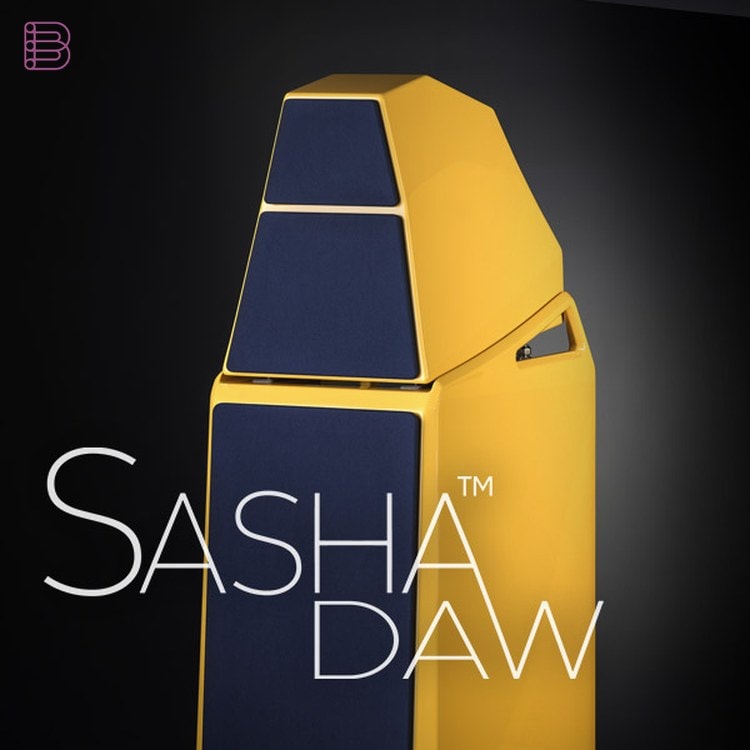
- Sasha (2009) — a direct descendant of the WATT/Puppy lineage that remains in production today.
- WAMM Master Chronosonic (2016–2017) — Wilson’s self-described magnum opus, a nearly five-year undertaking he built, in his own words, “as a tool, and as a thing of beauty.”

Legacy
In November 2016, Wilson named his son, Daryl, as President and CEO of Wilson Audio, having already seen him contribute to or lead the design of more than thirty successful loudspeaker models. Dave Wilson died on May 26, 2018, at his home in Utah, from metastatic bone cancer, with his wife Sheryl Lee and family at his side. Wilson Audio later named one of its most popular models the Sasha DAW — the initials standing for David Andrew Wilson — as a tribute to the man who started it all.
Writing in Stereophile shortly after his death, longtime colleague Jason Victor Serinus reflected that Wilson was able to depart secure in the knowledge that “his legacy as one of the great innovators in loudspeaker design will live on.” More than forty years after that first WAMM left a garage in Novato, Wilson Audio Specialties — still run by the family he built it with — continues to measure every new design against the standard he set: not just how a loudspeaker sounds, but whether it tells the truth about time. Readers curious about another amplification pioneer with an equally uncompromising philosophy may also enjoy our profile of Dan D’Agostino.
FAQ