

Black Friday is the most important week of the year for TV sales in Belgium and the Netherlands. But what should actually guide you when you buy a premium television? We asked Tonnie van Schijndel, Head of Marketing TV & AV Benelux at Samsung, and Nick Van Goethem, Product Manager TV at Samsung Electronics Benelux. Their answer starts with the room, not the price tag.
We spent a day with Nick at Samsung’s event at IFA in Berlin earlier this year. This time we sat down with him and Tonnie on Teams. The conversation follows four themes: Black Friday, Micro RGB, the trends shaping the market, and a look ahead to CES and 2027.
Guests: Tonnie van Schijndel, Head of Marketing TV & AV Benelux, Samsung, and Nick Van Goethem, Product Manager TV, Samsung Electronics Benelux.


Black Friday
For most shoppers, Black Friday is about finding the biggest discount. For someone buying a premium TV, what should weigh more heavily than the price tag?
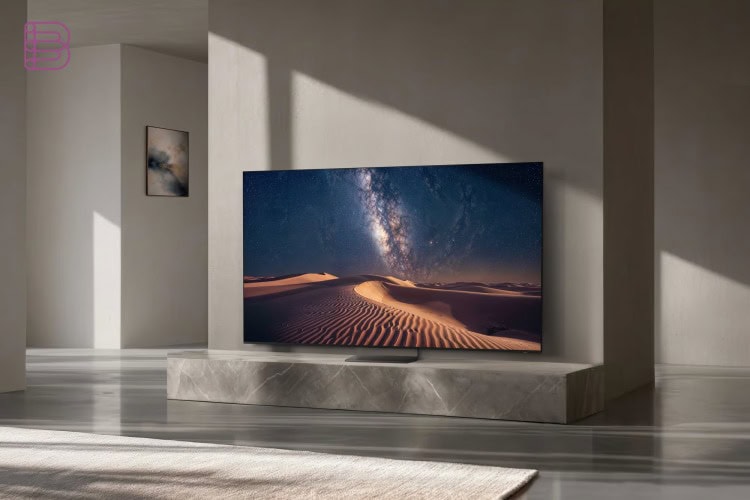
Tonnie: Picture quality, without a doubt. In the end, that is what you should primarily choose a TV on. Price matters too, especially during Black Friday, but picture quality is a broad concept. It starts with the display technology, and the right choice depends on where the TV will be placed and how you use it. If you mostly watch films in a darkened room, an OLED is probably the better choice for you. If you also watch during the day, say Formula 1, with light coming in, then it is worth looking at Micro RGB.
On top of that there is our glare-free finish. That contributes to a better viewing experience in both bright and dark rooms, because even in a darkened room there is always a light source that can reflect for one of the viewers. The glare-free screens we use now are already the second generation. They reduce reflections to an absolute minimum, to the point where you simply can no longer recognise objects in the screen.
Which trends do you expect on the Benelux market this Black Friday: bigger screens, more expensive models, or more people renewing their whole set-up?
Tonnie: This year was a special one, because we had a football tournament. Every other year there is either a European Championship or a World Cup, and in those years a lot of people already buy a new TV in June or July. Even so, the Black Friday weeks remain the most important moment of the year for TV sales.
What we see is exactly what you hint at. People buy bigger screens, and that really accelerates in November. At the same time, the average price of the TVs sold goes up. People wait until the TV they have their eye on, the one that may be a little above their budget, finally drops in price, and then they buy the more expensive TV they actually wanted.
Black Friday started in Belgium and the Netherlands about eight years ago, blown over from America, and back then it lasted one week. Retailers keep trying to outdo each other and start earlier, so it has almost become a Black Friday month. Most deals already start the week before. Still, the last week is the most important one, not least because that is when many people get paid.
Micro RGB
In plain words: what is Micro RGB, and how does it differ from OLED?
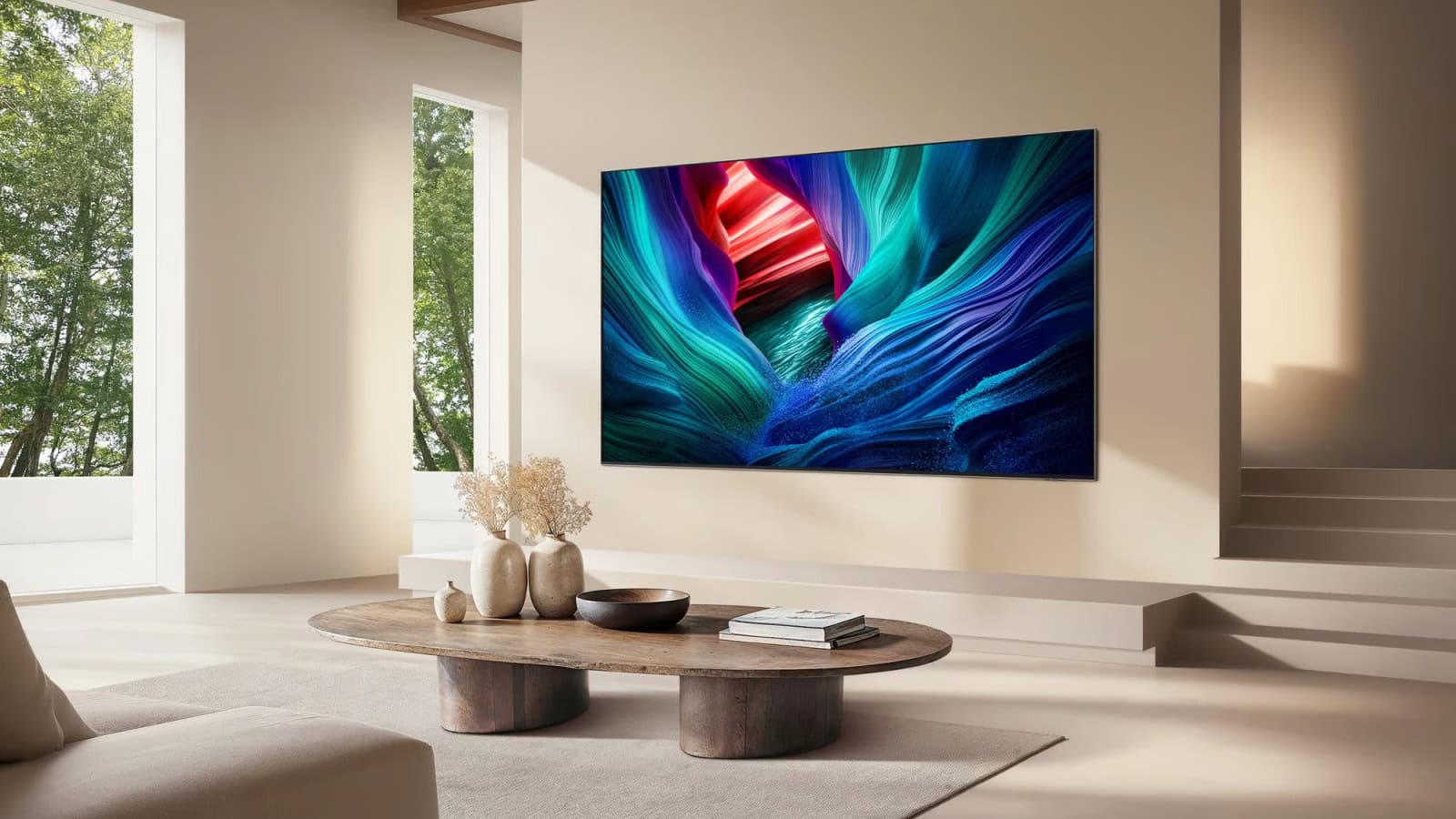
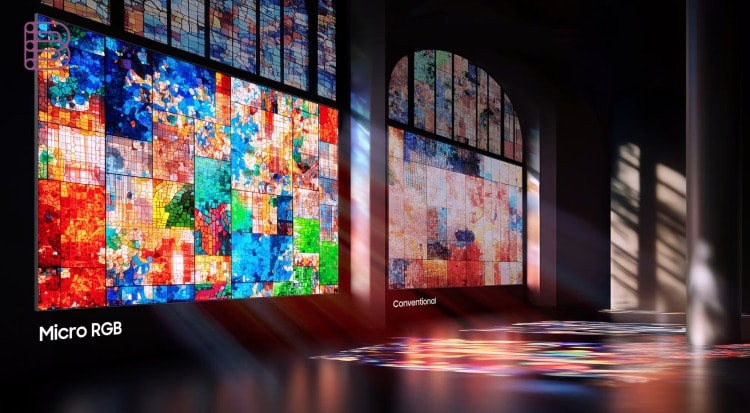
Tonnie: OLED is a very distinct technology, because the pixels produce the light themselves. With Micro RGB you have a backlight made of red, green and blue LEDs spread out behind the panel. The panel, with its LCD pixels, which are really small windows for every pixel, then mixes the colours from those three primaries. Because the LEDs behind the screen can shine much brighter, the TV can produce very high brightness.
Micro RGB also excels in colour gamut. OLED already has a wide colour gamut, but Micro RGB goes a step further: up to 100% coverage of BT.2020. That sounds very technical, but it means that colours at the outer edges of the colour space can be shown at all. The Micro RGB TVs we sell today can show colours you have never been able to see on a television before. That is quite an impressive fact.

Does that mean Micro RGB is overtaking OLED, and that OLED will be left behind?
Tonnie: That is a very good question, and it is hard to predict the future. Personally, I think OLED and Micro RGB can exist side by side, because they have slightly different strengths and characteristics. If you are really looking for that wider colour space and higher brightness, Micro RGB is the superior technology. But many people swear by the black levels and infinite contrast of an OLED.
The fact is that we started with Micro RGB around this time last year, with the 115-inch model. Today we already have two series in several screen sizes, we will expand that further, and other manufacturers are jumping on the train as well. Micro RGB will accelerate enormously in the market over the coming years.
Where does Micro RGB sit in the range today, and when will it come within reach of more buyers?
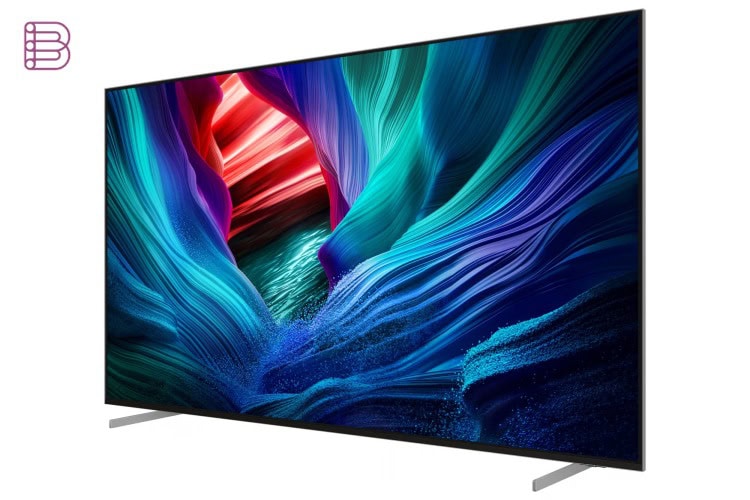
Tonnie: At the moment we have two series, the R95 and the R85, and each has its own position. We see the R95 as the flagship Micro RGB model, at a similar level to the S99, our OLED flagship. The R85 sits closer to our entry-level OLED models: the S85 and the R85 are in roughly the same range. With the current Black Friday offer, a 55-inch model even comes in at €999. So we are already addressing the volume part of the market. And a small tip of the veil: next year we will expand the portfolio further and cover the entire mid and high-end segment with Micro RGB.
So what is Samsung’s best TV today: the Micro RGB flagship or the OLED?
Tonnie: That is a tricky question. The S99 OLED is a beautiful set and close to unbeatable. But the S99 goes up to 83 inches. If you want to go bigger, there is only one option, and that is the R95. Last year we introduced the 115-inch model, and now the R95 also comes in 130 inches. Micro RGB is really what makes those very large screen sizes possible, at a reasonable price.
Editor’s note: Samsung confirms that the 130-inch R95 will be available in the Benelux from December 2026, in very exclusive and limited numbers.
Tonnie: Internally we sometimes run viewing tests where we deliberately show demo content made for OLED, with deep blacks and strong contrasts, on an R95. A trained viewer knows what to look for, but even colleagues ask: is this an OLED? The blacks are very black. In typical living-room conditions, Micro RGB can already match OLED or come very close to it. With all the lights off, you will see the difference more easily. And what I saw in Korea last month will strengthen Micro RGB’s picture quality even further. It is going to be a very interesting battle between OLED and Micro RGB.
Nick: We saw that at IFA too: how bright all the sets want to go. In the past we tended to ask what matters most to a consumer, brightness or colour, and we could steer in one direction. Today the top models offer so much in both brightness and colour that it comes down more to personal preference, and to screen size. For the very largest sizes, it will be Micro RGB. But OLED already goes up to 83 inches, which is a very big TV in itself.
“The highway we are building with these new TVs needs cars on it: content that addresses the full colour space.”
Tonnie van Schijndel
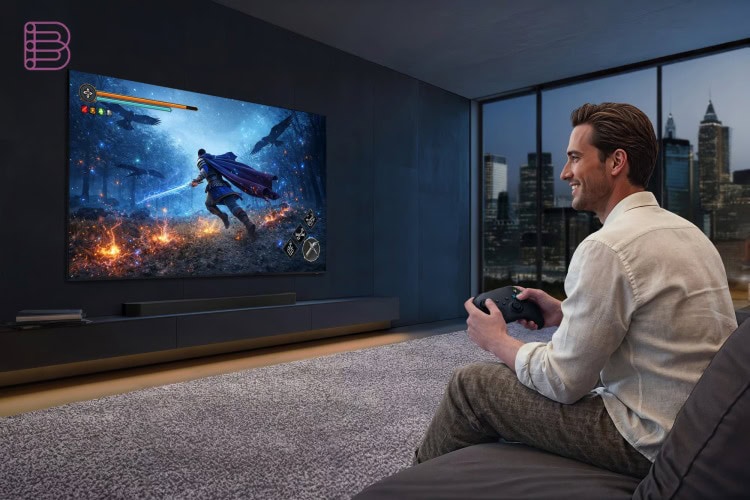
Tonnie: A lot of content does not yet address the BT.2020 colour space, but some game content already does, and hopefully the streaming services will push new formats quickly. And even when the colour space is not fully used, we can stretch and upscale it, so that you still get that pop or wow effect with today’s content.
Trends
Screens keep growing. What drives the demand for 85 inches and more, and what does a bigger screen ask of the room?
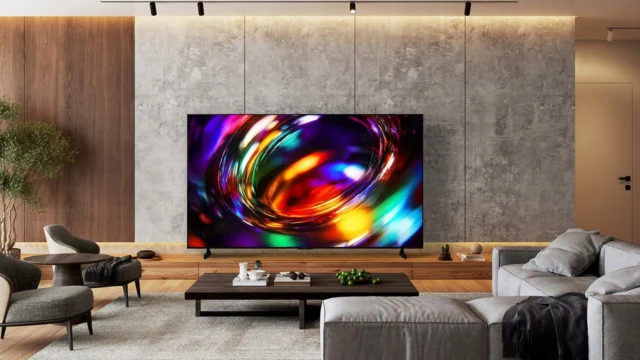
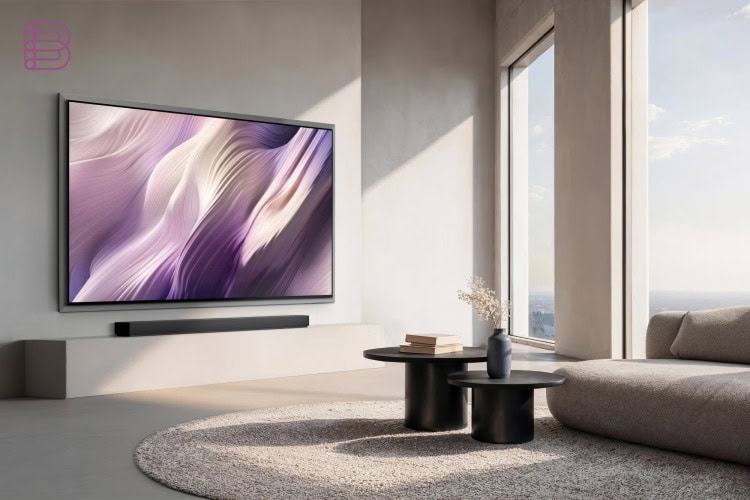
Tonnie: I am still surprised that the trend keeps going. Five or ten years ago we would have said the growth in screen sizes would stop. But apparently living rooms are still big enough to go bigger and bigger. Falling prices also bring large sizes within reach of more consumers. A bigger screen also catches more reflections, which is why we find glare-free technology so important for larger sizes. And it is often a big black surface in the room. Open an interior or styling magazine and you will never see a big black TV in the pictures.
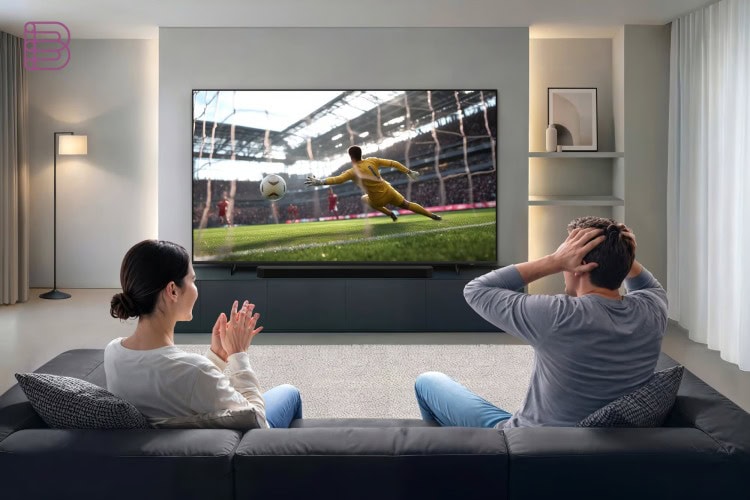
Nick: Screen size is often the first thing you notice when you visit someone at home. Some people say they should have gone one size bigger, others say it is perfect. It also has to fit nicely into the living room, so going too big is not always desirable. And colour gamut is becoming more important too, also in retail: when consumers compare so many sets side by side, colour and brightness always stand out. In Belgium we are also lucky that, on average, we live in slightly bigger homes than elsewhere in Europe, which is one reason why large screen sizes sell a little better here.
Tonnie: In Scandinavia, too, much bigger televisions are sold, and there the trend keeps going as well. They are typically three to four years ahead of us in screen size. I think that is partly because, outside the big cities, people there also live in bigger homes.
Lifestyle TVs have become a category of their own. Do premium buyers still have to choose between design and picture quality?
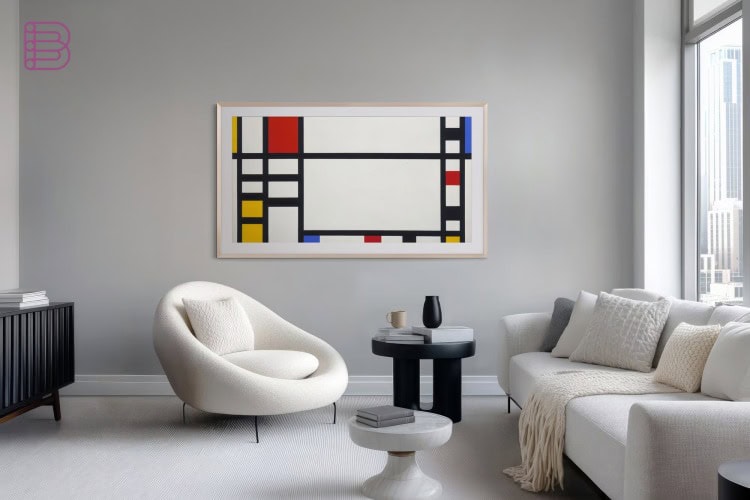
Tonnie: There are different techniques on the market, such as rollable or transparent screens, but from our point of view those are not yet solutions for the mass market. We address it with The Frame, and the S99 OLED, for example, also has Art Store on board, so that when you switch the TV off it can still enrich the room with a work of art. Projectors are another solution, for people with a dedicated cinema room.
Next year it will be ten years since we introduced The Frame, and its sales are still growing. Awareness is reasonably good, although not yet at the level of OLED or Neo QLED. We keep supporting it with campaigns, for example the current one with Daan Alferink, interior stylist, presenter and content creator, known in Flanders from TV programmes such as Blind Gekocht and De Slimste Mens ter Wereld. He had just moved house, and he furnished his new home with The Frame. In short, it is a segment that is still growing within our portfolio.
“Life is too short to watch bad TV.”
A phrase from the conversation
Looking ahead
Without giving away CES: which direction can our readers expect from Samsung in 2027?
Tonnie: We will continue down the road we took this year with Micro RGB. Where we used to have Neo QLED and OLED side by side, with the regular QLED sets below them, Micro RGB will now become the core, pushing Neo QLED and QLED further down into almost a supporting role. We will be able to fill the entire mid and high-end spectrum with Micro RGB.
We will not scale down our OLED portfolio either. It is not that we will reduce OLED in favour of Micro RGB; we really see them as two tracks that can live side by side, with Micro RGB above all making the larger screen sizes possible. And OLED is not fully developed: the big leaps in picture quality came at the start, and since then it has been small steps forward, which we will keep making. Beyond picture quality, we will also innovate in functionality. A TV is primarily for watching beautiful images, but what else do you do with it? Can it help you find the right content more easily, in the right picture quality? You will see innovation there too.
One piece of advice for a reader who wants to buy a premium TV this year?
Tonnie: Look very carefully at where you want to place the TV, at which moments and with which content you will use it, and decide on that basis whether you go for Micro RGB or OLED. And go and see glare-free for yourself. When we introduced it, many people reacted critically, often without having seen it: “glare-free smears everything out, it costs contrast.” Go and look at it before you make up your mind. Only when you see it will you believe how effective it is, and that the contrast really stays up to standard. That would be my advice in a nutshell.
Nick: It really depends on where you want to place the TV, which is usually the living room. Windows matter. And do you watch mainly in the evening, or during the day as well? Think of people who work shifts, who are at home more, or who simply like to watch during the day; a lot of sport is broadcast in daytime too. All of that influences the type of TV. In the premium line-up we have both glare-free and non-glare-free models, so compare them in the shop, or go and see a set for yourself.
“Go and look at it before you make up your mind. Only when you see it will you believe how effective it is.”
Tonnie van Schijndel on glare-free
Our thanks go to Tonnie and Nick for their time, and to Helena Wilmet and the Samsung team for organising the interview. We are already looking forward to CES, and to what comes out of Samsung’s magic hat. In the meantime, the current Black Friday deals are in our overview of Samsung Black Friday 2026.
More information on Samsung’s Micro RGB, OLED and The Frame ranges is on the Samsung Belgium website, in Dutch and in French.