

Why Peter Lyngdorf developed RoomPerfect comes down to years of frustration. He explains it as the result of many years spent thinking about how to compensate for room acoustics — a recurring problem that kept pulling him back.
The problem: great speakers, disappointing rooms
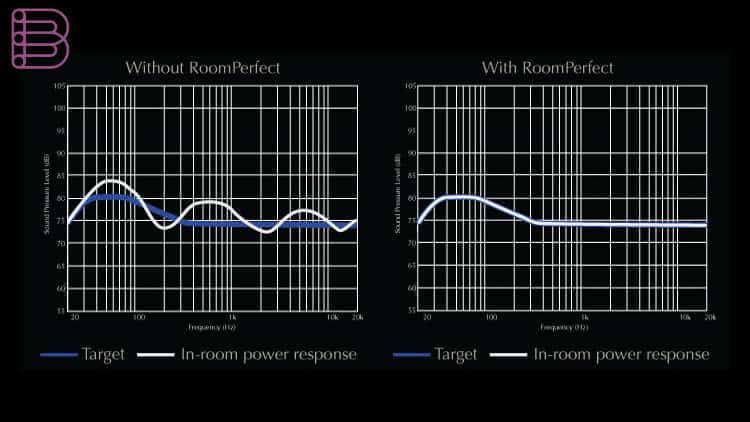
Running retail shops and designing loudspeakers and amplifiers for years gave Lyngdorf a direct view of the gap between a product on paper and a product in someone’s living room. Visiting customers, he’d regularly find that a DALI speaker he knew well sounded nothing like it should — not because the speaker was wrong, but because of the room it was playing in. People were still happy with the result, but Lyngdorf knew it could be far better. The insight that stuck with him: buy the best speaker in the world, put it in an ordinary living room, and roughly 85% of what you actually hear comes from the room — only 15% from the speaker itself. Most rooms are not acoustically kind. Digital compensation, done correctly, lets any good speaker — a Bowers & Wilkins, a DALI, whatever the choice — perform at its best regardless. That matters because most people can’t place their speakers or their sofa in the theoretical sweet spot; real life, and real living rooms, don’t allow it. Good room compensation makes that constraint disappear, even with a speaker close to a wall.
Four iterations to get it right
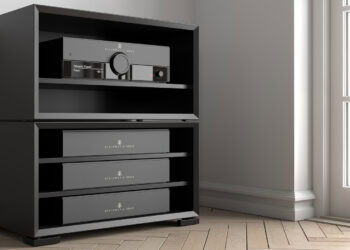
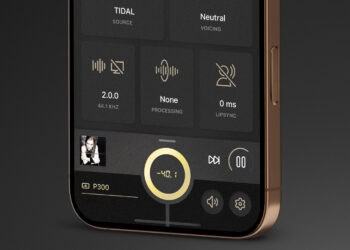
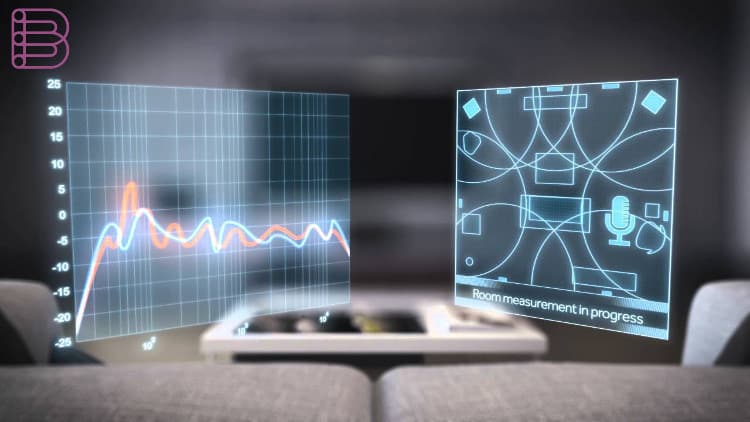
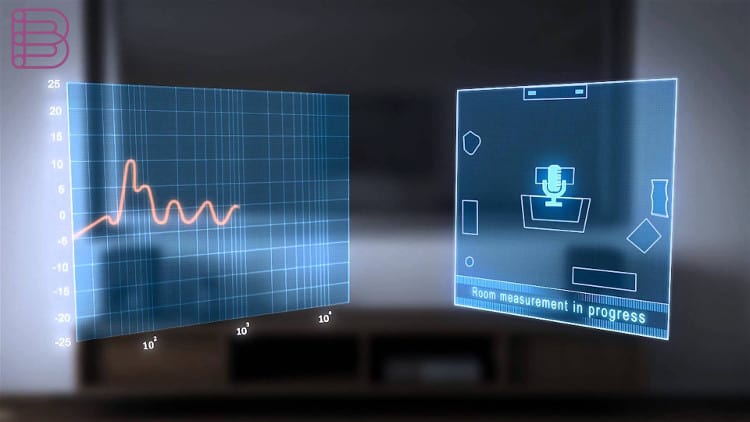
RoomPerfect is actually the fourth generation of Lyngdorf’s room compensation technology, and a full departure from what came before. The earliest version took a single measurement and corrected for the frequency response it revealed — until it became clear that a single microphone’s frequency response bears little relation to what you actually hear sitting in the room, since the sound arrives at different times and is roughly 85% out of phase. A single measurement, in other words, is close to meaningless on its own. That’s also why RoomPerfect works as a black box for the end user: you don’t see what’s happening, you simply hear that the speakers now sound the way they’re supposed to. Getting there took an $8–9 million investment and a genuinely new measurement approach — one immune to background noise. Lyngdorf recalls measuring a multichannel system in the middle of a cocktail party and telling guests not to leave the room or stop talking; the measurement worked regardless. It’s the same room-correction foundation built into products like the TDAI-3400 amplifier and the P300 processor.
Visit the website of Steinway Lyngdorf | Lyngdorf.
Frequently asked questions
Why did Peter Lyngdorf develop RoomPerfect?
Because he kept finding that speakers he knew well sounded wrong in customers’ homes — not due to the speaker, but the room. He estimates about 85% of what you hear at home comes from the room, not the speaker.
What generation of room correction technology is RoomPerfect?
The fourth. Earlier versions relied on a single frequency-response measurement, which turned out not to reflect what a listener actually hears in the room.
How much did Steinway Lyngdorf invest in developing RoomPerfect?
Between 8 and 9 million dollars, including a new measurement technology that’s immune to background noise.
Does background noise affect a RoomPerfect measurement?
No — the measurement technology was specifically designed to be immune to it, tested even during a live cocktail party in the room.