

Walk the demo rooms of any high-end audio show in 2026 and two irreconcilable schools of digital-to-analog conversion still share the same carpet. In one corner sit heavy, resistor-laden R2R ladder DACs, direct descendants of the very first compact disc players. In the other, sleek delta-sigma chips power everything from smartphones to six-figure reference DACs. The R2R DAC vs delta-sigma DAC debate is not forum nostalgia; it is a genuine engineering fork that still shapes how new products are designed today, from pocketable dongles to flagship CD players. Understanding why these two philosophies persist side by side, rather than one simply having “won”, is the key to making sense of one of digital audio’s most enduring rivalries.
A Fork in the Road: Two Ways to Turn Numbers Into Music
Every digital source, whether a CD transport or a streaming bridge, eventually faces the same problem: converting a stream of binary numbers back into a continuously varying analog voltage that a preamplifier or headphone driver can use.
There is more than one way to solve that problem, and the two dominant solutions are built on almost opposite engineering assumptions. R2R (resistor-ladder, or “multibit”) conversion tries to represent each sample directly and precisely, using an array of matched resistors. Delta-sigma conversion takes a completely different route, approximating the same waveform at extremely high speed using a low-bit-depth process combined with heavy digital filtering.
Both arrive at music. Neither is objectively “better” in every sense, which is exactly why manufacturers keep building both, decades after delta-sigma became the industry default. The R2R DAC vs delta-sigma DAC split, in other words, begins with hardware philosophy rather than a fixed sound signature.
History and Context: From the CD Era to the Rise of Delta-Sigma
R2R conversion is the older of the two approaches, dating back to the earliest consumer compact disc players of the early 1980s, including landmark chips such as Philips’ TDA1541, still prized by collectors today. Building an accurate R2R ladder is a brute-force exercise: hitting reliable 16- or 24-bit resolution requires resistors laser-trimmed to extremely tight tolerances, which is expensive. As digital audio scaled up through the 1990s, the industry needed a cheaper, more easily mass-manufactured alternative. Delta-sigma conversion, refined by chipmakers such as ESS Technology, Asahi Kasei Microdevices and Cirrus Logic, filled that gap: trading resistor precision for high-speed oversampling and digital noise shaping let chips be produced cheaply, in volume, while measuring extremely well on the bench. Within a decade, delta-sigma became the default in nearly every digital audio product, and R2R receded into niche, high-end territory, where it has spent the last fifteen years enjoying a steady audiophile revival.
The Technique: Ladder Networks vs. Oversampling and Noise Shaping
An R2R DAC works by physically switching current through a precise network of resistors arranged in a repeating “R” and “2R” value pattern, one rung of the ladder for each bit of resolution. There is no high-speed trickery involved: the ladder simply outputs the voltage that corresponds to the exact digital sample it has been given.
Because the process is inherently “non-oversampling” in its purest form, many R2R designs, including modern flagship models, offer a NOS (non-oversampling) mode that bypasses digital filtering altogether. The tradeoff is that any imperfection in the resistor network, however tiny, shows up directly as distortion, which is why serious R2R DACs are large, heavy and comparatively costly to build well. This hands-on, resistor-driven approach is the purest expression of the R2R side of the R2R DAC vs delta-sigma DAC equation.
Delta-sigma DACs take the opposite approach. Rather than resolving each sample directly, a delta-sigma chip converts the incoming signal into an ultra-high-speed, low-bit-depth pulse stream, switching on and off millions of times per second to approximate the analog waveform. A technique called noise shaping then pushes the resulting quantization error up into ultrasonic frequencies, safely out of the audible band, before an analog filter smooths the pulse train into a continuous signal. This is computationally intensive rather than component-intensive, which is exactly why delta-sigma scales so well into a tiny chip: the complexity lives in silicon and firmware rather than in a cabinet full of matched resistors.
R2R DAC vs Delta-Sigma DAC in Today’s Products: Arcam, FiiO and iFi
The clearest way to see the R2R DAC vs delta-sigma DAC divide is to look at what is actually shipping right now. Arcam’s new CD25 CD player, unveiled alongside the A50 Signature integrated amplifier as part of the brand’s 50th-anniversary Radia series, is a textbook modern delta-sigma design.
It is the first Arcam player since the FMJ D33 DAC to use a dual-mono DAC architecture, and the first Arcam product of any kind to adopt ESS Labs’ Hyperstream 4 conversion technology, paired with a linear toroidal power supply and a vibration-damped transport. Every channel gets its own complete conversion path, a dual-mono approach borrowed from the amplifier world and applied to the DAC section. That refinement is exactly what delta-sigma’s silicon-driven scalability makes affordable at the CD25’s price point.
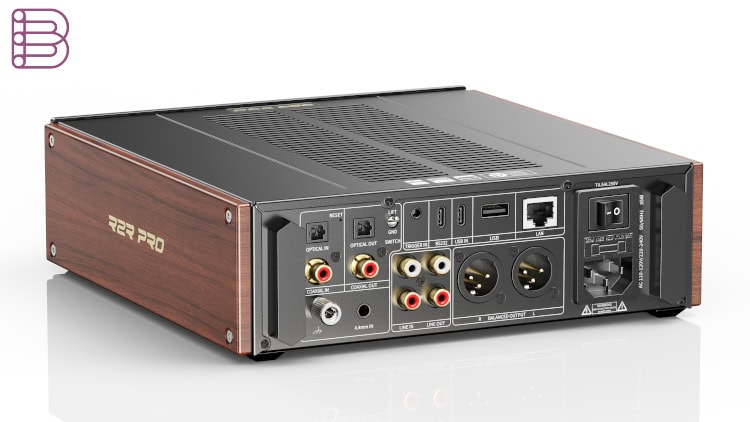
On the R2R side of the ledger, bestofhighend.com recently covered the FiiO K17 R2R Pro, a desktop DAC/amplifier built specifically around a discrete resistor-ladder conversion stage rather than a delta-sigma chip, aimed squarely at listeners chasing that denser, more “analog” multibit presentation.
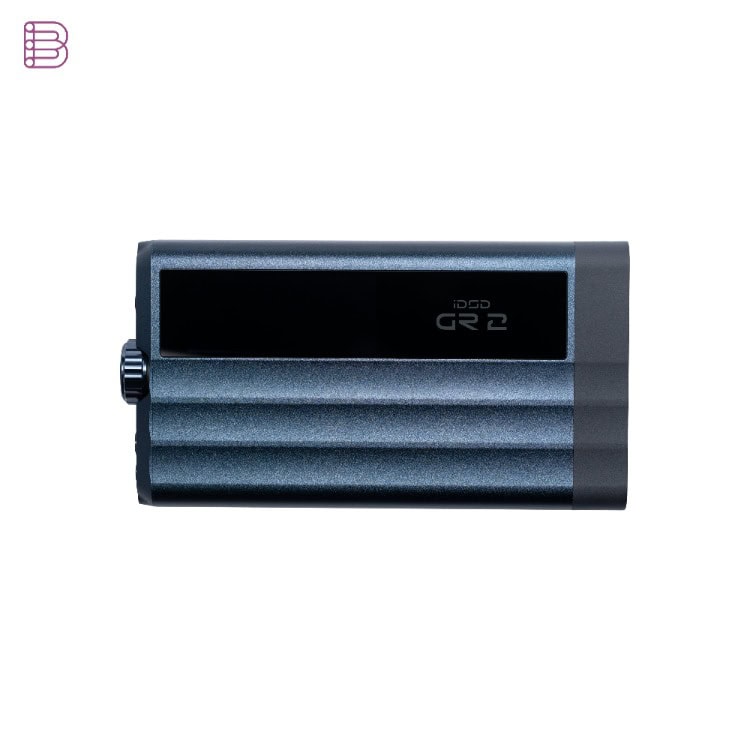
At the opposite end of the spectrum sits the iFi iDSD GR 2, a portable DAC/headphone amplifier built around a Burr-Brown PCM1795 delta-sigma chip, proof that the delta-sigma camp is just as capable of an engaging, musical presentation as any ladder DAC, in a fraction of the size and weight.
Placed side by side, the FiiO and the iFi make the R2R DAC vs delta-sigma DAC distinction tangible rather than theoretical: one prioritises resistor-network purity and NOS operation, the other leans on refined oversampling and noise shaping to extract detail and a black background.

Which Philosophy Suits the High-End Listener?
Neither architecture is on its way out, and the high-end enthusiast does not need to pick a permanent side. Delta-sigma remains the pragmatic choice for anyone who values resolution, a low noise floor and consistent, repeatable measurements, particularly in portable or multi-input products where a resistor ladder cannot compete on size, power draw or cost, as the Arcam CD25 and iFi iDSD GR 2 both demonstrate.
R2R, by contrast, rewards listeners who prioritise tonal density and ease over sheer measured performance, and who are willing to pay for the laser-trimmed components that make it possible, as the FiiO K17 R2R Pro shows. The most useful advice for 2026 is to treat DAC architecture as one input among several, alongside implementation quality, output stage design and system matching, rather than a shortcut verdict on how a product will sound.
Audition both where possible: the R2R DAC vs delta-sigma DAC divide is real, but the gap between a well-executed example of either architecture and a mediocre one is usually far larger than the gap between the two philosophies themselves.
Frequently asked questions
What is the basic difference between an R2R DAC and a delta-sigma DAC?
An R2R ladder DAC resolves each digital sample directly through a network of laser-trimmed resistors, an approach dating back to the earliest CD players of the early 1980s. A delta-sigma DAC instead converts the incoming signal into an ultra-high-speed, low-bit-depth pulse stream and uses noise shaping to push quantization error up into ultrasonic frequencies, out of the audible band, before an analog filter smooths the result — neither approach is objectively better, which is why manufacturers still build both.
Why did delta-sigma become the industry-standard conversion technology?
Building an accurate R2R ladder is a brute-force exercise: hitting reliable 16- or 24-bit resolution requires resistors trimmed to extremely tight tolerances, which is expensive. As digital audio scaled up through the 1990s, chipmakers such as ESS Technology, Asahi Kasei Microdevices and Cirrus Logic refined delta-sigma conversion into a cheaper, more easily mass-manufactured alternative, which is why it became the default in everything from smartphones to six-figure reference DACs.
What is NOS mode, and why do R2R DACs offer it?
Because the R2R process is inherently “non-oversampling” in its purest form, many R2R designs, including modern flagship models, offer a NOS (non-oversampling) mode that bypasses digital filtering altogether. The tradeoff is that any imperfection in the resistor network, however tiny, shows up directly as distortion, which is why serious R2R DACs are large, heavy and comparatively costly to build well.
How does the Arcam CD25 show what delta-sigma conversion can do today?
The Arcam CD25, part of the brand’s 50th-anniversary Radia series, is the first Arcam player since the FMJ D33 DAC to use a dual-mono DAC architecture, and the first Arcam product of any kind to adopt ESS Labs’ Hyperstream 4 conversion technology. Every channel gets its own complete conversion path paired with a linear toroidal power supply and a vibration-damped transport — a level of refinement that delta-sigma’s silicon-driven scalability makes affordable at the CD25’s price point.
Should I choose R2R or delta-sigma — do products like the FiiO K17 R2R Pro or iFi iDSD GR 2 help decide?
The FiiO K17 R2R Pro is built around a discrete resistor-ladder stage for listeners chasing a denser, more “analog” multibit presentation, while the iFi iDSD GR 2 pairs a Burr-Brown PCM1795 delta-sigma chip with a fraction of the size and weight, proving delta-sigma is just as capable of an engaging, musical sound. The most useful advice is to treat DAC architecture as one input among several, alongside implementation quality and system matching, and to audition both where possible — the gap between a well-executed example of either philosophy and a mediocre one is usually far larger than the gap between the two philosophies themselves.