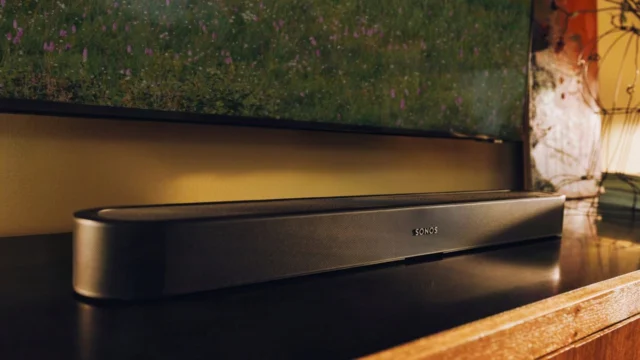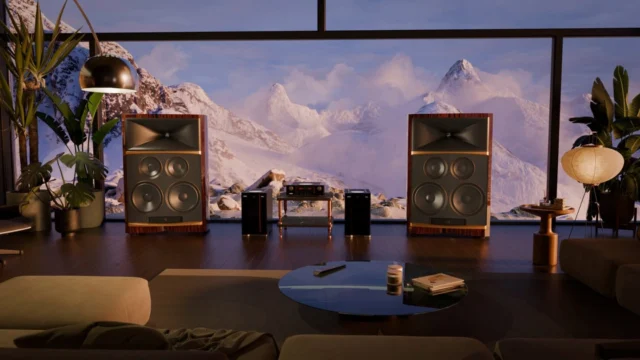


Dolby Atmos transforms listening from a flat stereo plane into a living, breathing hemisphere of sound. Instruments, vocals, and effects are placed in a 3D space above, behind, and around you, creating an immersive “bubble” where every element has its own position and movement. Unlike traditional mixes, Atmos tracks are object-based: engineers assign audio objects to precise locations that adapt dynamically to your speaker setup, from soundbars to full 9.1.6 home theaters.
The result is a concert-like realism where a guitar riff circles overhead, rain falls from the ceiling, or a bass line pulses beneath the floor. Now standard on Apple Music, Amazon Music Unlimited, and Tidal, Atmos isn’t just for movies — it’s redefining how we experience albums. We sat down with Roland Hoffmann to unpack what that actually means in practice, from the gear you need to why some of your favorite records may soon sound like a different album entirely.
Listen to the full conversation below, or read on for the highlights.
From Cinema to Living Room: What Dolby Atmos Music Actually Adds
Dolby Atmos originated in cinema as the next step beyond surround sound. Where surround sound is essentially two-dimensional — sound moving around you on a single horizontal plane — Atmos adds a third dimension: sound that also comes from above. Once you’ve heard a movie mixed in Atmos, going back to a normal surround mix tends to feel noticeably flat by comparison.
What Speakers Do You Actually Need?
To reproduce Dolby Atmos, at minimum you need one pair of speakers positioned above the listening position — typically ceiling speakers. A genuinely good setup uses four: two height speakers in front and two behind, and larger rooms may call for six. This is also where the extra number in configurations like 7.1.4 comes from: the first number is the main horizontal speakers, the middle number is the subwoofer(s), and the final number — .2, .4, or .6 — is the count of height (Atmos) speakers.
Music in Atmos, Not Just Movies
Dolby Atmos music uses the exact same speaker setup and the same underlying algorithm as Atmos for film — but applied to albums and songs instead of movie soundtracks. At HIGH END Munich 2025, this was demonstrated with a dedicated listening room built entirely around Dolby Atmos music, without playing a single movie.
Why “Stereo Is the Original” Isn’t Always True
A common criticism is that stereo is the “real” version of a song and anything else is an artificial add-on. That’s true for some recordings — and not for others. In the early days of Atmos, many releases were simple upmixes: a stereo mix run through software that might push a guitar to one speaker and drums to the height channels. It’s a novel effect for a minute, but it isn’t the artist’s intent, and the effect tends to wear thin quickly.
Genuine Dolby Atmos music is different: artists and sound engineers mix — and increasingly, write — the song using every available channel from the start. Artists such as Yello, Kraftwerk, and Jean-Michel Jarre, along with a growing body of classical recordings, fall into this category. In these cases the spatial mix isn’t a derivative of the stereo version — it’s the reverse. Boris Blank’s latest album, for example, was created directly in Atmos; what listeners buy as a stereo stream or CD is a downmix of that original. Listening in Atmos, in other words, gets you closer to what the artist actually intended, not further from it.
Not Every Upmix Is a Gimmick
Even so, older catalog tracks upmixed by a skilled studio can genuinely improve on the listening experience. Marvin Gaye’s “What’s Going On” is a good example: a pure stereo recording from an era with no surround or Atmos production, later given a thoughtful upmix. The song’s opening — voices and background chatter as if standing outdoors at a bar — was mixed to surround the listener, while the song itself remains anchored in front, exactly where it should be. Listeners who compare the upmix to the original stereo mix often find themselves preferring the more immersive version, even knowing it’s not the “purist” original.
A Personal Case for Immersive Listening
More than a decade ago, a similar demonstration was done with multi-channel SACDs, playing recordings of pianist Mari Kodama performing Beethoven — first in stereo, then the same recording in 5.1 surround. The initial reaction to hearing a piano “in surround” was skepticism. By the end of the demo, though, nobody in the room wanted to switch back to stereo.
What a Good Spatial Upmixer Actually Does to a Stereo Recording
Not every listener needs original, native Atmos content to benefit — a capable upmixing algorithm, such as the one built into Lyngdorf’s MP60 processor, can meaningfully enhance a well-recorded stereo track. Crucially, a good upmixer doesn’t fabricate reverb or add instruments and voices that were never there. Instead, it draws out spatial and ambience information that’s already present in the original recording — a piano recorded in a real room, for instance, carries subtle room reflections that a stereo mix compresses into a relatively narrow soundstage. A good upmixer identifies those existing cues and expands them, rather than inventing an artificial “hall effect” from nothing. The result: more of a sense of how the instrument or voice is actually behaving in the space it was recorded in, without it feeling synthetic.
Classical Music in Atmos: Sitting Inside the Concert Hall
For orchestral and classical recordings captured natively in Dolby Atmos, the experience goes a step further. Rather than an enhanced stereo image, listeners are placed acoustically inside the venue itself — the reverberation of a hall like Carnegie Hall or the Royal Albert Hall, along with the surrounding sound of an audience, genuinely recorded rather than synthesized. The musicians remain positioned in front, as they would in a stereo recording, but the room itself — its reflections and ambience — surrounds the listener. It’s a fundamentally different way of experiencing a recording compared to the “sound between two speakers” character of even an excellent stereo system.
Herbert von Karajan’s Forgotten Height Channel
This idea isn’t new. Decades before Dolby Atmos existed, conductor Herbert von Karajan was already recording in quadrophonic sound — an early four-speaker format — specifically to give home listeners a greater sense of the concert hall itself. In some sessions in Berlin and Vienna, an additional microphone was used purely to capture height information, at a time when no consumer format existed that could use it. That extra channel sat unused on tape for roughly 40 years. Today, some of those recordings can be reconstructed into authentic Dolby Atmos releases using that original captured information — meaning the added height and ambience is not artificial, but genuine acoustic information that was simply waiting for the technology to catch up.
The Trade-Off: Bandwidth and Streaming Quality
Reproducing many channels of audio — 5.1.4, 7.1.4, and beyond — in high resolution requires substantially more bandwidth than stereo, especially since music, unlike movies, is typically streamed in real time rather than buffered in advance. As a result, some commercially streamed Dolby Atmos music is compressed. It’s nowhere near as lossy as older formats like MP3, but it also isn’t full 24-bit high-resolution audio.
Apple Music and Tidal both offer Dolby Atmos music today, though generally at these more moderate bitrates. Pure Audio, a dedicated high-resolution Dolby Atmos streaming service, takes a different approach: it works directly with record labels to curate a smaller but genuinely high-resolution catalog, combining the benefits of hi-res audio with native Atmos mixing. The trade-off is a more limited library, since only a portion of any given catalog has been recorded or mastered that way.
Artists Using Atmos as a Creative Tool, Not an Afterthought
Some contemporary artists treat spatial placement as part of the songwriting process itself, rather than a mix applied after the fact. Billie Eilish’s Dolby Atmos releases, produced with her brother Finneas, are a widely cited example: a deliberate choice to have her whispered, overdubbed vocal layer arrive from behind or above the listener. It’s a spatial effect, but not an arbitrary one — it reflects a specific artistic decision the two of them made about how that layer of the song should be experienced.
Giving Classic Catalogs a New Dimension
The Beatles, Remixed With Care
Remixing a catalog as culturally significant as the Beatles’ in Atmos could easily go wrong. What makes the existing Beatles Atmos remixes different is who did the work: Giles Martin, son of original producer George Martin, working alongside surviving band members. Rather than running the catalog through an automated upmixing process, each album was reconsidered individually — giving longtime listeners a genuinely new way to revisit familiar recordings.
From simple stereo-to-Atmos upmixes to albums written in Atmos from day one, and from a modern pop production choice to a five-decade-old microphone recording finally finding its use, Dolby Atmos music covers a wide spectrum — and it’s expanding every month as more labels and artists commit to it. For anyone curious, the only real way to understand the difference is to listen for yourself.
Frequently asked questions
How does an Atmos mix know where sound should come from, when every listener has a different speaker setup?
Atmos tracks are object-based: instead of locking sound to fixed channels, engineers assign each audio object — an instrument, a voice, an effect — a precise position in three-dimensional space. Those positions adapt dynamically to whatever setup is present, from a soundbar to a full 9.1.6 home theater, so the same track lands as close as possible to its intended spatial placement on any system.
What does the final number in a configuration like 7.1.4 actually mean?
The first number is the main horizontal speakers, the middle number is the subwoofer(s), and the last number — .2, .4, or .6 — is the count of height, or Atmos, speakers. The minimum needed to reproduce Atmos is one pair positioned above the listening position, typically ceiling speakers; a genuinely good setup uses four, and larger rooms sometimes call for six.
Is a Dolby Atmos version of a song automatically better than the original stereo mix?
Not automatically. Early Atmos releases were often simple upmixes of an existing stereo track, producing a novel effect that wears thin quickly and isn’t the artist’s intent. Music that’s native to Atmos from the start — by artists such as Yello, Kraftwerk, and Jean-Michel Jarre — works the other way around: the stereo version is the derivative downmix, and the Atmos mix is what actually gets you closer to the artist’s original intention.
Does a spatial upmixer invent ambience that wasn’t in the original recording?
No — that’s precisely what separates a good upmixer from a poor one. A capable algorithm, such as the one built into Lyngdorf’s MP60 processor, doesn’t fabricate reverb or add instruments and voices that were never there. Instead, it draws out spatial information already present in the recording — a piano captured in a real room carries subtle reflections that a stereo mix compresses into a narrow soundstage — and expands those existing cues rather than inventing an artificial hall effect from nothing.
Is commercially streamed Dolby Atmos music always delivered in full high resolution?
Not always. Reproducing many channels of audio in high resolution requires substantially more bandwidth than stereo, especially since music is typically streamed in real time rather than buffered. Apple Music and Tidal both offer Dolby Atmos music, generally at more moderate bitrates, while a dedicated service like Pure Audio works directly with labels to offer a smaller but genuinely high-resolution native Atmos catalog.