

This is the third and final part of a Tech Talk trilogy on Class D amplification with Bruno Putzeys — engineer behind Hypex‘s UcD and Ncore amplifier modules, and co-founder of Purifi Audio and Kii Audio. Having covered where Class D came from and where it stands today in the current landscape of Class D amplifiers, this final conversation turns to Class D amplifiers in tomorrow’s world — and Putzeys’ answer is not quite what the marketing around “next-generation amplification” usually promises.

Class D amplifiers in tomorrow’s world: evolution, not revolution
Putzeys’ central point is a deliberately unglamorous one: as an amplification topology, Class D has largely finished its revolutionary phase. The self-oscillating, global-feedback designs that define modules like Ncore and Eigentakt already deliver distortion and noise performance that rivals the best linear amplifiers ever built, at a fraction of the size, weight, and running cost. From here, further gains in the amplifier stage itself are incremental — real, worth pursuing, but evolutionary rather than another leap on the scale of what happened when self-oscillating feedback designs first arrived. The bigger disruption, he argues, is happening one level up: in what a cheap, excellent amplifier lets designers do with the rest of the product.
The trouble with compartmentalized hi-fi
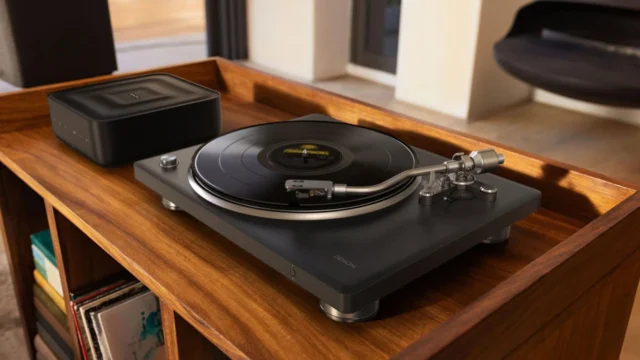
A recurring theme in Putzeys’ thinking is a critique of how the traditional hi-fi chain divides responsibility. A source, a preamp, a power amp, and a passive speaker are each designed and sold in isolation, by different teams or different companies entirely, with no shared awareness of what the other boxes in the chain are doing. That compartmentalization made sense when each stage was expensive and hard to build well. It makes progressively less sense once amplification and DSP are commodities — at that point, treating the whole signal path as one integrated engineering problem, rather than four separately optimized ones, is where the real performance headroom is left to find.
Dither, digital volume control, and a persistent myth
Putzeys also uses this conversation to push back on a piece of received audiophile wisdom: the idea that digital volume control is inherently lossy or harmful to sound quality. Properly dithered digital attenuation doesn’t throw away resolution in any way that matters — the myth persists mostly because early or badly implemented digital volume stages genuinely did sound worse, and that reputation stuck long after the engineering caught up. It’s the same pattern he’s pointed to elsewhere in the history of Class D itself: a real, once-valid criticism outliving the flaw that originally caused it.
Tesla as a working example of full integration
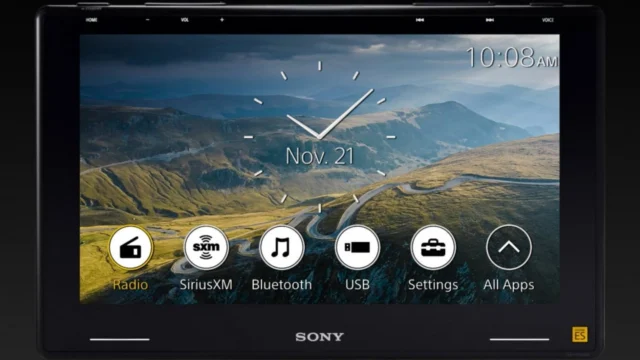
For a real-world illustration of what compartmentalization-free design looks like at scale, Putzeys points to car audio — specifically, systems like the one in a Tesla, where the amplification, DSP, and acoustic design are treated as a single engineering problem from the start rather than bolted together from separately sourced components. It is, in effect, an active speaker system that most owners never think of in those terms, precisely because the car manufacturer had every incentive to integrate it properly rather than sell each stage separately.

Active loudspeakers as the next frontier
If Class D amplification itself is entering its evolutionary phase, Putzeys sees active loudspeaker design — his own primary focus at Kii Audio — as where that settled amplification technology gets put to its most interesting use. Once the amplifier is no longer the bottleneck or the expensive component, the acoustic design and DSP integration around it become the place where a speaker can meaningfully improve. That is the frontier he expects the next real disruption in home audio to come from, not from a fourth generation of switching-amplifier topology.

Taken together, this trilogy traces a full arc: an amplification technology born nearly a century ago, refined into its current, largely-settled form over the last twenty-five years, and now handing the baton to what gets built around it. For Putzeys, that’s not a disappointing conclusion — it’s exactly the point at which a technology becomes genuinely useful rather than merely interesting.
Frequently asked questions
What do Class D amplifiers in tomorrow’s world look like?
According to Putzeys, further gains from here are evolutionary rather than revolutionary — the self-oscillating, global-feedback designs used in modules like Ncore and Eigentakt already perform close to the ceiling of what the topology can do.
What does Putzeys mean by “compartmentalized” hi-fi?
The traditional separation of source, preamp, power amp, and passive speaker into independently designed, independently sold boxes, with none of them aware of what the others are doing — a structure he argues made more sense when each stage was expensive than it does now.
Is digital volume control actually harmful to sound quality?
Not when properly dithered, according to Putzeys. The belief that it degrades sound is a myth that outlived the early, badly implemented digital volume stages that originally caused it.
Why does Putzeys bring up Tesla in a Tech Talk about amplifiers?
As an example of a fully integrated audio system — amplification, DSP, and acoustic design engineered together from the start rather than assembled from separately sourced components, much like the active speaker philosophy he applies at Kii Audio.
What does Putzeys see as the next frontier in audio, if not the amplifier itself?
Active loudspeaker design — using now-mature, affordable Class D amplification as the foundation for acoustic and DSP integration that a passive speaker built from separate components could never achieve.