

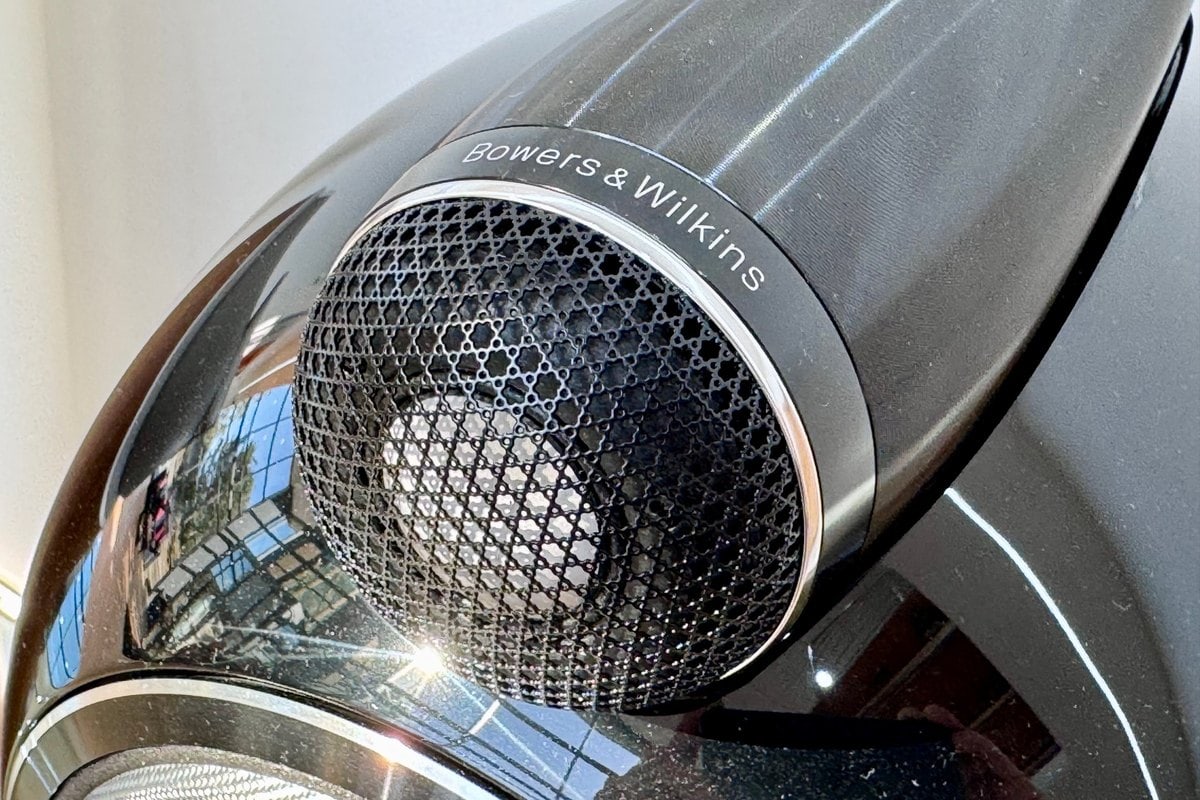
There is a particular mood in a factory that believes in what it makes. During our recent visit to the Bowers & Wilkins Worthing factory, on England’s south coast, that mood was impossible to miss. The message we heard, from the shop floor to the engineers, was a simple one: we’re back, and stronger than ever.
Bowers & Wilkins Worthing Factory: A Company Back on Its Own Course
Since becoming part of Harman, and with it Samsung, Bowers & Wilkins says it can once again follow its own, familiar course: making loudspeakers that sound right. You notice it the moment you walk in. The factory has grown, it is busy, it is immaculately kept, and it is backed by a large R&D centre. This is not a brand treading water.
It is also where the new 800 Series D5 is built, and where we got to hear exactly what the new generation brings.
It starts with wood
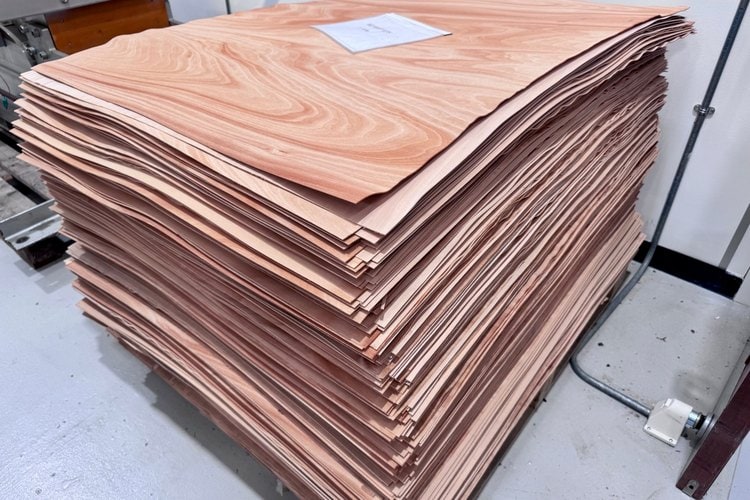
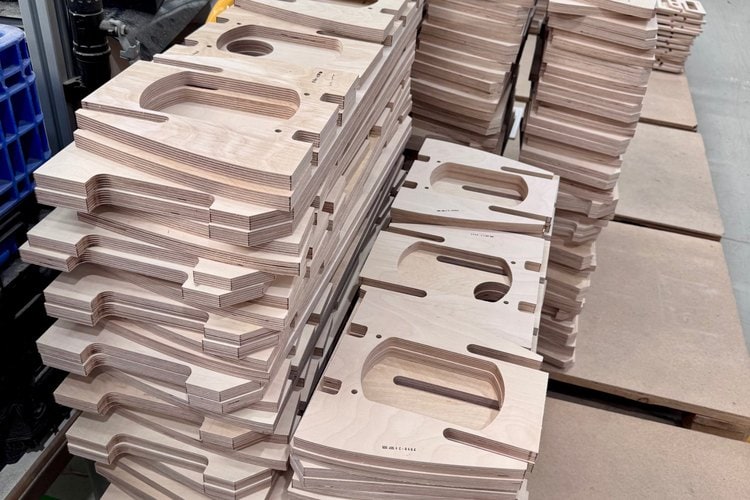
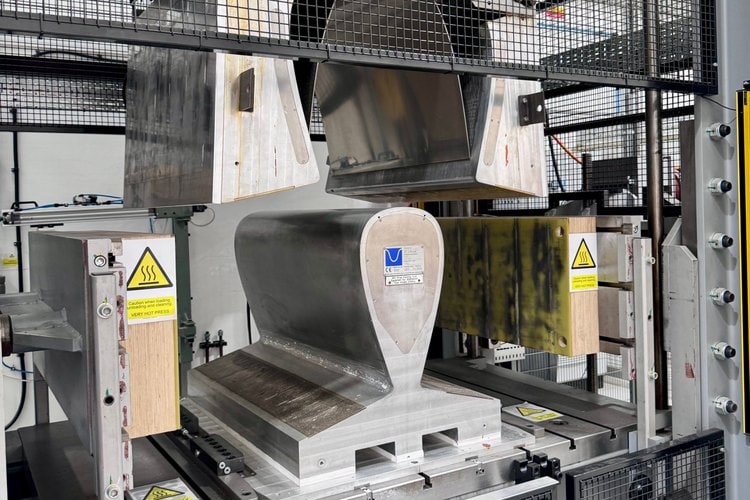
Every 800 Series cabinet begins as stacks of real wood veneer and precision-cut birch plywood. The plywood pieces become the internal bracing. The veneer is pressed under heat around an aluminium former in a hot press, and comes out as the curved cabinet wall that gives the 800 Series its unmistakable silhouette.
Machine precision, human hands
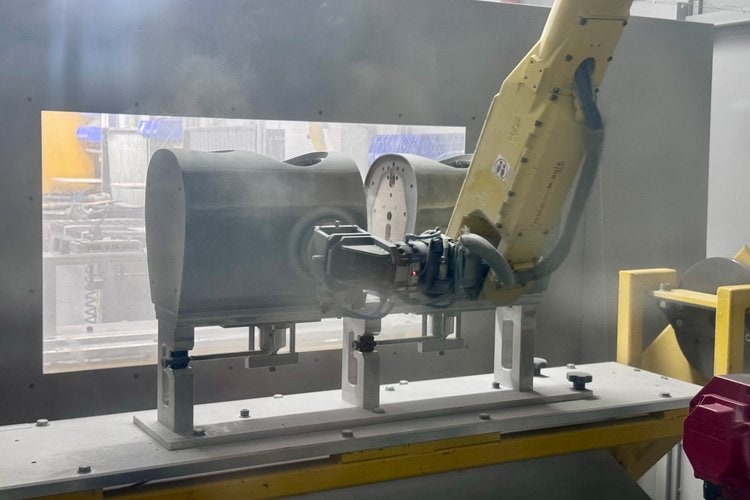
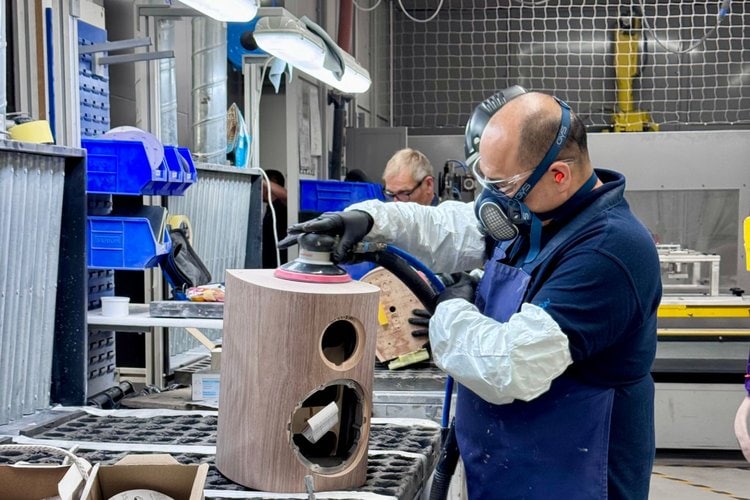
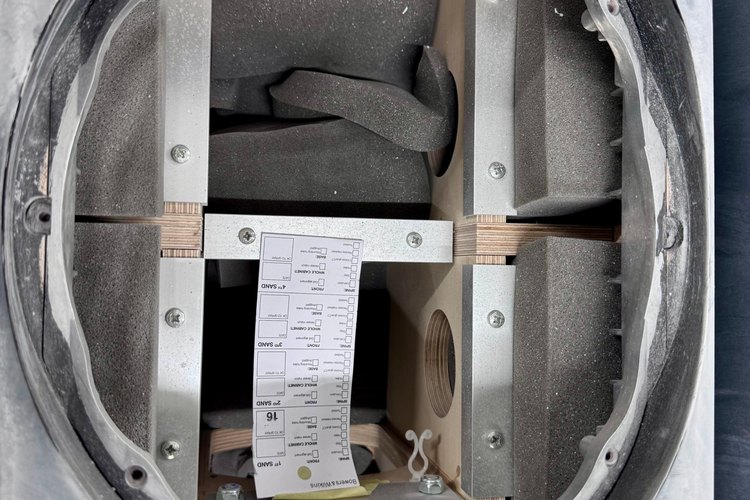
Once formed, the cabinets move through robotic sanding cells. The robots handle the repeatable work, but people still do the finishing by hand. A checklist tucked inside each cabinet tracks four separate sanding stages before it is signed off for spraying. Look inside before the drivers go in and you see the Matrix bracing: a grid of aluminium and plywood that keeps the enclosure rigid and quiet.
The finish
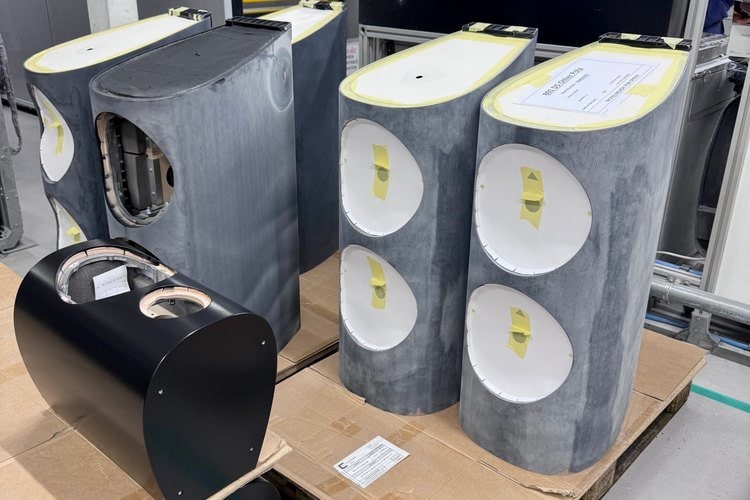
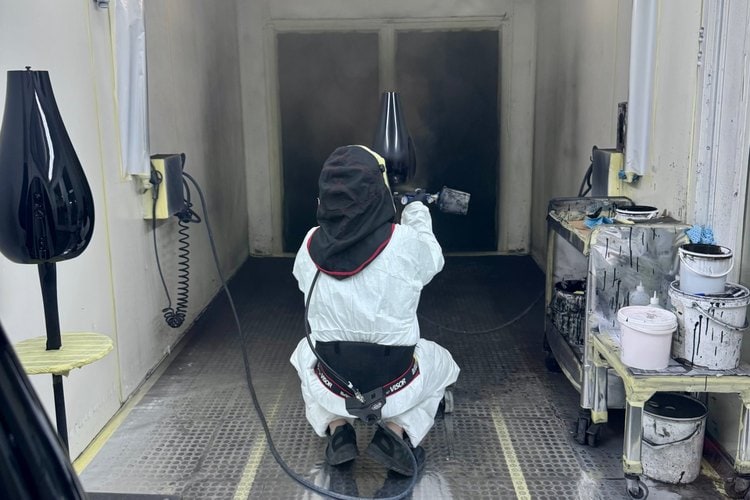
Next comes the paint shop. We saw 801 D5 cabinets in primer, lined up and ready for spraying, while tweeter housings were sprayed by hand to a deep piano gloss.
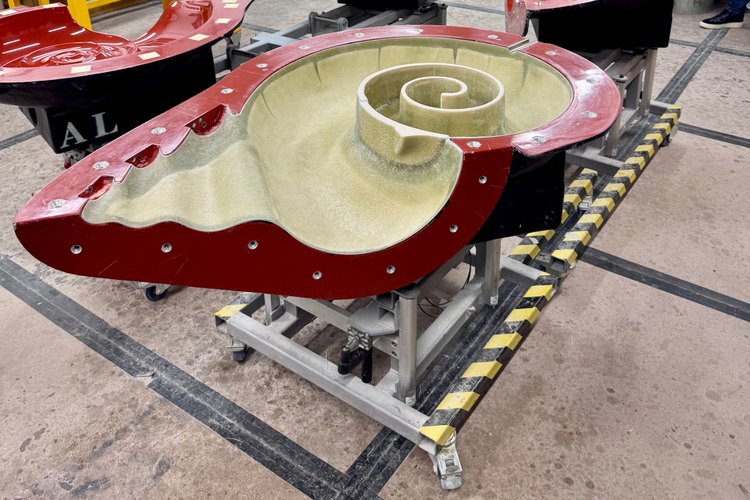
In another corner of the factory: the moulds for the Nautilus, the spiral-shaped loudspeaker that has embodied Bowers & Wilkins’ engineering ambition since 1993. Seeing them up close is a reminder of where the 800 Series’ technology comes from.
Drivers, crossovers and proof
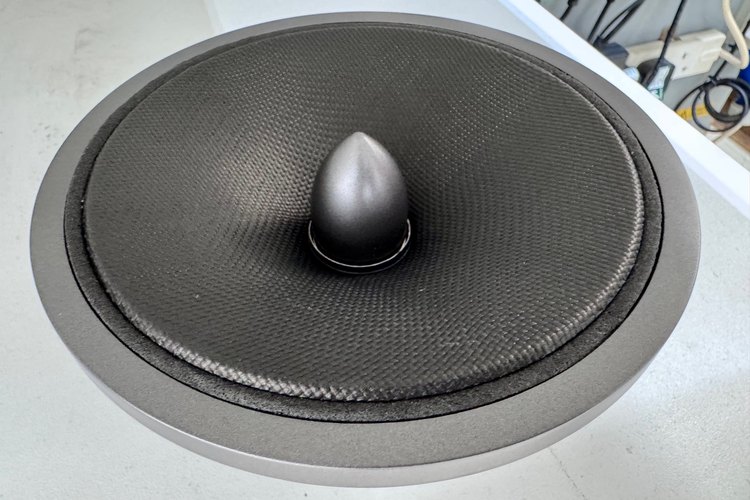
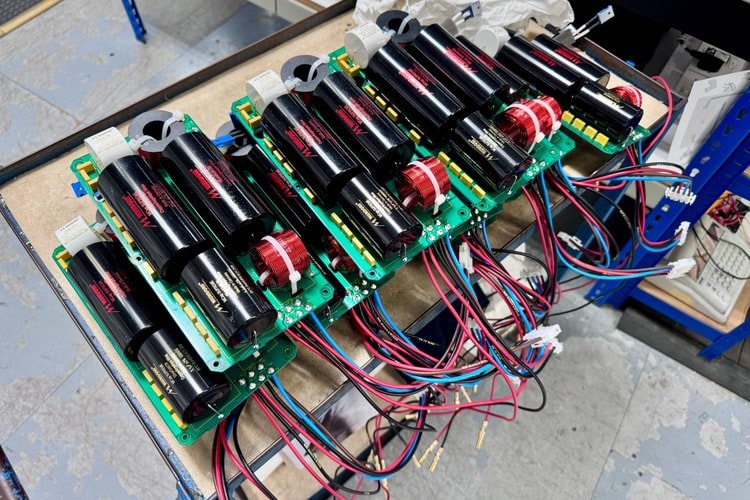
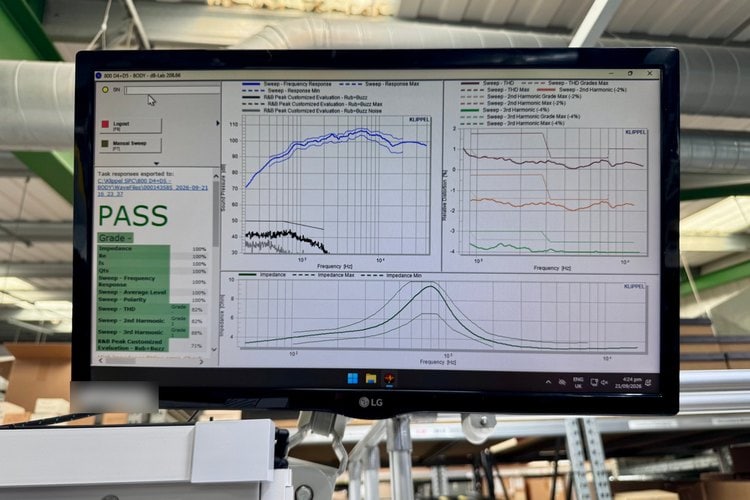
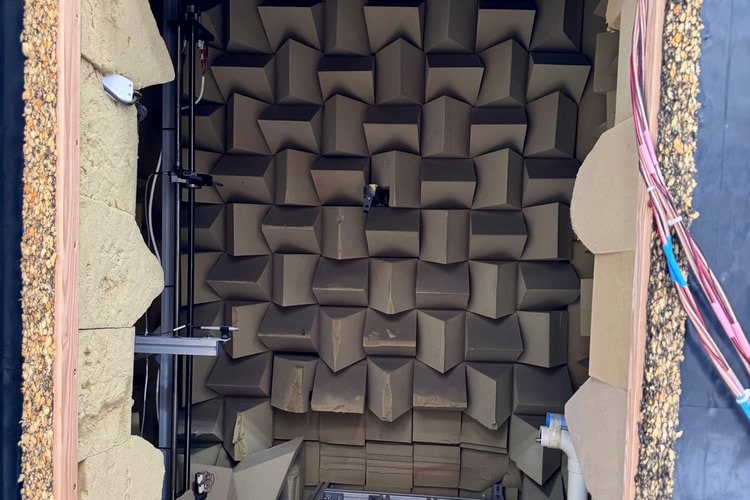
The drive units are just as carefully handled, from the midrange driver with its distinctive central bullet to the bass units. The crossovers are built on generous boards populated with Mundorf MCap Supreme capacitors. Then comes the proof: drive units are measured on a Klippel test station that gives a clear pass or fail verdict, and the factory has its own anechoic chamber.
D4 versus D5, side by side
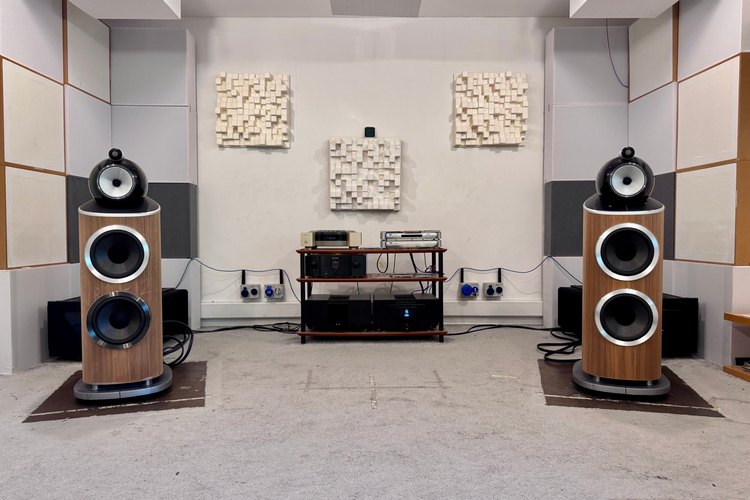
The most revealing part of the day came at the end, in the listening room. For each model, Bowers & Wilkins set up the D4 and the D5 version next to each other, so we could switch between generations and hear the progress for ourselves.
Our verdict: the improvements are subtle, but clearly audible, with every model in the range we were able to hear. There is nothing earth-shattering here. As you would expect at this level, it is all in the details. The D5 is a refinement of an already outstanding loudspeaker, not a reinvention.
Our take
Our visit to the Bowers & Wilkins Worthing factory left us with the impression of a company that is confident again, and has the investment, the people and the facilities to back it up. The 800 Series D5 shows what that looks like in practice: no big headlines, just steady, audible progress. If you own an 800 Series D4 or are considering one, our advice is simple: listen to both generations side by side at your dealer, and let your ears decide. For more on how the D5 sounds in a proper listening room, see our 800 Series Diamond D5 listening sessions and interview with Andy Kerr.
More images from inside the factory follow on our socials in the coming weeks.