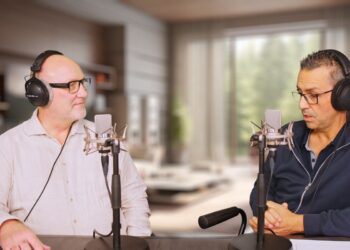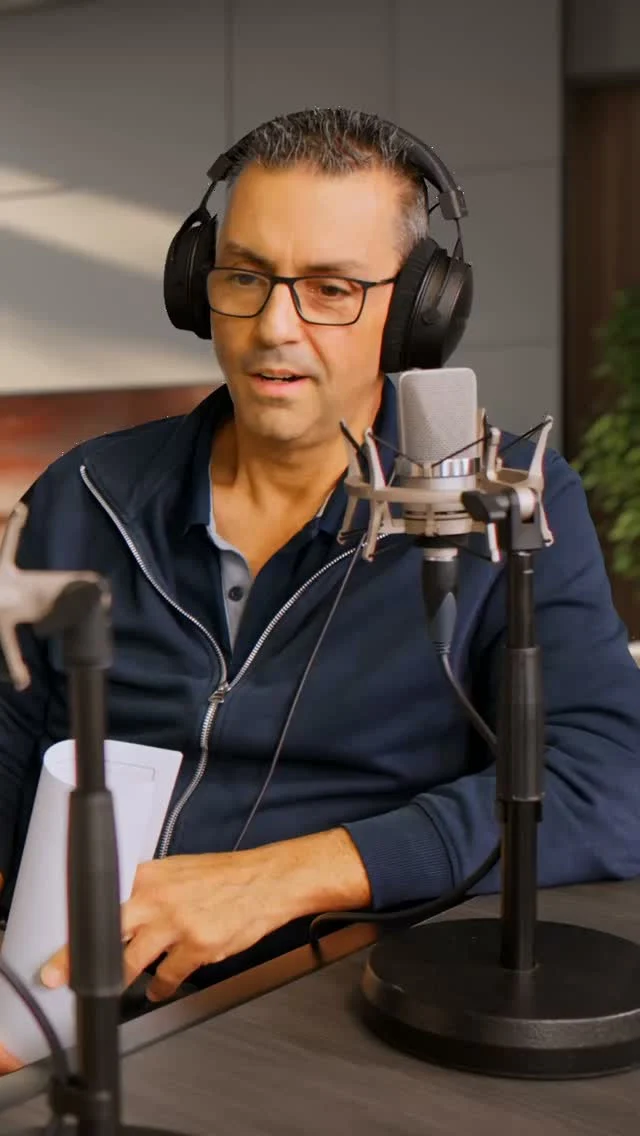


Welcome back to Tech Talk, recorded in the Best of High End studio with Hans-Ole Vitus, founder of Vitus Audio. In episode one we got to know the man behind the brand. In this second of seven episodes we dig into his listening philosophy: how far measurements go, when the ears take over, how you decide whether a new design is better or just different, and the 22-year-old amplifiers that still measure like new.
Hans-Ole Vitus: technology serves the music
Hans-Ole Vitus has often said that technology serves the music, not the other way around. So what does that mean on the test bench? His short answer: measurements are there for stability and repeatability. “We need to be able to produce products that are the same, whether they’re serial number 100 or 1000.” For a professional manufacturer, that makes measuring unavoidable, and Vitus Audio measures everything it is supposed to measure, with audio analysers and very expensive oscilloscopes.
But measurements don’t decide how a product sounds. They give pointers, and they feed a healthy curiosity: if a change made the sound different, can we measure what happened? The final verdict, however, is always made by ear. “And not only the ears, it’s all senses really.” A Vitus product, he says, has to be something he would personally have pride of ownership in and live with happily ever after. “At the end of the day, it’s what you hear when you sit down and drop the needle.” Or stream, although Spotify, he jokes, is for the car.
Hundreds of measurements in the first week
How many measurements go into a new design? Hans-Ole Vitus doesn’t count them. “I think I would get exhausted if I had to.” Take a new discrete op-amp stage. The first prototype alone needs 20 to 50 DC measurements, just to check that every power supply and voltage is where it should be. Then comes the signal path, which takes just as many, followed by stress tests: what happens when you short the output, or push the circuit to its limits?
Simulations are theory, and practice never matches theory exactly. Experience helps you understand the gap faster, but even today Hans-Ole sometimes looks at a simulation and pauses: “What’s that? Oh, okay.” Part of the reason is that running a company pulled him away from the work he loves. About four years ago he stepped back to focus on R&D, returned to run the business this year, and plans to go back to design full-time next year. “That’s where I’m supposed to be.”
Good tools matter. A €1,000 oscilloscope takes you a long way, but doubling the resolution of your measuring gear costs a lot more than double. That is where Vitus invests heavily, because the coolest thing of all is being able to explain what you hear. And when people say that if you can’t measure a difference, there isn’t one? “Says who?” For Hans-Ole, it simply means we haven’t figured out how to measure it yet.
When the measurement wins
Sometimes the bench overrules the ears. For about 20 years, Vitus has used discrete op-amp modules with a bandwidth of 2.5MHz and zero global feedback. That is balancing on the edge of a knife: one component slightly out of tolerance and you have “a very nice big oscillator”. If a better-sounding solution gets too close to that edge, the measurement wins and Vitus steps back. “Success for me is shipping a product and never hearing about it again, because it just works.” It is a compromise, he says, but one made for a good cause: a customer without problems.
Better, or just different?
That might be the hardest question of all, because no two people hear the same way. Hans-Ole Vitus explains it with the power supply. You can have the best signal-to-noise ratio in the amplifier, but a noisy power supply still gives a noisy result, and the details get buried in the noise floor. The lower the noise floor, the higher the resolution. So for him, a product is better when he hears things he didn’t hear before, or when dynamics stay present even at low volume. Power amplifiers are also pushed hard on difficult loads, especially since Vitus doesn’t use global feedback to help them out.
His view on phono stages has changed over the years. For a long time he refused to compensate for hum from a badly grounded turntable: “That’s a problem at the source.” Today he thinks differently. For the customer, the turntable already performs well, so adding a Vitus phono stage should make it better, not noisier. “It’s all about the customer experience at the end of the day.”
The reference systems of Hans-Ole Vitus
Vitus has never relied on a single reference system. In the early power amplifier days there were Apogee ribbons that dipped to well below one ohm, “a nasty load” for a solid-state amp without an output transformer. Hans-Ole still owns the Sonus faber Extremas, which look easy on paper but need current to avoid sounding dark and dull, plus a pair of Infinity IRS Betas, electrostatic speakers and studio monitors. The showroom today has different systems at each end, and the main reference is built around Göbel Divin Noblesse loudspeakers, with dynamics and resolution he calls extreme.
A fun detail: when he designed the Masterpiece DAC, his reference was not another DAC, but his own turntable with the Masterpiece phono stage. “The turntable is more musical for me.”
22 years and still in spec
In the early years, Hans-Ole carried a preamp and phono stage to friends’ houses to compare them with other brands. Those 100-kilo monoblocks stayed home. “Back pain didn’t come from nothing.” Today, new products are compared mainly with Vitus’s own portfolio. The SM-025 monos were tested against the SM-103 and the Masterpiece amplifiers, for example.
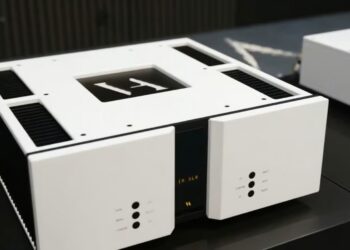
And then there is this story. Earlier this year, Vitus picked up a pair of SM-100 demo units in Sweden: the amplifiers that never made it to CES 2004 because they got stuck in customs. Twenty-two years later, they measured exactly as they did when they left the factory. Next to the current SM-103 MKII, the fifth generation of that design, the step forward is clear. “That is not just different sound. That’s definitely better sound.” Not because the originals were bad, but because of decades of refinement.
Coming up next
The listening philosophy of Hans-Ole Vitus doesn’t fit in one episode, so we continue the conversation in part three. Missed the first episode? Watch Hans-Ole Vitus: From Drummer to Designer. Want to hear Vitus Audio in a real room? Read our report from the D&D Audio room at Dutch Audio Event 2026, or visit vitusaudio.com. Prefer to listen? Every Tech Talk is also available as a podcast on Spotify.