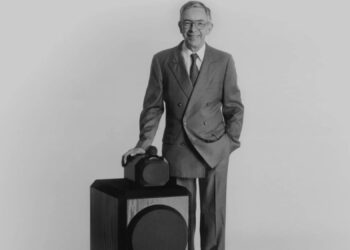


Few people in the history of American hi-fi walked away from a thriving company more often than Henry Kloss — and fewer still walked straight into founding another one. Between 1954 and 2000, Henry Kloss co-founded or founded four audio and video companies that each left a lasting mark on the industry: Acoustic Research, KLH, Advent, and Cambridge SoundWorks, before closing his career as a design partner at Tivoli Audio. Each time a company he built grew large, corporate, or simply less fun, Henry Kloss started over. That restlessness, paired with a genuine gift for turning complex acoustic engineering into products ordinary people could afford, is what makes him one of the most influential — and most serially entrepreneurial — figures hi-fi has ever produced.

From a Garage Idea to Acoustic Research
Henry Kloss was an undergraduate physics student at MIT in the early 1950s when he and classmate Edgar Villchur began experimenting with a radically different way of building a bass driver. Conventional loudspeakers of the era relied on large, heavy cabinets and stiff suspensions to control bass; Villchur’s acoustic suspension principle instead trapped a cushion of air inside a small, sealed enclosure, letting that air spring do the work a bulky mechanical suspension used to do. Kloss, the engineer and businessman of the pair, turned the idea into a product. In 1954 the two co-founded Acoustic Research (AR) in Cambridge, Massachusetts, and the resulting AR-1 loudspeaker proved that a bookshelf-sized box could deliver bass previously thought impossible from anything smaller than a floorstanding cabinet. It became one of the defining loudspeaker designs of the 1950s and set the template — small box, deep bass — that the entire industry would spend the next two decades chasing.
KLH and Advent: Betting on Radio and the Big Screen
Kloss left Acoustic Research in 1957, barely three years after founding it, and immediately started again. Together with Malcolm S. Low and Josef Anton Hofmann he founded KLH — the initials of all three founders’ surnames — also in Cambridge. KLH grew rapidly into one of the largest loudspeaker manufacturers in the world, but Henry Kloss didn’t stop at speakers. The KLH Model Eight table radio, famous for its high-selectivity FM tuner, became a reference design in its own right, while the KLH Model Eleven is widely credited as the world’s first truly portable solid-state stereo system. In 1962 Kloss partnered with a young engineer named Ray Dolby to bring Dolby B noise reduction to consumer audio for the first time, built into the KLH Model Forty reel-to-reel tape recorder.
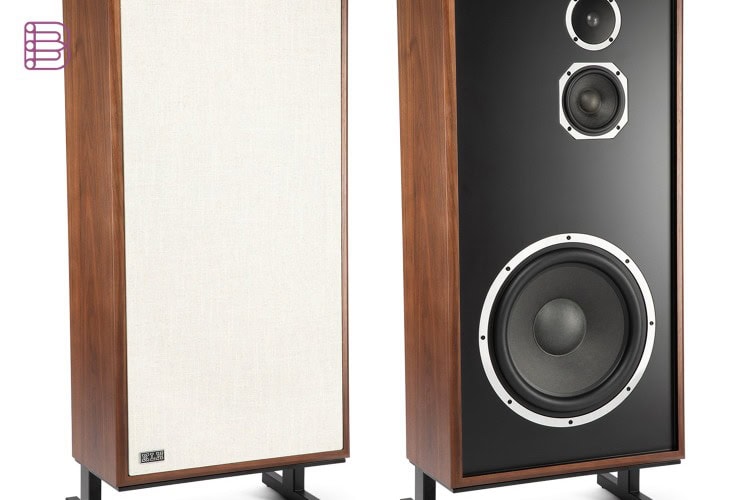
When Singer Corporation acquired KLH in 1964, Henry Kloss again moved on, this time into a field with almost no established playbook at all: home video. In 1967 he founded Advent Corporation, which became the first company to sell a consumer projection television — the enormous, room-filling Advent VideoBeam that let ordinary households watch a screen the size of a cinema wall for the first time. To help fund that ambitious video work, Advent also sold loudspeakers, and almost by accident those speakers became some of the best-selling models of the decade. The 1971 Advent 201 cassette deck, the first to include Dolby noise reduction, further cemented the company’s reputation for bringing studio-grade technology into the living room at a price regular people could justify.
Starting Over, Twice More
Advent’s video ambitions eventually ran into cheaper Japanese competition, and Henry Kloss founded Kloss Video Corporation in 1977, where he invented the Novatron projection tube — a technology that significantly improved the brightness and efficiency of projection televisions and earned him an Emmy Award for engineering achievement. True to form, he didn’t stay there either. In 1988, alongside Tom DeVesto, Kloss founded Cambridge SoundWorks, a company built on the then-unusual idea of selling direct to consumers and bypassing traditional retail markups entirely. It grew into a highly successful line of dozens of speaker models before Kloss stepped away in 1997, and the company was later absorbed by Creative Technology.
Even a brief retirement couldn’t hold him. When DeVesto founded Tivoli Audio in 2000 to build a new table radio, he turned to Henry Kloss to design it — and Kloss, by then over seventy, essentially revisited the KLH Model Eight concept that had impressed listeners more than forty years earlier. The resulting Tivoli Model One became one of the most recognizable table radios of the 2000s, closing the loop on a career that began and ended with the same simple, elegant idea: a small radio that actually sounds good.
Legacy
Henry Kloss was inducted into the Consumer Electronics Hall of Fame in 2000, recognition for a career built on turning expensive, specialist audio engineering into products that fit an ordinary living room and an ordinary budget. He died in Cambridge, Massachusetts, in January 2002, at the age of 72, having founded or co-founded four separate companies that each, in their own way, changed how people listened to music or watched television at home. Asked what drove him to keep starting over instead of settling into any one of his successful businesses, Kloss offered a characteristically modest explanation of his own philosophy:
“Idealism, quest for volume. A combination of those two things.”
— Henry Kloss, Audio Magazine, February 1992
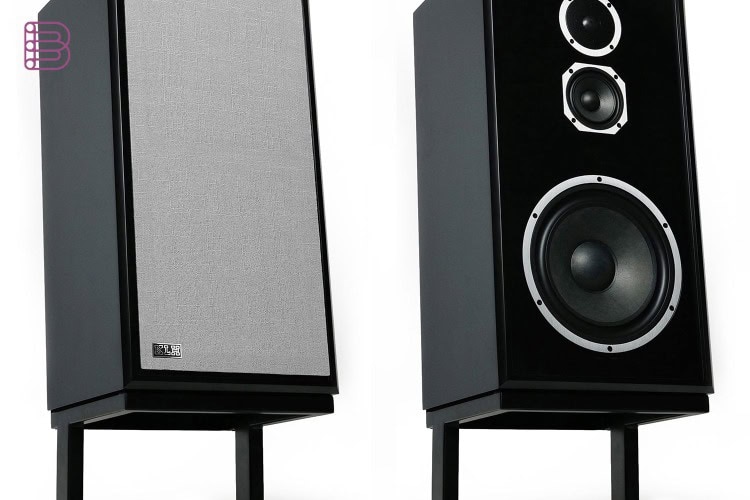
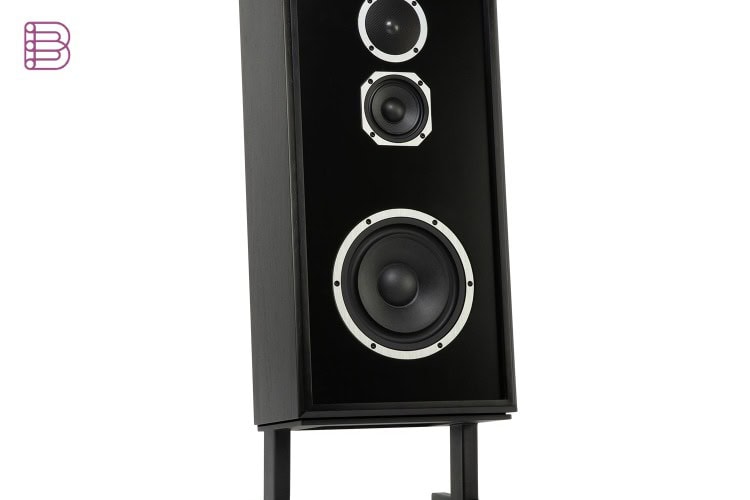
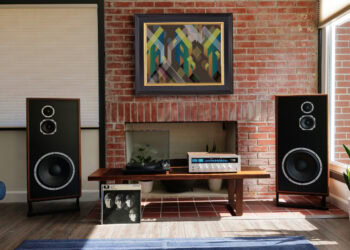
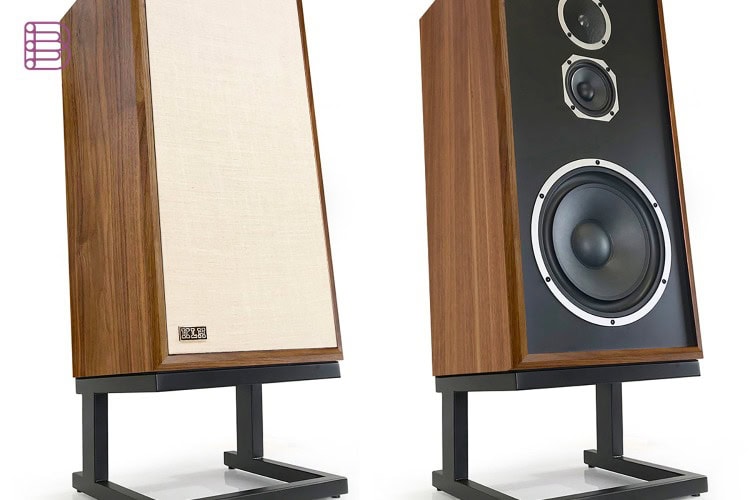
Today, the KLH name lives on under new ownership in Denver, Colorado, continuing to build loudspeakers that trace their lineage directly back to the acoustic-suspension principle Henry Kloss helped bring to market nearly seventy years ago — a fitting continuation for a man who spent his career proving that great sound didn’t need to come from a giant cabinet, or stay with the same company for very long.