

Franco Serblin was the visionary designer who transformed high-end audio from cold, rectangular boxes into objects of desire — pieces of furniture that married breathtaking Italian craftsmanship with soul-stirring musicality. He didn’t just build loudspeakers; he crafted them like fine violins, proving that beauty and performance could be inseparable.
From Vicenza to the World Stage
Born in 1939 in Vicenza, Italy, Franco Serblin grew up surrounded by the region’s rich tradition of master luthiers (violin makers) and artisans. After early experiments in audio during the late 1970s, he founded Sonus Faber in 1983 — a name that literally means “handcrafted sound.”

At a time when most loudspeakers were stark, industrial-looking boxes, Serblin introduced curvaceous, lute-shaped cabinets made from solid wood, exquisite leather, and luxurious finishes. His designs drew direct inspiration from classical musical instruments and Italian furniture-making traditions, instantly setting Sonus Faber apart as one of the most distinctive and desirable brands in high-end audio.
The Philosophy of Natural Sound
Serblin believed that a loudspeaker should disappear — both visually and sonically — allowing the music to flow naturally. He obsessed over materials, resonance control, and the emotional connection to the performance. Iconic models such as the Minima, Electa, Guarneri, Amati, and Stradivari became instant classics, loved for their warm, rich, and incredibly musical presentation.

His “Voice of Sonus Faber” — a signature sound that was refined, romantic, and deeply involving — influenced an entire generation of loudspeaker design. Many manufacturers still imitate his organic forms and artisanal approach today.
The Later Years and Serblin Legacy
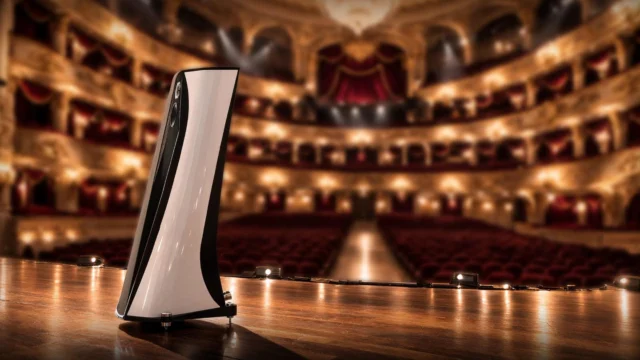
In 2006, after more than two decades at the helm, Serblin sold Sonus Faber to pursue even more personal and exclusive designs. He launched his own brand, Franco Serblin, releasing highly sought-after models like the Ktêma and Accordo series. These later creations were the purest expression of his philosophy: small in number, uncompromising in execution.

Franco Serblin passed away in March 2013, but his spirit lives on. His son-in-law, Massimiliano Favella, continues the family tradition through Franco Serblin Loudspeakers, carefully preserving and extending the founder’s vision with new models that honor the original ethos.
A Timeless Influence
Franco Serblin showed the audio world that technical excellence and emotional beauty are not opposites — they are partners. In an industry often dominated by measurements and specifications, he reminded everyone that the ultimate goal is musical joy and aesthetic harmony.

His work elevated high-end audio from a hobby for enthusiasts into a genuine expression of Italian la dolce vita — where extraordinary sound meets extraordinary style.
Frequently asked questions
Who was Franco Serblin, and which company did he found?
Born in 1939 in Vicenza, Italy, Franco Serblin grew up surrounded by the region’s rich tradition of master luthiers and artisans. After early experiments in audio during the late 1970s, he founded Sonus Faber in 1983 — a name that literally means “handcrafted sound.”
What made Serblin’s loudspeaker designs different from others at the time?
At a time when most loudspeakers were stark, industrial-looking boxes, he introduced curvaceous, lute-shaped cabinets made from solid wood, exquisite leather and luxurious finishes, drawing directly on classical musical instruments and Italian furniture-making traditions. He believed a loudspeaker should disappear — both visually and sonically — so the music could flow naturally.
Which Sonus Faber models became classics under Serblin?
The Minima, Electa, Guarneri, Amati and Stradivari, all loved for the warm, rich and musical presentation that became known as the “Voice of Sonus Faber” — a signature sound that influenced an entire generation of loudspeaker design.
What did Serblin do after selling Sonus Faber in 2006?
He left to pursue more personal and exclusive designs, launching his own brand, Franco Serblin, with sought-after models such as the Ktêma and the Accordo series — the purest expression of his philosophy: small in number, uncompromising in execution.
Does the Franco Serblin brand still exist?
Yes. Franco Serblin passed away in March 2013, but his son-in-law Massimiliano Favella continues the family tradition through Franco Serblin Loudspeakers, carefully preserving and extending the founder’s vision with new models that honour the original ethos.