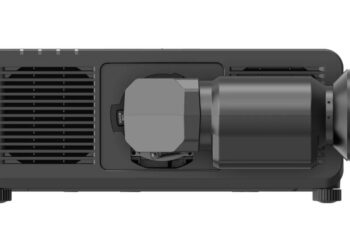


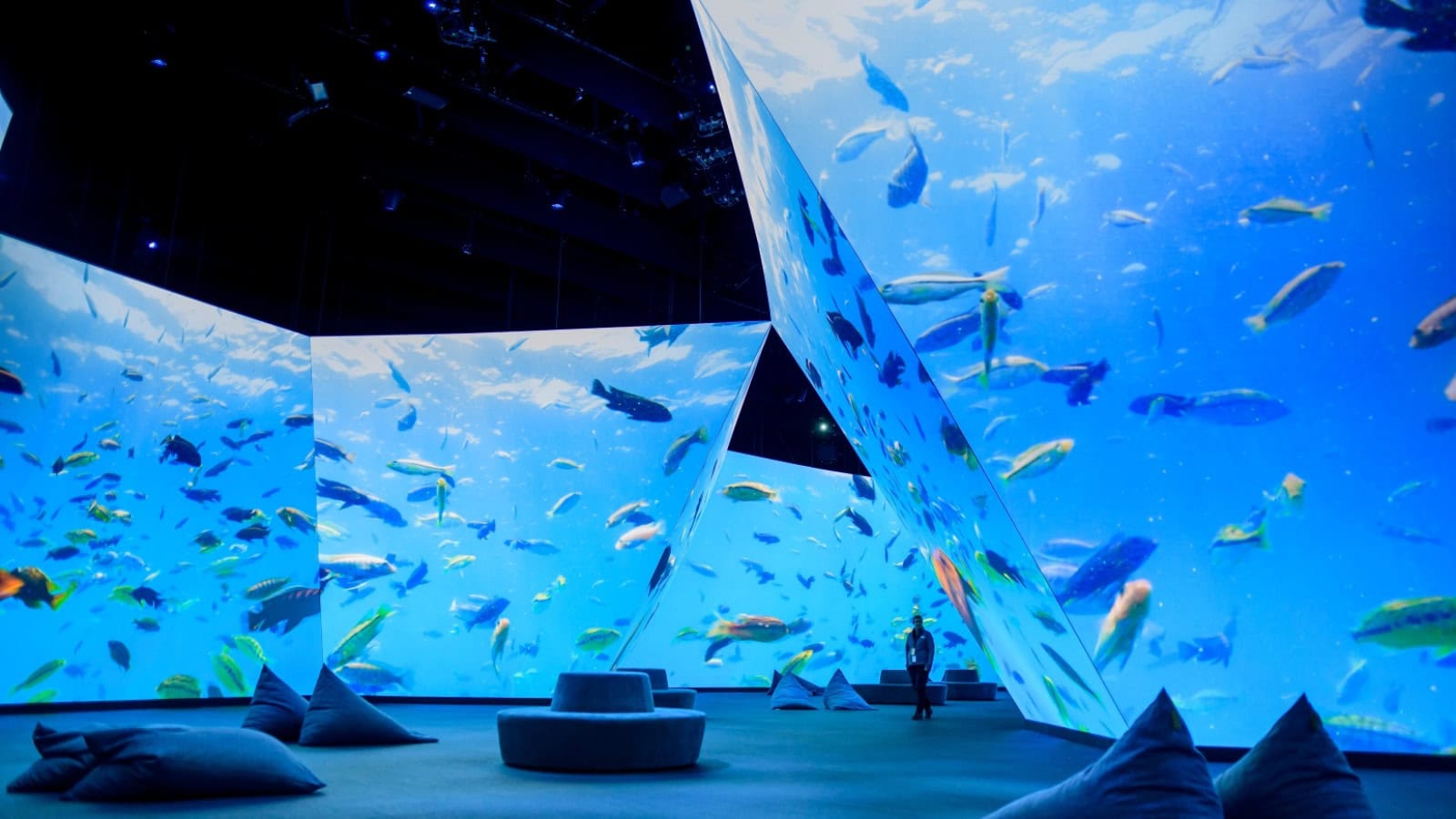
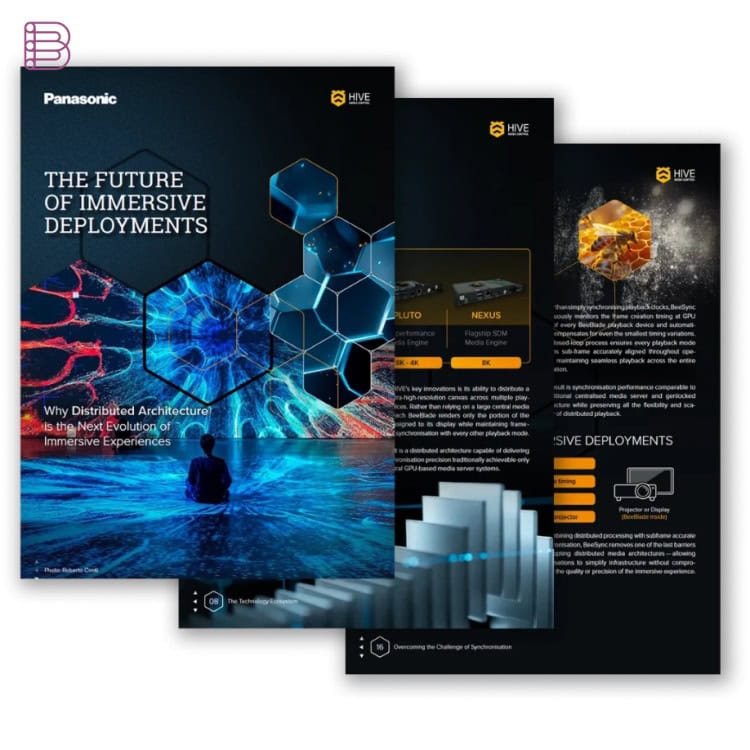
Panasonic Projector & Display Corporation and HIVE Media Control have published a new whitepaper on the cost of immersive AV. The Panasonic HIVE whitepaper, titled The Future of Immersive Deployments: Why Distributed Architecture is the Next Evolution of Immersive Experiences, claims that media playback and infrastructure costs can drop by up to 80% when legacy rack-mounted systems are replaced by a distributed approach.
Visitors to an immersive exhibition see spectacular projection and storytelling. What they don’t see is the equipment behind it, and according to Panasonic and HIVE that hidden part can swallow a large share of the budget.
Why the Panasonic HIVE whitepaper targets the equipment room
Traditional immersive installations rely on centralised media servers. These usually need a dedicated equipment room, long fibre runs, extensive cabling, cooling and specialist installers. In a distributed architecture, media playback is embedded directly in compatible projectors and displays. That removes much of the supporting infrastructure, makes installation simpler and leaves more money for the experience itself.
“Immersive experiences are becoming increasingly ambitious, but that shouldn’t mean the infrastructure supporting them must become increasingly complex or expensive,” says Felix Kleisen, Sales Engineer at Panasonic Projector & Display EMEA. In his view, the conversation shifts from how much technology a project needs to what customers can achieve with their available budget.
Real-world installations as reference
The Panasonic HIVE whitepaper draws on existing projects, including the BBC Earth Experience in Melbourne and the National Museum of Qatar. We covered that last installation earlier in our article on how Panasonic upgraded the National Museum of Qatar with HIVE. Besides the financial impact, the document looks at scalability, simpler deployment and lower operational and environmental impact. It also covers permanent installations, touring exhibitions and visitor attractions.
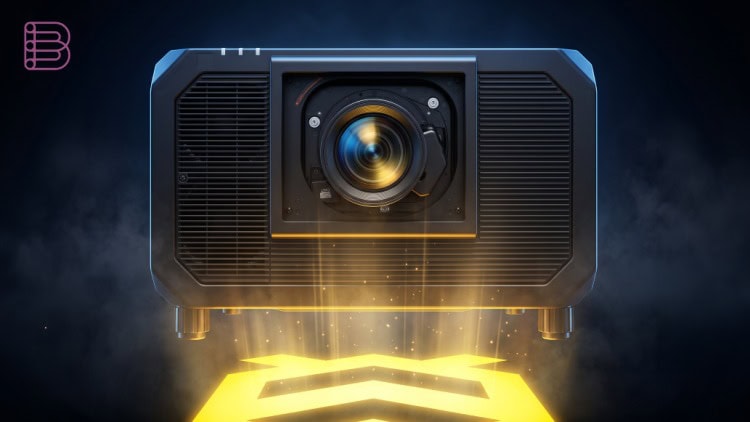
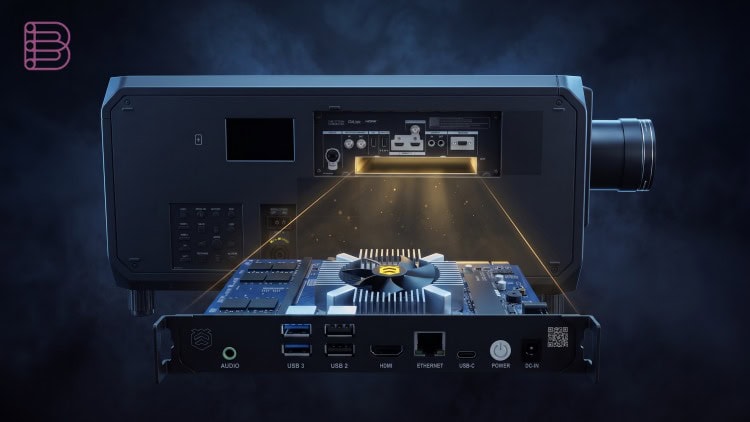
The reasoning in the Panasonic HIVE whitepaper is a familiar one in AV: the fewer boxes, cables and rooms a system needs, the lower the cost of building and running it. With HIVE’s BeeBlade playback modules, each projector or display renders only the part of the image assigned to it, while the units stay synchronised with each other. Adding a projector to the canvas then no longer automatically means adding rack space, cooling and another fibre run back to a central server room.
HIVE stays vendor-agnostic
HIVE was acquired by Panasonic, but the company stresses that its technology is not exclusive to Panasonic products. “Cost and affordability have always been central to HIVE’s approach,” says Dave Green, CEO of HIVE Media Control. He adds that HIVE remains committed to customers and partners across the wider professional AV industry, including those working with other manufacturers, and that the ideas in the whitepaper can benefit the entire immersive AV ecosystem.
The Panasonic HIVE whitepaper is written for AV consultants, systems integrators, rental and staging specialists, venue operators and organisations planning immersive experiences. For home theater enthusiasts it offers an interesting look behind the scenes of large-scale projection.
Pricing and availability
The Panasonic HIVE whitepaper is available now and free to download after registration on the Panasonic Connect website.
Key specifications
- Title: The Future of Immersive Deployments: Why Distributed Architecture is the Next Evolution of Immersive Experiences
- Publishers: Panasonic Projector & Display Corporation and HIVE Media Control
- Topic: distributed media architecture with playback embedded in projectors and displays
- Claimed saving: up to 80% on media playback and infrastructure costs versus rack-mounted systems
- Case studies: BBC Earth Experience Melbourne, National Museum of Qatar
- Audience: AV consultants, integrators, rental and staging, venue operators
- Availability: free download, registration required