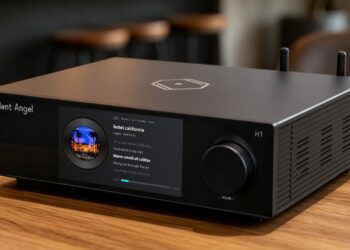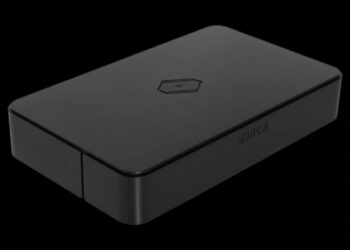


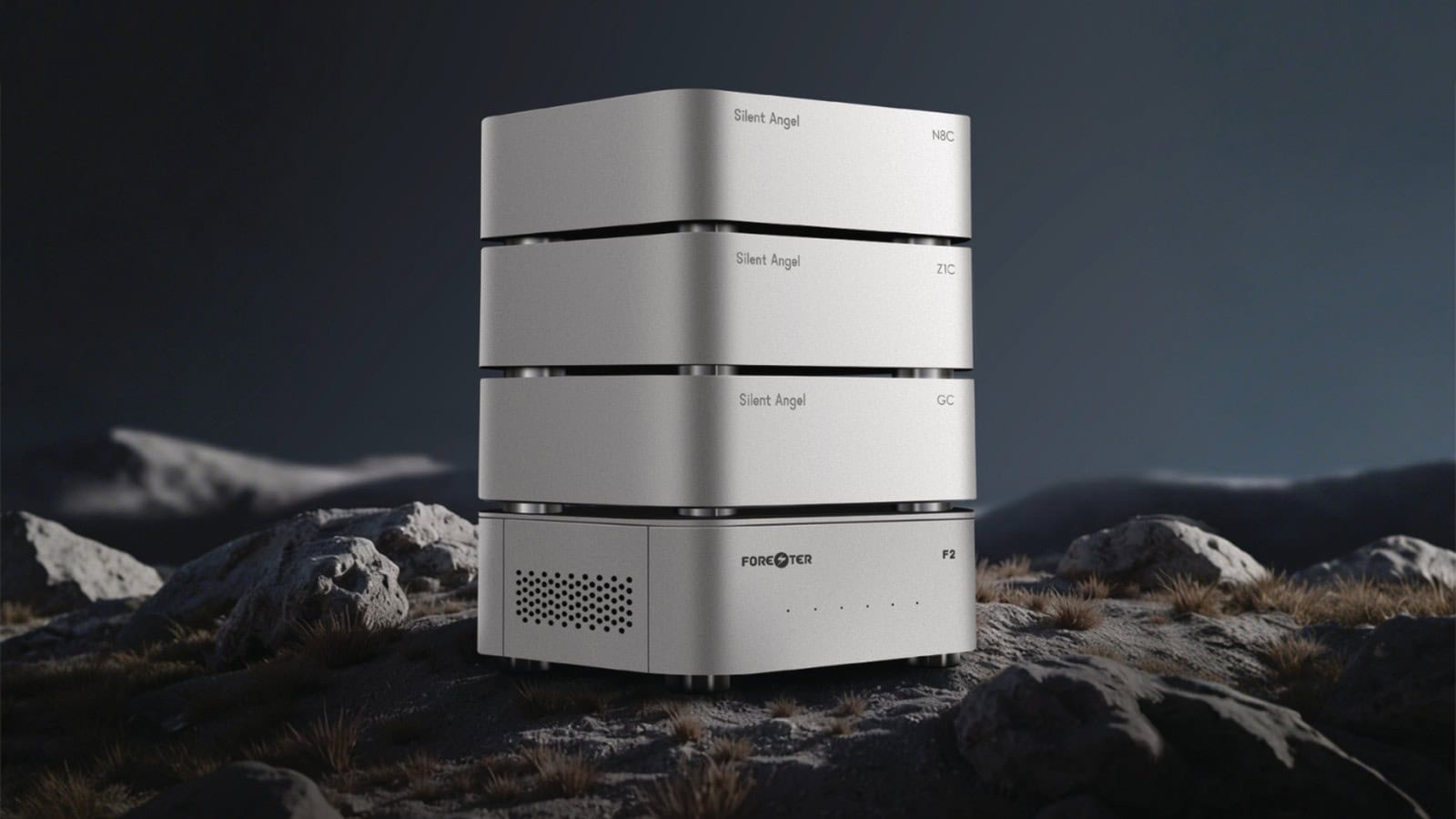
Every review on Best of High End starts in the same room: our HQ, the 80 m² space where the reference system lives. That system is immersive-only, built around a StormAudio Core 16+ with Dirac ART, and almost all of its music arrives as a network stream from Roon. Which makes the streaming front-end just as important as any amplifier or loudspeaker in the chain. Starting today, that front-end is the complete Silent Angel Elite Series: four modules, each with one job, now working together as a single system in HQ.
Silent Angel describes the Elite Series as an “optimized system for Roon streaming”. The idea is that the weak spots in a streaming chain are rarely the music files or the app, but the hardware around them: network noise, unstable power and timing drift. The series answers each of those with a dedicated box. In this report we look at every module separately: what it does, how it sits in our chain and what we expect to hear from it.
Why a dedicated streaming stack in HQ
For a long time Roon ran on our Synology NAS. It worked, but a NAS is a general-purpose computer that also handles backups, indexing and file serving, fed by a switch-mode power supply. In an immersive system that resolves as much as ours, that is exactly the kind of compromise you start to notice. The Silent Angel Elite Series replaces it with a chain in which the server, the network, the clock and the power each get their own attention.
One practical point shapes the whole setup: the StormAudio Core 16+ has no USB audio input. Music from Roon reaches the processor over the network, and films from our R_volution PlayerPro 8K arrive over HDMI. The last network hop before the StormAudio is therefore the place where the Elite Series can make the biggest difference.
Bonn N8C: the clocked heart of the network
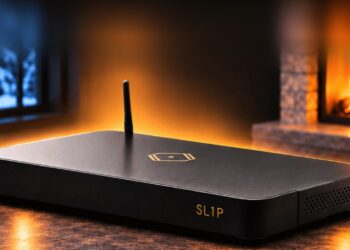
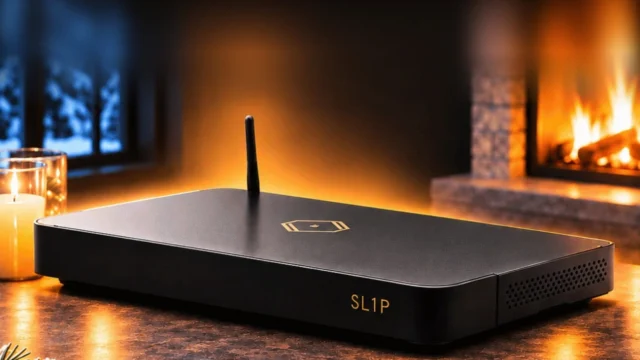
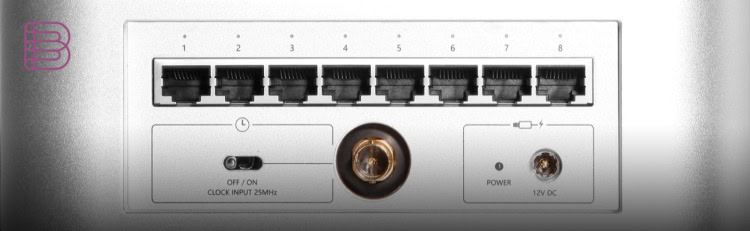
The Bonn N8C is an eight-port Gigabit network switch with a built-in 25 MHz TCXO, a BNC input for an external 25 MHz master clock and a toggle to choose between the two. Silent Angel adds what it calls a medical-grade power supply design and isolation circuitry to keep electrical noise away from the data. The 2.8 kg aluminium chassis is there for shielding and stability, not for show.
In HQ the N8C is the hub of everything: router, NAS, Rhein Z1 Plus, R_volution and StormAudio all connect to it. When we reviewed it on its own, it introduced more refinement, airiness and dynamics, and earned a 9.2/10 in our Silent Angel Bonn N8C review. As part of the full Silent Angel Elite Series stack, we expect it to give the immersive soundstage a calmer, more stable base, so that height channels and ambience sit more clearly around the listening position.
Rhein Z1 Plus: Roon Core on dedicated hardware
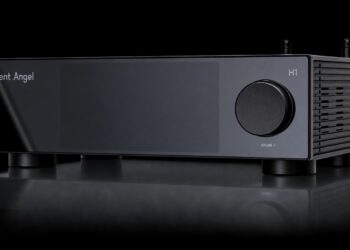
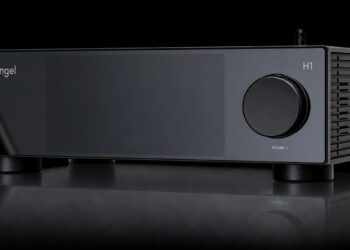
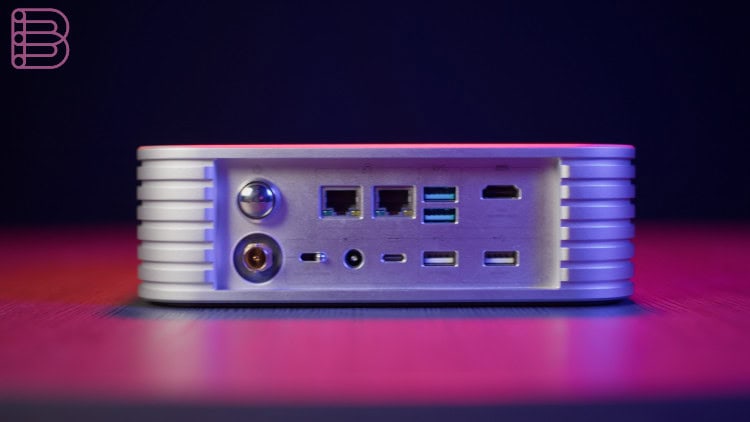
The Rhein Z1 Plus is the music server of the stack. Inside is an Intel quad-core J6413 processor with low-power DDR4 memory and NVMe storage, running Silent Angel’s own VitOS. It runs Roon Core with enough headroom for DSP, offers a 25 MHz clock input and has two Gigabit Ethernet ports, all in a fanless aluminium chassis.
Silent Angel’s own Elite Series line-up names the Rhein Z1C as its server. We keep the Rhein Z1 Plus, the model we reviewed together with the Forester F2 and Munich MU (8.8/10). Its USB audio output stays unused here: the Z1 Plus feeds the StormAudio over the network. What we expect is stability above all: no dropouts, no stuttering when we browse the library during playback, and the quiet confidence of a machine that does nothing but music.
Genesis GC: one timing reference for the whole chain
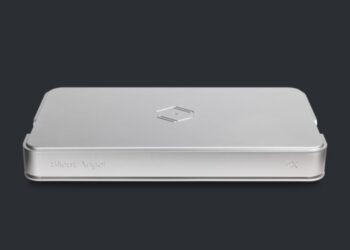
The Genesis GC is a compact master clock with a high-precision TCXO and one gold-plated BNC output carrying a 25 MHz signal. It replaces the internal clock of the device it feeds with a cleaner, more stable reference.
The GC has one output, so we had to choose. We connect it to the Bonn N8C rather than to the Rhein, because both music and film pass through the switch on their way to the StormAudio: it is the shared last hop. In earlier listening, adding the GC lifted the performance of the switch even further. With the stack complete, we expect finer detail at low levels and more natural decays. Because a clock only settles once it is at temperature, the GC stays on 24/7.
Forester F2 (2x): clean power, split by design
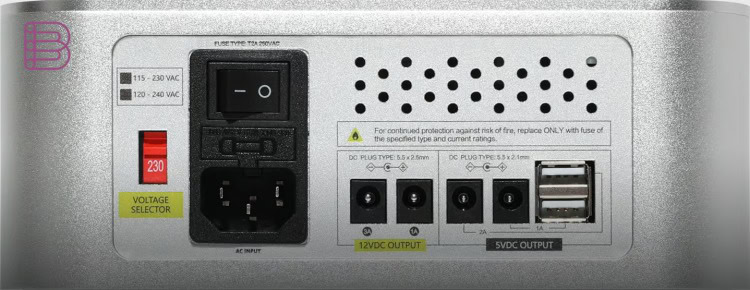
Every module in the stack runs on 12V DC, and the Forester F2 linear power supply is there to deliver it cleanly. Behind the AC input sits a toroidal transformer, followed by regulated outputs: 12V/3A, 12V/1A, 5V/2A and 5V/1A. The two 12V outputs share a budget of 36 W.
That shared budget is why HQ uses two of them. F2 number one feeds only the Rhein Z1 Plus from its 12V/3A output, so the server always has the full budget to itself. F2 number two powers the Bonn N8C and the Genesis GC, each from its own 12V output. This also keeps the server’s power draw away from the clock and the switch. Silent Angel Bastei DC cables make the connections. From the F2s we expect a blacker background and a more effortless presentation, especially during dense, dynamic passages.
How the Silent Angel Elite Series comes together in HQ
Around the four modules, a Silent Angel Forester FPC power noise reduction enhancer works in parallel on the same mains distribution, without passing any power through itself. An LF-SP LAN filter sits on the network side. The start-up order matters: first the Genesis GC, then the Bonn N8C, then the Rhein Z1 Plus. All devices run from one dedicated mains group with a single earth point. You can find the full system, from loudspeakers to cables, on our Inside HQ page.
What we expect to hear
Each module of the Silent Angel Elite Series attacks one source of degradation, and the effect of a single box is often small. The question is what happens when all four work together in an immersive system with 7 base channels, 4 height channels and 5 subwoofers. Our expectations: a quieter background between notes, a more stable and more precisely placed soundstage around and above the listener, and more ease at high levels. Those are expectations, not conclusions. Over the coming weeks we will listen to the Silent Angel Elite Series in HQ with the music we know best and report back on what it really changes. More information about the series is available on the Silent Angel website.
Key specifications
- Bonn N8C: network switch, 8 x Gigabit Ethernet, 25 MHz TCXO, BNC 25 MHz clock input, 12V/1A
- Rhein Z1 Plus: music server, Intel quad-core J6413, DDR4, NVMe SSD, VitOS, Roon Core, 25 MHz clock input, 2 x Gigabit Ethernet, 12V/3A
- Genesis GC: master clock, TCXO, 1 x 25 MHz BNC output (gold-plated), 12V/1A
- Forester F2 (2x): linear power supply, toroidal transformer, 12V/3A + 12V/1A (36 W shared), 5V/2A + 5V/1A
- Support: Forester FPC power noise reduction enhancer, LF-SP LAN filter, Bastei DC cables
- Role in HQ: Roon streaming front-end for a StormAudio Core 16+ with Dirac ART (network input, no USB)