

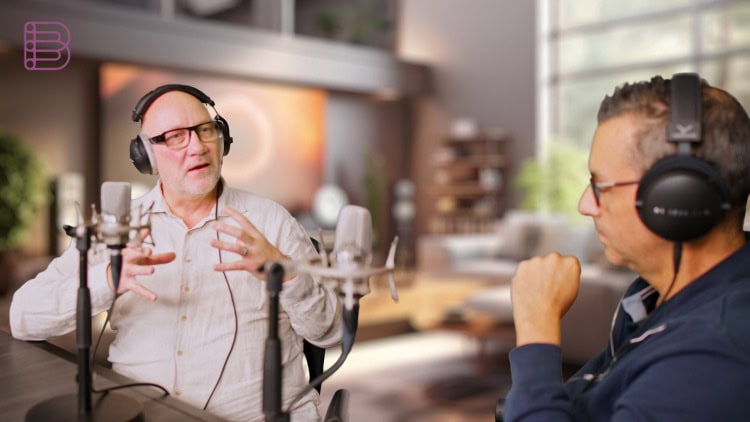
Welcome back to Tech Talk, recorded in the Best of High End studio with Hans-Ole Vitus, founder of Vitus Audio. In this fourth of seven episodes, we dive into the engineering and design philosophy behind the brand. And Hans-Ole surprises us straight away: after more than twenty years, he is questioning some of the very choices that made Vitus Audio famous. Along the way, he reveals a brand-new integrated amplifier for the first time.
Why Vitus Audio refused global feedback
The opening question is a big one. Why does Vitus Audio refuse global negative feedback, what does that bring in sound, and what does it cost in design and price? “I’m probably not going to answer this the way you thought I would,” Hans-Ole warns.
For more than twenty years, Vitus Audio has been known for three things: no global feedback, exclusively bipolar transistors and no toroidal transformers. “That’s basically the signal we have been sending,” he says. “But one of the things I find problematic is when an engineer makes his decisions into a religion. Then you stick yourself in a corner.”
Vitus R&D: rewind and reset
About four years ago, Hans-Ole started a new side company, Vitus R&D. It allowed him to step back from running the group that manufactures and owns the Vitus Audio brand and return to what he enjoys most: research and development. “The main thing I wanted to do was rewind and reset,” he explains.
Technology has moved on, new materials have arrived, and Hans-Ole wanted to know whether the decisions he made two decades ago are still the right ones today. “So today, I might actually use global feedback. If that gives me the result that I’m after, why wouldn’t I?” He admits there are real technical benefits to global feedback, and real problems when you avoid it.
His approach is to start from scratch, as if he had never made those choices, with the same curiosity he had back then. It fits a theme that came up earlier in this series: technology serves the music, not the other way around. “I don’t care too much what technology is used, as long as the result is what I’m after.”

Toroidal transformers make the cut
That open mind is already producing results. Vitus Audio is evaluating global feedback, as well as FETs and MOSFETs. On one topic, Hans-Ole has already made up his mind: toroidal transformers.
More than twenty years ago, measurements led him to choose EI and UI transformers and to be firmly against toroidals. Since then, transformer technology and materials have improved so much that most of the drawbacks he measured back then have been minimised. “For the Reference series, moving forward, the toroidal transformer is the choice of transformer instead of the EI,” he says. “The result is what is important.”
First reveal: the Vitus Ri200
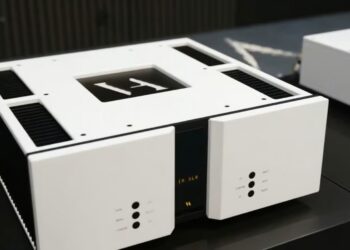
The testbed for all these new ideas is a product that Hans-Ole mentions here publicly for the first time: the Ri200, a new integrated amplifier in the Reference series. Despite the higher number, it will sit below the current Ri101 in price. The reason for the name is simple: it delivers 200 watts RMS into 8 ohms. “We go back to where the number is the power.”
The Ri200 is the design where Vitus Audio tests its new technologies. Toroidal transformers have convinced Hans-Ole, both in measurements and in sound, and are now the obvious choice for this series. Global feedback, FETs and MOSFETs are still under evaluation. “There are definitely some signs that we will have a shift in technology. Again, it’s the end result that matters.”
As for timing, Hans-Ole expects the Ri200 in the first half of next year. He hopes to present it in Vienna. “The product will be ready before. The question is whether we will get our own room in Vienna, which we don’t know at this point.”
Fully balanced, from input to output
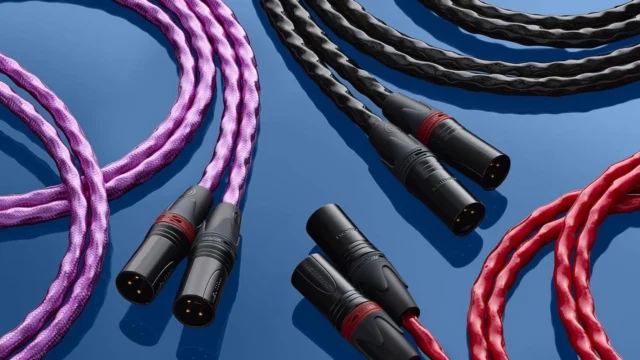
One principle is not up for debate: all Reference, Signature and Masterpiece products remain fully balanced. “That doesn’t just mean you have an XLR in the back,” Hans-Ole stresses. “It’s really a balanced design, from input to output.”
That has a price. A fully balanced design needs double the components, and what adds even more to the cost is the precision required throughout the stages, with resistors matched to 0.1%. “It becomes quite expensive to make. But I still personally feel and hear that the benefits we get from that are worth the investment.”
There is one exception. Eloxity, the brand that Hans-Ole’s son started, will no longer exist as a separate brand. It becomes a series under Vitus Audio, called Eloxity by VA, positioned below €10,000 retail. At that price level, a fully balanced design simply does not fit, so the Eloxity by VA series will not be balanced. “But yeah, I still swear by balanced designs.”
Class A and class AB in one chassis
Vitus Audio amplifiers can switch between class A and class AB, a feature that has raised questions for twenty years. Why not simply run class A all the time? Hans-Ole turns the question around: “Why is nobody else doing it?”
The answer starts with a story. A friend of his bought a pair of compact class A amplifiers without a power switch and never turned his system off. After a year, he received an extra electricity bill of around €1,000, just for the amplifiers, and promptly sold them. “That was kind of the provocation for me.”
There is also a practical side. The large Vitus Audio class A amplifiers need at least two hours to reach their ideal operating temperature. “When I get home from work, I want to listen. I don’t want to sit there going, oh, this sounds horrible.” The switch lowers the bias current of the output stage, turning the amplifier into a high-bias class AB design that saves energy when you are not listening seriously.
Hans-Ole’s own routine is telling. He never switches his amplifier off: he leaves it in class AB and muted, so it stays at a decent temperature without a crazy electricity bill. When he wants to listen, he switches to class A, unmutes, and within thirty minutes he has the full sound. “It started with wanting to save money for the customers, and it’s a practical thing for how I use the units.”

Coming up next
That closes episode four of our Tech Talk series with Hans-Ole Vitus. In the next episode, we continue with the engineering and design philosophy behind Vitus Audio, including the question of whether leaving an amplifier on all the time dries out its capacitors. Missed the earlier episodes? Watch Hans-Ole Vitus: From Drummer to Designer, Hans-Ole Vitus: Measurements Serve the Music and Hans-Ole Vitus: The Pursuit of the Absolute. More about the Reference, Signature and Masterpiece series can be found on vitusaudio.com. Prefer to listen? Every Tech Talk is also available as a podcast on Spotify.