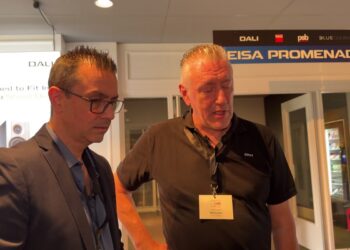


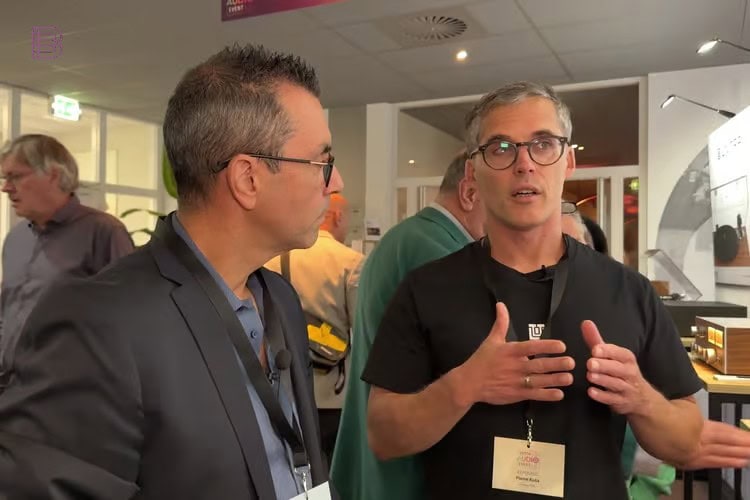
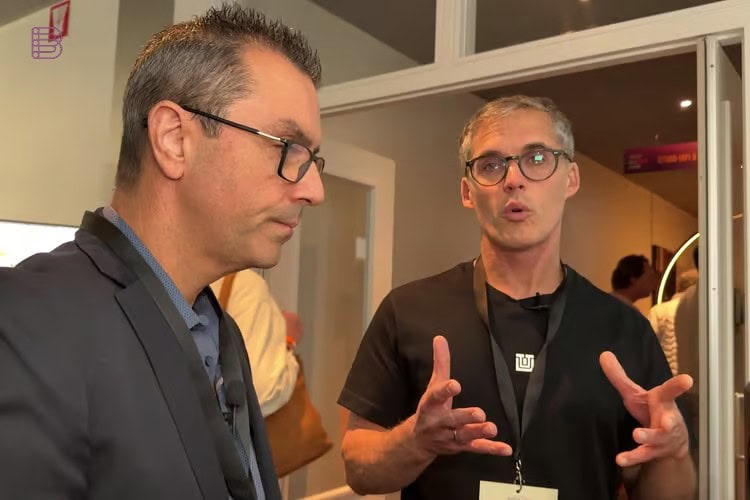
Dutch Audio Event is big. Really big. Walk from one corridor to the next and you pass stand after stand, until something makes you stop. For us, that was a wall with a confident line on it: “The beauty of Polish engineering”. Behind it: Unitra, presented by its Benelux partner Linear HiFi, and a full line-up that looks like it travelled straight from the 1970s into 2026. Pierre Kuta of Unitra gave us the tour.
The return of a Polish hi-fi giant
In Western Europe, the Unitra name may not ring many bells. In Poland, it is a legend. Unitra goes back to the early 1960s and grew into one of the country’s main producers of hi-fi equipment. By the mid-1980s, Pierre tells us, it employed up to a hundred thousand people. And many Westerners owned Unitra gear without knowing it: the factories built equipment that was rebadged and shipped west under other brand names.
Today there is a new Unitra. Backed by a new investor, the brand returned five years ago with a completely new line-up: an integrated amplifier, a DAC, a CD player, two turntables and two pairs of loudspeakers. And it is still very much Polish. According to Pierre, around 80% of the components are produced in Europe, in Poland, to Unitra’s own designs. Only parts such as CD mechanisms and DAC chips are bought in.
Unitra DSH-805: a control centre for digital
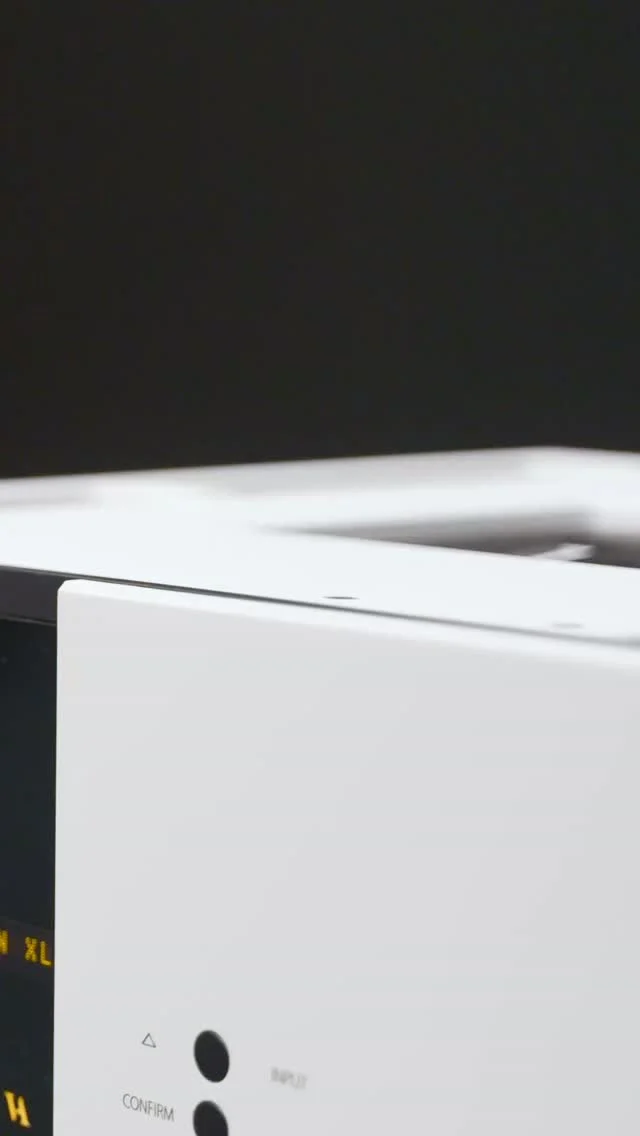
We started with the digital section. The DAC is built around an ESS Sabre 32-bit Pro chip, and is designed as a control centre for all your digital sources. Connect a CD transport or a streamer and let the DAC do the rest, so you don’t have to pay for a converter in every source.
Unitra uses a quad structure: the signal of each channel is processed four times and the DAC takes the average, so small discrepancies cancel each other out. It also takes care of reclocking. “Just like for analog, timing is very important for digital as well,” says Pierre. Filter presets let you add a little more stage to the music to suit your room, and the display shows the incoming sample rate at a glance.
A CD player with an e-ink display
The CD player combines a mechanism from Japanese specialist TEAC with an ESS Sabre DAC. Its most distinctive feature is the display: e-ink, the same technology you know from e-readers. It is not just a styling choice. An e-ink screen produces very little radiation, so its impact on the surrounding electronics is much lower than that of a standard LCD. And it has a lovely, paper-like look: digital, with an analog touch.
Unitra WSH-805: the masterpiece
Then the star of the stand: the Unitra WSH-805 integrated amplifier. This is not a retro design invented by a marketing department. It is based on the popular WSH-205 that Unitra built in the 1970s, with the same style of VU meters, knobs and switches. In the Classic edition you get wooden side panels, golden accents on the knobs and gold-tinted meters.
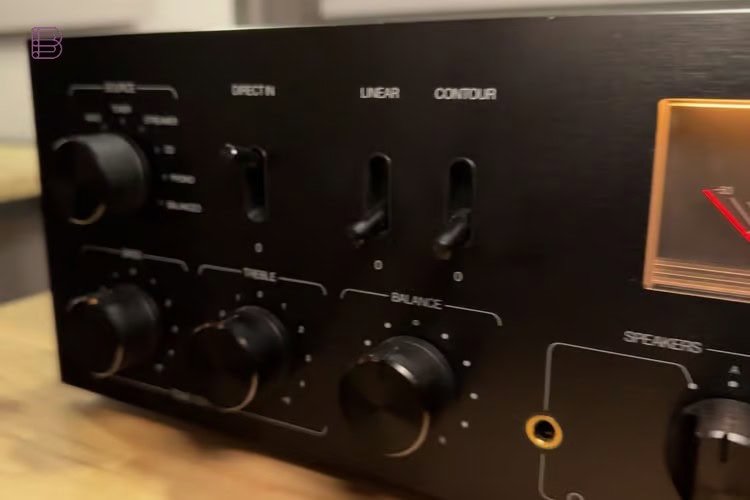
Under the skin it is thoroughly modern. You can switch between Class A and Class AB operation, with up to 125 watts into 4 ohms in Class AB: plenty for three-way floorstanders. The construction is dual mono, with a separate transformer for each channel, and there are two sets of speaker outputs, an XLR input and a properly isolated MM/MC phono stage.
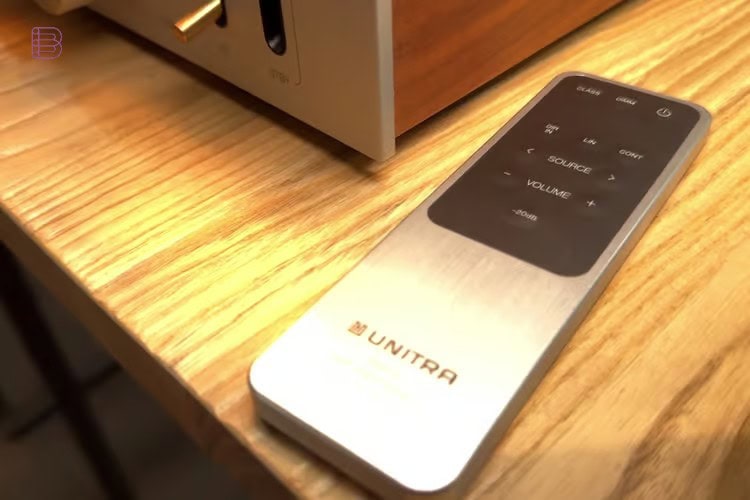
The best trick, though, is in the remote. Change the input from your sofa and the physical selector on the front panel turns along with it. Even the light intensity of the meters can be dimmed, for that late-evening jazz mood. Prefer something more discreet? The whole line-up is also available in black, with black VU meters.
Fryderyk and Edmund: turntables with a name
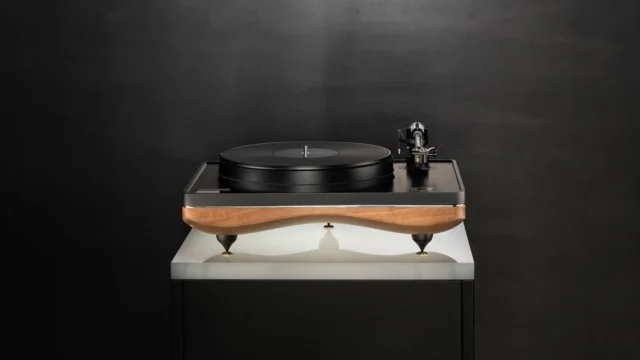
Unitra gives its turntables nicknames, just as it did in the 1970s. The entry-level model is called Fryderyk, its bigger brother Edmund. Both use a direct-drive motor that Unitra designs and produces itself, and an aluminium tonearm that is also designed and made in-house. A practical touch: the headshell can be removed without a screwdriver, so swapping cartridges takes seconds.
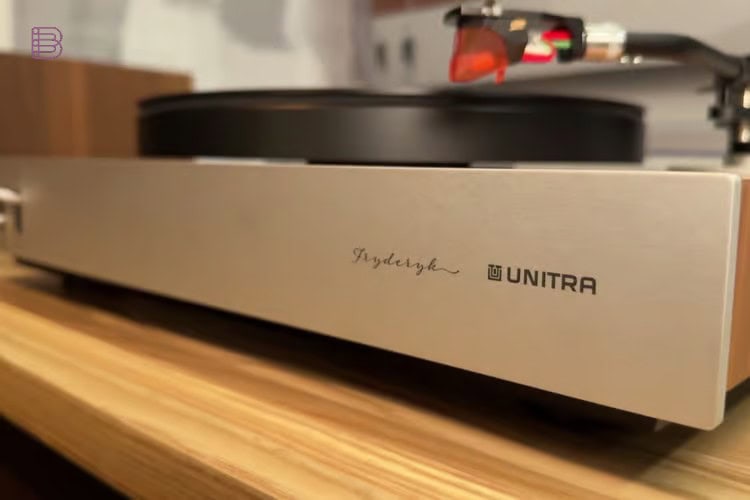
The Edmund adds a larger plinth and an external power supply to keep vibrations away from the platter. The aluminium platter weighs 1.7 kilos, but the motor has been tested with up to 6 kilos for anyone who wants to go heavier. Even the dust cover is thought through: acrylic rather than plastic, more transparent, less resonant, and if it ever gets scratched, a polish makes it look new again.
Unitra ZGZ-802: easy listening, in the best sense
To finish, the speakers. The ZGZ-802 is the second version of Unitra’s floorstander and, again, it goes back to designs from the 1970s. It is a sealed, box-in-box construction: one cabinet on the outside, a second one inside that holds the drivers. No bass reflex port, which makes the low end easier to control and the speaker easier to place.
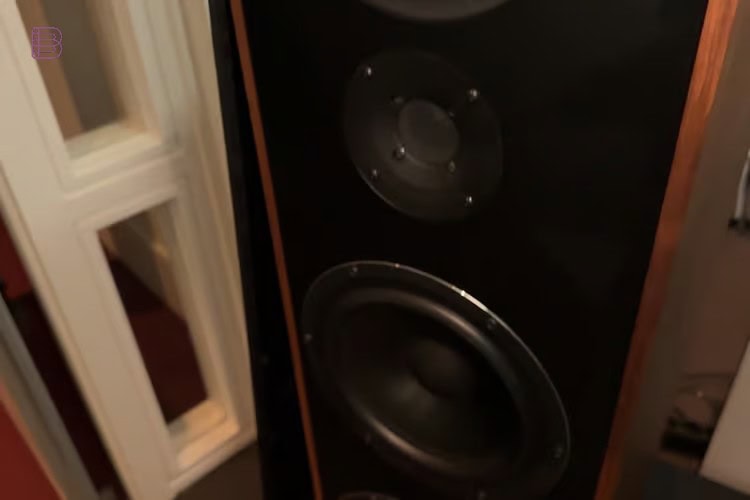
The ZGZ-802 weighs 41 kilos, comes with metal feet and gold-plated binding posts, and it is Pierre’s personal favourite of the whole line-up. Visitors describe the sound as natural, relaxed and never tiring, with a delicate, airy soundstage, best suited to medium and larger rooms. “The idea is to give naturally the sound that the artists wanted to share,” says Pierre. For smaller rooms there is a compact box-in-box model with a bass reflex port and aluminium-ceramic drivers, which has also been well received.
A complete system, like in the old days
What makes Unitra stand out is the coherence of the range. In the 1970s and 1980s, many people bought a complete system from one brand, every piece matching the next. Unitra wants to bring that back. Each component stands on its own, but together they form one consistent design, for listeners who simply want to put on a record and enjoy the music without endlessly swapping boxes.
Our take
The new Unitra is a lovely surprise: a brand with a real history that brings back the look and feel of its golden era, without pretending it is still 1975 inside. Dual-mono amplification, Sabre converters, an e-ink display, in-house direct-drive motors and sealed box-in-box speakers show that the engineering is taken seriously. If you have a soft spot for VU meters, wood and switches that go click, this is a stand you should not walk past. We certainly look forward to hearing more from Unitra.
More from Dutch Audio Event 2026: read our reports on Aequo Audio Ensium, System Audio Silverback and Vitus Audio. More information: unitra.com