

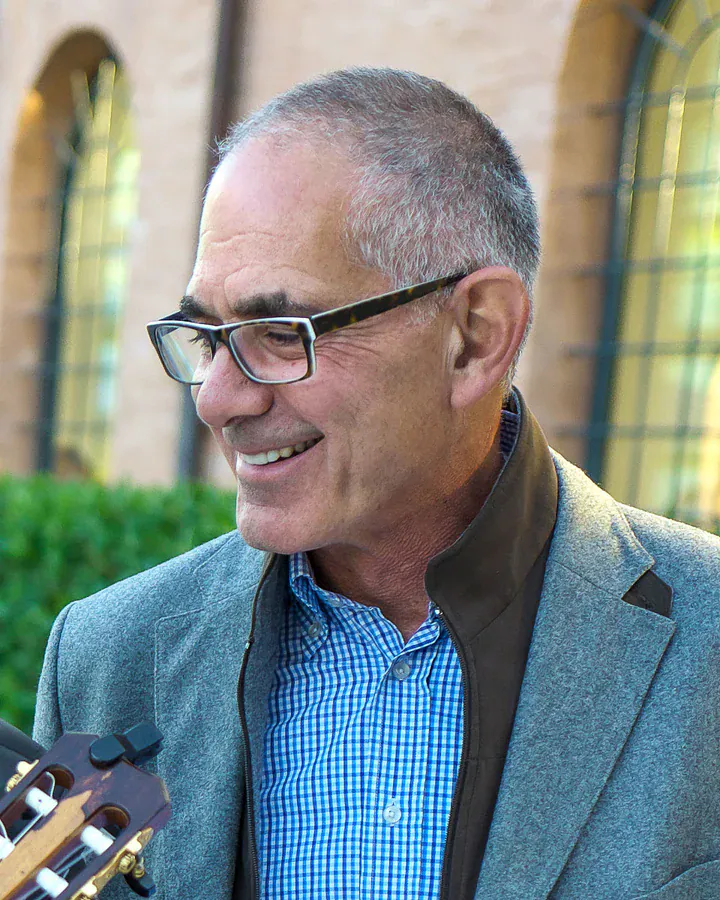
Few people in the history of high-end audio can claim to have given the category its name. Mark Levinson can. A professional jazz musician before he ever designed a circuit, Levinson built the first product to carry his own name in 1974 — and in doing so, set a standard of uncompromising sound and build quality that the industry still measures itself against, more than fifty years later.
A Musician’s Ear for Engineering
Mark Levinson’s path into audio began on a stage, not a workbench. In his teens and twenties he played double bass alongside jazz figures including Sonny Rollins, Paul Bley, Keith Jarrett, Jimmy Garrison and later Stan Getz, and he spent more than fifty years studying the classical music of Northern India with maestro Ali Akbar Khan. Already known in music circles, he built the stage mixer used at the Woodstock Music Festival in 1969. That grounding in live performance, combined with the patient perfectionism of mentors such as engineer Richard Burwen, shaped a conviction that would define his entire career: that reproduced music should sound as close as possible to what a trained musician hears in the room.
It was this musician’s standard, rather than a purely technical one, that separated Levinson’s earliest work from the rest of the industry. He was not chasing specifications on a datasheet; he was chasing the sound of a double bass he had spent a lifetime learning to play.
The LNP-2 and the Birth of “High-End”
In 1972, Levinson founded Mark Levinson Audio Systems (ML¹) in Connecticut, and in 1974 the company released the LNP-2 preamplifier — widely credited as the product that gave the high-end audio category its name and its identity. The LNP-2 used military-grade modular construction, hand-selected components, and Teflon as an insulator, at a time when most consumer electronics treated such choices as unaffordable luxuries. After hearing the LNP-2 at an Audio Engineering Show, Audio Magazine’s Bert Whyte told Levinson he intended to put him “on the map” — and did, concluding his CES report with the verdict that, “monetary considerations aside,” it was “the premiere choice.”
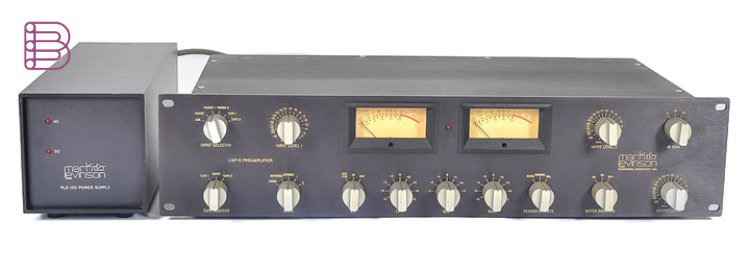
The HQD System, built around Hartley woofers, QUAD electrostatic midranges and Decca ribbon tweeters driven by six MLAS ML-2 amplifiers, became the world’s first tri-amplified reference system for music listening, and the Mark Levinson name soon entered common usage as shorthand for uncompromising quality. By the end of the 1970s, ML¹ had assembled a catalogue of preamplifiers, power amplifiers and crossovers that collectors and vintage-audio specialists still restore and sell today, often at prices well above their original list.
Cello and the Pursuit of “Audio Palette”
Levinson sold Mark Levinson Audio Systems in 1984 and, under a non-compete agreement, could not use his own name commercially for several years. He founded Cello Ltd. in 1985, and the company’s flagship product, the Cello Audio Palette, became one of the most unusual and influential designs of his career: a parametric equalizer built for music lovers, not studio engineers, that let listeners tune the tonal balance of their system to taste rather than accept a single, fixed “correct” sound.
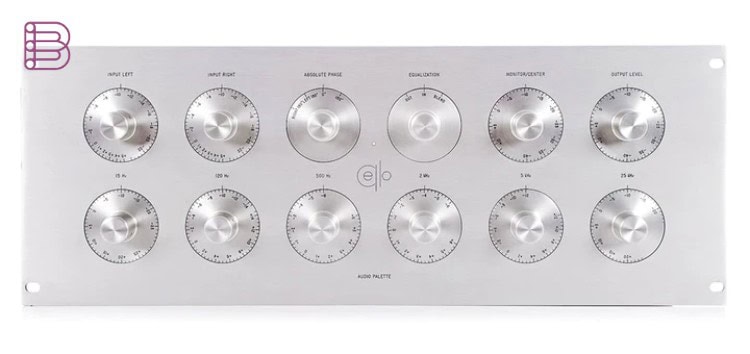
The Audio Palette was controversial in some corners of the hi-fi press, precisely because it rejected the idea that a system should have one objectively correct tonal signature. For Levinson, trained as a performing musician rather than an electrical engineer by formal education, the goal was never theoretical neutrality — it was matching the sound in the room to the sound he remembered from the stage.
Red Rose Music and Daniel Hertz: Still Building Today
After Cello, Levinson continued designing under Red Rose Music in the late 1990s and 2000s, and today builds under his current company, Daniel Hertz SA, founded with his wife Maria Rodrigues Levinson and named for their son. Daniel Hertz’s current catalogue includes the Maria integrated amplifier, the Anton and M-series loudspeakers, and the Amber and Chiara systems — all still built around Mark Levinson’s original conviction that a system should be judged by how convincingly it recreates the experience of live, acoustic music. Read more high-end amplifier news on Best of High End.
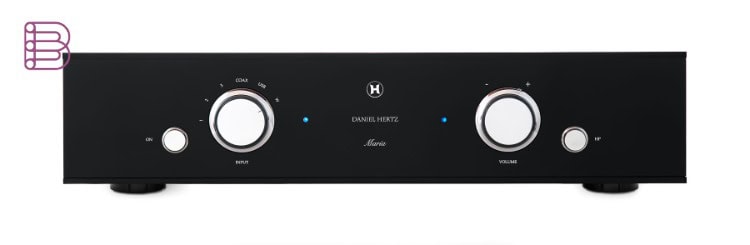
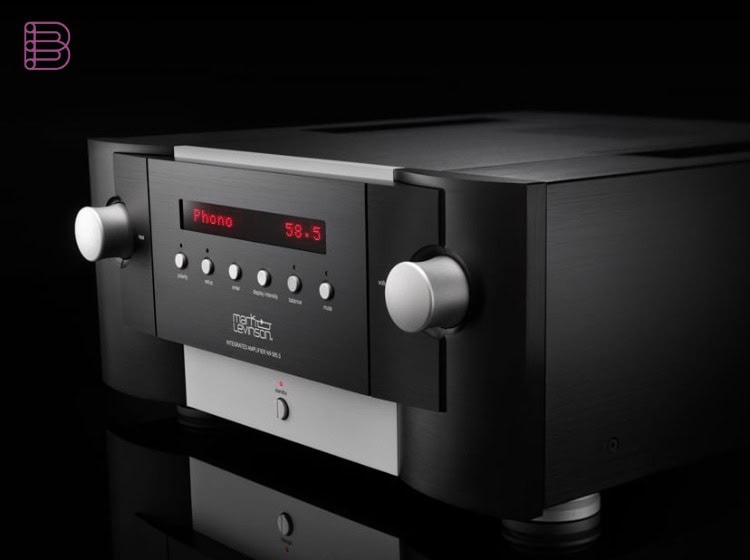
Daniel Hertz remains a small, specialist operation compared with the scale Mark Levinson Audio Systems eventually reached under new ownership — the Mark Levinson brand itself, now owned by Harman International, continues to sell amplifiers and electronics worldwide, entirely independent of the man whose name it carries. That split is itself part of the Mark Levinson story: few figures in audio history have had their own name become a product category, sold on by several owners, while they themselves kept building under new names, chasing the same standard, decades later.
Legacy
Mark Levinson’s influence on high-end audio is difficult to overstate. He did not simply build good amplifiers; he helped define what “high-end” meant as a category distinct from ordinary hi-fi, built the vocabulary the industry still uses to describe it, and proved that a trained musician’s ear could out-engineer a specification sheet. That musician-first approach — now expressed through Daniel Hertz — still guides every product that carries his design, more than fifty years after the LNP-2 first put his name on the map.