

Look at the spec sheet of almost any multi-driver loudspeaker and a crossover frequency will be listed somewhere: a single number, something like 2.2kHz or 2,800Hz, that tells a buyer very little on its own. Inside the cabinet, that number marks the handover point of a small but critical piece of engineering, the speaker crossover, explained most simply as the circuit that decides which driver reproduces which part of the music. Getting that decision right is often as demanding as designing the drivers themselves.
Why One Driver Isn’t Enough
No single driver can reproduce the full audible range, roughly 20Hz to 20kHz, without compromise. A driver light enough to move quickly for high frequencies is too small and too lightly built to push the air a deep bass note requires; a driver large and rigid enough for bass carries too much moving mass to track the rapid excursions of treble. That physical reality pushed speaker designers, well before stereo became mainstream, toward splitting the job between dedicated drivers: a tweeter for highs, often a separate midrange, and a woofer for lows. Multiple drivers only work together, however, if each one receives just the part of the signal it was built for. That is exactly what a crossover does.
A Speaker Crossover, Explained in Three Parts
A passive crossover, the type found in most home speakers, is a small network of components sitting between the amplifier terminals and the drivers, built from three basic parts:
- Inductors (coils) block high frequencies and let low frequencies pass through to the woofer.
- Capacitors do the opposite: they block low frequencies and let high frequencies pass through to the tweeter.
- Resistors are added where needed to pad down a driver that is naturally more sensitive than its neighbours, so the tweeter does not simply play louder than the woofer at the same input level.
Where those components are tuned to hand over from one driver to the next is the crossover point. How quickly that handover happens is the crossover’s order, usually described in decibels per octave: a first-order filter rolls off at 6dB per octave, second-order at 12dB, third-order at 18dB, and so on. A steeper, higher-order filter isolates each driver more strictly from frequencies it was never meant to play, which protects fragile tweeters and reduces the audible contribution of a woofer breaking up at the top of its range. The trade-off is phase: a steeper filter shifts the timing relationship between drivers more aggressively around the crossover point, and getting that phase behaviour right, not just the frequency response, is where crossover design turns from arithmetic into craft.
Crossover Points and Orders in Today’s Speakers
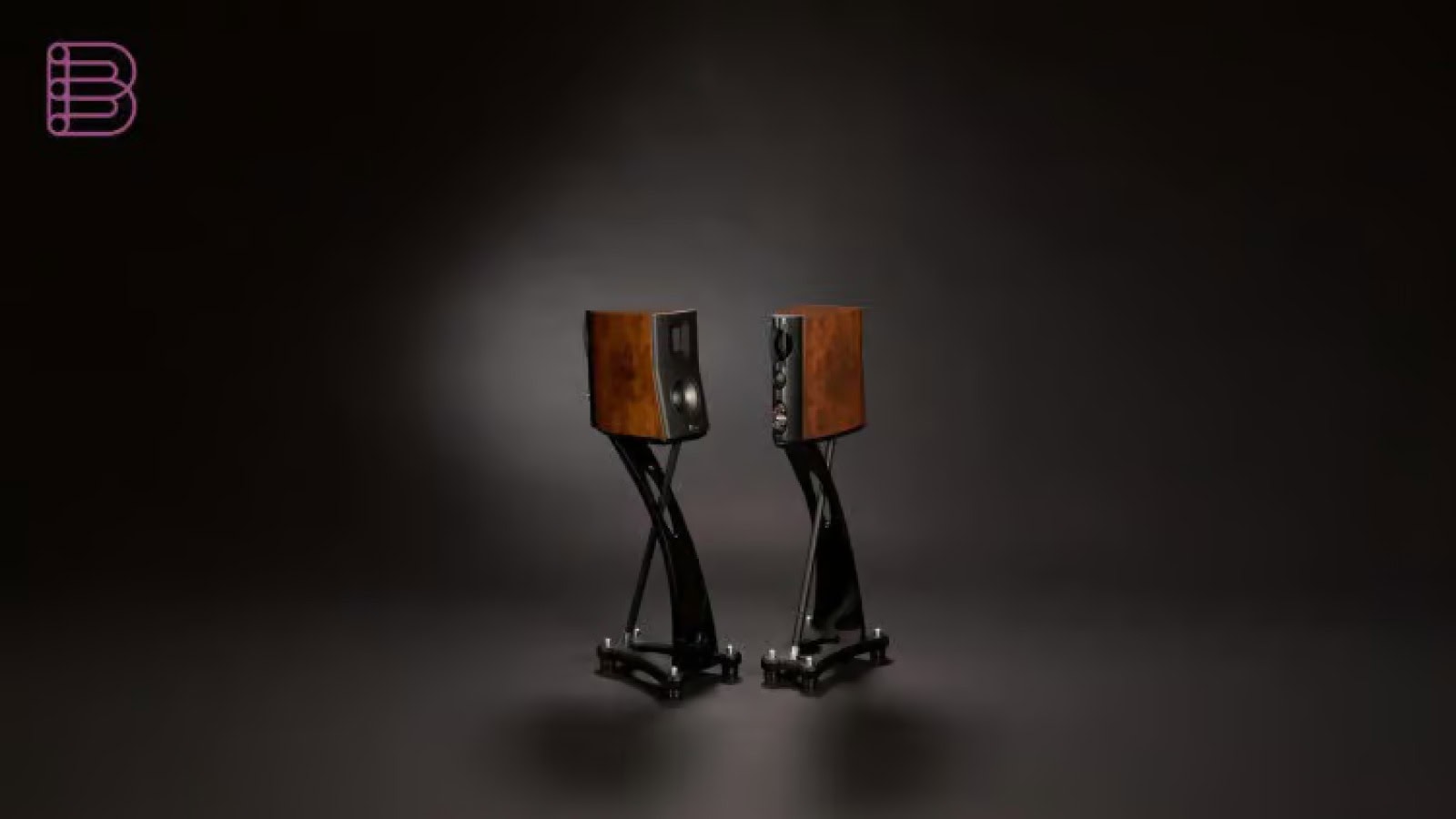
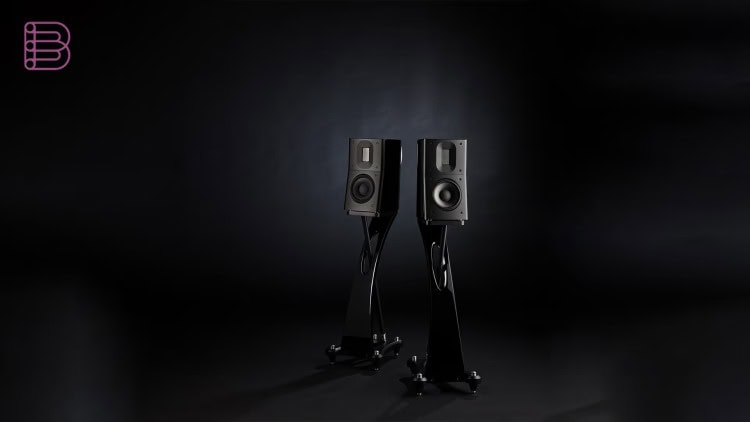
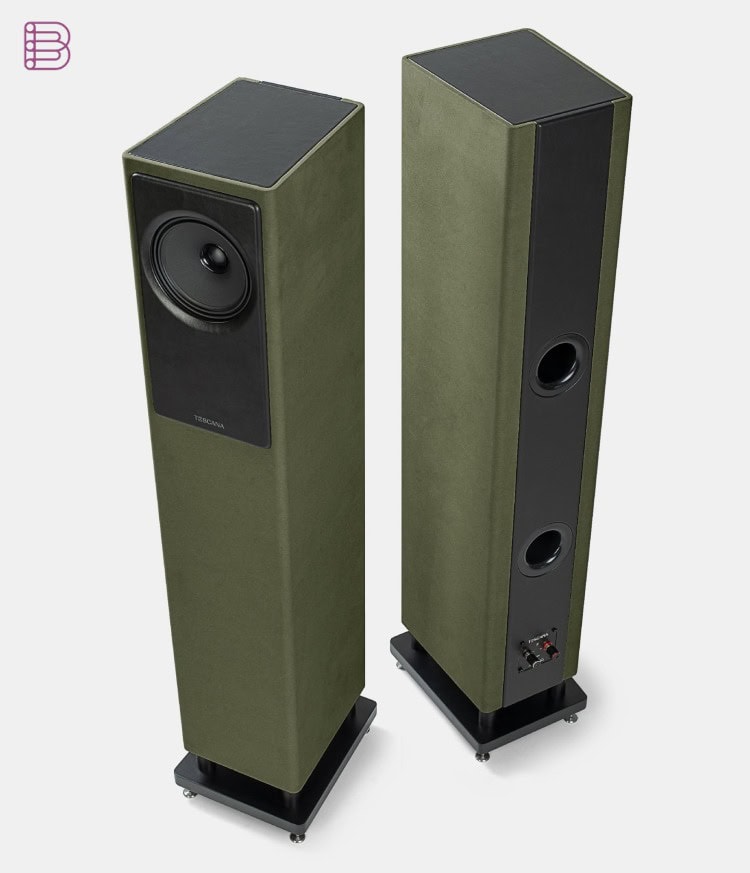
The same principles show up differently depending on how many drivers a speaker uses. The Raidho TD1.2 Signature, a two-way standmount, recently had its crossover revised using lessons from Raidho’s flagship TD3.10 project, refining how its planar-magnetic tweeter hands over to its tantalum-diamond bass/midrange driver without changing the speaker’s overall character. Toscana by Rosso Fiorentino takes a different two-and-a-half-way approach: its coaxial tweeter-and-midrange driver crosses over at 1.7kHz in the standmount models, while the floorstanding Toscana F adds a second, down-firing woofer that only joins in below 2.0kHz, extending bass without disturbing the coaxial driver’s single-point dispersion higher up.
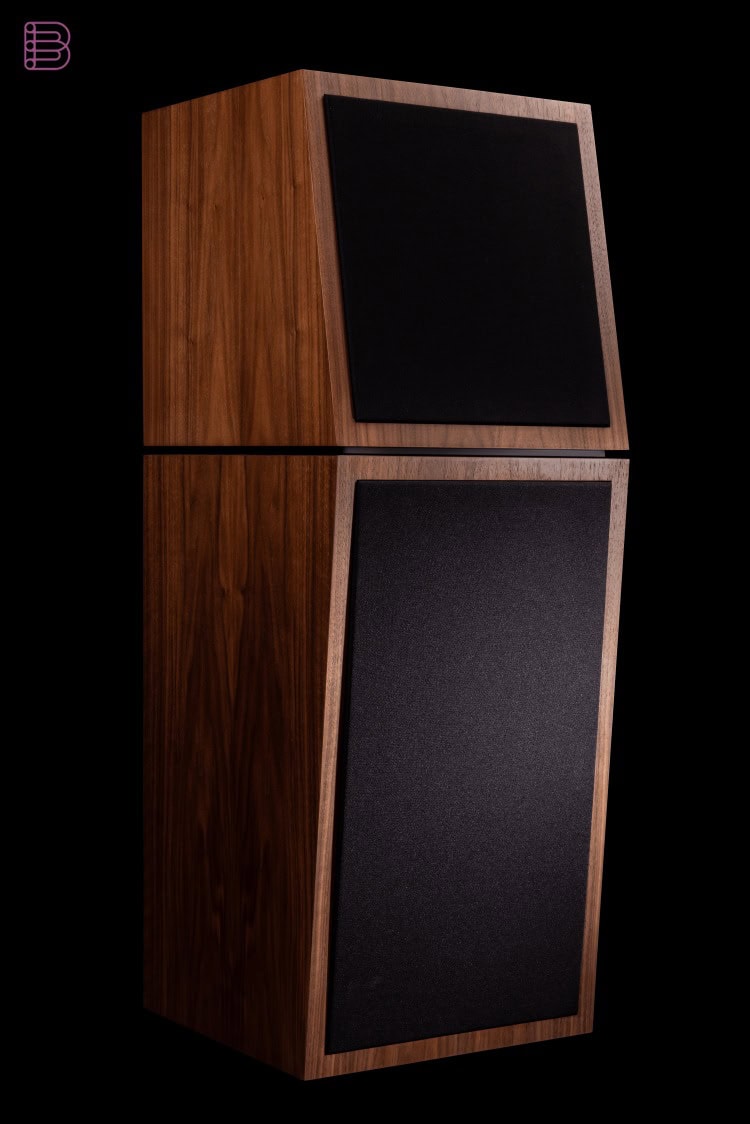
A three-way design adds a second crossover point entirely. French manufacturer Davis Acoustics builds its Renoir Évolution around an aramid-fibre tweeter, a 16cm Kevlar midrange and a 31cm cellulose woofer, crossing over at 250Hz and 3,500Hz. Two crossover points mean two handovers to get right instead of one, which is part of why three-way floorstanders tend to cost more than comparable two-way standmounts: there is simply more filter design, and more driver matching, to work through.
What This Means When You’re Listening
None of this shows up directly in a listening session, which is exactly why it is worth understanding. Two speakers with near-identical driver complements can sound meaningfully different because of how their crossovers are designed, not because of the drivers alone: a cleanly executed crossover keeps the tweeter and woofer sounding like one coherent voice through the handover region, while a poorly matched one can leave an audible seam, a small dip or bump right where one driver takes over from the next. A crossover frequency on a spec sheet is a useful clue, but it is only a label for a trade-off between isolation and phase that a designer has already made. For a buyer comparing speakers, that is a good reason to ask not just where a speaker crosses over, but how, and why the designer chose that particular point. Read more about how Davis Acoustics applies this on the Renoir Évolution product page.