

Every dynamic headphone driver relies on the same basic idea: a thin diaphragm, pushed and pulled by a voice coil sitting in a magnetic field, moves air to create sound. The engineering challenge behind that simple description is what separates a budget earbud from a flagship headphone, and it comes down largely to headphone diaphragm materials. A diaphragm needs to be stiff enough to move as a single, rigid piston across the audible range, light enough to start and stop almost instantly, and well damped enough that it doesn’t ring or resonate once the signal has passed. No material gets all three for free, and the sixty-year history of headphone engineering is really a history of chasing that trade-off.
The Mylar baseline: why plastic film still works
Most headphones, including many very good ones, still use a diaphragm made from PET film, commonly known by the trade name Mylar. It is cheap, easy to manufacture into precise domes at scale, and light enough to react quickly to a voice coil’s movements. Its weakness is stiffness: PET film flexes rather than moving as a perfect piston, particularly at higher frequencies, which is why engineers add ribbing patterns, vapour-deposited metal coatings, or multi-layer constructions to stiffen it without adding much mass. Mylar’s real achievement is that, done well, it still forms the backbone of countless well-regarded headphones and earphones, from mass-market models to respected mid-range hi-fi designs.
Chasing stiffness: beryllium, titanium and ceramic coatings
To push past Mylar’s limits, manufacturers turn to stiffer, often metallic, diaphragm materials. Beryllium became something of an audiophile buzzword for good reason: it is far stiffer than aluminium or titanium for a similar weight, letting a driver behave as a rigid piston well beyond the range where cheaper diaphragms start to flex and distort. Titanium and ceramic-coated diaphragms occupy a similar space, trading some of beryllium’s stiffness-to-weight advantage for lower cost and easier handling, since raw beryllium dust is toxic and must be processed under strict controls. Audio-Technica’s flagship ATH-L5000, which uses a diamond-like carbon coated diaphragm, sits at the boundary between this metal-and-ceramic generation and the fully synthetic diaphragms discussed below.
Diamond-like carbon and the rise of CVD diamond
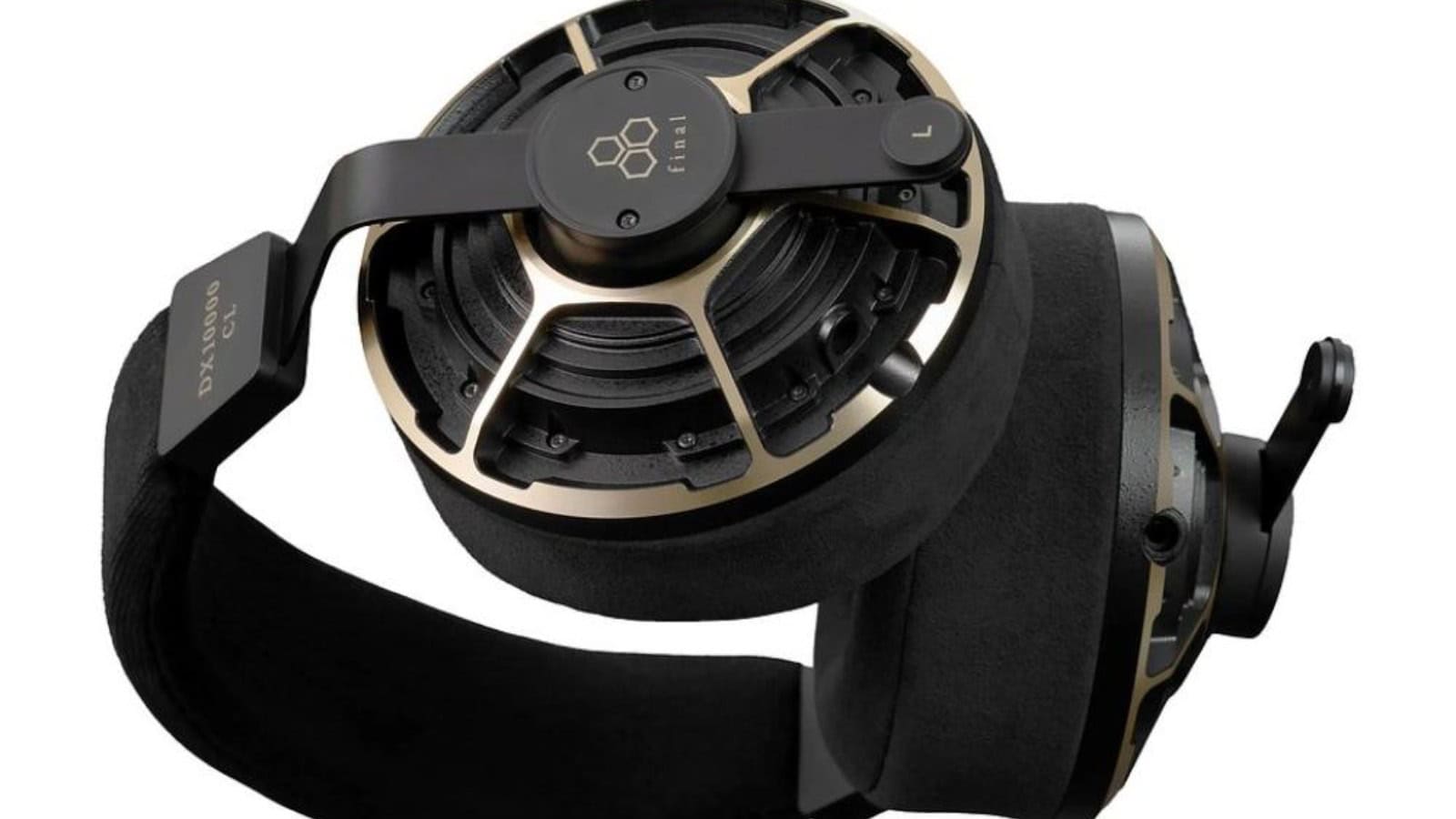
The newest frontier is carbon in its various crystalline forms. Diamond-like carbon (DLC) coatings apply an extremely hard, amorphous carbon layer over a lighter substrate, combining high stiffness with relatively low mass and has featured in high-end designs for over a decade. The more radical step is chemical vapour deposition (CVD), which grows an actual polycrystalline diamond diaphragm, atom by atom, rather than coating an existing surface. Diamond is the stiffest natural material available, giving a diaphragm that resists breakup modes at frequencies far beyond the audible range, in principle allowing near-piston behaviour across the entire spectrum. Final’s newly announced DX10000 CL headphones make this the centrepiece of their design: a 40mm dynamic driver built around a true CVD diamond diaphragm, paired with a 12-point through-bolt construction intended to control resonance in the housing around it. Only 150 units of the Collector’s Edition, housed in a paulownia wood case, will be made, alongside a standard edition, with pre-orders having opened on 9 July 2026 at €8.999 and €8.499 respectively.
What this means for sound, and for your wallet
None of this guarantees that a stiffer, more exotic diaphragm automatically sounds better: cabinet design, damping, magnet strength and tuning all still matter enormously, and a well-executed Mylar driver can outperform a poorly tuned exotic one. What premium diaphragm materials do reliably deliver is headroom: less breakup distortion at the frequency extremes, faster transient response, and more consistent behaviour at higher volumes. That headroom carries a cost, both in raw material and in the specialised manufacturing needed to work with beryllium safely or grow diamond diaphragms at all, which is why headphones built around these materials sit at the top of manufacturers’ ranges and price lists.
Where diaphragm technology goes next
Diamond diaphragms are unlikely to trickle down to affordable headphones any time soon, given the cost of CVD manufacturing, but the pattern of previous decades suggests today’s flagship material eventually becomes tomorrow’s upper-mid-range feature, much as beryllium and DLC coatings have gradually spread beyond the most expensive designs. For now, a true diamond diaphragm remains one of the clearest signals that a manufacturer is building a genuine statement product rather than a marketing exercise. We will take a closer look at what that means in practice later this week, with a First Look at the Final DX10000 CL itself.
Key takeaways
- Mylar (PET film): light and affordable, but flexes at higher frequencies without added stiffening
- Beryllium: excellent stiffness-to-weight ratio; costly and hazardous to process
- Titanium / ceramic coatings: a more affordable middle ground with similar goals
- Diamond-like carbon (DLC): hard carbon coating over a lighter substrate
- CVD true diamond: a fully grown diamond diaphragm, currently the stiffest option available, as used in the Final DX10000 CL
Frequently asked questions
Why does a headphone diaphragm need to be stiff, light and well damped at the same time?
Every dynamic driver uses a thin diaphragm moved by a voice coil sitting in a magnetic field. It has to be stiff enough to move as a single rigid piston across the audible range, light enough to start and stop almost instantly, and well damped enough that it does not ring once the signal has passed. No material delivers all three for free, which is why headphone engineering has always come down to that trade-off.
What is the difference between beryllium and titanium or ceramic-coated diaphragms?
Beryllium is far stiffer than aluminium or titanium at a similar weight, letting a driver behave as a rigid piston well beyond the point where cheaper diaphragms start to flex and distort. Titanium and ceramic-coated diaphragms aim at the same goal but trade some of beryllium’s stiffness-to-weight advantage for lower cost and easier handling — raw beryllium dust is toxic and must be processed under strict controls.
What is the difference between a diamond-like carbon coating and a true CVD diamond diaphragm?
A DLC coating applies an extremely hard, amorphous carbon layer over a lighter substrate, combining high stiffness with relatively low mass, and has featured in high-end designs for over a decade. Chemical vapour deposition goes further: it grows an actual polycrystalline diamond diaphragm atom by atom instead of coating an existing surface. Diamond is the stiffest natural material available, which in principle allows near-piston behaviour across the entire spectrum.
Does an exotic diaphragm material automatically sound better than Mylar?
No. Cabinet design, damping, magnet strength and tuning all still matter enormously, and a well-executed Mylar driver can outperform a poorly tuned exotic one. What premium diaphragm materials do reliably deliver is headroom: less breakup distortion at the frequency extremes, faster transient response and more consistent behaviour at higher volumes.
Which headphone uses a true CVD diamond diaphragm?
Final’s DX10000 CL, built around a 40mm dynamic driver with a true CVD diamond diaphragm and a 12-point through-bolt construction intended to control resonance in the housing. Only 150 units of the Collector’s Edition, in a paulownia wood case, will be made alongside a standard edition; pre-orders opened on 9 July 2026 at €8.999 and €8.499 respectively.