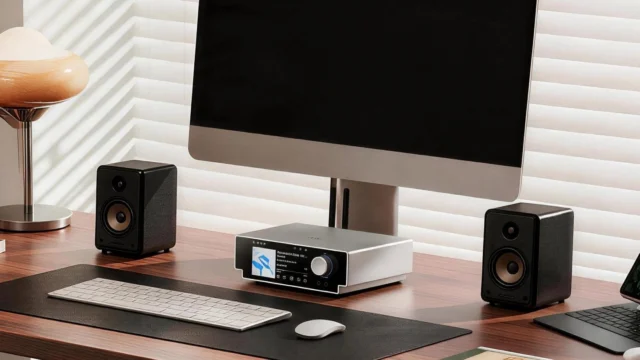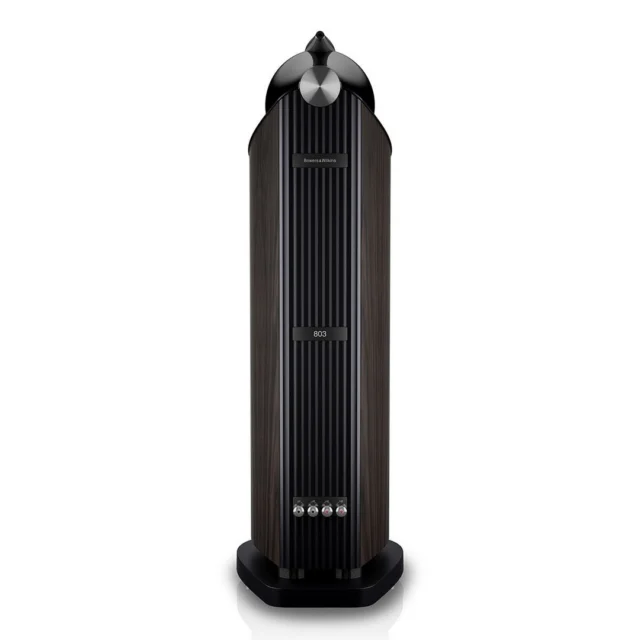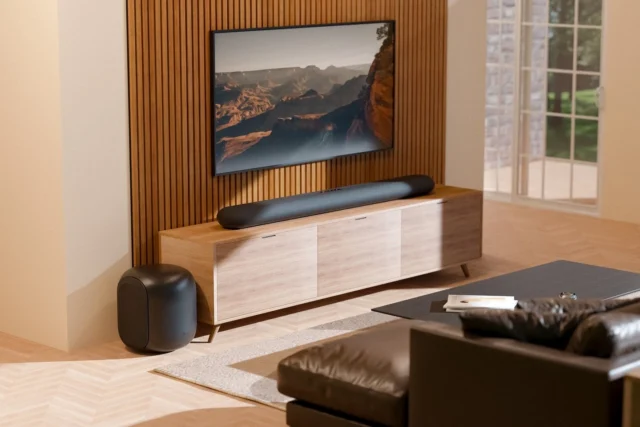


A RoomPerfect measurement is not a quick sweep-and-done affair, and that is by design rather than by accident. The RoomPerfect measurement signal itself, developed specifically for this system and covered by its own patents, is deliberately longer than a conventional test sweep — and that extra time is what makes the resulting correction more reliable.

Why the RoomPerfect measurement signal is not a short sweep
Most room correction systems measure with a short sweep: a quick pass through the frequency range, in and out in a few seconds. RoomPerfect instead uses a purpose-built signal — a comparatively long low-frequency measurement passage followed by a comparatively long high-frequency one. The reasoning, according to Roland Hoffmann, Director Product Marketing at Steinway Lyngdorf, is straightforward: a short sweep does not spend enough time in the room’s more troublesome frequency ranges to properly excite the acoustic problems that actually need correcting.
A longer, dedicated signal gives the room’s resonances, reflections and standing waves time to fully develop in the measurement, rather than being captured only partially.
A useful side effect: resistance to disturbance
The longer RoomPerfect measurement signal brings a second, less obvious benefit. Because the signal runs for an extended period rather than a fleeting few seconds, a brief disturbance — a door opening, someone speaking, an object dropped nearby — does not dominate the measurement the way it would in a short sweep.
A short, few-second measurement can be thrown off by exactly that kind of interruption, since the disturbance makes up a large proportion of the total signal captured. Spread across a longer signal, the same brief disturbance becomes a much smaller proportion of the overall measurement, and is far less likely to end up baked into the resulting correction curve.
In practical terms, that means RoomPerfect’s measurement process is both more thorough and more forgiving of the ordinary background noise of a household during setup — a genuine trade-off in the system’s favour, not just a side note.
Why it adds up with more speakers
Because each speaker in the system is measured with this same longer signal, the total measurement time scales with the number of speakers being set up.
A system with five speakers takes longer to measure than a stereo pair; a system with seven or nine speakers takes longer still. That is simply the cost of getting higher-quality data from every channel — and it is a one-time cost. Once the measurement and correction process is complete for a given speaker layout, it does not need to be repeated unless the speakers or the room itself change. That same multi-position approach is also what allows RoomPerfect to map an entire room rather than a single spot — see our Tech Talk on how RoomPerfect maps a room in 3D for how the two connect.
Frequently asked questions
Why does RoomPerfect take longer than other room correction systems?
RoomPerfect uses a purpose-built, longer measurement signal rather than a short sweep, specifically to properly excite the room’s acoustic problems and to reduce sensitivity to brief background disturbances during measurement. Both of those design choices add time compared with a quick sweep-based system.
Does a longer measurement signal actually improve accuracy?
Yes, in two ways: it gives room resonances and reflections enough time to be fully captured, and it dilutes the effect of any brief interruption during the measurement, so the resulting correction curve is less likely to be skewed by a one-off disturbance.
Do I need to redo the measurement if a door slams during setup?
Not necessarily. Because the RoomPerfect measurement signal runs for an extended period, a brief disturbance like a door closing or a dropped object typically makes up too small a proportion of the total measurement to significantly affect the result.
Does measurement time increase with more speakers or subwoofers?
Yes. Each speaker channel is measured individually with the same thorough signal, so a 7.1 or 9.1 system takes longer to measure than a stereo pair. It only needs to be done once per speaker layout, however, not repeated for every listening session.