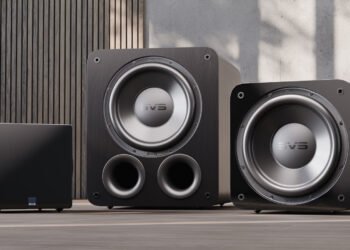


Subwoofers play a crucial role in both stereo systems and home cinema setups, enhancing the listening experience by reproducing low-frequency sound with power and precision. In home cinema, that’s especially clear thanks to the dedicated LFE (Low-Frequency Effects) channel — the “.1” in 5.1 or 7.1 — carrying extra bass information mixed in by sound studios specifically to deliver impact in explosions, deep rumbles and cinematic effects. To find out why subwoofers matter just as much in plain stereo listening, we sat down with Roland Hoffmann, Director of Product Marketing at Steinway Lyngdorf, for an Academy session on the magic of a subwoofer.
Listen to the full conversation below, or read on for the highlights.
Subwoofers Aren’t Just for Home Cinema
Subwoofers often carry the reputation of being a cinema-only accessory — something you need because of that dedicated LFE channel, without which you’d lose an entire channel of mixed-in bass information. Stereo music doesn’t work that way: there’s no separate “.1” bass channel in a music recording. That makes it easy to assume stereo listening doesn’t need a subwoofer at all. It isn’t true.
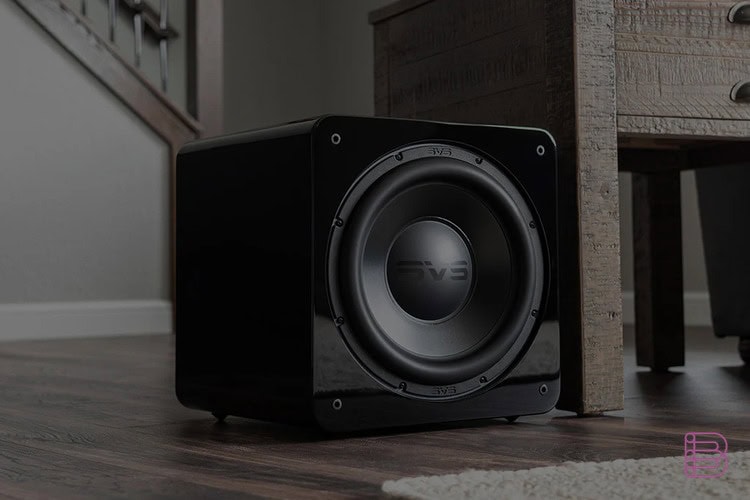
Why Stereo Music Reaches Just as Low as Cinema’s LFE Channel
A double bass, an electric bass, a drum kit, even a piano — let alone dance music, club music or a full orchestra — can reach down to 50, 40 or even 30Hz. Only instruments like a church organ go meaningfully lower. That’s essentially the same frequency territory where cinema’s LFE content lives. In other words, deep bass isn’t a cinema-only phenomenon; it’s a completely normal part of music’s fundamentals. A subwoofer in a stereo system is best thought of as an extension of the left and right speakers, not a home-cinema add-on.
The Fine Print Behind a Speaker’s Bass Spec Sheet
Plenty of floor-standing speakers list bass extension down to 40Hz, or 35Hz on a good one. Read the spec sheet more closely, though, and a few things become clear. First, that number only tells you how low the speaker can technically reach — not how well it performs there, or how much it distorts. It sounds nowhere near as clean at 35Hz as it does at 60 or 70Hz; it just manages to reach that number in terms of raw output level. Second, that figure is usually measured at -3dB or -6dB — meaning the speaker is already well into its roll-off zone at that point, quietly playing that frequency noticeably softer than it plays 40Hz.
The Car-at-Top-Speed Analogy
It’s a bit like a car rated for 200 km/h: technically capable, but drive it at 210 and you’ll feel that it isn’t stable, and hear that the engine is straining. The car can do it on paper — it just doesn’t do it well. The same logic applies to a speaker’s rated bass extension: yes, it can technically reach the number, but that’s the speaker performing right at its edge, and the edge is never where a speaker sounds its best. Full-range floor-standers that genuinely reach down to 20Hz do exist, but they’re enormous, and even they experience the same -3dB/-6dB roll-off at that extreme.
What an Active Subwoofer’s Dedicated Amplifier Changes
A regular amplifier has to power an entire floor-standing speaker across its whole frequency range, from the lowest note to the highest. An active subwoofer, by contrast, comes with its own dedicated amplifier — built specifically to handle the lowest notes. Pairing the two means the main speaker’s driver and amplifier no longer have to work as hard reproducing frequencies they were never truly built to handle effortlessly.
How Much Power a Subwoofer Really Uses
A decent stereo amplifier might produce somewhere around 100 to 300 watts across the entire range. A capable active subwoofer, using modern class-D amplification, is frequently rated at 1,000 to 1,500 watts — dedicated entirely to controlling that single cone properly. Put side by side, that difference says a lot about how much energy it genuinely takes to get low frequencies under control.
Headroom Is the Real Payoff
Once the main speaker no longer has to reproduce the very lowest notes, it simply performs better across the rest of its range — one plus one becomes more than two. That’s the real “magic”: headroom. A system with real headroom sounds more effortless, stays controlled and full even when turned up, and never sounds like it’s straining at its limits. It’s less about adding more bass quantity and more about revealing bass quality — the texture of a resonating string, the specific character of a kick drum, the detail in an electronic bassline — because the main speakers are finally freed up to reproduce the finer, more nuanced notes instead of juggling the lowest and low frequencies at the same time. Since music is built from harmonics, getting those low notes right improves the entire soundstage built on top of them.
Why Two Subwoofers Beat One
A single subwoofer is usually enough in terms of raw level and headroom for most rooms. But bass, unlike cinema’s LFE, was never recorded in mono — so relying on one subwoofer effectively downmixes stereo bass content to a single mono channel, played back from one fixed spot in the room. At the very lowest frequencies that hardly matters, since human hearing can’t localise sound well around 20-30Hz. Higher up the bass range, though, localisation becomes noticeably more audible, and a subwoofer needs to match the nearest main speaker to preserve that separation — a consideration that simply doesn’t apply to a cinema LFE channel, which is mono by design anyway.
The Problem With Downmixing Stereo Bass to a Single Corner
Imagine bass content that was recorded mainly on the right channel, downmixed to mono and reproduced from a subwoofer sitting in the left corner of the room. Even without a listening test, it’s easy to see the issue: content that belongs on one side ends up reproduced from the opposite side of the room, moving the sound in exactly the wrong direction.
Small and Fast vs. Big and Powerful
Two smaller subwoofers can have a real advantage in music playback: they tend to be faster and tighter than one large unit. A big cone with a big magnet excels at moving serious low-frequency energy — ideal for cinema — but that same size and mass can make it comparatively slow. For music, that favours two woofers that are faster, tighter, and better matched to the front speakers, though it isn’t a night-and-day rule; the best subwoofers combine a large cone area with genuine speed and tightness, which is exactly why a 2.2 setup is sometimes worth considering over a single large sub.
Four Subwoofers, Two Different Philosophies
Some AV processors offer bass management for up to four subwoofers — two front, two rear. There are two competing theories behind that idea. The first simply spreads a single LFE signal across all four corners of the room, evening out bass response because the energy no longer comes from just one spot — at the cost of punch and impulse response, which is why this approach isn’t universally favoured.
How Steinway Lyngdorf’s Bass Management Keeps Left and Right Separate
The alternative — and the approach used in Steinway Lyngdorf’s own bass management — treats the front-left and front-right subwoofers as true stereo bass channels, not just LFE duplicates. Both reproduce the LFE content, but bass that belongs to the left or right channel specifically is redirected to the matching woofer, preserving the channel separation that Dolby and DTS mixes are allowed to carry down to 20Hz. There’s no reason to collapse that content to mono when it’s clearly meant for one side. The same logic extends to an optional rear-left and rear-right pair: bass content mixed onto the surround or rear channels gets redirected to the rear subwoofers specifically, rather than to a single, centrally placed LFE unit. The result is genuinely two-dimensional bass, not four repetitions of the same mono signal.
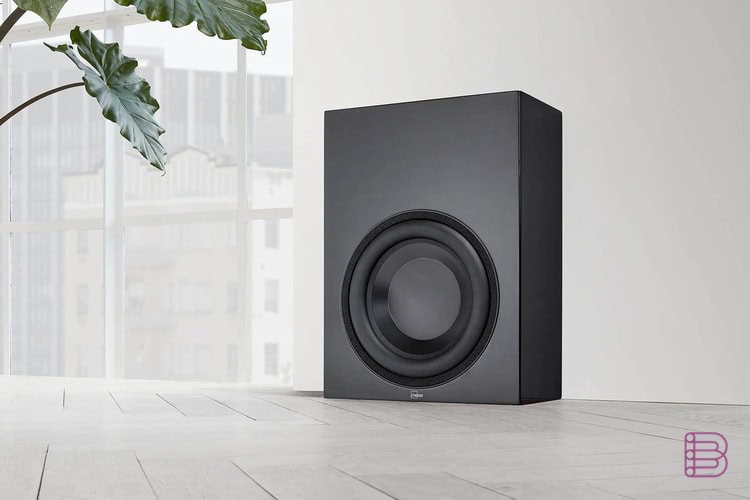
The Takeaway
Subwoofers aren’t a cinema-only convenience — stereo music reaches just as deep, and a dedicated subwoofer amplifier frees the main speakers to do what they do best. Get the size, number and bass-management approach right, and the payoff isn’t simply more bass. It’s more effortless, more textured, more genuinely three-dimensional sound.
Frequently asked questions
Do I need a subwoofer for stereo music if my main speakers already produce bass?
Yes: instruments like a double bass, electric bass, drum kit, or even a piano can reach down to 50, 40, or even 30Hz — essentially the same frequency territory as cinema’s LFE channel. A subwoofer in a stereo system is best thought of as an extension of the left and right speakers, not a home-cinema-only add-on.
Why is the bass extension listed on a speaker’s spec sheet often misleading?
That figure only shows how low a speaker can technically reach, usually measured at -3dB or -6dB — the point where it’s already playing noticeably softer than at higher frequencies. It’s a bit like a car rated for 200 km/h: technically capable, but not the speed at which it performs best, or feels stable.
What changes when a subwoofer has its own dedicated amplifier?
A regular amplifier has to power an entire speaker across its whole frequency range, while an active subwoofer comes with its own amplifier built specifically for the lowest notes. A typical stereo amplifier produces roughly 100 to 300 watts across its whole range; a capable active subwoofer is often rated at 1,000 to 1,500 watts, dedicated entirely to controlling that one cone — which frees up the main speakers and delivers real headroom.
Is one subwoofer enough, or do I need two for music?
In terms of raw level and headroom, one subwoofer is usually enough for most rooms. The case for two is different: unlike cinema’s LFE channel, bass in music was never recorded in mono. A single subwoofer downmixes stereo bass content to one fixed spot in the room — barely noticeable at the very lowest frequencies, but higher in the bass range, localisation becomes audible, and content that belongs on one side can end up playing from the opposite corner. Two subwoofers, each paired with the nearest main speaker, preserve that separation.
What does a subwoofer actually add, beyond simply more bass?
Headroom — the real “magic” of adding a subwoofer. Once the main speaker no longer has to reproduce the very lowest notes, it performs better across its entire remaining range: one plus one becomes more than two. A system with real headroom sounds more effortless and stays controlled even when turned up. It’s less about the quantity of bass and more about its quality — the texture of a resonating string, the character of a kick drum — and since music is built from harmonics, getting the low notes right improves the whole soundstage built on top of them.
What is the difference between the two philosophies behind four-subwoofer bass management?
One approach simply spreads a single LFE signal across all four corners of the room, evening out bass response at the cost of punch and impulse response. Steinway Lyngdorf’s own approach instead treats the front-left and front-right subwoofers as true stereo bass channels: both reproduce the LFE content, but bass belonging specifically to the left or right channel is redirected to the matching subwoofer, preserving the channel separation that Dolby and DTS mixes carry down to 20Hz. The same logic optionally extends to a rear-left and rear-right pair.