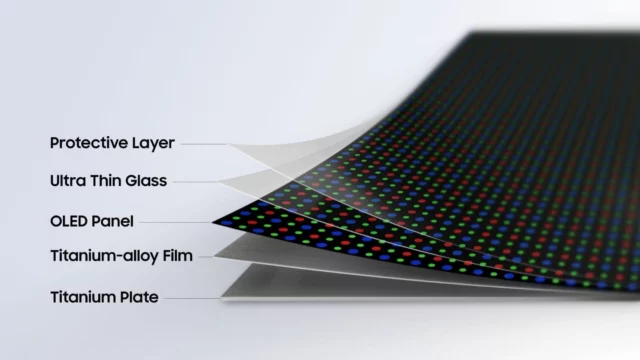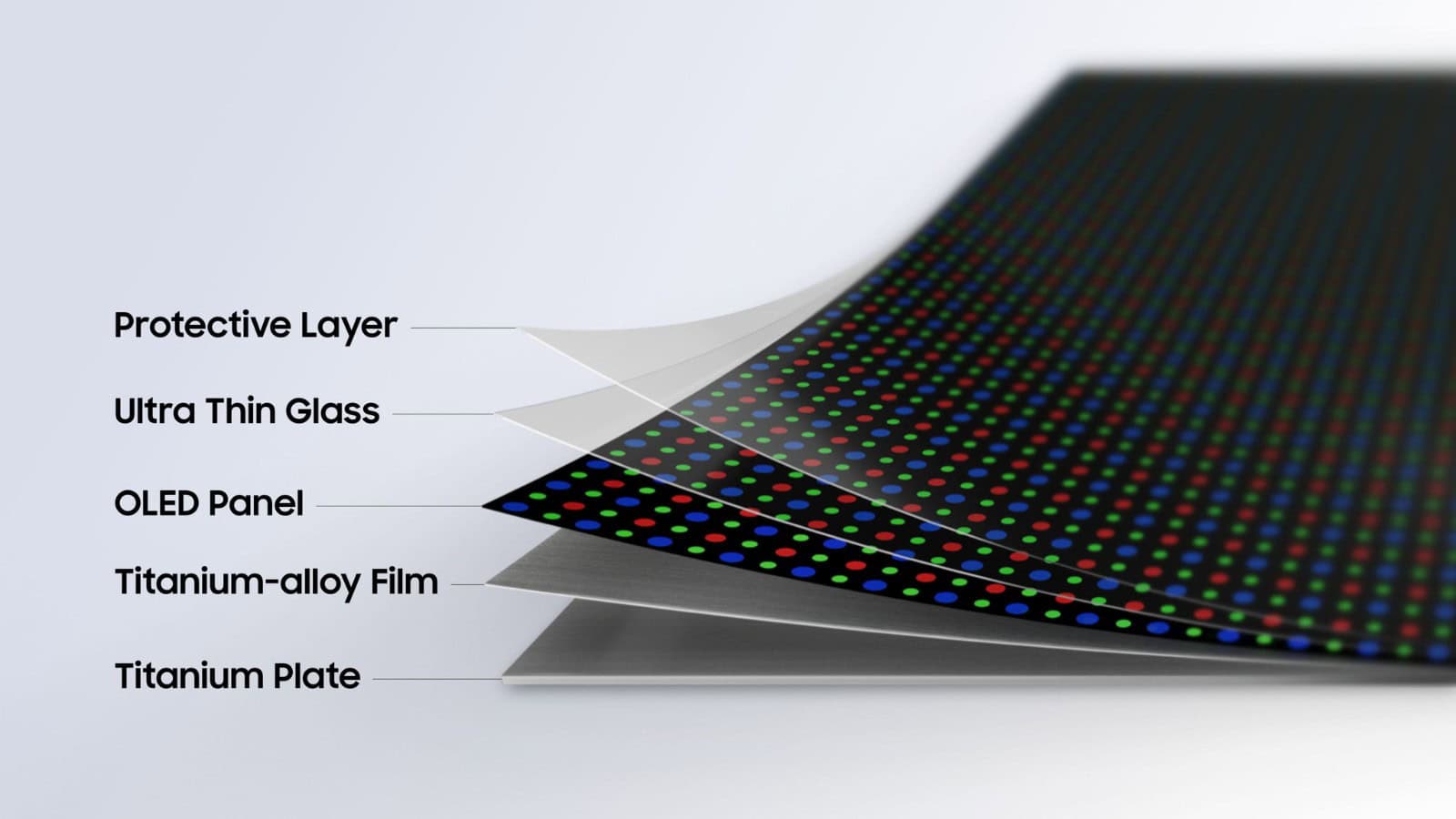
Samsung Electronics has introduced Samsung Flex Titanium, a new foldable display construction it says will debut in the next generation of Samsung Galaxy Foldables. The technology builds on seven generations of foldable engineering and combines two titanium-based components, a titanium-alloy film and a titanium plate, to make screens thinner, more rigid and less prone to showing a visible crease.




Why Samsung turned to titanium
Samsung says the Samsung Flex Titanium construction had to solve three problems at once: a display tough enough to absorb daily knocks, flexible enough to survive tens of thousands of folds, and thin enough to keep the device slim. Titanium, already used in satellite antennas and Mars rover wheels for its strength-to-weight ratio, turned out to be the material that could do all three when engineered into an ultra-thin foldable stack.
A titanium-alloy film and plate, working together
Inside the Samsung Flex Titanium panel, a titanium-alloy film sits directly beneath the OLED layer, giving roughly twenty times the mechanical stiffness of the polymer film used in earlier folding screens, while a precision rolling process keeps it about a third the thickness of a human hair. Underneath, a titanium plate supports the screen, with a redesigned venting structure that Samsung says eliminates air bubbles between the display and adhesive layer for a more stable, evenly supported panel when the device is fully unfolded.
“Within the foldable segment, Samsung’s strength really lies in our ability to translate user needs into technology that makes a real difference in daily use,” said Sunghoon Moon, EVP and Senior Executive of Samsung Electronics’ Mobile R&D Office – H/W. “For the next generation of Samsung Galaxy Foldables, we are drawing on all of our accumulated expertise to integrate display innovations that elevate the user experience, with a focus on exceptional viewing enjoyment.”
Higher resolution and a less visible crease
Alongside the mechanical changes, Samsung Flex Titanium pairs a higher-resolution panel architecture with new organic materials that the company says lower power draw and improve overall efficiency. Kyung-Jin Yoo, EVP and Head of Samsung Display’s Mobile Display Product Development Team, added that a specially engineered micro-pattern in the fold area of the titanium plate was key to combining flexibility with strength, and that the resulting display architecture should strengthen the competitive position of the next Galaxy Foldables lineup.
Samsung’s foldable line, including the recently launched Galaxy Z Fold7, Z Flip7 and Watch8 series, has steadily pushed toward thinner hinges and less visible creases with each generation, and Samsung Flex Titanium is positioned as the next step in that seven-generation development path. More technical detail and the first devices to use the new screen construction are expected to be announced at a forthcoming Galaxy Unpacked event, according to Samsung.
Pricing and availability
Samsung has not announced pricing, as Flex Titanium is a display technology rather than a standalone product. It will debut inside the next generation of Samsung Galaxy Foldables, with full device pricing and availability expected to follow at Samsung’s official Galaxy Unpacked announcement.
Key specifications
- Titanium-alloy film beneath the OLED panel: roughly 20x the mechanical stiffness of prior polymer film
- Ultra-thin rolling process: film thickness about one-third that of a human hair
- Titanium support plate with redesigned venting to eliminate air bubbles under the display
- Higher-resolution panel architecture with new, more power-efficient organic materials
- Builds on seven generations of Samsung Galaxy Foldables engineering
- Debuts in the next generation of Samsung Galaxy Foldables, details at Galaxy Unpacked