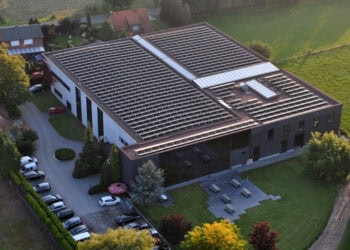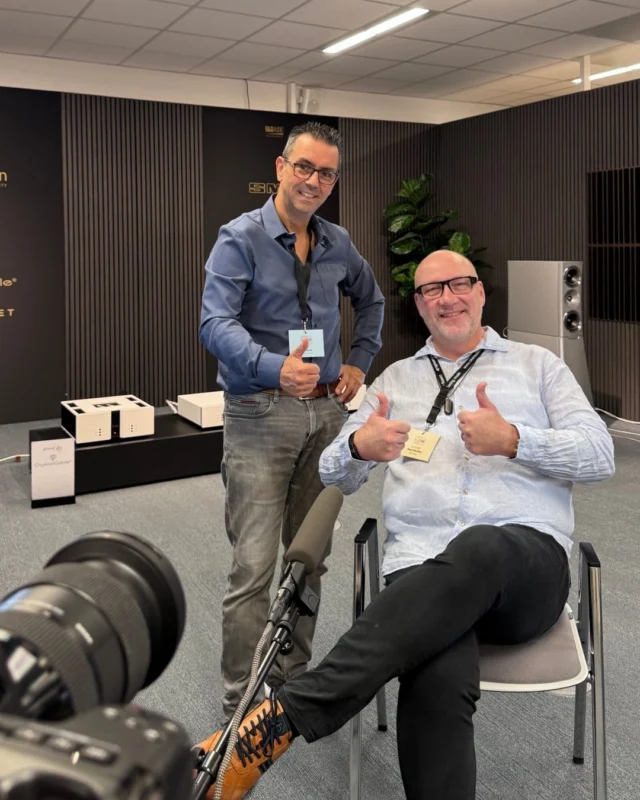


This is the history of Auro-3D: Best of High End visited the Galaxy Studios in Mol, Belgium, home of Auro Technologies. We interviewed CEO Wilfried Van Baelen and came away with this video report, with a few extra shots from the different booths at Galaxy Studios to add some flavor. Enjoy! It also gave us a good look at how Auro Technologies works with partners across cinema, home entertainment and beyond to bring the format to a wider audience.
History of Auro-3D
The Auro-3D concept and format were developed in 2005 by Wilfried Van Baelen, CEO and founder of Galaxy Studios and Auro Technologies. The format was officially introduced to the public at the AES Convention in 2006 in Paris and San Francisco, during the workshop “Surround with height channels”.
Auro-3D adds a third dimension to sound. Where traditional surround sound spreads channels around the listener at ear level, Auro-3D adds one or two extra layers — height and top — mounted above the existing surround layer. That extra height dimension is the natural next step after mono, stereo and surround: each earlier step in audio history arrived roughly fifty to sixty years apart, and Auro-3D is positioned as the next one in that same line.
How Auro-3D Works
Thanks to its height channel configuration, Auro-3D reproduces acoustic reflections the way they occur naturally, with sound arriving from around the listener as well as from above. That combination creates a true “sound in 3D”, immersing the listener in a hemisphere of sound rather than a flat ring of speakers.
The format delivers uncompressed audio and keeps a high level of flexibility: the height information is mixed directly into a standard 5.1 PCM stream, so any device with an Auro-Codec decoder can play back the original Auro-3D mix on a compatible speaker system, while older equipment can still fall back to a standard 5.1 signal.
Where Auro-3D Is Used
Auro-3D was built as an end-to-end solution, and Auro Technologies has pushed the format well beyond cinema alone. At the time of our visit, the company already counted several hundred equipped theatres, well over a hundred Auro-3D mixed movies, and a growing catalogue of music titles mixed in the format, alongside a proprietary Auromatic algorithm that upmixes existing stereo and surround content to Auro-3D on the fly.
Beyond the cinema and the living room, Auro Technologies has also pursued licensing in cars, gaming and broadcast, anywhere audio plays a role. Depending on the size of the room, one or two extra height layers can be added above the existing surround setup, so the format scales from a compact home theatre to a large auditorium.
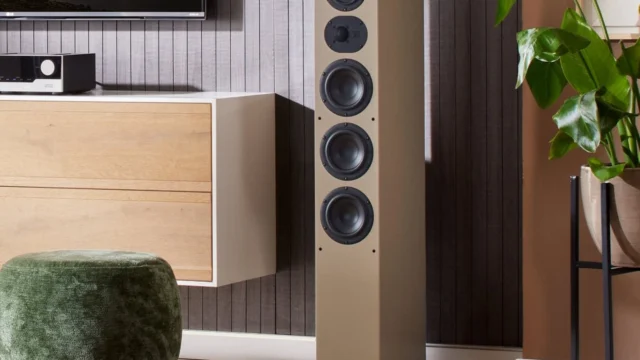
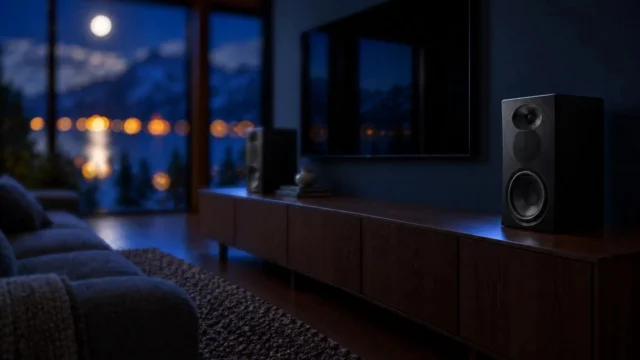
In a living room, that same principle plays out at a smaller scale: an Auro-3D-enabled receiver adds a pair of height speakers above the main front or surround pair, so movies, games and Auro-3D-mixed music all gain that same sense of space without a full ceiling speaker array.
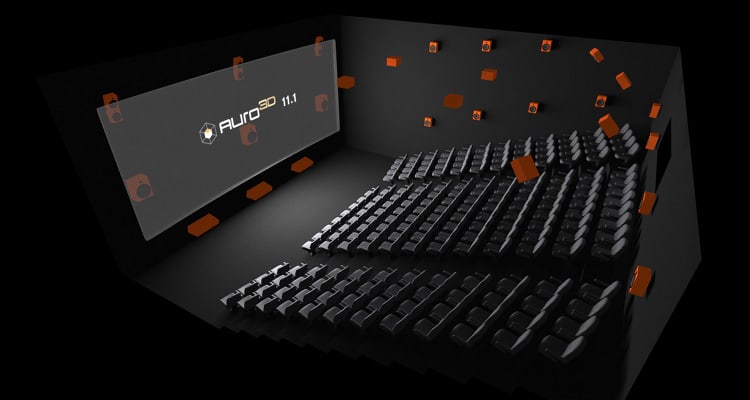
You want more technical information on the Auro-3D format? No problem: the video below explains the basics.
Visit the Auro Technologies website.
Frequently asked questions
What is Auro-3D?
Auro-3D is a three-dimensional audio format developed in 2005 by Wilfried Van Baelen, founder of Galaxy Studios and Auro Technologies. It adds a height dimension to conventional surround sound, so sound reaches the listener from above as well as from around.
Who invented Auro-3D?
Auro-3D was developed by Wilfried Van Baelen, CEO and founder of Auro Technologies and Galaxy Studios in Mol, Belgium. The format was officially introduced at the AES Convention in 2006 in Paris and San Francisco.
How can you experience Auro-3D at home?
At home, Auro-3D adds one or two extra height layers above an existing 5.1 or 7.1 surround setup. Because the height information is mixed into a standard PCM stream, any device with an Auro-Codec decoder can decode the original mix on a compatible speaker system.