For years, my reference audio system rested on a fairly basic five-shelf audio rack that did its job without drawing much attention to itself. It was functional, reasonably sturdy, and capable of supporting a growing collection of components that included everything from streamers and DACs to turntables and power supplies. But like many audiophiles, I eventually began to wonder whether my rack was limiting the overall performance of the system.




Earlier this year, I found myself revisiting that question after reading coverage of a Hi-Fi show in Montreal, where Madera Works‘ beautifully handcrafted Stack Rack caught my attention. Amid a sea of expensive electronics and loud design statements, the Madera Works Stack Rack immediately stood out because it looked purposeful, elegant, and refreshingly honest. It was not trying to impress through excess. Instead, it reflected thoughtful engineering, superb craftsmanship, and a clear understanding of what audiophiles actually need.
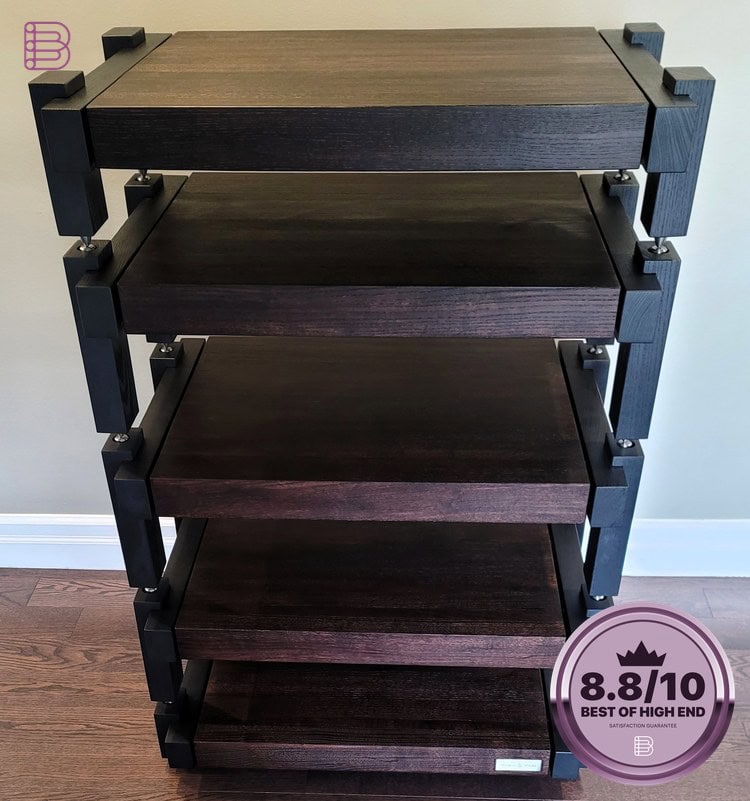
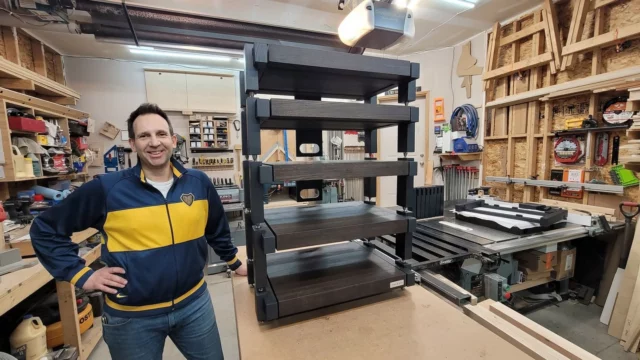
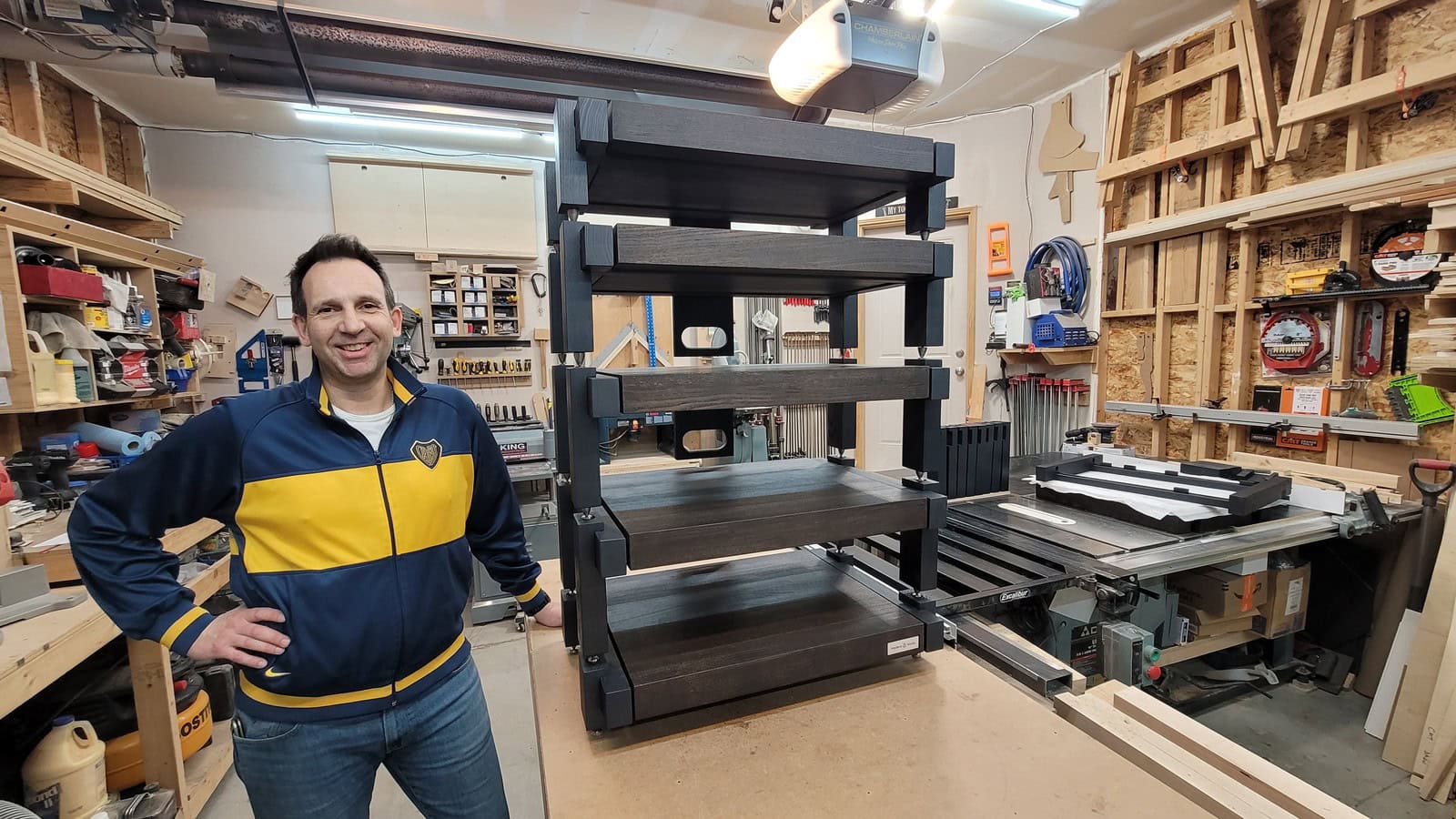
Built by Santiago Iglesias out of his Ontario workshop, his Stack Rack combines solid hardwood construction with a highly modular design and a clever vibration isolation system that can be tuned to the weight and balance of each individual component. After spending several weeks with the five-shelf version finished in stunning white ash with a chocolate ash finish, I came away deeply impressed by both its aesthetic presence and its contribution to the overall listening experience.
Why the Madera Works Stack Rack Matters
The importance of a dedicated audio rack is often underestimated. Many enthusiasts will spend thousands of dollars on electronics and cables while placing those same components on generic furniture or shelving units never intended for sensitive audio equipment. Yet vibration control plays a critical role in high-performance audio.
Every component in a Hi-Fi system is affected by micro-vibrations. Transformers vibrate. Motors vibrate. Speakers feed energy back into the room and into the floor. Even digital components and DACs can be negatively impacted by resonance and electrical interference. Turntables, tube amplifiers, and streamers are particularly susceptible.
A properly engineered audio rack addresses these issues through mechanical isolation, resonance control, and structural rigidity. The audible benefits can include tighter bass, cleaner transient response, improved image focus, lower perceived noise floor, and a wider, more dimensional soundstage.
Beyond its acoustic benefits, a dedicated rack provides a more functional and visually cohesive home for an audio system. It improves cable management, optimizes airflow around components, and enhances the overall presentation of the listening space. The Madera Works Stack Rack strikes an impressive balance between thoughtful engineering and furniture-grade craftsmanship, making it as visually appealing as it is functional.
Design and Construction
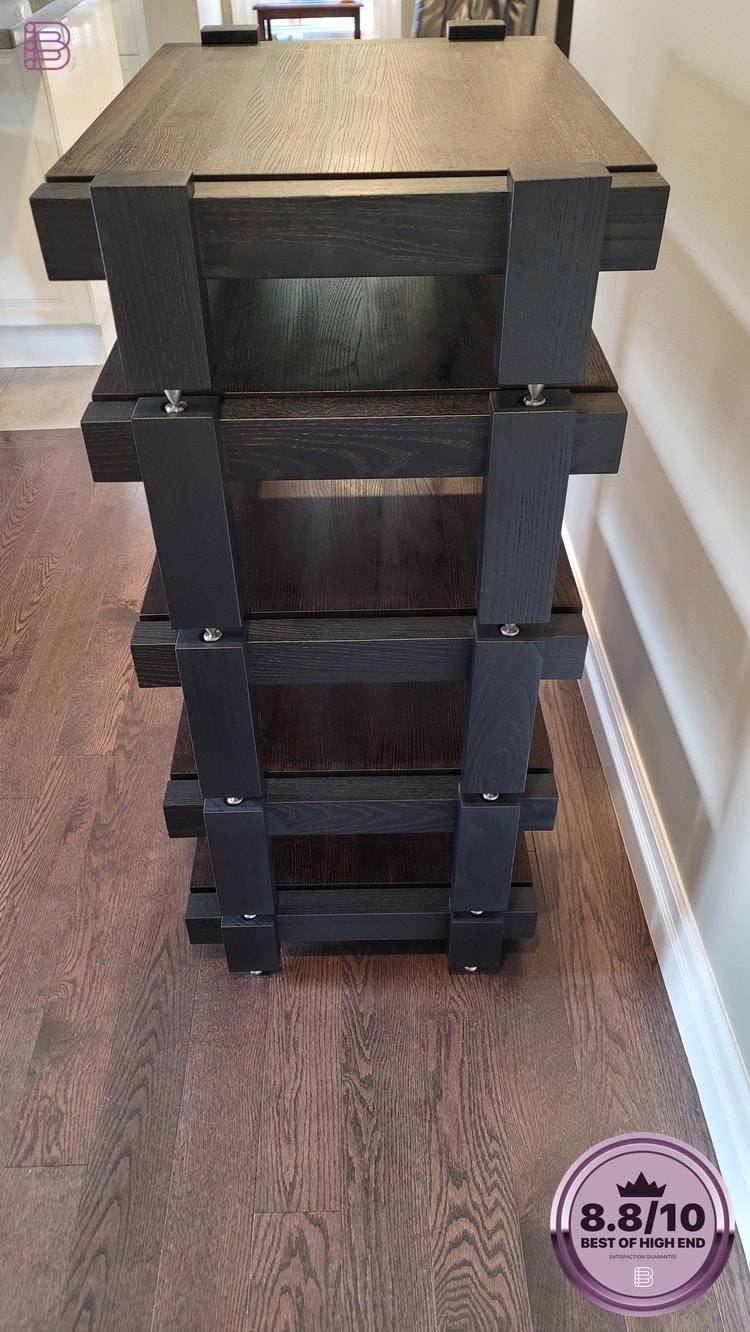
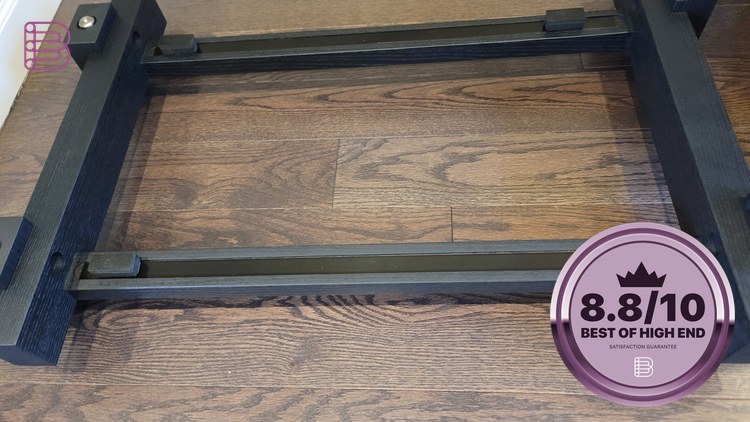
The Stack Rack is constructed from solid hardwood and is fully customizable in terms of wood selection, shelf spacing, and configuration. For my review I chose the five-shelf version crafted from white ash and finished in a rich chocolate ash stain that beautifully complemented the black and silver aesthetic of my reference components. The Stack Rack was also outfitted with the optional Cable Management System to help keep all the rear cables neatly sorted and out of sight. The total cost of this particular rack is $1,600 U.S. At this time Madera Works only offers shipping to customers in Canada and the United States.
I found the fit and finish throughout was exceptional. The thick hardwood shelves feel immensely solid and substantial, while the grain patterns and satin finish give the rack an artisanal quality rarely seen at this price point.
According to Santiago, Madera Works originally operated as a custom furniture and cabinetry shop before deciding to focus exclusively on audio furniture and acoustic treatments.
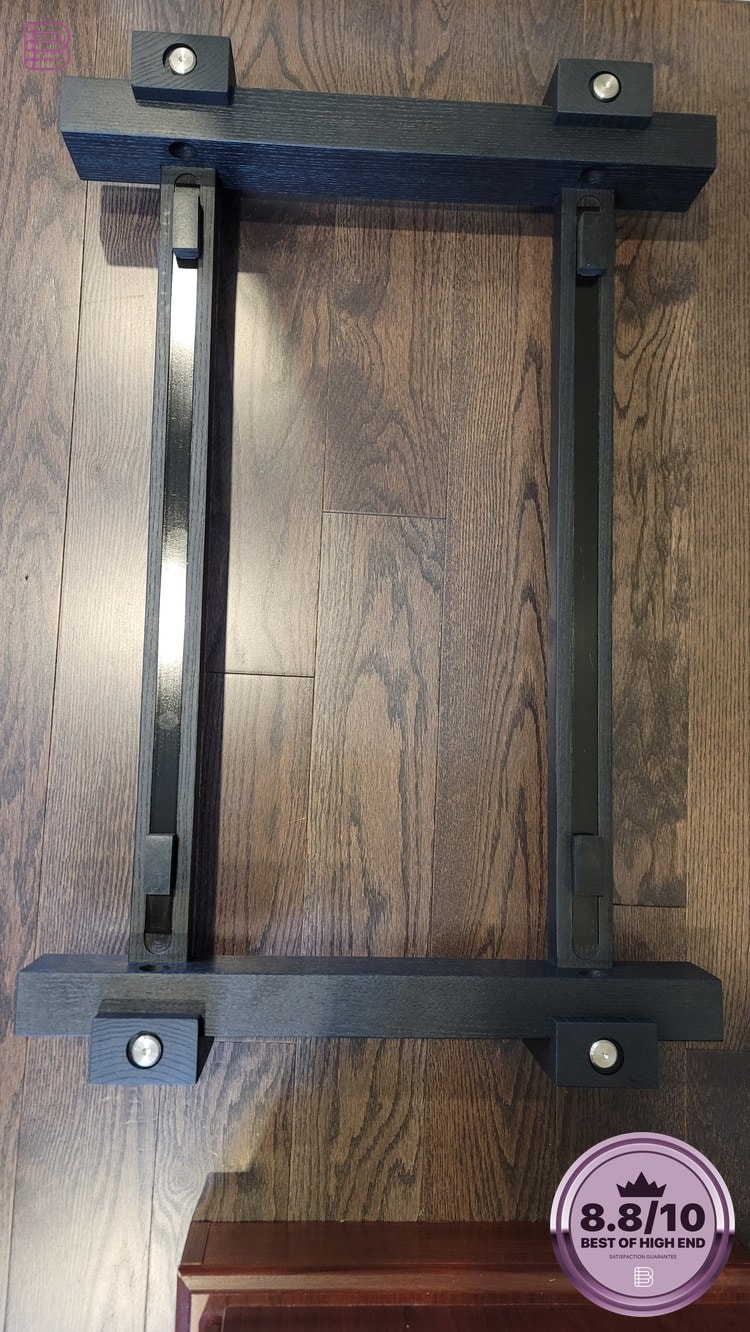
“We had been making racks and acoustic treatment for ourselves and friends,” he explained. “Over the years we refined the designs based on feedback we received from our customers. It became a natural marriage between our love of woodworking and Hi-Fi.”
What makes the Stack Rack particularly interesting is its modular architecture. Shelf spacing can be customized to accommodate virtually any component height, and additional shelves can easily be added as systems evolve. If you change amplifiers, add a streamer, or reconfigure your setup entirely, the rack adapts with you.
That flexibility is central to the Stack Rack philosophy.
“We wanted a rack that could keep up with how often a system changes,” says Santiago. “You can add shelves, change clearances, and reconfigure the setup as needed.”
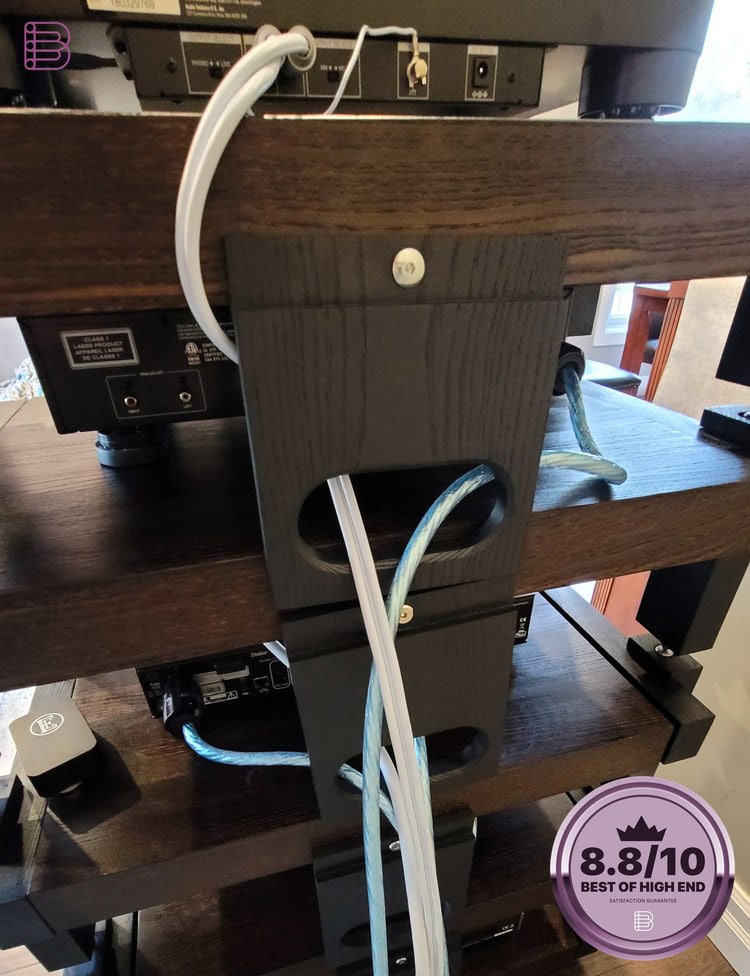
Isolation Technology
The true engineering story behind the Stack Rack lies in its custom isolation system.
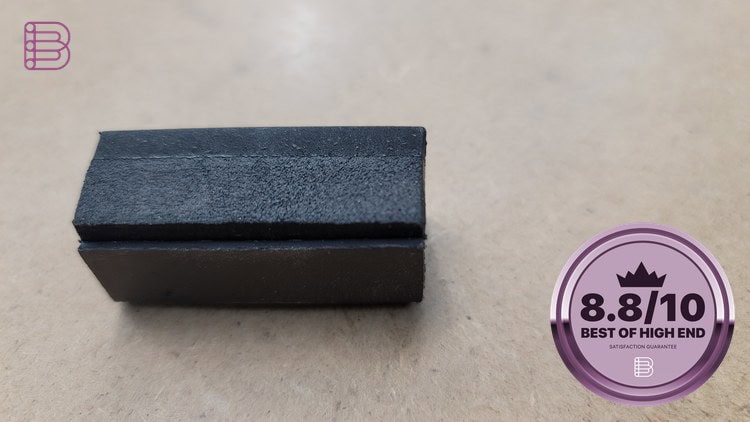
Each shelf effectively “floats” on custom composite vibration absorption pads developed by Madera Works. The pads can be added or removed depending on component weight, allowing each shelf to be tuned individually for optimal damping performance.
The concept itself is refreshingly straightforward but highly effective.
“Like a lot of suspension designs, the pads are more effective when loaded,” says Santiago. “Putting too many pads under a component lessens effectiveness, just like putting too few. Through our testing we defined recommended pad configurations for various weight ranges.”
The pads themselves are based on technologies commonly used to reduce vibration in large commercial air conditioning systems. Using a vibrometer, Madera Works measured vibration reduction under different loads and frequencies, achieving reductions in the 70 to 80 percent range.
Another clever aspect of the design is the ability to compensate for uneven weight distribution. Components with heavy transformers or rear-weighted layouts can have isolation pads strategically positioned to maximize performance.
While some manufacturers rely heavily on spikes as vibration control devices, Madera Works takes a more measured approach.
“Spiked feet act as couplers and do not materially reduce vibration,” he noted. “In our design they are primarily used to securely couple the modular sections together.”
Listening
My reference system for this review included the PS Audio StellarGold DAC and AirLens streamer feeding my Revival Audio Atalante 3 speakers powered by the Atoll IN400 EVO. Analog duties were handled by Audio-Technica’s LP7 turntable and their VM760SLC cartridge.
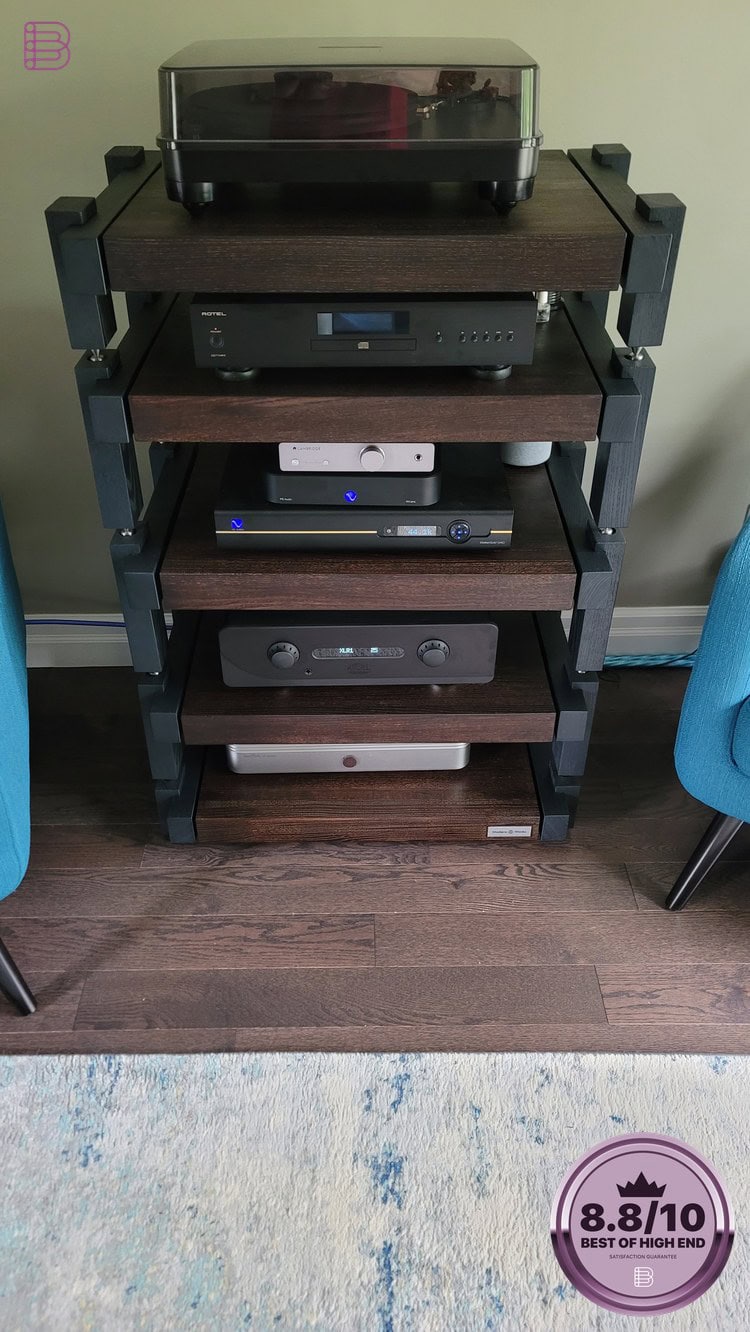
The most immediate change after moving the system onto the Stack Rack was a noticeable increase in overall focus and clarity. The presentation became slightly calmer and more organized, particularly during complex passages where image stability and separation improved.
Using Qobuz through the StellarGold DAC and AirLens, Patricia Barber’s Company revealed tighter bass articulation and improved spatial layering. Barber’s voice occupied a more defined position within the soundstage while cymbal decay emerged from a noticeably blacker background.
On Dire Straits’ Telegraph Road from Love Over Gold on TIDAL, the Stack Rack helped deliver a more expansive presentation with improved instrument separation during the track’s dense dynamic swings. Low-frequency grip in particular seemed more controlled and authoritative.
Listening to Yello’s The Race via Qobuz showcased another strength: transient speed. Electronic percussion had greater precision and snap while maintaining excellent composure at higher playback levels.
Switching to vinyl, Donald Fagen’s I.G.Y. on the Audio-Technica LP7 demonstrated improved image solidity and a lower perceived noise floor. Background textures appeared cleaner, allowing microdetail to emerge more naturally from the mix.
Fleetwood Mac’s Dreams on vinyl also benefited from the rack’s isolation properties. Bass lines felt more articulate and rhythmic while Stevie Nicks’ vocal occupied a more holographic position between the speakers.
Tracklist
- Company — Patricia Barber (via Qobuz)
- Telegraph Road — Dire Straits, from the album Love Over Gold (via TIDAL)
- The Race — Yello (via Qobuz)
- I.G.Y. — Donald Fagen (on vinyl)
- Dreams — Fleetwood Mac (on vinyl)
Hardware Checklist
- Atoll IN400 Evolution integrated amp
- Revival Audio Atalante 3 speakers
- PS Audio AirLens streamer
- PS Audio StellarGold DAC
- Audio-Technica LP7 turntable with VM760SLC cartridge
- Supra Sword Excalibur speaker cables
- PS Audio PowerPlant 12
- IsoAcoustics GAIA II Neo isolation feet
- Prophecy CryoSilver Reference i2s cable
- Synergistic Foundation SX 12 power cable
- Synergistic Foundation SX 10 power cable
Technical Specifications
- Configuration reviewed: five-shelf Stack Rack
- Material: solid white ash, chocolate ash stain finish
- Fully modular shelf spacing, expandable as systems change
- Custom composite vibration-absorption pads, tunable per shelf load
- Measured vibration reduction: 70-80%, verified with a vibrometer
- Optional Cable Management System
- Price as reviewed: $1,600 USD
- Shipping: Canada and United States only
Madera Works Stack Rack
$1,600 USD (five-shelf configuration, as reviewed)The differences the Madera Works Stack Rack brings to a system are subtle rather than transformative, but they add up to a more refined and composed presentation that is easy to appreciate over extended listening sessions. Even Santiago Iglesias himself is refreshingly cautious about overselling the sonic impact of his racks: "I will be very honest here — likely very little," he admits, "but we want to provide a rack that will never negatively impact the sound and will keep up with high-end systems." That honesty is admirable in today's high-end audio landscape. The Stack Rack succeeds because it balances craftsmanship, engineering, flexibility, and value in a way few competitors manage. It looks stunning, and the modular design is genuinely practical: shelf spacing can be customized to fit almost any component, and the tunable composite isolation pads let each shelf be dialed in for the weight it carries. The system is intelligently executed without unnecessary complexity or marketing hype, and it provides a stable, acoustically thoughtful foundation for serious audio systems. In many ways, the Stack Rack reflects what Canadian high-end manufacturing does best: smart design, honest engineering, and meticulous craftsmanship. At a time when some audio racks cost as much as premium amplifiers, the Madera Works Stack Rack, at $1,600 USD for the five-shelf configuration reviewed here, offers remarkable value given the attention to quality on display. Santiago Iglesias and his team have created something special — a rack that not only enhances the visual presentation of a hi-fi system but also contributes meaningfully to its overall performance. For audiophiles looking to upgrade beyond generic furniture and invest in a proper foundation for their system, the Madera Works Stack Rack deserves serious consideration.
Pros
- Handcrafted in Canada with excellent solid hardwood construction, premium fit and finish.
- Beautiful modular design allows shelves to be added, removed, or reconfigured as a system evolves.
- Shelf spacing is made to order to accommodate components of different sizes.
- Customizable vibration isolation system with tunable composite absorption pads.
- Improved the focus, clarity, and image stability of the reference system tested.
- Optional Cable Management System is a great add-on.
- Superb value compared to competing high-end audio racks.
Cons
- Currently ships only to customers in Canada and the United States.
- Isolation system requires proper pad configuration based on component weight for optimal performance, adding some setup complexity.
- Audible improvements may be difficult to justify for listeners with entry-level or mid-range systems.