The high-end headphone segment is more crowded than ever. From hybrid electrostatic designs to wireless flagships incorporating active noise cancellation, DSP correction, and app-based customization, manufacturers increasingly compete on technological novelty and feature density. While these developments broaden the category’s appeal, they can also blur the line between convenience-driven design and faithful music reproduction. For listeners whose priorities center on tonal accuracy, transient realism, and emotional communication, these advances are not always synonymous with progress.




It’s refreshing therefore to see Grado Labs adopting a notably restrained and deliberate design philosophy for their redesigned Signature S750 headphones. Rather than layering additional processing or lifestyle features onto the listening chain, the S750 focuses almost exclusively on the fundamentals: driver behavior, mechanical stability, and acoustic geometry. This approach places the S750 closer to traditional two-channel audio thinking than to contemporary personal-audio trends.
The Grado Signature S750 (priced at $1,695 / £1,695) is a high-end, open-back dynamic headphone that reflects the company’s long-standing commitment to directness, clarity, and immediacy. With a newly developed driver, an updated cushion system, and an all-aluminum enclosure, the S750 positions itself as a reference-oriented design rather than an all-purpose solution. It does not attempt to compete on isolation, portability, or ergonomic luxury. Instead, it continues Grado’s long-running emphasis on sonic engagement and unfiltered musical communication.
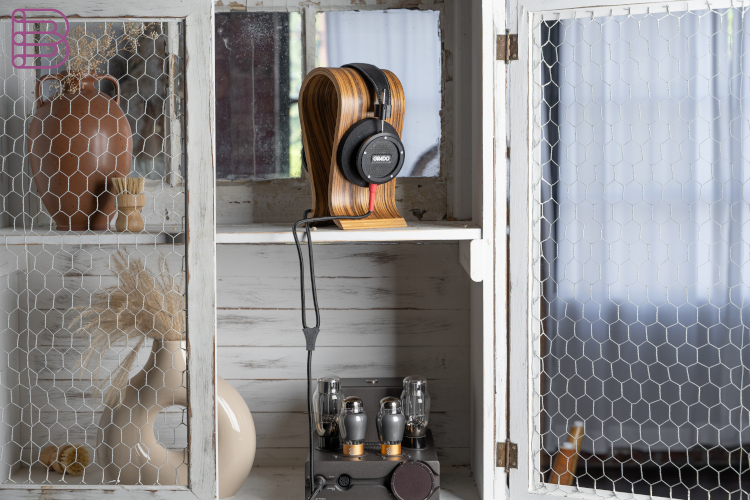
After several weeks of focused listening on my reference system, combined with longer-term, non-analytical listening sessions, the S750 emerged as a serious and carefully voiced performer. It delivers high levels of clarity and spatial definition while preserving the energetic, forward character that has long defined the Grado sound. Comfort has improved relative to earlier models, but the S750 remains unapologetically fidelity-centric. It will be most rewarding for listeners willing to accommodate its ergonomics in exchange for its transparency and immediacy.
Grado Labs: Brooklyn Built Craftsmanship
Grado Labs was founded in 1953 on a kitchen table in Brooklyn, New York, with a singular goal: to produce audio equipment that serves the music rather than market trends. Over more than seven decades, that philosophy, rooted in hands-on assembly, mechanical simplicity, and voicing by ear, has guided the company’s work. Grado first earned recognition for its phono cartridges, later building a reputation for dynamic headphones that emphasized openness, speed, and midrange presence.
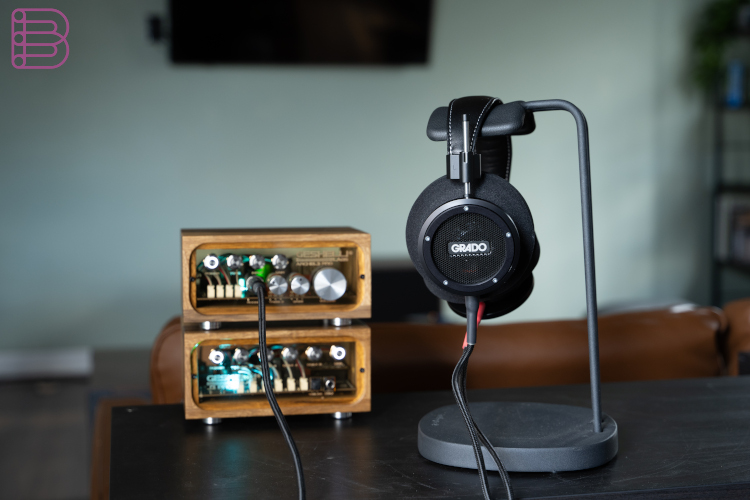
The Signature line, which includes the S750, represents the most refined expression of this lineage. Rather than redefining the brand’s sonic identity, the Signature models refine it through improved materials, tighter tolerances, and incremental acoustic optimization. Each S750 is assembled in Brooklyn, NY, reinforcing Grado’s commitment to small-scale, domestic manufacturing and continuity of design philosophy.
Engineering and Design: Refined, Not Redefined
At the core of the S750 is Grado’s new S2 50 mm dynamic driver, developed specifically for the Signature series. The diaphragm combines carbon fiber with a paper composite, paired with a lightweight copper-plated aluminum voice coil. This configuration seeks to balance stiffness, damping, and low moving mass, enabling fast transient response and low distortion across a wide dynamic range. In listening, the driver demonstrates strong control during complex passages while maintaining sensitivity to low-level information.
The all-aluminum housing provides rigidity and resonance control without excessive weight. At approximately 460 g, the S750 is over 10 % lighter than the HP100 SE, a reduction that contributes meaningfully to long-term usability. The mechanical consistency of the housing also supports stable imaging, particularly during dynamic swings.

The Grado B Cushion represents a substantial update to the company’s pad design. By reducing the distance between the driver and the ear and incorporating eight airflow vents, the B Cushion alters both tonal balance and spatial projection. The soundstage feels more open and continuous, while transient definition improves through reduced acoustic smearing. Pressure distribution is also improved, mitigating some of the fatigue historically associated with Grado’s on-ear designs.
A detachable Signature Gold braided cable is supplied, terminated in a 6.3 mm single-ended plug. The ear-cup connection uses a 4-pin balanced mini-XLR connector, allowing users to tailor cabling to their amplification choices.
Comfort and Build Quality: A Step Forward
Grado has made tangible ergonomic improvements with the S750. The leather headband incorporates approximately 50 % more padding than earlier non-Signature models, and the revised gimbal assembly provides better weight distribution and stability. Stainless steel rods and reinforced aluminum junction blocks contribute to a feeling of durability and mechanical confidence.
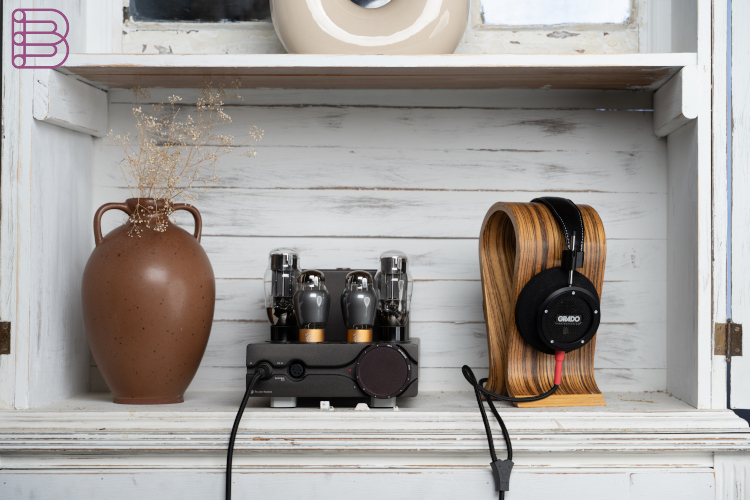
That said, the S750 remains a firm-fitting design with an on-ear lean. During extended sessions beyond two hours, some listeners may experience fatigue, particularly when compared with headphones that prioritize plush padding and minimal clamp force. These ergonomic compromises reflect Grado’s continued prioritization of driver-ear geometry over comfort-driven design choices.
Reference System and Evaluation Context
All my listening impressions were gathered using the following reference headphone system:
- Headphone Amplifier: Atoll IN400 EVO integrated amplifier
- Source/DAC: PS Audio AirLens streamer and PS Audio StellarGold DAC
- Music Services: Qobuz & Tidal (24-bit / 96–192 kHz)
Overall Sonic Character: Clarity and Presence
From first listen, the Signature S750 presents music with immediacy and focus. Its sonic character can be summarized by several defining traits:
- Immediacy and Detail: Microdynamic shifts and subtle transient cues are rendered with clarity, lending music a sense of liveliness and articulation.
- Wide Soundstage: Imaging is open and stable, with convincing lateral spread and meaningful depth.
- Midrange Focus: Vocals and acoustic instruments are presented with presence and intelligibility, avoiding excessive warmth or thickness.
- Treble Transparency: High frequencies are extended and energetic, contributing air and openness without undue grain on quality recordings.
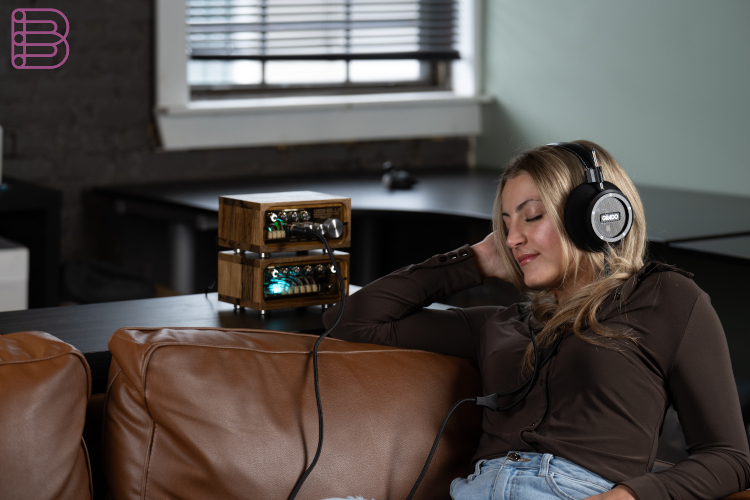
With a nominal impedance of 38 Ω and sensitivity of 115 dB SPL, the S750 is relatively easy to drive, though its resolution benefits from capable amplification. Its tonal balance is revealing rather than forgiving, exposing weaknesses in poor recordings and compressed material. Bass response is taut and controlled, favoring definition over impact.
Track by Track Listening Evaluation
Dire Straits – “Telegraph Road”
Qobuz | 24 bit / 192 kHz
This extended composition serves as an effective test of large-scale dynamics, low-frequency discipline, and spatial coherence. Through the S750, the opening minutes unfolded with notable transparency, allowing subtle ambient cues, reverberant guitar textures, low-level keyboard swells, and background percussion—to emerge clearly from a quiet noise floor. The sense of space surrounding the instruments felt continuous rather than artificially exaggerated.
As the track builds, Mark Knopfler’s fingerpicked guitar exhibited clear string articulation and harmonic complexity. Individual plucks were well differentiated, with leading edges rendered cleanly and decays allowed to trail naturally. The bass line remained taut and intelligible, supporting the arrangement without encroaching on the midrange. During climactic sections, the S750 maintained composure, preserving image stability and separation even as dynamic intensity increased.
Patricia Barber – “Company”
Tidal | 24 bit / 96 kHz
This intimate studio recording highlighted the S750’s strengths in midrange resolution and tonal accuracy. Barber’s voice was presented with clarity and focus, capturing subtle shifts in phrasing, breath intake, and articulation without editorial emphasis. The headphone avoided adding warmth or bloom, instead presenting the vocal line with a neutral balance that felt faithful to the recording.

The accompanying piano demonstrated convincing weight and harmonic structure. Notes decayed naturally, with overtones clearly resolved, and the interaction between voice and instrument was easy to follow. Low-level details—pedal movement, faint mechanical noises, and room ambience, were audible but not distracting, contributing to a sense of realism rather than analysis.
Hans Zimmer – “Why So Serious?”
Qobuz | 24 bit / 96 kHz
Cinematic material places significant demands on a headphone’s ability to manage low frequencies and dense layering. The S750 approached this track with control rather than excess. Sub-bass content was present and extended, but deliberately restrained, avoiding the sense of scale inflation heard in more bass-forward designs. This restraint preserved midrange clarity and prevented masking of inner detail.
As the arrangement thickened, overlapping electronic textures, strings, and percussive elements remained distinct. High-frequency effects were rendered with extension and transparency, contributing to a wide, enveloping soundstage. The headphone conveyed tension and momentum without resorting to exaggerated impact, favoring articulation over spectacle.
Keith Jarrett – “The Köln Concert, Part I”
Tidal | 16 bit / 44.1 kHz
Solo piano remains one of the most revealing tests of tonal balance and microdynamic resolution. Through the S750, Jarrett’s performance was reproduced with convincing immediacy. Variations in touch, from delicate pianissimo passages to forceful chord clusters, were clearly differentiated, highlighting the headphone’s sensitivity to dynamic nuance.
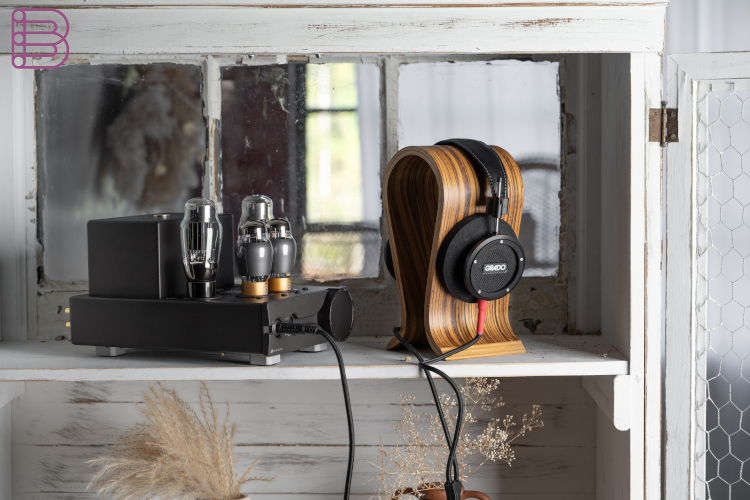
Low-register notes possessed appropriate weight and resonance, while upper registers retained air and clarity without glare. Harmonic overtones were well articulated, contributing to a believable sense of the concert hall’s acoustic space. The presentation encouraged extended listening, drawing attention to musical flow rather than sonic artifacts.
Tool – “Chocolate Chip Trip”
Qobuz | 24 bit / 48 kHz
This rhythmically complex and densely layered track tested the S750’s transient speed and separation. Percussive attacks were rendered with immediacy, each strike clearly defined in space. Despite the density of the mix, individual rhythmic elements remained intelligible, and the headphone maintained a strong sense of forward momentum.
Synthesized textures and effects were positioned precisely within the soundstage, and the overall presentation remained coherent even as the track intensified. The S750 emphasized clarity and timing over visceral impact, resulting in an engaging but controlled portrayal of the material.
Soundstage, Imaging, and Tonal Balance
I found that the Signature S750 emphasizes tonal accuracy, transient speed, and spatial precision over bass-forward presentation. It excels with music that rewards careful listening, including jazz, classical, acoustic, and well-recorded rock. Electronic and bass-centric genres benefit from clarity and pace, though listeners seeking visceral low-frequency impact may find the balance reserved.
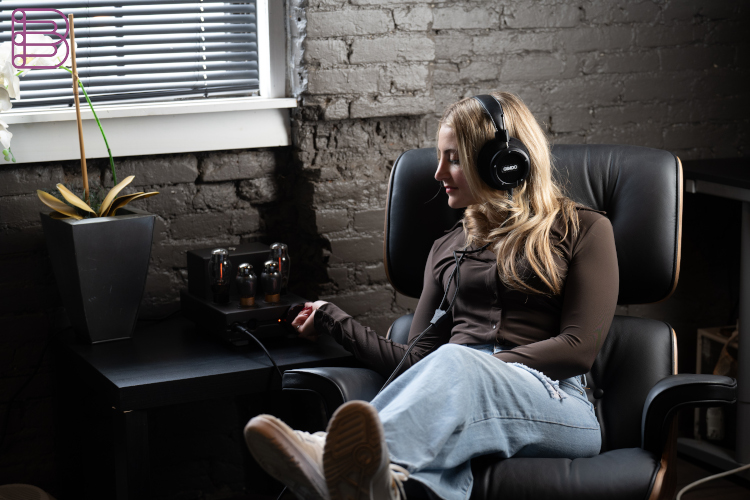
The soundstage is wide and coherent, with stable imaging and a convincing sense of depth. Midrange tonality is neutral to slightly forward, enhancing vocal intelligibility. Treble extension contributes openness but places demands on recording quality. Bass remains disciplined and articulate, supporting the overall presentation without drawing attention to itself.
Specifications
- Transducer Type: Dynamic (S2 50 mm driver)
- Operating Principle: Open Air
- Frequency Response: ~6 Hz – ~46 kHz
- THD: <0.2 % @ 100 dB
- Nominal Impedance: 38 Ω
- SPL 1 mW: 115 dB
- Driver Size: 50 mm
- Driver Matched dB: ~0.05 dB
- Cable: Signature Gold braided detachable (mini XLR)
- Weight: ~460 g
- Headphones: Grado Signature S750
- Price: $1,695 / £1,695
Tracklist
Dire Straits – “Telegraph Road” – Qobuz | 24-bit / 192 kHz
Patricia Barber – “Company” – Tidal | 24-bit / 96 kHz
Hans Zimmer – “Why So Serious?” – Qobuz | 24-bit / 96 kHz
Keith Jarrett – The Köln Concert, Part I – Tidal | 16-bit / 44.1 kHz
Tool – “Chocolate Chip Trip” – Qobuz | 24-bit / 48 kHz
Hardware Checklist
- Grado Labs Signature S750 headphones
- Atoll IN400 Evolution integrated amp
- PS Audio AirLens streamer
- PS Audio StellarGold DAC
- PS Audio PowerPlant 12
- Supra Ultra High Speed I2S cable
- Supra Lorad 5 Excalibur power cables
Grado Labs Signature S750 headphones
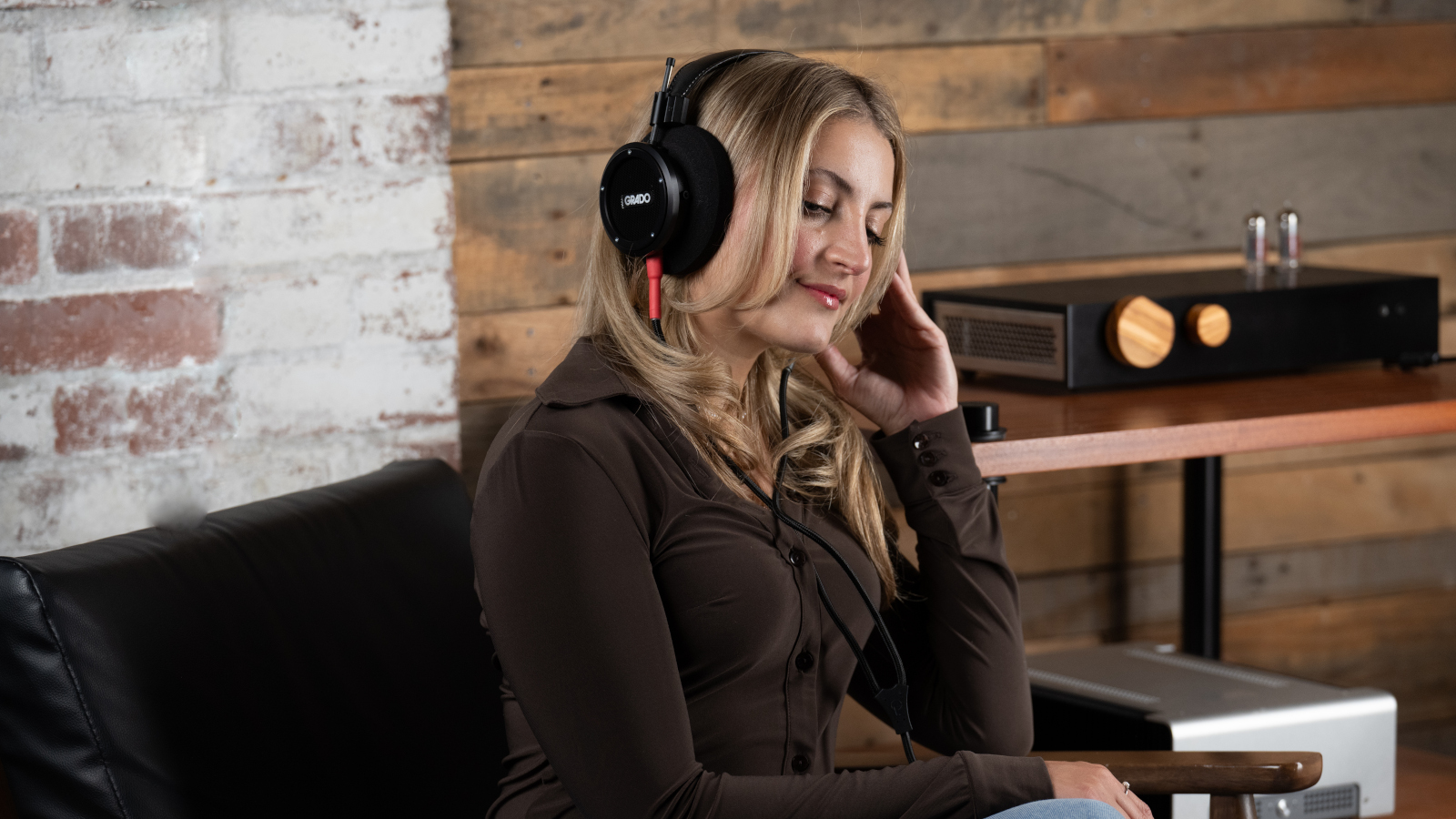
$1.695The Grado Signature S750 is a disciplined and carefully executed refinement of Grado’s long-standing design philosophy. It prioritizes clarity, immediacy, and structural integrity over convenience or ergonomic indulgence. The new S2 driver and revised pad geometry result in improved resolution and spatial presentation while preserving the brand’s characteristic voicing. Comfort has improved, though the S750 remains firmly oriented toward sonic priorities. When partnered with high-quality amplification and source material, it offers a revealing, engaging, and musically communicative listening experience. For listeners who value insight into recordings, transient precision, and an open, unembellished presentation, the Grado Signature S750 warrants serious consideration.
Pros
- Exceptional clarity and resolution
- Wide, natural soundstage with precise imaging
- Articulate midrange and vocal reproduction
- Extended treble that remains controlled on quality recordings
- Improved build quality and revised B Cushions
- Flexible detachable cable system
Cons
- On-ear fit can still be fatiguing for some listeners
- Sub-bass presence is lean compared with bass-forward headphones
- The forward balance can be unforgiving of poor recordings
- Open-back design limits isolation (not suitable for travel)